Slowing Down and Breathing Deeply: On Time and Inflating the Ordinary Moment

By Catherine DiMercurio

There are times in our life where we are keenly aware of how swiftly time passes and we wonder, how can I slow things down?

I have had numerous conversations with friends about how, as our children get older, life increasingly seems to be on fast-forward. I feel hyper aware of time. When my children were babies, I wasn’t cognizant of how quickly their first year went by until it was over. Though I was waking up several times a night to breastfeed, I tried to be present during the daytime, aware of how quickly the children moved from one stage to the next. But, I was simply exhausted and a lot of those memories are fairly hazy. It is only in the looking back that I perceive how quickly that time flew by. But day by day, within that time, it didn’t seem as though I’d ever get to place were we were all sleeping through the night. Now, I have an awareness even while I’m living through this time that moments are disappearing before I’m through with them. They are footprints in wet sand, washed away before I’ve finished taking the next step.

Tick Marks on the Timeline

The easiest things to remember are obviously things that stand out as atypical, as outside of the normal routine and pace of life—vacations, events, illnesses, and griefs. Recalling the things we’ve deliberately denoted as significant is also a relatively straightforward endeavor. Parents do this all the time—first Christmas, first day of school, etc. All the other days, those that seem to be undifferentiated from one another, are forgettable time. They are the spaces in between the tick marks on a timeline. Yet those moments and days and years filling in the gaps between the firsts and the vacations and the tragedies are where most of our living happens and where much of our memory fades. The passage of that time is what makes it seem as though life is going by so quickly. It’s because there is nothing to grab on to. The current of time rushes along, and without any specific memory to fix upon, we rush past, and remark on how quickly that year went by.

pexels-photo-277458.jpeg

So, I’ve been wondering how to shake free of this mindset, of this feeling that I’m caught in a current. I want to somehow fill in all the spaces on the timeline, to deliberately draw a line and exist in each moment, each day, as though it matters as much as a birthday, or the death of our dog, or a trip to the beach, or the first day of kindergarten, or one of our camping trips. Because, doesn’t it? Doesn’t each moment matter?

Maybe it depends on how we define mattering. I’ve heard people say that it is in how we handle tragedy and crisis that defines who we are. Perhaps, though, it is in how we manage the mundane that shapes us more. How do we respond to all that is dull in a day, in the weeks and months and years that we work and save, trying to earn enough to take that vacation and “make some memories”? If we can’t find something to savor in all that we’ve deemed unworthy of memory-making, then how much our lives are we relegating to those empty spaces on the timeline?

Yoga Breathing and the Value of the Dull Day

When the kids were in elementary school and I worked at home as a freelance writer, I’d take time during the late mornings to watch a yoga program on tv that guided me through a daily practice. This particular program incorporated some philosophy throughout and a few ideas have stuck with me. One is that our lives are not measured in moments, but in breaths, so we should breathe mindfully, deliberately, and deeply.

I’m trying to combine these notions of living and measuring. I want to be aware of moments, of days that seem undifferentiated and somehow, to differentiate them. I want to expand moments, to fill them up the way my breath fills my lungs. I think, how can I make this ordinary day different, or memorable, or significant? If I park in a different lot at work, or take a break and go outside for a moment, will it make a difference? If I watch and listen for a new idea or notice a sparrow or hear someone laughing or sit with the morning sun on my face before I walk into my building, will it matter?

pexels-photo-929386.jpeg

Will I be able to remember this day as a specific part of my life? It might be easy to brush this idea off and say, why would you want to? Maybe some days aren’t worth remembering. Is there any value to marking just another workday? I’m not sure yet. I hope so. I hope that in a month, I’ll be able to look back and not feel like it went by so fast. I don’t want to rush through even the dull days. Even though on the surface it might seem as though I’m experiencing an unremarkable day of work and returning home to make an unremarkable dinner, it is another collection of breaths I get to have on this earth, another meal I get to share with my children. And perhaps if I’m seeking opportunities to find the remarkable within the ordinary, I’ll find something unexpected.

Soaking It All In

This past weekend, my children and I, needing some warmth in this frigid Michigan April, drove to the Belle Isle Conservatory in Detroit. This being something that is outside of the realm of our usual routine automatically makes the event something we’ll all be more likely to remember in the future. But I tried with more intention and deliberateness than usual to notice the details of the day, the blue of the sky beyond the greenhouse windows, the way the sunlight illuminated the large green leaves of a tropical plant, the shape of leaf shadows on the leaves below. I took time to appreciate the details my children commented on—the worm wriggling through the dirt that my son pointed out, the tiny gauzy white cactus sporting an even tinier magenta flower my daughter saw. We sat on a bench together and I closed my eyes and felt the sun on my face. I wanted to soak the moment in, to draw another tick mark on the timeline.

IMG_2932

If our lives here are a journey, maybe each mile of the road trip is worthy of our attention. Notice the song on the radio, the sun through the window, the people with you. Get out and stretch your legs. Breathe deeply. Inflate the ordinary moment.

Enjoy the road. Love, Cath
Learning from Memory: The Parable of the Kite

By Catherine DiMercurio

As a mother, I find myself coming back to the lessons my own parents taught me. Rarely though do these lessons filter through my consciousness in verbal form. Rather, some memories return repeatedly enough that I wonder, why this, why now?

A Father-Daughter Moment

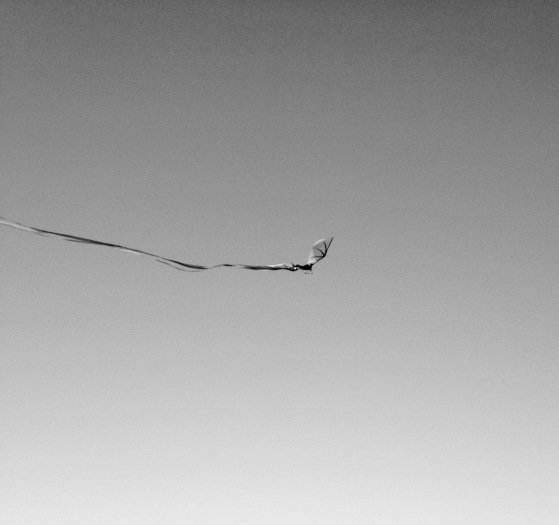
Sometimes the memories are so strong and come from so far back in my childhood I feel as though I made them up, and they take on the power of parable in my mind. One of my earliest memories is of flying a kite with my father. I always thought that one of the reasons this memory was so striking was that it was just the two of us. I have two older sisters, a younger brother, and a younger sister, so most of my childhood memories involve some combination of siblings. My mother features prominently as well in most of those memories. She was more involved in the particulars of our day-to-day lives than my father was and it is easy to recall things like the day we went strawberry picking and had strawberry shortcake for dinner, or the time my sisters and I all had chicken pox and we got to eat on t.v. trays in our beds. There are lessons in here as well about the different ways we nurture one another. But, the memory of kite flying with my father stands out, in part, because it is an anomaly. We simply didn’t have many one-on-one moments.

IMG_5051

Running with the Wind

I remember standing in a muddy field on a grey day. I can see big clumps of soil and puddled rainwater. I don’t know if it was spring or fall but certainly it was chilly and damp. I was running along side my father, who gripped the white kite string, waiting for the kite to catch on the wind. He slowed, and handed me the spool of string, and showed me how to hold it. I remember my father telling me, “Cath, don’t let go!” I kept running. The wind slacked and the kite dipped. “Keep going,” he shouted. And I ran. I felt the tug of the kite at the end of the string as the wind buoyed it once again and my heart lurched with joy. And somehow, I let go. My father sprinted after the string, splashing through mud, trying to catch it. That’s where the memory ends for me. I never knew if he caught it. I don’t know why it never occurred to me to ask my dad about this sooner. Maybe I was afraid he wouldn’t remember, or that it never even happened and it was really only a dream. But this past Sunday, I asked him. And he remembered. He recalled the same details, the muddy field, and me letting go. As it turns out, he caught the runaway kite, though given that I never retained that portion of the memory, clearly it wasn’t the important part for me. He seemed pleased, remembering. He told me it was in the field behind our house, where we lived when I was about five.

pexels-photo-755041.jpeg

The Meaning of the Memory

Years later, I find myself drawn in my writing to kite metaphors. In a scene in which a thirteen-year-old girl experiences her first kiss and is developing feelings for a boy for the first time, I wrote: “Nora thought of the way Ben’s fingers curved around hers, wondered what her fingers thought as they leaned against his knobby knuckles. It was a relief to be here, connected to Ben. She felt like a kite on a string, and she felt like the string, too, safe within his grasp, yet soaring above him. At home, she drifted around everyone, but never felt anchored.”

For years, I thought that this was the ideal, to feel as though we are both kite and string, to feel both grounded and free. I think I’ve looked for this in my adult relationships, never realizing until now that I’ve been trying to replicate that feeling I had as a child, of being both safe and buoyantly free, the string securely held, the kite catching in the wind. And in the past few days, maybe simply because I talked with my father about the memory, I’ve realized something else: As a parent, this is what I’ve tried to create for my children—a sense that they are secure and safe and taken care of, and at the same time, that they are free to be who they are, to explore what are always becoming, that there is always possibility and joy, hope and freedom. It was what my parents tried to do for me and for my siblings. And because there was such a foundational sense of peace in that upbringing, not only did I try and create it for my own children, I also sought it elsewhere, perhaps where I didn’t need to. Perhaps even, where I shouldn’t have, that is, I looked everywhere else but within myself.

pexels-photo-633488.jpeg

I realize now that it is something I needed to be cultivating within myself all along. Perhaps it was only after my marriage ended, and after I tried to resurrect a relationship from the past, that I was able to finally begin to seek that sense of peace within myself. And in many ways, I have found it. Some days I might have to look harder than others, but now I know what I’m looking for. I know how to be the kite. I know how to be the string. Though I might feel untethered at times, I know the way back to myself. Though some days I can’t find the breeze, and can’t feel that joyful buoyant freedom, on other days I know I can get there. I know how to wait and when to run and how let joy take hold.

Listening and Learning

Perhaps learning this lesson is one of the reasons that the relationship I’m in now feels so stable and calm and exhilarating. It isn’t because I found someone who makes me feel like kite and string. It is because I am not looking for him to do that. I am free of the expectation that someone else will make me feel the way I want to feel. I entered into the relationship with a greater sense of wholeness than I ever had before, and with the knowledge that I am already enough. I can run fast enough and hold on securely enough to usually keep the kite in the air. And if I trip, or the wind dies down, I know how to fly, and that I can try again, in another moment or another day. Because he is in the same place, we are able to enjoy security and freedom, stability and joy, together, side by side.

The best part of all this is that we intuit these lessons even when we can’t always articulate what we’ve learned. I don’t think my father had a list of things he wanted to make sure he taught me before I left home. He and my mother were guided by their own experiences and did the best they could, as we all do. Sometimes, as we are running along, trying to hold on to the string and keep the kite in the air, we simply have to listen, to pay attention to the memories that bubble up within us and ask, why this, why now?

Enjoy the road. Love, Cath


On Work and Usefulness

by Catherine DiMercurio

It’s Sunday evening. We are gathered, the kids and I, in the living room, each with a blanket, a task, and a sense of wishing we’d had more time to do both things that needed doing and to relax together. I sip my decaf Earl Grey and look at my notes for this week’s blog. As the night wears on, we’ll all deal with small bouts of transition anxiety, each for different reasons, as we head into the week. For me, the strain of the workweek comes from stresses on the job, but mostly from pulling the weight of expectation and responsibility along with the heft of the monotony.

pexels-photo-734983.jpeg

Only a few short years ago did I became the primary earner, or as the IRS 1040 puts it, in all of its official elegance, the “head of household” – unmarried, earning more than half of household expenses, and with at least one child or dependent. The divorce necessitated I transition from freelance work to a regular full-time job with some haste. As I wrote about in earlier posts, I landed where I began, at the same company I started for in the early 1990s. I feel lucky to be there, as I’m not sure my years of freelancing prepared me particularly well for many other fields. At the same time, I do know people who seem to love what they do. When I graduated college, I hoped to find a job that allowed me time and energy to write, but I longed for meaningful work that engaged me, work that I looked forward to doing most of the time.

Pulling with Patience

So how do I make sense of the way things have played out? How to I reframe the narrative that sneaks up on me when a day on the job feels more like a toppling pile of tasks to manage rather than meaningful work to do? I understand the value and dignity of doing the work no matter what it is, of honoring my responsibility to earn, to be the head of the household. I think of a poem by Marge Piercy, “To be of Use.” She says, “I love people who harness themselves, an ox to a heavy cart, / who pull like water buffalo, with passive patience, / who strain in the mud and the muck to move things forward, / who do what has to be done, again and again.”

pexels-photo-247512.jpeg

Sometimes, in my quest for sense-making, I see success and reward and engagement in the work that is done in the margins of my employment/commuting life. In the margins is where I get to be a mom, where I write, where I spend time with my boyfriend, where I catch up with a friend over coffee or on a walk, where I snuggle my dog at the end of the day, where I try out a new recipe, or watch my kids’ games and competitions and performances. The margins are the places where life happens, but it is in the recognition of this too that things can seem out of balance.

As a society, we tell our kids that they can be anything they want if they work hard. It’s not that the message is bad, but it is an incomplete message. You can be things you want but you’ll give up other things to be them. You can be anything but you can’t be everything. You’ll be some things you want some of the time. You may work very hard and it might not seem like you achieved what you set out to do, but you achieved other things, in different ways. There is always more than one way to be happy, and not working at your dream job won’t be the end of the world. You may find yourself in a grey cubicle, sitting for too long under fluorescent lights looking at a screen and wishing your brain or your heart were engaged differently, more fully. But you’ll remember that you are doing the hard work of showing up every day, and earning the paycheck, and being responsible. Your job is as important as anyone else’s. You will shrug it off when someone says to you, “I could never do that. Sit at a desk all day.”

There is value in putting one foot in front of the other every day. There is honor and dignity in whether the paycheck is earned by intellectual, physical, or creative toil. On Sunday night as I write this draft, that is how I frame it, what I tell myself to remember. I don’t have to love each task to make it all feel worthwhile. Does it matter that this is not the job I went to school for or what I dreamed of as a child? Maybe. But does it matter more that the mortgage is paid and that my children’s lives are stable and secure enough that they can begin to imagine what they might want their adult lives to be like? Probably.

The Sunday Night Anxiety Club

The other thing that admits you to the Sunday Night Anxiety Club is the self-induced stress regarding balance. A friend once reminded me about that balance is about movement. Think of a yoga pose or simply standing on one foot. Muscles make micro adjustments to keep us stable. The act of balancing is more in the shifting than it is in some sort of state of perfect equilibrium. I used to think that balance meant that equal portions of my time every day or week were allotted to the categories I valued. And some days I still feel as though balance was achieved if I wrote, and went for a run, and after work had some quality, non-rushed time with the kids. But every day can’t be like that. And every Sunday night there are the reminders to myself that the week ahead will be filled with road blocks—hours at work where I try and figure out how to stay engaged and focused, a bad night of sleep that gets in the way of my writing the next morning, some issue of scheduling that disrupts the chance to work out. And balance will be about pivoting, and peace will be more about reframing than about the proper amount of calm every night before bed, though that is still something to reach for.

Right now, on Sunday night, the three of us are sitting here, making our concessions, our retroactive assessments of balance. Did we get enough done, did we honor our obligations, did we take time for each other? We stumble. Some days more than others. Some times I can’t help but wonder how the hell I’m supposed to juggle it all. It helps to remember the grander-scheme balancing act I’m trying to perform, that I’m trying to teach my son and my daughter that a good work ethic does not mean that you will be happy every moment of performing various tasks, but that you take pride in the fact that you worked earnestly and with the intention to do the job well. That living well is not truly an equation, where the moments of each day yield a result that always looks and feels like happiness. You should not feel as though you failed to live up to your youthful expectations of yourself, or society’s expectations of you, if you don’t go to bed feeling blissfully happy every night. Happiness is a strange alchemy of peace and joy and contentment. But there is wisdom in recognizing the richness of experiences that do not come to fruition in that way.

blue-glass-flower-decoration.jpg

Piercy’s poem ends with this revelation: “The pitcher cries for water to carry / and a person for work that is real.” Sometimes that work happens in the workplace and sometimes it happens in the margins. I think it is the great task of our lives, one of the most important parts of our journey, to learn what fills us up and to work at those things, whether it is the work we are paid for, the work of being a parent or a partner or a friend, something else entirely, or a combination of all of these.

I do need to step back sometimes, often on a Sunday night when the prospect of the week ahead seems daunting and out of balance, and reframe the conversations I have with myself about the work that I do in the workplace. I need to remind myself that it has a meaningful place within the context of the rest of the work I set my energy to in life. So as you embark upon the journey of your own week, I hope that even in moments of dread or drudgery, you are able to find the meaning there as well.

Enjoy the road. Love, Cath