
By Catherine DiMercurio
When I was much younger, I used to think of happiness as something fixed, the donkey’s tail reunited with its waiting body at a child’s party. Life was the twirled and blindfolded eight-year-old, and when they pinned the tail, whether it found its way to the donkey’s nose or flank, it stuck. I used to think that it would stay stuck. I counted on it, as one does when one is young.
Still, even when it didn’t stay stuck, I assumed that there was always another chance, another spun partygoer who would make an attempt to once again affix happiness to my waiting existence, and it often worked this way. I felt lucky. And patient. I could wait it out. Wait for the next chance, and then prance ecstatically once again, when that magic reunion happened.
What I didn’t count on were the people in my life who were less optimistic about the return of happiness to our waiting bodies. They seemed to assume that once it had fallen away, that was it, game over. What they never understood was that the odds were in our favor. It would return, it always did if you believed it would. What I had to learn was that while there was chance involved, and luck, and optimism, you also had to make yourself an easy target. You have to watch the way everything is spinning and try and get out in front of it. Be hopeful and easy and trusting that it is on its way back around.
I lived that way for a long time, trusting and certain that happiness would make its way back to me. Sometimes it was just so easy, how could I not believe that? But when the person you’re with has a different philosophy, as a pair, the two of you become a less likely target. And then, when you’re no longer a pair, you find that you’ve begun to doubt your own beliefs. Life becomes less like a dizzy, capricious child at a party. Happiness is bestowed less easily and frequently. It becomes something you pursue instead, a quarry that seems to prefer remaining hidden, and life provides countless obstacles that make the hunt even more challenging.
Everyone is always trying to figure out how to find happiness, how to keep it, how to be it. But I remember that I once simply cultivated peace and contentment, and I enjoyed happiness when it found me. But I didn’t expect to permanently live in a state of it. I made myself an easy target for it. I practiced the good habits that made me feel healthy and whole, and when happiness found me, I was there for it. Ready to soak it up. There is a way to bask without grasping for it, without trying to bottle it up like so many fireflies.
I feel as though I have forgotten some of my former way of being, my pin-the-happiness-on-the-human philosophy. With the ebb and flow of life, with the stress, and the changes and the losses life throws our way, it seems sometimes that we are made of steel, that there is no soft surface any longer for happiness to be affixed to. It doesn’t help that a lot of the messaging we’re bombarded with tells us that happiness is something that we should be striving to fully embody at all times. That unless we’re able to say, I AM happy, simply feeling happy sometimes is somehow not enough. It’s easy to conflate being and feeling, especially when we’re young. It’s that notion of happiness being affixed, the idea that we have it now, as if there is permanence to it, which makes the losing of it harder to bear.
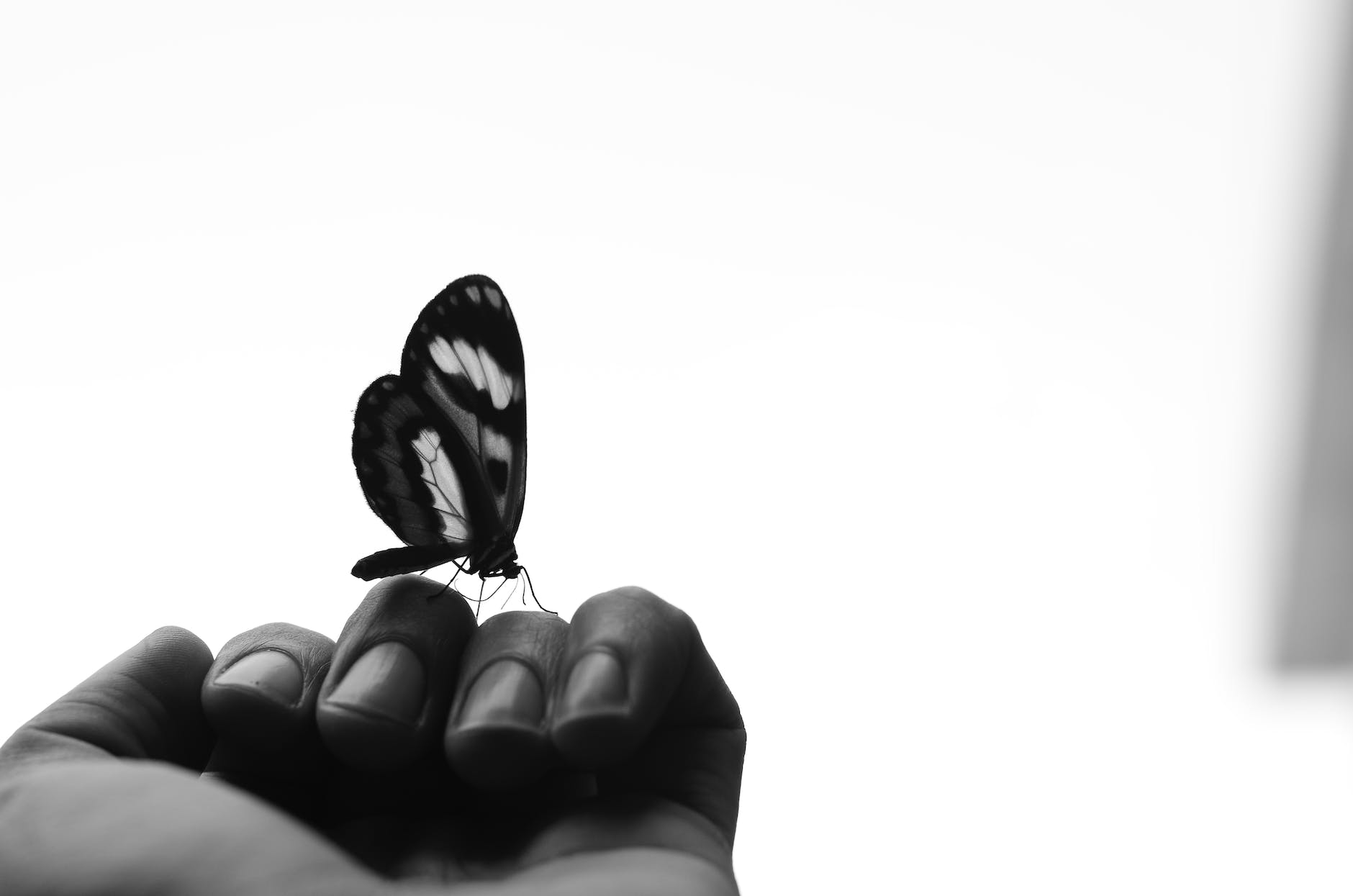
But if we acknowledge that it is a transitory thing—something that lands on us when the conditions are right the way a butterfly lands on you when you’re standing very still in the sunshine and wearing the right color—the loss of it is softened. If we stop demanding happiness, searching for it, clutching it, then maybe when it finds us, we can enjoy it more fully, and when it flutters away, we’re not left with a shattering loss, but rather, the peaceful and contented state we have been cultivating, and which we were in, before the butterfly, or the tail, alighted upon us.
We attract happiness in the way we construct our lives, but that doesn’t mean we can live in a permanent state of happiness. To expect to do so invites disappointment and even despair. But we open ourselves to it, and we control what we can. We monitor and tend to our health—physical, emotional, mental, spiritual—and we are careful with those we surround ourselves with, drawing near to us those who encourage us to be our full selves, who don’t diminish us through word or action. Life has taught me that there is a high price to pay for being with someone who prefers a certain, constrained version of yourself to your actual self. And even after you realize it, the rebuilding of self takes a long time.
I have a theory that when the quest changes from how do I find and keep happiness to how do I cultivated peace and contentment, happiness finds its way to us with more regularity anyway. I also believe that peace is not arrived at through conflict avoidance but instead through a reverent attention to self-growth, self-acceptance, and self-respect. It’s different for everyone, I’m sure. But after a confusing decade filled with so much change and so many beginnings and endings, taking time to look inward has made the most sense to me. And doing so reminds me of all the earlier iterations of myself and what worked and what didn’t.
This morning I woke earlier than I have been lately, and it was still dark outside when I let the dog out. I recently strung fairy lights beneath the newly painted patio area. They are solar lights and I am often in bed reading before I really have a chance to spend any time beneath them in the evening, so it was unexpectedly joyful to have them still glowing this morning, when I was out with my coffee and the pup. I felt happiness rustling nearby and I let it find me, let it erase my grumpiness at having woken too early after a restless night. I created that outdoor space for just such an experience. It’s filled with flowers and comfy furniture, and though it’s rustic and imperfect and really needs to be rebuilt, it is doing exactly what I hoped it would do: setting the stage for the peaceful and contented mindset I’m trying to cultivate. And in this environment, happiness alighted, and affixed, at least for now, which is all that we can ask of it.
Love, Cath
 Chronicles of the Open Hearted