On Wishes and Finding Our Way

By Catherine DiMercurio

We are here again, edging our way toward the end of another year, bracing ourselves for whatever is next and trying to inch forward in our own lives, no matter what’s next.

I’m still in the habit of trying to solve my own future, solve for x, study each element of the equation as if some part of me truly believes there is a right answer to find. I do believe we are very much comprised of the stories we tell ourselves about ourselves. But sometimes experiences knock us around, begin to shape those stories, and we have to spend years trying to unbelieve words that have written themselves onto our hearts.

I tell myself stories about belonging because it often seems that I find myself living in places I don’t feel connected to. In truth though, everything ebbs and flows, and discontent arises when I don’t feel connected to myself, and for me it is also true that this disconnect happens less often and less intensely when I’m in natural spaces—near woods and water. And so I keep trying to connect those dots, find the path to where I am supposed to be.   

Today is the solstice and I have been writing different versions of this essay for weeks. The words have had a tough time finding their way because I have plans in the works that I want to talk about but I also feel it is premature to talk about all that, so I keep writing around it all, even though it impacts no one whether I say this or that. What I want to tell you is that I’m trying to move again but I also don’t want to say it out loud in case something gets in the way and my plans are thwarted. I don’t want to jinx it, but I also want to make it real, call it into being. Saying I’m trying to move near Lake Michigan feels like a bold statement but being vague is confusing, and since this is one of the biggest things tumbling around my head and impacting my life, it is hard to say nothing at all. It is hard to write about anything else. When your heart’s on your sleeve, it’s impossible to play things close to the vest. And it is the solstice which is a magic day and therefore good for wishing.

Because of this trying to move, this deciding, this moving toward a lifelong goal, I am making other decisions, like take a break from pottery, which feels uncomfortable and necessary and like there will be a gap, a big place where something is supposed to be, like when you lose your first molar as a child. How is it gone, and don’t I need that, and how long will it take for something to take its place? My ceramics journey is far from over but there are times when we need to pause. I tell myself it is an artist’s decision, to move toward inspiration and peace and wildness and curiosity, and even though it means saying goodbye to one place, one community, I will find another and art often thrives in such curious and tumultuous circumstances. But I left the studio in tears the night of my last class. I don’t know the last time I was more grateful that I had pushed myself into something new, into that first pottery workshop I did with my kiddo.

While the point of pausing pottery is to focus on getting my house ready to sell, the pause might also be a good opportunity to embrace some writing projects that have stalled a little. But it is also a good time to remember that we can only do so much. We can’t underestimate the toll of the full-time job, especially when it asks more of us than ever before. We have to hold so many conflicting notions in our heads at the same time—being grateful for meaningful work and a paycheck but also feeling that work often leaves us little time or energy to enjoy the rest of our lives, to pursue our other dreams. Sometimes I start out by focusing on gratitude but then find myself down a rabbit hole where gratitude is muddied by things that ought not to be the way they are, where corporate greed impacts so much of our lives, and so on. I am working on finally building a meditation practice that will hopefully keep me away from rabbit holes for a few minutes every morning. Which is not to say that there are issues in this world that we should look away from. Gratitude for what we have should not blind us to what we need to bear witness to.

Still, it is a beautiful, cold morning here and I am lucky and grateful for it. Zero and I spent some time outside at sunrise, while the gibbous moon still shone above us. I feel as though I have more questions than answers at this point in my life and I am always looking for signs and guidance, am always wanting to know if I’m on the path I should be on. While standing out there in the cold at dawn, I stomped my slippered feet lightly on the worn pavers to stay warm, and Zero snuffled around in the frozen grass, and I lit a little candle and did my wishing. It reminded me of the kind of early morning where you might find a lamppost shining in the woods, as if we could be so lucky to find any kind of sign that was so obvious. It was a silly thing to want, yes, but it didn’t stop me from wanting it. If someone else said any of this to me, I would reassure them that the path they are on is the right one by virtue of them being on it. We will get to where we need to go, one way or another, and learn what we need to even if we veer in a direction that later seems “wrong.”

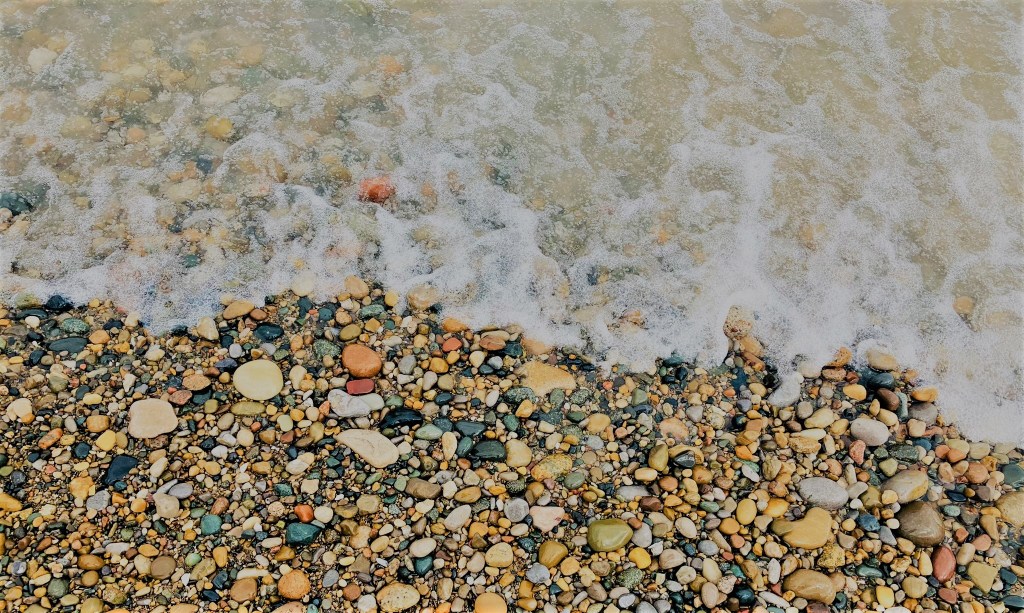
Photo by Boys in Bristol Photography on Pexels.com

Maybe one day I will accept my own answer, that it is okay to make wrong decisions, and it is more important that I am approaching life with curiosity and openness and love than it is to worry about doing something that might hurt me or cost me in some way later on, so much so that I stay frozen. This approach treats inaction as if it is some kind of protection. “Bad” choices and situations are going to happen, even when we’re trying to do everything right, because there is way too much we can’t control. I think once you go through a few such things and feel tired of the consequences, the hurt, you get to a place where you just don’t want to choose anything. It’s okay to move slowly, choose our next step with care but it is an illusion to think staying still makes us invisible to the world and to the challenges it wants to throw our way. Still, we are allowed to rest, and take our time.

Maybe too we can be lanterns for one another, glowing lampposts in the winter woods, helping if not to guide one another, at least to show each other that we’re not alone in our wandering.

Wishing you peace,

Cath

On Burros and Butterflies, or How to Hold on to Your Dreams

By Catherine DiMercurio

When you are snuggled up with yourself on a towel with a thermos of coffee next to you after you’ve dipped yourself in a chilly lake on a cool, grey morning, you forget. You forget about all the things in your life that you needed to forget about for a little while. The things that seem un-figure-out-able. Those are the things that cause me the most daily stress, and having some relief from them was a gift. Lake Michigan is always a gift.

That was one of my favorite moments from my solo camping trip—the overcast day, the cold lake water, the hot coffee. Perhaps I could even call this trip a retreat, in that I retreated from the overwhelming stress of what my job has been like the past couple of months. I hiked and journaled and did some watercolor painting and read a lot and sat on the beach and looked at the water, and swam whenever I wanted. I made campfires. I listened t0 bumblebees in the silver linden tree. I watched butterflies flit through spirea blossoms, through a field full of staghorn sumac, milkweed, ox-eye daisies, black-eyed Susans. I sought calm and coziness.

Returning to the shores of the lake is for me like returning to the first sound you ever knew, your mother’s heartbeat. And it never fails to unlock something in me, this return. Still, this, itself, is part of one of my un-figure-out-able things. I haven’t figured out how I can rearrange my life, or afford, to have a lakeside life. I tried not to think about that on this trip, tried to simply immerse myself as much as possible.

When I’m in proximity to the lake, I don’t think about the not-belonging I feel almost everywhere else. I feel less out of sync with my environment than I have in most of the places I’ve lived. What does it mean to belong to a place, anyway? It is hard to find language that captures it. In some places, you simply feel connected. A place can speak to you—a house can, a lake can, a town can, a tree can—and you understand somehow. It feels like you. It’s a familiarity, in the sense that you recognize something of yourself in the landscape. It feels like home, a returning of you to you.

I’ve written a lot about belonging over the years in this blog. I thought about it a lot when I left the home I’d raised my children in and moved to this nearby township. It’s my fourth summer here and I don’t feel as though a strong sense of belonging is developing. I’ve made it my home, certainly, and my neighbors and I are friendly with one another. It isn’t a bad place to live by any means. But it is a long drive to a body of water. And in light of the dog attack I’ve written about and the number of loose dogs I have seen in the neighborhood, a new sense of hostility has developed. After the last incident a few weeks ago—another large dog was loose, but I spied him before the dogs noticed one another and I turned and we made it home—something in me closed a door, said it was the last time. The last time I risk another attack. It is another un-figure-out-able thing, my love of morning walks with Zero, and my inability to feel as if we can do that safely. I consulted a trainer, and I’m doing everything I can to make sure Zero is still getting exercise and mental stimulation. But it has been tricky. I have been very unsettled by the loss of our routine. And this sense of the neighborhood at large being hostile to us has been hard to shake.

I once had the thought, or the hope, that once I felt at home in my own skin, felt at last as though I belonged to myself, then I could and would feel at home anywhere. And I do feel that I have arrived at a place where I am more comfortable and content and at home with myself than I ever have been. But rather than this creating a situation where I feel at home wherever I am, it instead has intensified feelings of misalignment in terms of me feeling at home here.

And yet, for now, there’s nothing to be done, or if there is, I can’t see it yet. But, in most lives, there are un-figure-out-able things we live with all the time. We circle back to them, or, they circle us, like hawks or wolves. I’m trying not to think of these circling thoughts like predators, but I do feel an urgency about figuring things out. I wonder if I can make myself more patient by imagining them like butterflies or puppies instead. Though I suppose butterflies and puppies and all living things have some sense of urgency about them. Maybe, like everything else, it all comes down to self-trust. We have to trust ourselves to figure out the right thing at the right time.

There is some version of me that will know what to do, when to do it, and how to do it, and maybe I’m still evolving into her.

I think that a recent dream I had reflects how I’m really feeling about these stubborn, un-figure-out-able things. The dream centered on a stampede of wild burros. It was a chaotic scene, but the burros were beautiful—their hindquarters a golden honey color and their forequarters white with dark spots. Maybe, in the midst of trying to figure out what we want and how to get there, part of the process is cultivating an openness toward all the ways we receive clarity about our path. That is, there is some beauty in wanting, no? My quest for the lake takes many forms, but maybe until I land there, I need to (from the safety of some shelter) observe the beauty of the stampede of my dreams. That is, our wanting helps us flesh out the specifics of our dreams, helps us to pinpoint exactly what is important and why. My desire for a safe place to walk with my dog and enjoy experiences with him is leading me toward other ways of interacting with him and building our bond.

So much of mental health, or at least my mental health, is centered in reframing how I look at things: my fears and anxieties, my past experiences, and my own view of myself. My sister recently observed that we don’t hear rain; what we enjoy about the sound of rain is the sound of the impact of each drop—on a window, the pavement, our skin maybe. She made a point of noting that it is only through this striking of water against object that we note the beauty of that sound. It is up to us to interpret how we view the nature of that impact within this metaphor. To me, “impact” is a word with some inherent violence but it is unsurprising that I hear it that way. Sometimes even minor experiences can leave me feeling a bit shaken; I often experience the world as a little overwhelming (sound in particular). But we don’t have to see everything that way, hear it all that way. Lots of gentle things can be described as impact—clapping, any touch, the brush of a butterfly wing against a flower petal.

We do have to trust ourselves to know what action to take and when to take it, to assess the status of our dreams and our progress toward them, but we also can take smaller, gentler actions every day in the way we look at our lives and our hopes. Recharacterizing our perspectives, reframing our metaphors, can help us tame the chaos of our anxieties. And observing the subtle qualities of our desires can help keep us in tune with what we’re seeking. Sometimes I find it exhausting to hold my own hand and walk myself through something that has been troubling me or causing me persistent worry. But I’m glad I’ve learned how over the years. Kind of. And we have to help each other to do the same. It’s not always about listening to a friend or a loved one and offering advice on what to do. Sometimes we just need to hear one another and swap metaphors, share our dreams, create safe places from which to observe stampedes.

Love, Cath

On Home and Hum

By Catherine DiMercurio

My home is full of rocks, pinecones, driftwood. Whenever I visit a place that gives me that particular feeling, the one that makes my cells sing, I snag a memento. It’s not just bringing the outside in, it’s trying to maintain a particular hum within myself even when I’m away from the places that strike that chord.

For the past several years, I’ve thought a lot about home and belonging, in ways I’d never imagined I’d be contemplating. For a long time, it didn’t occur to me to wonder how we attach our psyche to a certain place, or why. But I’ve been experiencing, for the past decade, almost, what feels like a great untethering. The bonds I have with my children will never be undone, but so much else has unknotted, leaving me free to discover myself in new ways, but also creating a sense of perpetual drift.

I’ve made this home cozy, this place I’ve landed for now. But this was a place of convenience, a place I moved to during the pandemic because I needed to move, and it was affordable, close to my then-boyfriend, close to where my kids had gone away to school, and close enough to an office I’ve been back to about twice since the pandemic began. It will soon outlive its purpose, has already outlived at least a couple of them.

Here’s the thing: if/when I move again, it will be one of the few major life decisions I’ve made completely on my own. I’ve got proximity issues and financial boundaries that will guide my decision, but there aren’t any compromises to be made with regard to what anyone else wants or needs out of this potential move. It’s not nothing. It’s a big something, which is why I’ve been trying to tweeze apart all the strands of what matters. And what I want more than anything is to feel at home, to feel like I belong in the place where I land. But what does that mean? How do I find it?

As I look at what it means to feel at home in a particular place, to belong, I study the places that have felt like home in the past and try to deconstruct memories so I can put it all back together with the pieces I’m working with now. At the same time, the versions of myself that felt at home in those places no longer exist.

I had a childhood friend whose grandmother had a cottage on Lake Huron. Once, I was allowed to go up north with her and her family to visit. I was about ten years old. I don’t remember much, except that it was stormy out, and we were inside, staring through a bank of windows out at the lightning and the rain dancing across the waves. I was transfixed. Transformed. I don’t have many memories that seem etched so clearly into my consciousness, but I know that our brains encode emotionally powerful events differently, so I’m certain that the fact I can retrieve this memory as easily as pulling a Polaroid out of my back pocket underscores how much it mattered to me.

It was because of events such as this that I began to build the wish to someday live by the water. Over the years, the picture of what this might look like, and who might be with me, has changed, but the essentials have remained the same. I always imagined having a summer place up north the way so many Michigan families do, but without a cottage that has been in the family for generations, or without a second income, the idea that I could own a second home is not within the realm of possibility. But lately, as work has shifted to a hybrid, largely from-home situation, a new idea began to take shape. Maybe I could purchase a year-round home on the Great Lake closest to me, and still be near enough for a monthly or so in-person visit to the office, which is all that’s required of me. Maybe this could be a different version of my childhood dream, one that I could conceivably execute on my own. Certainly there are a lot of factors to consider and I’m a ways off from making a decision. But recently, my son and I took a reconnaissance mission to a lake town that seemed like a decent prospect.

We drove to a small town on the east side of Michigan’s thumb. The town is perched on the coast of Lake Huron. The tiny downtown is home to a beautiful old library with a stained glass window featuring a pair of bright green dragons. Most of the little shops were closed for the season or had reduced hours in the winter, but I could tell that the vibe was cozy. There was a marina, but we couldn’t get right down to the water, so after driving around some neighborhoods, we stopped at a nearby county park so we could spend a little time on the beach. It was the last day of February and was relatively mild though the wind had a chill to it. As we headed toward the water, we could hear the waves crashing on the beach. Instantly, tension I hadn’t even realized I’d been carrying in my chest dissipated. I found myself sighing and smiling as we approached the water. The waves lapped at our boots. Most of the sandy beach was covered in snow. But at the water’s edge, the churning waves were busy polishing beautiful stones, rounding off all the rough edges and leaving a swath of smooth little worlds, a multicolored universe for your eyes to take in each time the waves recede.

As always, whenever I’m near one of the Great Lakes, I hunt for Petoskey stones. I’ve never been able to find one before, though both of my kids have. No matter how diligently I have searched in the past, I’ve never been lucky enough to spot one. But that day on the beach, I did. I found one. I didn’t believe it at first. I whooped with joy and showed it to my son, then later sent a picture of it to my older kiddo, both of whom confirmed it was indeed a Petoskey.

As we walked back to the car, my thoughts churned. How was I going to do it, I wondered. And when? How could I actual bring the dream of living someplace like this to fruition? Should I? Could I? Wasn’t the finding of the Petoskey a sign? As we sat in the car, sipping our coffee and warming back up, I tried to unpack my thoughts and feelings with my son. “I have to figure this out,” I told him. “It’s a good dream.” He agreed, but I repeated it anyway, and suddenly I began to cry, though I hadn’t expect it and wasn’t exactly sure why it was happening at that moment. The tears didn’t last long, but the impact of that moment is still with me. Moments like these are evidence. They are our intuition, our gut, our true selves, insisting on what it is they want and need. Aren’t they?

It is so easy to rationalize things. To say, yeah, it’s a nice dream but the logistics don’t make sense. Or the timing isn’t right, and probably won’t be for some time, if ever, because, because, because. But I have this reaction whenever I’m by one of the Great Lakes. I had it over the summer when I camped in the Upper Peninsula. I had it when my sister and I escaped to Lake Michigan a couple of summers ago. And I had it when I was a child, staring out at Lake Huron as young child.

It’s easy to just keep making the way things are now work. To tell myself the dream is just a fantasy. To tell myself I can have it in pieces, in periodic visits to any one of this state’s beautiful lakes. Maybe it’s more special that way anyway.

There hasn’t been a time where, being near one of the big lakes, I haven’t been deeply and powerfully moved, to my core, and filled with great peace and magnificent energy at the same time. I’m certain the lakes have a similar effect on most people. But I can know only the interior of my own heart, and when I feel this tug of the water, it feels like it matters. Deeply, to every version of myself I’ve been and will be.

I have spoken before of all the erasure that happened at the time of my divorce, where I saw my future evaporating in front of me. It was as if memories of things that hadn’t happened yet were being siphoned from my consciousness. Each time I began a new relationship, each day that it progressed and still seemed full of hope, I tentatively began to imagine a new future. Is this it?, I would wonder. Is this the size and shape of it? And with each ending, the erasure began again.

To not be able to see any of what the future might hold, to not be able to imagine it the way I used to, feels the way heights or deep water feels to me—vast, threatening, frightening. (Ironic, no? The way I long to be near an enormous lake and yet the thought of being in deep water is so scary? I can’t explain it.)

My past has taught me that there is so much you can’t count on, so much that changes regardless of what you planned for, so it’s usually best to not be too wedded to those ideas. Maybe that’s why I’m resisting myself, pulling away from the dream as soon as I’m away from the water. As much as it comforts me to have a hazy outline, a plan that’s adaptable, a goal to work toward, I am afraid to claim it, when so many other things haven’t worked out.

Maybe, at the heart of it, I’m scared that I can’t trust myself to carry it out. Maybe I’m afraid that I’ll betray myself by failing to get there.

In the essay “Self-Reliance,” Ralph Waldo Emerson writes, “Trust thyself; every heart vibrates to that iron string.” The line keeps coming back to me. At times, we feel out of sync with the world around us, and then we find ourselves in a place where everything feels in tune, where we are a plucked string whose vibrations are in harmony with everything around us. When we are seeking answers, or trying to determine what path is the best one for us, how can we ignore that cosmic hum? How can I? Is it so hard to believe that I can get us there, me and all the other versions of myself who have longed for it?

Do you ever feel like you already know the answer you’ve been looking for? Or, you assume there must be something wrong about the dream because the path is so unclear, or there are things about the journey that frighten you? I don’t know if I have my answer or not. Have I been carrying it with me this whole time, like a little lake stone in my pocket? I’ve been trying to write this post for days. I keep clumsily getting in my own way. I don’t know that I’ve gotten it right. I’m still trying to peer through the clouds, listening beneath the wind for that hum.

Love, Cath

On Belonging, Nests, and Popsicle Sticks

By Catherine DiMercurio

Sometimes we find new ways to belong to ourselves.

I read recently that where we belong is not always the same as where we are used to.

That juxtaposition between belonging and familiarity is a curious one. I am in a prolonged state of transition. I have not yet moved into my new house, but have been steadily at work, along with my son, my boyfriend, and his son, to make some fairly dramatic changes there. My old house, which I’m simply occupying at this point, is in a state of disarray as I prepare to move. The yard is getting overgrown. We can only do so much to maintain both places. I have work responsibilities. I am tired.

When I think about belonging and familiarity I think of people, not places, now, which is a fine thing. I do look forward, though, to having the sense that I belong in my new space, to making memories there, building the familiar piece by piece like the log cabins my sisters and I used to make from popsicle sticks we’d collect throughout the summer. Belonging and familiarity aren’t always at odds.

The house I am leaving feels like a collection of homes, four walls filled with debris of different versions of home, good, bad, and otherwise. Here the familiar has a long history, sometimes sweet and wonderous, like bringing babies home from the hospital after they were born. The ensuing, often sleepless years, unfolding moment by moment. The familiar had its run of trouble here too and that’s ground I’ve covered before. The house is filled with discarded nests. It is all twigs and straw and popsicle sticks. There are things I don’t want to forget, and things I don’t want to remember. If I swept it all into a pile, I wonder what would be recognizable, what would still seem familiar. I wonder what to take with me.

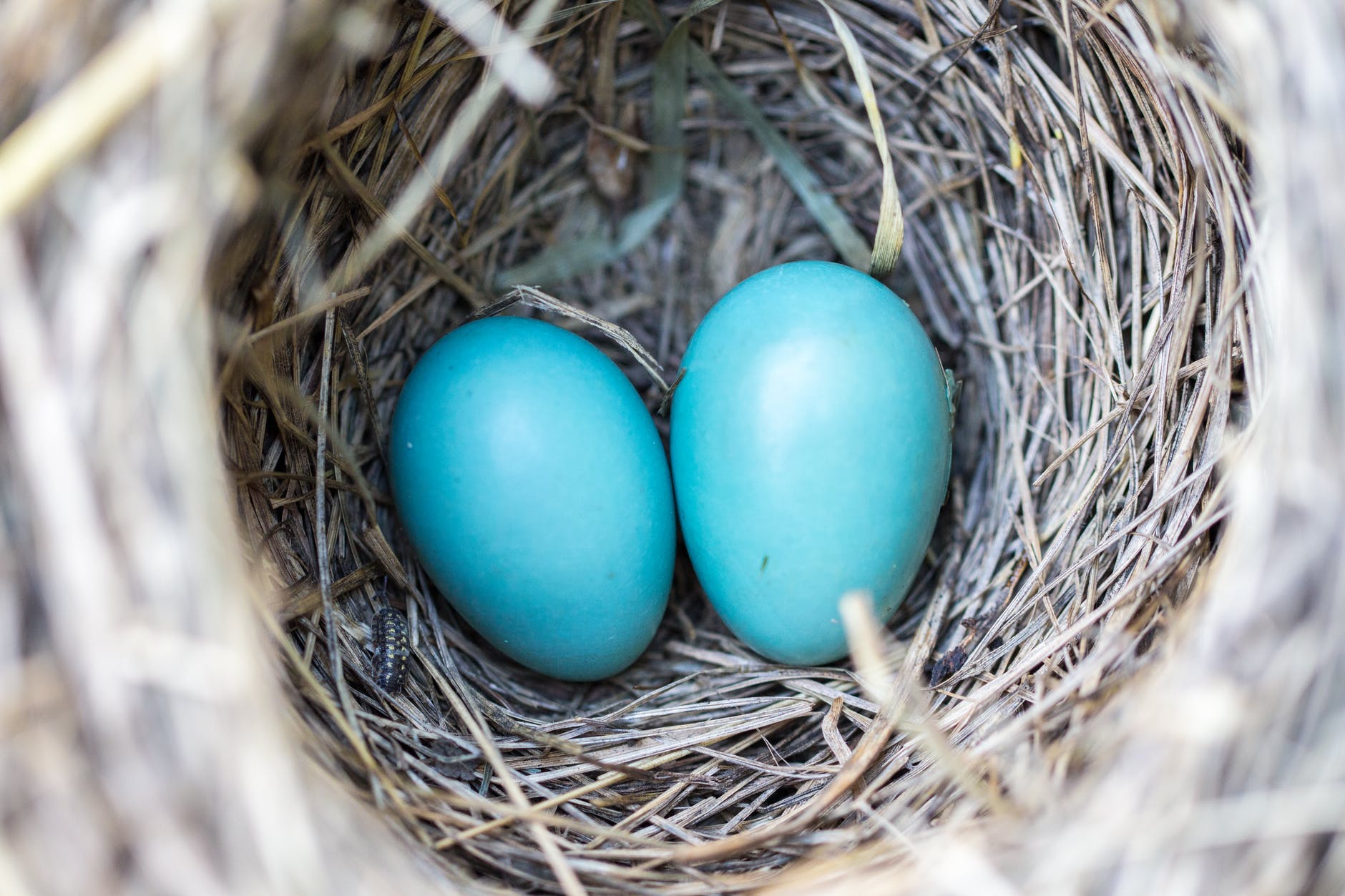
bird-nest-eggs-blue-158734.jpeg
Photo by Pixabay on Pexels.com

Belonging is a funny thing. This house was mine because my name was on the deed and the mortgage, and now different pieces of paper bear that scrawl. Signing all the documents to transfer ownership for both houses, I remember looking at my signature and the way it changed from one document to the next. By the time you have signed your name fifteen times you begin to doubt that you know how to do it anymore.

[Side note on signatures and belonging: I think of the poetry of a name, the way the script mirrors mood, the way when I pen a note with the three letters of your name at the top and the roughly four and half of mine at the bottom, I attempt to corral with the shape of words the way I feel, and it feels like creating art together. It is the words as I write them and the sound of them in your head or on your lips when you read them, and what a beautiful thing it is, to make art with you.]

But despite the documentation and transfer of ownership of what I have called “mine,” what I now call “mine” doesn’t belong to me, because homes have the histories of other families and maybe in a way, the way we reshape a home to our personalities, the way we nest and re-nest over the years, is also a beautiful piece of enacted art, one that we make in collaboration with our own histories, along with those who have inhabited the space before us.

In many stories, place functions very much as a character, a real force the characters interact with, rather than simply a backdrop. Fiction that effectively executes this (Charles Baxter’s The Feast of Love comes to mind readily as an example, but there are many others) is easy to immerse oneself in, because it feels like truth. We are products of our environment, acted upon by place, as much as we interact with it.

Belonging is a funny thing. I wonder if you can feel at peace with yourself and not in harmony with your personal setting, or does that peace create the sense of harmony no matter where you are?

I have the strong sense that feeling internally at peace but out of step with your environment is common, and is perhaps what propels us to look at our surroundings perhaps as a place where we do not belong, or no longer belong.

It is impossible to ignore the fact that tucked away within both the concept of belonging and in the word itself is longing. There is an ache within us to fit. I think of the two baby robins snugged in the nest at the new house. It sits securely in the crook of the downspout behind the garage. I think of how we long to feel safe, at least somewhere.

I wonder how it is built, our sense of belonging to one another? How much is instantaneous, how much constructed. I consider what that infrastructure comprised of.

And what does it mean to belong to ourselves? I was told that by the time I reached almost-fifty, I would not care what others thought of me; I would be wise; I would settle into myself. Yet I don’t settle in. I still often feel awkward in my own skin, in my own brain, though at times I have allowed myself to be at peace with that part of me.

The sparrow in the backyard at my old house pinched a beakful of just-brushed dog-fur-fluff. My dog has the softest fur, and I thought, well-chosen! What a happy, cozy little nest that will be to settle into.

And sometimes I think maybe I can settle into myself after all.

Love, Cath