On Spring, and Little Mysteries, and Soft Truths

By Catherine DiMercurio

It’s been a bizarre spring. The last time I wrote, it was just the beginning of it. Now we’re in the thick of it, the irises are blooming and the peonies are about to burst and the buckthorn is proving to be its annual nuisance. Last time I wrote, I was figuring out some paths forward and now they all look a little different.

When I began this blog about open-heartedness, I invited my readers to wander with me, to explore heartbreak and wholeness and everything in between. I think this blog has been around for about eight years, and one of the main things I have discovered in that time is that there is wholeness even in heartbreak, there is wholeness when we feel healed and wholeness when we feel broken. To be human is to be whole; the breadth and depth of our experience is encompassed by who we are in this life and nothing—not pain, loss, grief, fear—can deplete the full richness of our identity. We absorb it all, we metabolize it, transform it, re-emerge as new versions of ourselves over and over again.

The wholeness can feel elusive sometimes. In parsing out recent events, I tell myself I don’t have anything to prove, but my brain cycles through the discussions I’ve had with myself, formulating a defense for decisions I’ve made, paths I’ve taken, as if I have to account for them to anyone other than myself. She has a high threshold for what “makes sense,” this internal judge of mine, and hears arguments daily, usually when I’m in the shower and relitigating my past. I sense it is time to move past such habits, that my energy is needed elsewhere.

But still, I have a strong desire to be “fair” and “reasonable,” and to be perceived that way, so holding myself to account is habitual but sometimes excessive, often unnecessary, and occasionally, cruel. Looking back over my life, I see the ways in which my gut was right, but that it was also right to test its theories, as guts don’t always see nuance, or the need to have certain experiences anyway. But that gut has a good head on her shoulders. I’m learning to be mindful of what she’s instructing. I find that I’m often wary about going with my gut instinct right from the get-go because it is difficult to determine if something is actually and truly wrong when I get that “something feels off” kind of feeling, or if the discomfort I’m feeling is a natural and necessary part of a particular growth journey.

There is also some work to be done when I consider what I just said a few sentences ago, about my desire to be perceived as fair and reasonable. Who is my target audience and why should their perception matter to me so much? Ralph Waldo Emerson wrote, “What I must do is all that concerns me, not what the people think.” I remember reading that in college, being struck with the boldness of that statement. I feel as though I’ve internalized a lot of expectations about who I’m supposed to be and how I’m supposed to behave, and I get caught in the trap of overexplaining, even to myself, why I’ve chosen a particular course of action. Maybe to be regarded as fair and reasonable is so important because I’ve always been a sensitive person who was often told she was overreacting or misperceiving a situation. So I’ve grown accustomed to overcorrecting and interrogating myself, as if there is some value in making my life make sense to other people. There used to be value there. I craved the validation of others, people I trusted saying good thinking, and yes, that makes sense. It’s always nice to hear but in truth I haven’t needed it for some time, though part of me doesn’t entirely know that yet.

It is a strange thing to consider walking through this world and accepting mystery and to say, maybe I don’t need to understand that. Maybe I can stop trying to figure out why I feel better alone than when I’m in a relationship. When I knew myself less, the opposite was true. I thought I was a better me in partnership. But just as my understanding of myself has improved, so has my understanding of what does and doesn’t constitute a partnership. Maybe when we’ve done all the philosophizing and therapizing we can, all the studying and soul-searching, we can say, for now, I accept this as a mystery of life, a mystery of love, a mystery of the universe and of my own soul. Maybe my energy is needed elsewhere, maybe yours is. Possibly it will all make sense when we’re ready. Or, we are ready and it does make sense and we are slow to acclimate to the truths of our existences.

Photo by Valeria Boltneva on Pexels.com

This morning I was preparing to go outside at dawn with my coffee and my dog. He usually sniffs around the yard and I fill the birdfeeder. I examine what’s blossoming: currently, irises, dahlias, snapdragons, impatiens, columbine. I usually hope to see cardinals and woodpeckers before the sparrows and grackles arrive, but lately that hasn’t been the case. Today, though, when I looked through the window before opening the door, I saw a fawn grazing near the overgrown herb bed. I looked past her and noticed two other deer nestled in the myrtle at the back of the yard. Soon, one rose, another fawn, who also began grazing in the yard. The larger doe who I assumed to be the mother remained reclined. She laid there so long after her offspring had risen and wandered that I began to wonder if she was hurt, or, perhaps even giving birth to another baby. I watched the three for a while through the window, feeling glad that they felt safe and nourished in my yard. I left them to their quiet morning routine, told my dog we’d go out in a little bit. I returned after about twenty minutes; they had gone. When I finally wandered out into the yard with my dog, I could see the indented places in the myrtle where they had lain and I wondered if they had cozily bedded down for the whole night in my yard. It gave me such a feeling of peace to cede my space to them for a little while. I imagined that the myrtle was still warm in the chilly morning from their soft brown bodies.

There has been some grief this spring, some loss of a sense of safety and well-being in my little circle. I know that this morning’s sighting of the white-tail deer in my yard was a chance occurrence but also I don’t know if it wasn’t a tiny little gift from the universe, a brief glimpse of a mother and her two youngsters feeling safe and fed and content and together. Maybe mornings like these are for embracing little mysteries as they come to us, and in them, we sense our own enough-ness.

Love, Cath
On the Familiar, Change, and Growth

By Catherine DiMercurio

One of the strangest facets of my existence in the past ten years has been the recurring sensation of unfamiliarity, and how dizzying it can be at times.

When I was married, I enjoyed the feeling that I knew my partner better than anyone else in the world, and I felt was as known to him. Toward the end, that changed, and it began to feel as though he was becoming a different person; the reasons are varied and complex and I have never truly understood how much of that I should allow myself to write about candidly. Suffice it to say that after it was over, I felt as though maybe I’d never known him at all.

In the relationships since, each ended before I’d arrived at the familiarity I craved. I also moved at the beginning of the pandemic, and my youngest went off to college, all of which contributed to the sensation that nothing in my life felt familiar to me any longer. Not my home, not my community, not my solitude, not my self. So much of who we are, at any given moment, feels rooted in place and people. When we look at ourselves extracted from those relationships, it can be disorienting, and it takes a while before we can take advantage of the opportunity it offers.

During my relationships, I was so afraid of loss that I had become someone other to myself, someone who allowed herself to be sloughed off, little by little. I found myself in a dangerous pattern of letting go of little pieces of me, the ones that might get in the way of the relationship succeeding. In the hazy aftermath of it all, after the last one ended, I realized that I did not know how to be in a relationship without this happening. The reason, I began to learn, was that I’d drifted too far from the shores of my own sense of identity. I had forgotten—or never knew—that I was the safe harbor I’d been looking for. The pattern of self-abandonment for the sake of the relationship, for the sake of loss mitigation, had become so familiar it provided its own comfort. It felt easy and good to mold myself into the type of person it seemed my partner wanted me to be. But when things got comfortable, when I was comfortable enough to relax and be myself a little more, it was understandably jarring, and I would back pedal. How much of myself do I get to be, and for how long, became the guiding principles of my behavior. Though there are a lot of reasons things didn’t work out with my past relationships, this is the part that I have to own.

I’ve spent the last two years trying to undo that damage. Some of the rage and grief I still feel over the decade’s losses are rooted in this loss of self—and my own role in it. At the same time, I exist alongside a frustration with time. When I imagine potentially building that sense of familiarity with a new partner, I remember that you can’t create twenty years of history with someone you just met. It’s hard to make peace with what feels, at times, like running out of time. One of the balms for this particular type of bruising the heart experiences is trying to nurture those relationships with friends and with family with whom a history does exist.

But here we encounter another wrinkle. People change, all of us do. And we might find that people who once seemed very familiar to us no longer do, and maybe we don’t seem familiar to them either. And change is such a slippery term, right? It rarely looks how you think it will, in ourselves or in others. To put it more baldly: it hurts. Sometimes it simply hurts to watch people you love become someone else. And our own evolution can hurt, too, when we choose to know and honor who we are. Growth is prickly, painful, and nonlinear.

Sometimes growth is prickly and we long for familiar things we can't have.
Photo by Pixabay on Pexels.com

For a long, long time, the idea that guided my writing was informed by a similar exploration of familiarity and change: do we become more or less of who we are as we get older? Are there essential facets of our true nature that get stripped away or clouded over, or are we growing, feeding that true nature so that it blossoms in a thousand beautiful ways? There is much to think about here, but it seems to me that despite whatever we are doing internally to nurture and protect that truest self, there are external forces acting upon it too. There are people who feed our soul, those who seek to crush it, and those whose aims are more difficult to see, who, for whatever reason, see what is beautiful in us and cannibalize it, because it soothes their own wounded soul. And sometimes we can’t even see it happening, because we are busy being our loving and generous selves. But we are mistaken to believe this is anything other than trauma, and there is wisdom and growth in waking to that knowledge and repairing the damage.

So how do we reconcile this need for familiarity with the fact that everything is always changing? For me, it has become a practice of asking myself new questions. Why am I drawn to the familiar in the first place? What am I truly looking for? The answer is usually comfort. Something needs soothing. All the things that had me craving something familiar—the ending of a relationship, having moved to a new house, my kids moving out—left me disorientated and lonely and I wanted to sink into something that felt like being held. But there was nothing to hold me, so instead, I sifted through old familiar things, held them: photos, books, trinkets in jars, stones from beaches gathered on trips I’d taken with my children.

But one of the most amazing things that has happened in these past couple of years is that I’m learning to accurately identify what I’m longing for and how I can soothe that longing. Not everything that feels like loneliness is loneliness. Sometimes, when the hum of routine has me feeling under-stimulated, I’ll seek out art, nature, company. Sometimes there’s too much happening, and all I want is for everything to slow down, so I’ll do something slow, like bake, sit in the sun, read a book. When I’m longing for connection, I’ll reach out to the people who understand. And sometimes I do genuinely feel lonely and I let myself feel it, knowing that it is a price I willingly pay for peace.

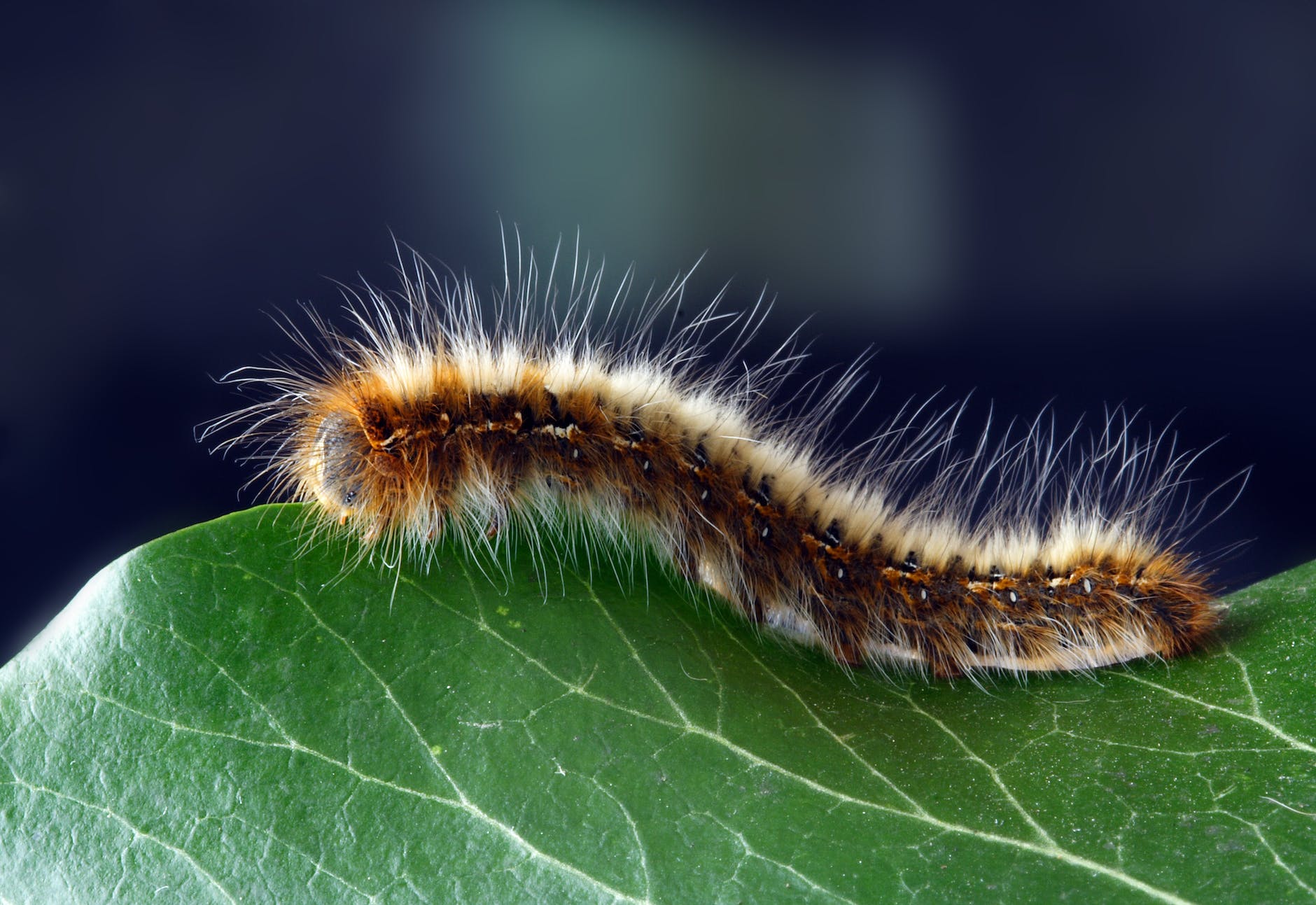
I long to layer all this thinking with some kind of metaphor that captures the feelings I want to convey, but it’s hard because change isn’t always for the better, doesn’t always seem to lead to growth, not when we get stuck in certain patterns. It’s like going through all the trouble of dissolving ourselves in a chrysalis but never becoming a butterfly, when sometimes all we really want to do is be a caterpillar anyway, happily munching on leaves all day. Maybe we do the whole thing over and over again in a lifetime, or maybe we’re always part caterpillar, chrysalis, and butterfly, all at the same time, with different parts of us transforming in different ways. I think though, at the heart of it all, is a truest self, always longing to be seen, to show us the familiar and changing way back to ourselves, lighting the way like a little firefly in the night.

Love, Cath

On Future-Planning, Free Will, and Fate

By Catherine DiMercurio

Sometimes life forces you to think about it in a very philosophical, free-will-versus-fate sort of way.

When you get divorced, one of the most dislocating, wrenching things you go through is watching the future you had imagined for yourself with your partner being erased. You try to make new plans, but things still seem hazy, at least for a while. You do begin to get your world back in order little by little, though, and you start to think about what life might look like after the children leave for college. And if you date, and if a few dates turn into a relationship, you cautiously begin to imagine your future with someone else. But sometimes these plans too go awry, and the relationship reveals itself to be something other than what you thought it was.

sun rays through the tree leaves and mist
Photo by Pixabay on Pexels.com

When the Future is Foggy

This is where I find myself. The future – however tentatively imagined – once again gradually evaporating like fog as the day warms up and the sun burns it off. At least that is how I have been feeling for the past couple of weeks. But as I sit here watching the fog burn off, I am slowly starting to realize that it wasn’t the future, it was a future, one of many possible futures that could have been made reality. I suppose it all comes down to that philosophical fate versus free will debate. Is our future already written, and all the things we do, the relationships we have, are simply events leading us to a future that was “meant to be,” either in a faith-based sense or in a fairy-tale way?

It seems to me the designation “meant to be,” or the converse construct, “not meant to be,” is where we land at the end of a series of decisions whose consequences we can’t make sense of in any other way. But I’m not buying it.

I think we have a little more control and responsibility than that. In a way, the idea of control is an illusion. You can’t control much of what happens to you in life—the economy, natural disasters, the choices that other people in your life make, etc.—you can only control how you respond to all these things. But we do have control over our own choices, and a responsibility—our mission, should we choose to accept it—to be conscious of those choices, and to learn and grow in response to the consequences of those choices.

And though we have little or no control over the choices of others or random events that wreak havoc in our lives, we can plan for the future. We can decide what we want to see there after the fog lifts. I sort of have to. I’ve learned that I need goals and dreams, something to work toward and something to look forward to, whether or not someone is sharing that journey with me. Whether the events that have led me to this point are random or willed by cosmic forces, whether I have a little control or even less than that, I still find myself searching through the fog, looking for the constants within me, knowing that everything else is an external variable that can and will change.

Searching for the Constants in the Midst of Change

For me one of those constants is, in a way, a variable—it is growth, a desire for growth and openness that yields a range of constantly varying results. And encapsulated in this reaching outward is a search for connection. It is why I write—it is not only about my search for connection, but it is also an offering, a hope that others may similarly locate something that feels like a balm to the isolation that so many of us often experience. And I know that in the future, that is always the direction I want to be moving in, toward connection, and finding familiar, common ground with others. I have other, more concrete dreams for the future as well, like someday owning a cottage up north, and I think having something like that to work toward is as important, though maybe not as important as knowing who I am, and learning more about myself as life and love and years work their magic and shape me.

Micro Choices and Micro Changes

This might be all the sense I can make of things today, all the sorting through sadness and choices and consequences I can do for right now. But I’ll leave you with these final thoughts on choice and control. People often speak of changing the world, of what they can do to make it better, and many have noble, lofty goals in this regard, which are admirable and inspiring. I tend to think of things on a micro level, rather than a macro level. We all change the world in our own way, every day, whether we are conscious of it or not. It is in how we handle conflict with people we love—do we act on an instinct to rage or an inclination to resolve? It is in how we speak to the stranger standing across from us ringing up our groceries. It is in how we handle interactions with coworkers, with friends, with strangers, with animals. It is in the thousands of choices we make every day. My aim is to be conscious of as many of these choices as I can, of the way word and manner and energy and action impact the world, and shape it, hopefully for the better, little by little.

Love, Cath