On Change, Evolution, and More Lake Magic

By Catherine DiMercurio

The more I write about journeys and transitions, about navigating them, the less I know. In my experience and from what I’ve observed, it’s as if we rarely get a chance to process one thing, when something else changes. I don’t know that this is a bad thing, but it is a thing to get used to, in the same way that we acclimate to the cold of the lake. I used to just run right in when I swam at the various inland lakes I used to live near. Now, being in close proximity to a Great Lake, I’m experiencing a different kind of cold. I used to think that by late August, the water temperature would generally feel warmer than it does at the beginning of the summer, and that is sometimes true. But there is nothing linear about the way lake water temperatures trend. I’ve learned about upwelling, where a wind shift pushes warmer waters near the shore back toward the middle of the lake, and brings up cold water from the lake depths. This can cause the water near the shore to drop by about twenty degrees. One day the water temperature could be 70 degrees Fahrenheit, the next barely 50.

So, you test the temperature, you wade in. Are your feet normal-cold or do your bones ache with it? I don’t acclimate as quickly as I used to, even in those warmer temperatures. Sixty-five to seventy degrees can still feel chilly for lots of people. I take it slowly. Somewhere between waist-deep and chest-deep, I dunk my head under, then swim in the unaccomplished, untrained way I do, staying where I can still touch the sandy bottom.

Lately, with all the transitions that continue to happen in my life and in the lives of those close to me, I’ve been thinking about the lake a lot, especially when I feel overwhelmed. I think about the way I float on my back, the way I’m able to move with the waves this way, the way the water sways me. I think about floating along with the changes that are happening, rather than trying to swim against them.  
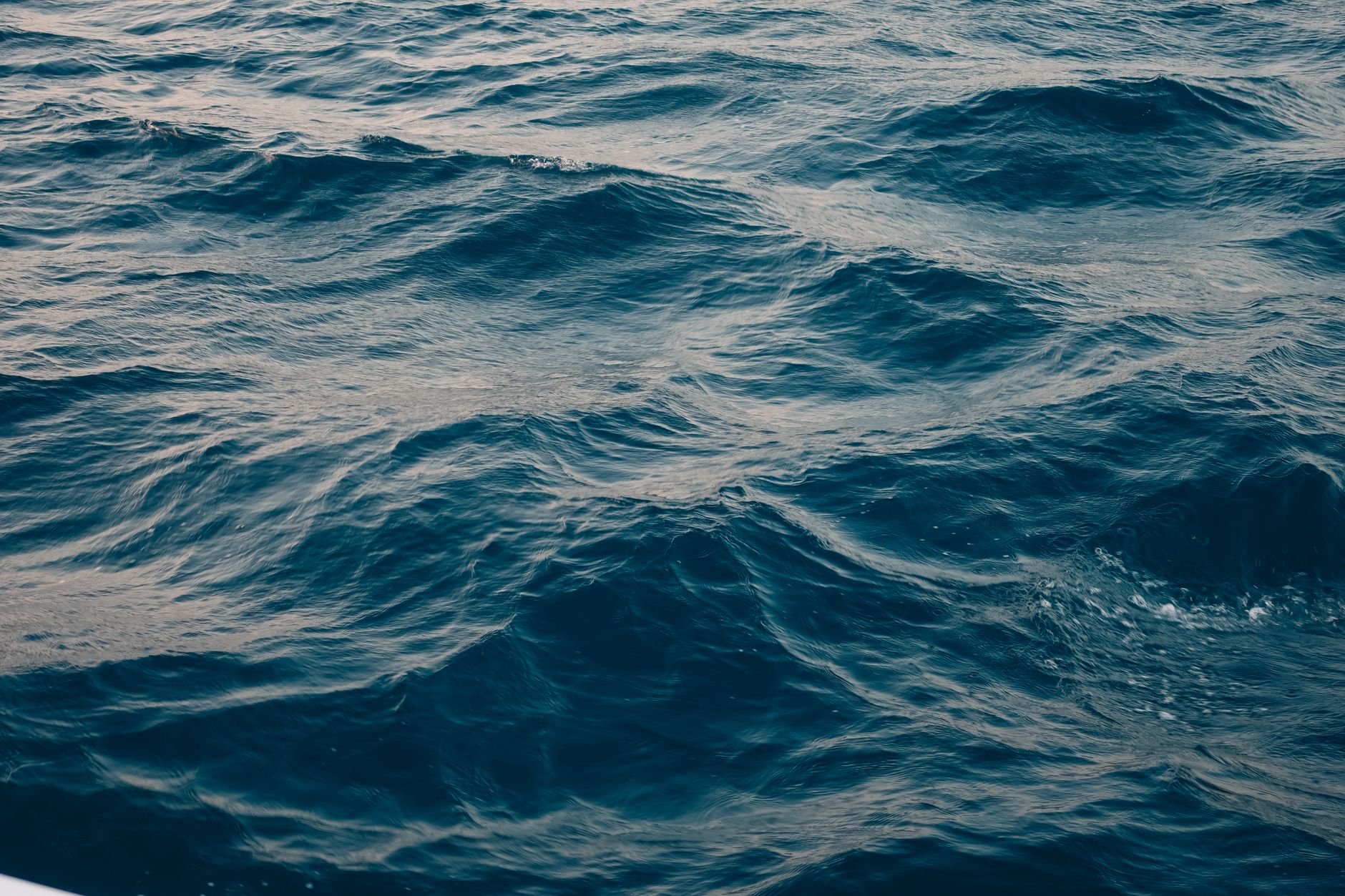
Photo by gu00f6ku00e7e erem on Pexels.com

It doesn’t always work. Sometimes the waves are too big. Sometimes you try to stand solidly and take the hit, keep your feet on the ground. There’s so much we cannot control when life is changing. Least of all the velocity of changes, the timing. Even when everything coming at us is a positive development, a series of open doors we’ve decided to step through, once we decide, everything takes on its own momentum and we must simply try to keep up.

I feel as though the only wisdom I’ve gained through any of this over the course of my life is that to acclimate to change, the best thing I can do is to keep shifting my perspective until I find the one that allows this particular transition to make sense. Eventually, with the right metaphor, I can find a way of looking at something that helps me to manage the change.

My hunch is that everyone is doing something similar when confronted with changes, good, bad, or otherwise. Because, you kind of have to. It seems that the only thing that you can predict accurately in life is that things will change, whether you want them to or not.

I try to see the beauty in it all, in the way people recalibrate their lives, their perspectives. Even when it’s messy, even in the struggle. I’m always especially impressed by my children. Watching the way they adapt to change, explore opportunity, embrace the new is inspiring. I often have the thought that I want to be just like them when I grow up. When I observe the way they handle things, I don’t see them the way I see myself: as a clumsy human navigating the lake by floating with the waves or trying to stand firmly against them. Rather, I’ve watched my children evolve, shift into whatever shape is most amenable to the situation, becoming a gull bobbing on the surface of the waves, a fish swimming deftly beneath the surface. They don’t resist, they efficiently grow into what each change requires. I wish I’d been able to learn that skill, that magic of being able to shift so effortlessly and beautifully into the next form. I don’t know that I ever had it; maybe I did once. Maybe I can learn it again.  

It’s easy, after enough time, enough life, to forget that such magic ever existed. But witnessing it now, recognizing it, maybe that’s the first step to getting it back. Maybe my magic has always been different, though. Maybe I don’t adapt efficiently and elegantly and wholly. But I can find my own way to acclimate, find the metaphor that helps me see what to do next. Where others transform, I can watch and mimic, I can imagine myself a gull or a fish, even if I struggle to become whatever is next. Maybe that’s enough, for now, and if I remain imaginative enough and pliable enough, perhaps with enough lake magic I can keep moving from acclimatizing toward transforming, however slowly and inelegantly. We are all moving toward our next form, and we each accomplish it in our own way. Perhaps all we can do is be observant, be gentle, be open. I wonder sometimes if I am trying so hard to meet the moment, to evolve, to get it “right,” that I become my own obstacle. I am not the first person to get in my own way, to think that if I prepare and study in all the right ways, everything will fall into place. It’s as if in order to learn, we must unlearn so many things first. As if we spend so much time thinking about how to become a certain version of ourselves we lose our ability to become what was already on its way without any friction or intervention on our part. Maybe we can’t think our way toward our own evolution, we simply have to allow it.

Love, Cath
On Suns, Swimming, and Floating

By Catherine DiMercurio

{Sometimes you have to look at the sun.}

As my children get ready for the next part – for my son, beginning college, living away from home, for my daughter, beginning her junior year, formulating plans for what post-undergrad looks like for her – it is impossible to avoid looking at the sun of it all. Sometimes the shifts in our lives and relationships are small and gradual and we adapt to them almost without noticing the effort, but sometimes the shifts announce themselves brightly; they greedily signal their significance.

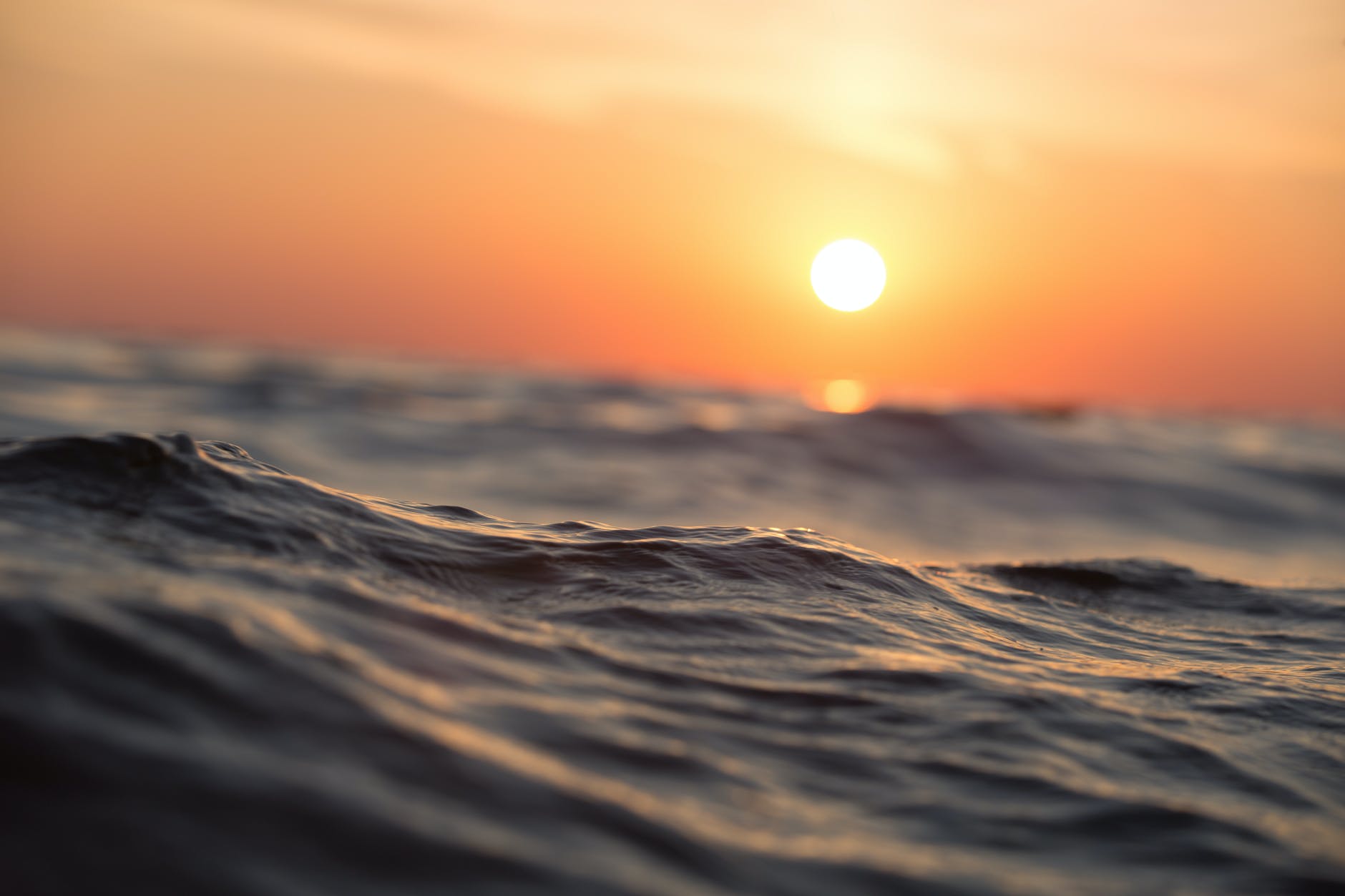
beach dawn dusk ocean
Photo by Sebastian Voortman on Pexels.com

Looking back, I see the inevitable trying too hard, the flurries of energy expended in multiple directions, the lack of calm that often characterized my efforts as a parent. I tried to be better than myself for them, tried to shape myself to tasks that shifted at the very moment I thought I know how to accomplish them, or at the very moment I realized I had no idea what I was doing. I tried to unmake the damage of divorce with deluges of emotion, with little proofs of the constancy and consistency of love, with notes, lots of talking, and sleepless nights full of worry, with hugs, cookies, gifts, lectures, as many meals together as we could, everything I could think of. I tried to pick up jagged shards of broken hearts, and puzzle the pieces back together. I tried to make everything count. I gave up sometimes, angry, resentful, tired, lost. I tried to relax, tried to not be cannibalized by guilt when I got things wrong, when either child was obviously hurting or struggling. I wanted more beach time and forests for us. More breakfasts, more stories, more magic – always. More pasta, too, and road trips fueled by potato chips and coffee. More holding hands. More laughter. More books, more lake-smoothed stones, more stars, moons, more wishes.

Sometimes I think of the curly brackets, or braces, these: {}, and I think being a parent is somehow like them, full of mysterious and elegant purpose, an effort to order, shape, contain the infinite nature of love. I admit, I don’t really know what they mean, for math, or language, and I don’t know what I mean, for my children, but I know that by some cosmic calculus, they have made me who I am, and that I am for them, always. Please know that, wherever you are. I am for you, always.

For me, now, I do what any mammal does when their young grow hearty and capable and ready. Send them off, let them go, and then I return to the den. After that, who knows. The nature shows seem to leave that part out, the camera follows the juveniles as they seek out new lives, not the lumbering mother bear or the lioness, or fox, or hare.

This is like any other part of parenting. You know you will be challenged and changed, but you don’t always know in what ways and you can’t quite predict how you’re going to feel about it.

I’m always amazed at our ability as parents to keep at it even once we realize that everything we do is focused on preparing our children to leave us. We practice goodbye, early, often. The first day of preschool is marked indelibly upon my heart and brain, the exact shape of the moment when I hugged each child, the way their arms felt around my neck. I knelt on the sidewalk. My daughter received and returned my embrace, tight, quick, and then she squirmed away to wait in line in front of the door. My son lingered, waiting, uncertain. He was always a naturally curious child who loved to learn but this sudden separation seemed unexpected and a bit unnecessary to him.

The separation that begins tomorrow is less unexpected, and is clearly a next step that he is more than prepared for. Our mutual sometimes-sadness is rooted quite simply in knowing we will miss each other, and in comprehending that his childhood has ebbed. Is it okay to regard this as a kind of grief for an ending, even though it is surrounded by the joy and excitement about what comes next? And we are, joyful and excited. For both of us, there is new, there is growth and learning, there is a fresh independence, and discovery.

I think of all the energy and urgency I put into parenting and I wonder what becomes of it, and does it turn inward or toward other relationships, or is it so unique to parenting that it exists for itself only. I’m sure it is different for everyone. I know I am not suddenly done parenting, but it is necessarily time to float instead of swim. I am curious what the coming weeks will reveal, if that will feel like a natural movement or a forced one. Will it seem as unfamiliar and urgent as learning to swim felt?

I wrote a while ago about trying to replace anxiety with curiosity and I do try to remind myself of this. A lot of my writing about this transition is a part of that effort, a way to pay attention to what our hearts and brains do during changes like this, a way to wonder and perceive. There is not dread here, only a surplus of emotion.

But surpluses do have a way of overwhelming us sometimes and I have found that this is one of the ways I teach myself about how to manage them. I think that is what we are called to do, perpetually, is to continue to teach ourselves how to manage the multiplicity of evolutions we experience in our lives. We learn, we lean on each other. We celebrate the joys and let ourselves feel the griefs and make ourselves and each other whole through all of it, through the celebration and tears and puzzling the pieces together and swimming and floating and leaning.

Love, Cath