On Cranes and Kites, Work and Wishes

By Catherine DiMercurio

Sometimes we feel fragmented, abstract; we are connected.

I keep unfolding this origami shape, trying to make a kite.

What’s the right way to look at the work we do? Does anyone notice the difference between folding and flight?

We are told to do the work, and we want to, and it comes as easily to us as flight does to a thousand paper cranes.

paper cranes
Photo by David Yu on Pexels.com

It is easy to believe we are doing it wrong. It is easy to believe that there is a dull ache, there are sore muscles, even when we are doing it right.

And everything is right.

Everything is all right.

I’m not not spelling it out in order to obfuscate; I wouldn’t do that to either of us. I’m not spelling it out because the test is wrong, and I know the answers, but not to these questions. We know everything, and we have never known any single thing.

I know this: I draw hearts in Douglas fir sawdust with my fingertip, believing always in yes, now, this.

We whisper wishes into night, day, storm, sun. We whisper gusts. We keep the kites aloft.

Some days I don’t know where to begin. I think of how hard our psyche rushes in the background, trying to escape remembered danger or pain that isn’t anything now, isn’t more than paper in a puddle, but we wake up exhausted anyway.

Sometimes we fool ourselves into thinking that the way we work is in a straight line, as if we don’t loop back around again, as if we won’t need to. And I think of the way a kite stays up, and the way when I was little, I ran in circles trying to catch the wind in the muddy field with my father. My feet in boots navigating slippery clumps of soil, heavy grey clouds churning above his head as he ran for the string that slipped through my fingers.

And I think of catching and holding, and running, and waiting for the wind, and fighting it, and those few moments in between when it’s all just grace and flight and lift and it feels like it’s no work at all.

Let’s give each other the space and grace to navigate, to slip sometimes, to falter. I’ll give chase for you.

Sometimes work is a four-letter word, the way we put ourselves back together every day, for ourselves, for each other. Do we privilege one audience over another, and why do we feel maligned for doing either, or both?

I’ve been gripped for the past several days by a certain melancholy I can’t quite source. Touching base with a number of people in my life, I hear they also feel marked in this way. I think about the things that we sense collectively, the cold heaviness of a loud, mean world. I think of the way it makes us feel separate, though we are feeling the same thing, each in our own way.

I think of this: sometimes the kite string doesn’t simply slip from our grasp because the wind was strong or because we slid in the mud. Admit it. Sometimes we let it go. Sometimes we woke up exhausted. And I think, I’ll chase that for you today. Will you help me start again, tomorrow? I think of the way I was given paper. The way I watched you transform a thousand origami cranes into kite, the way I managed to let the wind take mine again, though getting into the air in that day was a feat, and you said so.

Sometimes I try and take the view of the kite, and look down on the field, on all the endeavoring, and I’m struck by the earnestness of it all, by the web of string, the kaleidoscopic pattern of arms outstretched, by the chasing we are willing to do, for ourselves, for one another, even though you can only see it from this vantage point.

Love, Cath


Failure, Rejection, and the Road to Nowhere

by Catherine DiMercurio

This is the blog post I keep running away from. The reason? I can’t find perspective. I don’t know how I’m supposed to feel about it, what insights to draw from it, because, to be candid, my writing life is filled with frequent rejections and persistent failure. My relationship with my writing is messy in a way that I learn to live with every day but don’t fully comprehend.

pexels-photo-243625.jpeg

I have written since I was about ten, when I began composing angsty tween poems, before being a “tween” was a thing. You were just ten, or eleven, or twelve. Then you were a teenager.

I often say that I love writing, which is true, but as with most loves, there exists a complex array of emotions for which the word is merely a cipher. The things we truly love cannot be separated from who we are.

Trying to Avoid the Pull of the Road

This identity-centric love happens to be a thing that many people have been able to monetize. Many people have found channels with which to share their work with others. It becomes expected that if you write, you do something with it. When I began my freshman year at U of M, I was interested in genetics. After I took my first science class though, and received the first C I’d ever gotten in my life, I wondered if maybe there were other career paths more suited to my strengths. I didn’t know what those were, however. I knew I liked to read, and I liked to write, but the whole point of college was to prepare myself for an actual job and I knew I didn’t want to teach. I’m sure if I’d had a little more confidence in myself I could have successfully pursued the career in genetic counseling I thought I wanted. Later, I would get a C in a poetry class and it didn’t slow me down one bit. In the end though, I sat with an advisor in a little room in Angell Hall. It was time to declare a major. He did the best he could with one more unfocused liberal arts student and told me I should do what I loved, because that was the most important thing, and things would fall into place. I’m still not sure if this advice was sound, but the idea was reinforced throughout the years after I graduated. I feel like for a decade or so the message many Gen Xers received, a message amplified by talk show hosts and self-help books, was do what you love.

Embracing the Longest Road Trip Ever

I declared as an English major that day. Still, I was afraid to take a creative writing class. I focused on literature, and I loved writing about it. A friend pointed me to a creative nonfiction class my senior year, and I was so engaged by it, I began seeking out the professor at her office hours to talk about writing. She encouraged me to write a story and submit it for the Hopwood award, a prestigious writing award at the University of Michigan. I did write. I did submit. I did not win. But the act of writing that story was a beginning for me. Something in me unlocked.

pexels-photo-371954.jpeg

After graduation, I landed a job as an assistant editor with a reference publishing company, hoping for two things: one, that the job would allow me time to keep writing, and two, that maybe it could lead to some publishing connections.

In a way, though it would take many years, it did both. I was only able to finish a novel after I left the company. I began freelancing, and with the power to structure my schedule differently, I was finally able to focus the way I wanted to. I wrote a novel and sent out dozens of query letters. The rejections piled up and the message I internalized was that the work simply wasn’t good enough. Perhaps all I needed to do was send out hundreds instead of dozens of letters. Perhaps I needed to get better. Later, still freelancing, and now raising two children, I tried again with another novel, and sent out query after query. The company I freelanced for had purchased a fiction imprint, and I was able to acquire the name of an actual person at the imprint to whom I could submit my query. Amazing Disgrace came out in 2006. The print run was small, but my foot was now in the door. I’d even contacted my former professor, who was still teaching. She came to one of my book signings and invited me to her class to speak. I couldn’t believe it; I finally had some momentum.

That momentum slowed and dissipated, a little ripple dying in the wet sand at the water’s edge. I wrote another novel. I revised that third novel over and over again and kept sending it out. Eventually I put it aside and focused on my freelance work, which now involved a lot of writing. Writing about literature. I was good at it, and I had a lot of jobs coming in. But, the work started to dwindle. At the same time, my marriage began to unravel. In the middle of it all, I applied to some MFA programs, thinking that maybe the reason I wasn’t getting published was because I needed to learn how to write better. It was a victory to be accepted into the Vermont College of Fine Arts creative writing MFA program. I felt like I belonged. I even did a post-grad semester so I could continue to work on my next novel.

When Things Don’t Add Up

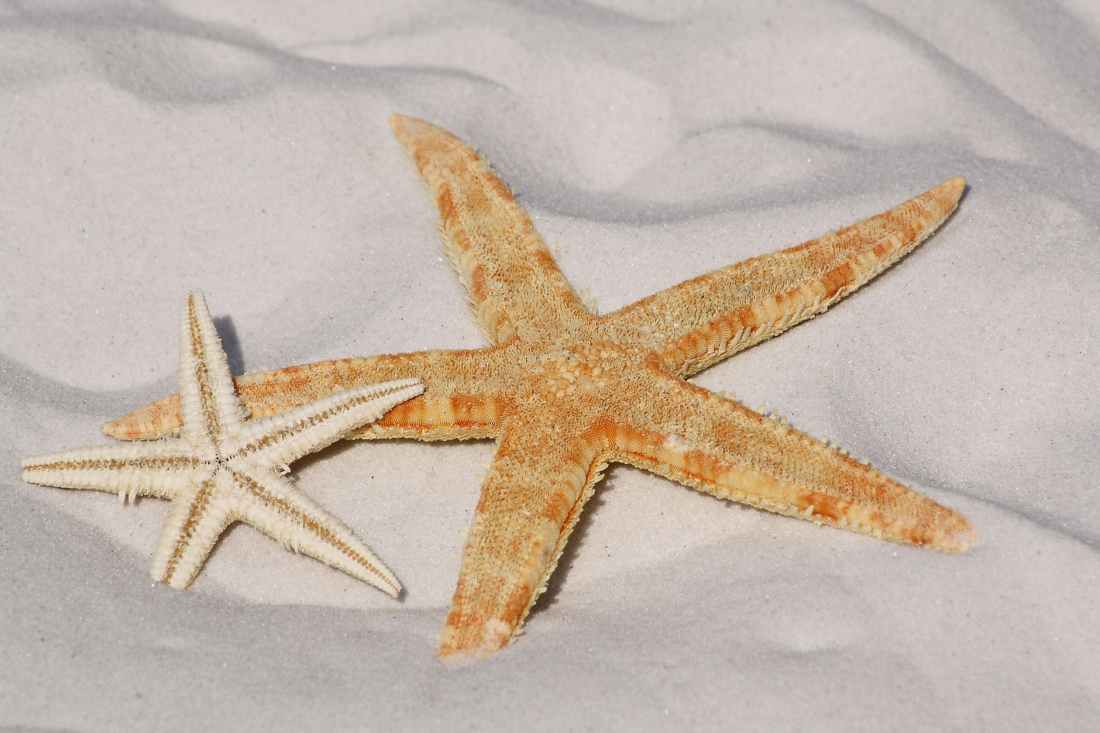
All of the writing, the submitting, the rejections—each act is a lesson in vulnerability, in open heartedness, in loving the work rather than the reward. It would be a lie to say that the rejections don’t break my heart. They do. I imagine myself as a starfish, able to regenerate the necessary body parts to keep functioning. For the starfish, limbs; for me, my heart.

starfish-sand-beach-sea-56610.jpeg

Here I am now, two years post-MFA. I’m working full-time again at the same reference publishing company, squeezing in my writing time in the hours before or after work. In a way, I’m back to where I started. Currently, I have two short stories I’m submitting at various literary journals. They are getting rejected. But many of the rejection letters are detailed, positive notes that praise the work. I feel like I’m close, that soon maybe I’ll find the right person at the right time at the right journal. I also have several queries out for what is technically my fourth novel, and I’ve begun work on a new short story.

I wonder every day if the work is good enough, and if I’m trying hard enough. I’ve failed a lot and have seen so few successes. I lose sleep so I can write. I’ll be paying back student loans for the MFA for a long, long time. I have asked myself if it is worth it and all I know is that it doesn’t seem to matter. Converting the experience into tangible value in order to deem it a sound investment is like saying 2 + circle = purple. It doesn’t add up. I seem to be on a road that meanders in no discernable direction, and I’ve paid to be on it. So where do I go from here? Maybe onward is the only answer.

Enjoy the road. Love, Cath