On Wishes and Finding Our Way

By Catherine DiMercurio

We are here again, edging our way toward the end of another year, bracing ourselves for whatever is next and trying to inch forward in our own lives, no matter what’s next.

I’m still in the habit of trying to solve my own future, solve for x, study each element of the equation as if some part of me truly believes there is a right answer to find. I do believe we are very much comprised of the stories we tell ourselves about ourselves. But sometimes experiences knock us around, begin to shape those stories, and we have to spend years trying to unbelieve words that have written themselves onto our hearts.

I tell myself stories about belonging because it often seems that I find myself living in places I don’t feel connected to. In truth though, everything ebbs and flows, and discontent arises when I don’t feel connected to myself, and for me it is also true that this disconnect happens less often and less intensely when I’m in natural spaces—near woods and water. And so I keep trying to connect those dots, find the path to where I am supposed to be.   

Today is the solstice and I have been writing different versions of this essay for weeks. The words have had a tough time finding their way because I have plans in the works that I want to talk about but I also feel it is premature to talk about all that, so I keep writing around it all, even though it impacts no one whether I say this or that. What I want to tell you is that I’m trying to move again but I also don’t want to say it out loud in case something gets in the way and my plans are thwarted. I don’t want to jinx it, but I also want to make it real, call it into being. Saying I’m trying to move near Lake Michigan feels like a bold statement but being vague is confusing, and since this is one of the biggest things tumbling around my head and impacting my life, it is hard to say nothing at all. It is hard to write about anything else. When your heart’s on your sleeve, it’s impossible to play things close to the vest. And it is the solstice which is a magic day and therefore good for wishing.

Because of this trying to move, this deciding, this moving toward a lifelong goal, I am making other decisions, like take a break from pottery, which feels uncomfortable and necessary and like there will be a gap, a big place where something is supposed to be, like when you lose your first molar as a child. How is it gone, and don’t I need that, and how long will it take for something to take its place? My ceramics journey is far from over but there are times when we need to pause. I tell myself it is an artist’s decision, to move toward inspiration and peace and wildness and curiosity, and even though it means saying goodbye to one place, one community, I will find another and art often thrives in such curious and tumultuous circumstances. But I left the studio in tears the night of my last class. I don’t know the last time I was more grateful that I had pushed myself into something new, into that first pottery workshop I did with my kiddo.

While the point of pausing pottery is to focus on getting my house ready to sell, the pause might also be a good opportunity to embrace some writing projects that have stalled a little. But it is also a good time to remember that we can only do so much. We can’t underestimate the toll of the full-time job, especially when it asks more of us than ever before. We have to hold so many conflicting notions in our heads at the same time—being grateful for meaningful work and a paycheck but also feeling that work often leaves us little time or energy to enjoy the rest of our lives, to pursue our other dreams. Sometimes I start out by focusing on gratitude but then find myself down a rabbit hole where gratitude is muddied by things that ought not to be the way they are, where corporate greed impacts so much of our lives, and so on. I am working on finally building a meditation practice that will hopefully keep me away from rabbit holes for a few minutes every morning. Which is not to say that there are issues in this world that we should look away from. Gratitude for what we have should not blind us to what we need to bear witness to.

Still, it is a beautiful, cold morning here and I am lucky and grateful for it. Zero and I spent some time outside at sunrise, while the gibbous moon still shone above us. I feel as though I have more questions than answers at this point in my life and I am always looking for signs and guidance, am always wanting to know if I’m on the path I should be on. While standing out there in the cold at dawn, I stomped my slippered feet lightly on the worn pavers to stay warm, and Zero snuffled around in the frozen grass, and I lit a little candle and did my wishing. It reminded me of the kind of early morning where you might find a lamppost shining in the woods, as if we could be so lucky to find any kind of sign that was so obvious. It was a silly thing to want, yes, but it didn’t stop me from wanting it. If someone else said any of this to me, I would reassure them that the path they are on is the right one by virtue of them being on it. We will get to where we need to go, one way or another, and learn what we need to even if we veer in a direction that later seems “wrong.”

Photo by Boys in Bristol Photography on Pexels.com

Maybe one day I will accept my own answer, that it is okay to make wrong decisions, and it is more important that I am approaching life with curiosity and openness and love than it is to worry about doing something that might hurt me or cost me in some way later on, so much so that I stay frozen. This approach treats inaction as if it is some kind of protection. “Bad” choices and situations are going to happen, even when we’re trying to do everything right, because there is way too much we can’t control. I think once you go through a few such things and feel tired of the consequences, the hurt, you get to a place where you just don’t want to choose anything. It’s okay to move slowly, choose our next step with care but it is an illusion to think staying still makes us invisible to the world and to the challenges it wants to throw our way. Still, we are allowed to rest, and take our time.

Maybe too we can be lanterns for one another, glowing lampposts in the winter woods, helping if not to guide one another, at least to show each other that we’re not alone in our wandering.

Wishing you peace,

Cath
On Stress, Right Answers, and Noticing

By Catherine DiMercurio

I cherish calm, routine days. I think I’ve always been that way, but at this point in my life, I am more thankful than ever for peaceful stretches of time where I’m able write, exercise, work, hang out with my dog, and spend time with people I care about, without anything disrupting that flow. I had the thought recently that I need to figure out how to hang on to that sense of peace when I’m stressed. But a new thought dovetailed into that one. Once I’m stressed, that feeling of peace or well-being or calm is lost or distorted. What I actually need to do is to keep that stress outside of me.

Can we deal with stressful situations without becoming stressed? Is it possible not to internalize it? I have started to wonder not only if it is possible, but if it is the way many people already know how to handle it. Can I simply decide to not let it in? Sometimes I think of stress as a cold shadow, and though I try and stay warm and in the sunlight, I get cold and dark anyway.

Maybe it has less to do with what we let in and what we don’t. Like many people, I use the terms “emotions” and “feelings” rather interchangeably, but there’s a lot of information emphasizing that they are two different things. A Psychology Today article I read provides an example of the emotion of discomfort one might experience at a party. Your stomach might constrict and your breathing becomes shallow and rapid. Maybe you start to perspire. One person might interpret these physical cues as feeling anxious our awkward. Another person might experience the same physical cues and describe feeling excited. I certainly have tried to tell myself at times that the physical experiences that I associate with anxiety, often about a social situation, are actually excitement, hoping that if I labeled it differently it would calm me. It usually doesn’t.

Whether stress in particular is a feeling or an emotion seems a little blurrier. It certainly involves physical changes in the body that we label as “feeling stressed” but it is bigger than that. The Mayo Clinic notes that stress affects our body, thoughts, feelings, and behavior. I feel as though my big “revelation”—the idea that maybe I can choose whether to internalize or externalize it—will not be so simple to enact, given that an external situation that is stressful causes immediate physical reactions in my body; this happens before thought, or regardless of thought.

Is it possible then to experience the physical signs of stress—to be having an internal, bodily response—but still try to externalize the stress? As in: there is a stressful situation happening over there. I can feel my heart beating harder in my chest and my breathing is shallow. And while I recognize that I am experiencing physical discomfort and am feeling fearful, the situation itself is still happening over there. I can choose to react to it differently. I can take deep breaths and stretch and I can trust that I will find a way to handle the details of that situation.

Yet a stressful situation is stressful because some part of us feels threatened. Whether it is related to our own experience or that of someone we care about, we might feel that physical or emotional safety is threatened, or financial stability jeopardized, or there might be some other fear we feel deep down in our bones. It might also be very difficult to see it as something external if it is something related to our own bodies, like an injury or illness.

I suppose some of the best advice is just about noticing. When we’re in a heightened, uncomfortable state, we can notice what we’re experiencing in our bodies and how we’re labeling it. Then we can try to bring our bodies back to a state of calm—by breathing deeply, stretching, jumping, dancing, shaking it out, crying. I wonder if the most important part is avoiding what many of us do: we try to talk ourselves out of feeling what we feel. But what if instead, we attempt to love ourselves through it, and to be curious about why we’re responding the way we are.

Sometimes, the most comforting and grounding way for me to respond when I observe that my body is  tense, and my mind is swirling with worry, and my feelings are overwhelming me, is to say to myself: hey, it is normal for you to be feeling this way in this situation. This is a natural response to stress, especially given the circumstances (whatever those may be). Sometimes it is that permission to respond in the way I am responding that makes the path through it a little clearer. This is a generous, loving response that I had to teach myself slowly and painstakingly over a long period of time, that I am still teaching myself.

What’s key here is that when faced with a stressful situation our bodies often have an immediate intrinsic response. It is incredibly challenging to move ourselves toward a calmer state of being if we tell ourselves we should not feel the way we are feeling. But maybe it is possible to take it in steps. Our bodies and minds are going to have that immediate response to something stressful, and that’s normal and healthy. They want to protect us. But once we manage those physical symptoms, and after we’ve been gentle with ourselves and acknowledged the existence of those normal feelings, can we then try to separate the stress from ourselves, can we other it, externalize it, place it “over there” as a set of problems to be solved or details to be managed? It’s worth a try.

Perhaps there is some danger too, in the idea of externalizing stress. That is, we don’t want all big and uncomfortable feelings to be something we see as separate from ourselves, right? I think when we separate ourselves from our grief or rage for example, we lose an opportunity to work through them in a healthy way. But stress is a special beast and maybe it needs special rules to tame it, and to treat its effects on us. It is a strange thing in many ways to try and extricate ourselves from stress and its effects. What I mean is that the world and its energy is woven throughout us and always has been. We can’t float along through this life untouched by things we’d prefer not to experience. It is hard to be soft, to let ourselves have a permeable barrier that allows us to take in as much love as we can, without taking in pain too. It’s hard to live fully and to also protect ourselves. The act of living and pursuing our dreams invites stress and risk.

Photo by Kevin Malik on Pexels.com

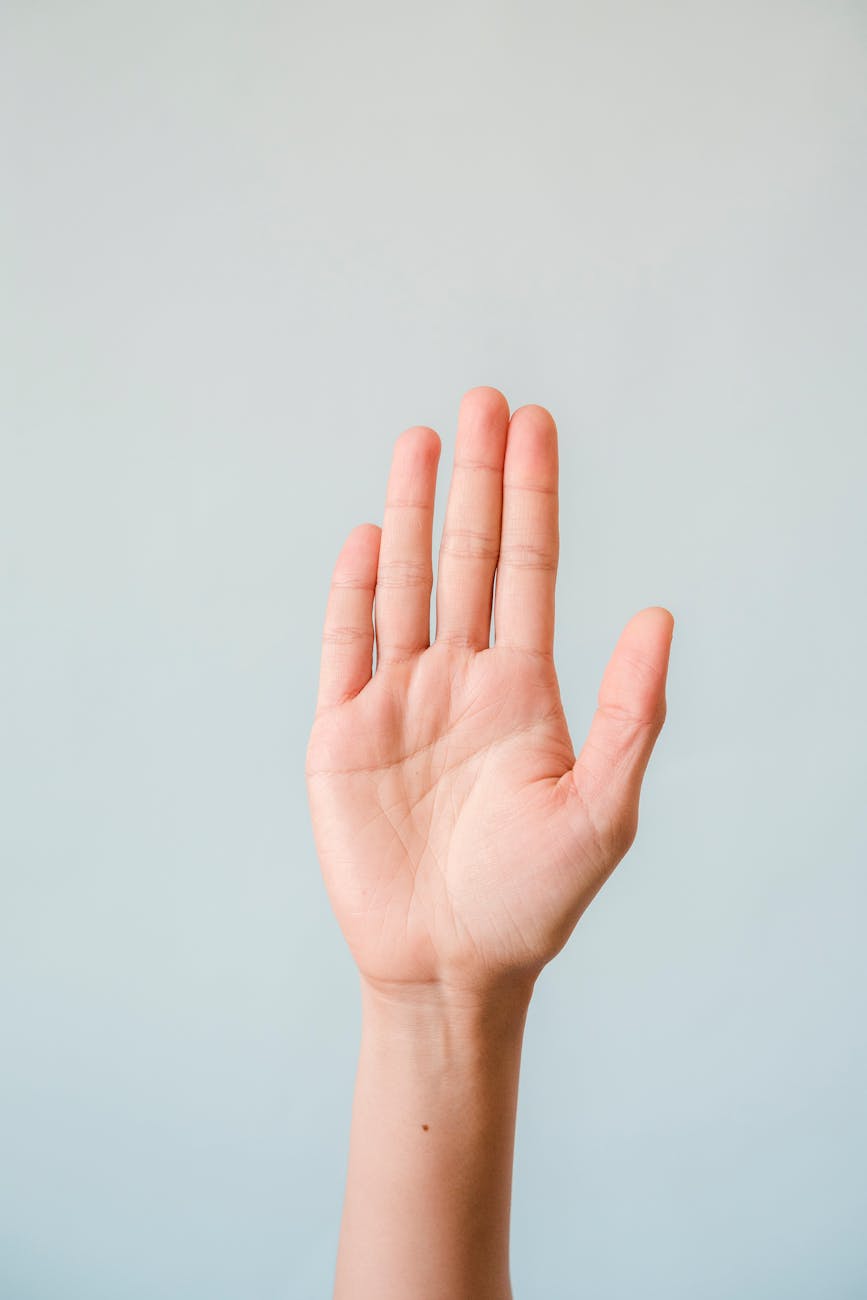
One of the things that always comes back to me—wise words from a long time ago—is that there is no right way to do this. No right way to heal, or grow, or explore new things, to say yes to some things and no to others. There is no standard, no road map. As a kid, I always wanted to have the right answer, and in school, there always is one. I wanted to get the “A” and to be ready in class if I was called on. I think of my hand, shooting up into the air, ready to be the one to get it right. Throughout my adult years, I have searched out the “right” answer. The right way for me to live, to love, to be, to be me. It’s been hard to trust that I have ways of doing things that are the right way for me, especially since I look at the way my path has been different from that of a lot of people I know. My way doesn’t have to be someone else’s.

Sometimes when I’m not sure about what to do, I feel as though if I listen hard enough and in a particular way, I will be able to figure out what I truly want. I have worried that I’m on the wrong path because I’m not listening well enough.

What I forget is that there is a chance that the part of me I turn to for the “right” answers for myself might not know yet. It’s one thing to trust your gut, but sometimes your gut is still working on things. It’s hard to be patient, to trust in the timing as well as the answer, to trust that I’ll know what I need to know when I need to know it. I wonder, what if I miss it? What if the answer is too subtle, or I’ve been waiting so long I’ve forgotten to listen?

Perhaps, this is when it all comes back to noticing. We must be ready to notice what our instincts, our gut, is trying to tell us, in its own time. Maybe we must strive to dwell in a state of awareness. Perhaps this is part of what I had in mind, without fully knowing it, when I started this blog. Being an open-hearted person means being open to what is happening around us and inside us; it is about cultivating a rich, fulsome awareness. I think of that same hand shooting up in the air, not to proclaim the right answer, but simply to feel the air, simply to notice.

Love, Cath