On Adjustments, Distractions, and Tools

By Catherine DiMercurio

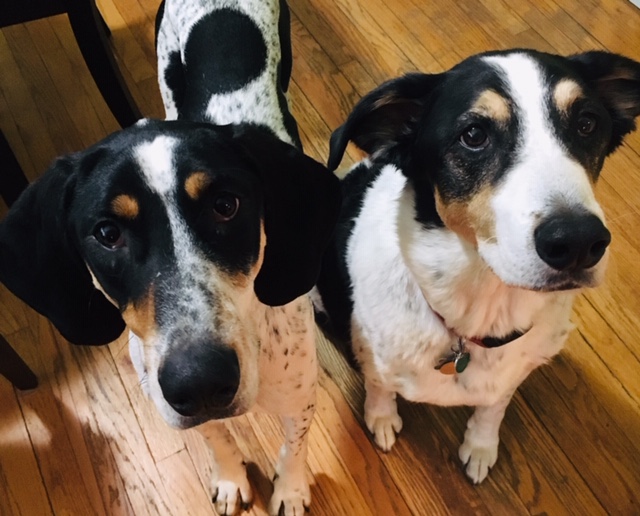
On a mid-May morning, mid-week, I take my dog out to the backyard. It’s just after 6 a.m. We won’t go for a walk today because it’s garbage day, and though he is fine with walking past the loud trucks and even the workers, he struggles with the people dragging cans to the curb, sometimes with an unleashed dog tagging along. A month after a loose dog attacked us, I try to minimize the risk of another such encounter. So instead, I train in the yard, running Zero through commands that he does without fail in the house. This is a training step I skipped over when he was smaller, working through familiar things but with added distractions. I was eager and impatient to add walks into our routine and pushed him through a lot of things too quickly. So now I’m taking a step back, trying some things again, but still endeavoring to keep several walks a week incorporated into our schedule. We walk early these days, armed now with an airhorn and pepper spray. Walking just after the sun begins to rise, we see mostly rabbits, and deer. We know the schedules of the folks who have to leave their house before 6:30.

As I try to extend the duration of a “stay” command in the yard, with Zero battling the distractions of birds, squirrels, scents of all kinds, I myself get distracted by the sweet and slightly herbal scent of iris blossoms, newly bloomed. It is hard for both of us to stay focused sometimes.

Mid-May also marks the one-year anniversary of the death of my older dog. It took Zero and I at least half a year at least to stop expecting to see Phin in his favorite napping spots. With every walk I take with Zero, avoiding his triggers, I think of walking Phin, and his joy at being out, trotting along in front of me, excited but also in his own peaceful, exuberant state of mind. He was friendly with everyone, afraid only of loud noises or being left alone. Without Phin, Zero and I have made adjustments, to our schedule, to the way we interact with one another, to the way we interact with our space, a home without Phin in it.

And just before that sad anniversary, we celebrated my son’s graduation from college. I’m now the parent of two college graduates, two people who are healthy and strong and surrounded by people who care about them. I make adjustments in this area of my life, too. I have to, to the way I think of my children and how our relationships have evolved, and will evolve now that this milestone has been achieved. It’s been a while since either of them has lived at home. They’re self-sufficient, and I’ve marveled at how readily they’ve taken on various forms of independence in the years since they’ve been at home. I wonder and worry about how our relationships will change, even though we’re close. We talk and text often; we visit as frequently as makes sense for everyone’s schedules. They have full and wonderful lives of their own and whenever we see one another it strikes me how honored I am to be a part of their current worlds.

In my relationship with my boyfriend too, we are often making adjustments. We navigate, communicate, gain deeper insights about the other as things come up. I’m learning that there is and there isn’t a trick to all this. There isn’t some magic that eliminates the need to do any work. There’s nothing that makes everything easy all the time. But there are ways to make communication more effective. There’s a way to listen with an open heart and a way to speak without defensiveness, and when both people are willing and capable of those things, tough conversations unfold differently than they used to for me. They don’t leave me feeling confused or attacked, but rather, heard and respected.

Life is constantly throwing things at us. I’ve spent long portions of my life believing that you could wait things out, that there would be periods where nothing was being thrown at you and in those times, happiness awaited. But then you learn that not only can you not predict when those “down times” will be, you can’t expect them to last, and when you’re in them, you’re not always aware of it. And even if you are, you might be recovering from the stuff you’ve just dealt with, or feeling anxious about what’s coming next. I get that this is why we get so many messages about “living in the moment” but that can be incredibly difficult to do. For me, this is another adjustment I’m constantly making. I often need to tweak my perspective, and not beat myself up for not having everything figured out. If I was adroit at planning several steps ahead, maybe that would lessen anxiety a bit, or maybe that would simply extend future-worry even farther ahead in the timeline.

So how do we manage anxiety about the future, or concern over how we’ve handled things in the past? How do we cope with the ways things are changing, constantly in a state of flux? How do we accomplish not just making the most of the times in between turbulent parts of our lives, but find some sense of calm even during the storms?

For me, there is a lot of reframing, a lot of conversations with myself where I try to put various things into perspective. Sometimes we have to remind ourselves: I’m safe or I’m strong or I’ve got this or I’m loved. When I’m worried about whether this scenario or that will come to pass, and I’m doing all the what-iffing worriers do, I have to remind myself of things I have handled, have gotten through.

When I was spending time with my son recently, I was marveling at the way, throughout college, both he and his sibling handled their housing situations. After the first stint in the dorm, they each found living situations that they could afford based on the jobs they’d secured for themselves; they found housemates, they signed leases. They handled things. No one was calling me to ask for advice on how one does this, or what does that mean in the lease, or how to handle a roommate or landlord situation. Of course, I would have tried to help if they’d needed it or asked, but they both figured out so much. I was telling my son how impressed I was that both of them did this and my son replied that they’d learned it from me, from the way I figured things out after the divorce: how to be a single parent, how to find and adapt to a full-time job after years of freelancing, how to refinance the house, how to sell a house, buy a house, and how to navigate relationships and grad school in the midst of all this. My son reminded me of how much I hadn’t known how to do or hadn’t been prepared for, and how I just kept figuring things out. He said that’s how he had approached things he wasn’t sure of.

What a gift, to have this conversation, and for him to be able to share that with me. And it was such a timely reminder for me, that even through all the recent changes in my life, I can keep figuring things out, that I do know how to do that.

There are so many things in my life that I thought I’d get to keep. Various loves, imagined futures. I also thought that once I’d achieved a belief in myself, it would simply thrive inside me without needing attention. I’m learning that it needs to be nurtured like anything else. You don’t get to keep anything without taking care of it. Nothing is free, nothing a given. We know this is true for all the relationships in our lives, but I sometimes forget that it is also true for the relationship we have with ourselves. I don’t only need quiet time to myself, and good sleep and exercise, and time to write and do pottery, I need to continually cultivate a healthy mental state, be a supportive friend to myself.

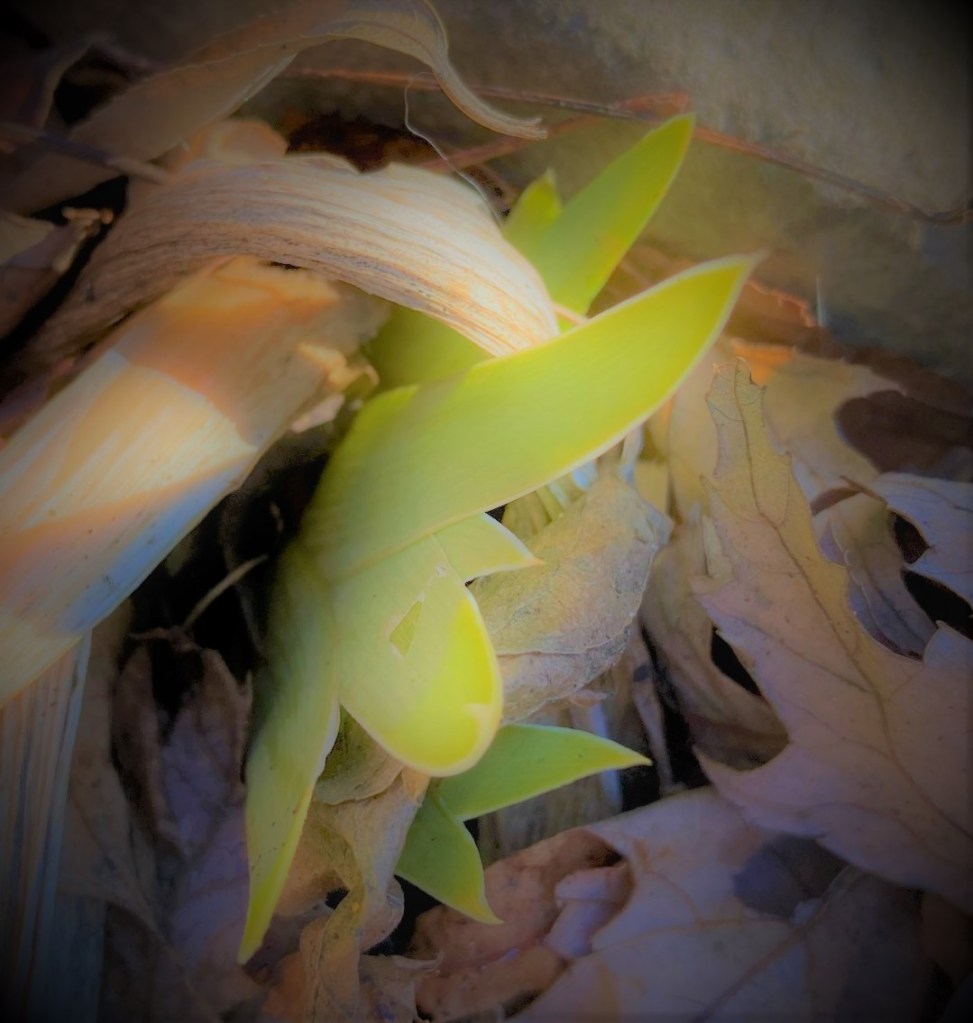
Sometimes this surprises me, that something in me calls for my own attention in that way, but I’m also pleased to observe that other things that I’ve tended without apparent payoff have come to fruition in their own time. A couple of years ago, I divided the irises I’d inherited in this yard and moved some to other locations in the yard. Last year the transplants were still alive, but hadn’t bloomed. This year, the plants are filled with snowy white blossoms, and deep purple ones too, which are about to open. I worked hard and then I waited and things came together on their own timeline. The thing about the waiting is, I didn’t know I was waiting. I had not given up, but I also was not actively hoping. I thought, who knows if these will ever bloom?  It makes me wonder what else is preparing to bloom in people’s lives, things we’ve put work into, things we’re not consciously waiting for, things we keep nurturing anyway, because it feels like the right thing to do, it feels like we’re compelled to. It’s the same reason I write, going long stretches without anything getting published. Why I keep signing up for the next semester of pottery. It’s why we try.

There is so little sense to be made out of life. But it is also sort of ridiculous to think it is supposed to make sense. This is another way I try and reframe things. It doesn’t make sense to want it to make sense. All we can do is make our own order here and there, make the adjustments and do the work that allows things bloom in our lives, try to do good and be good. I feel like we do get guidance here and there, about where to direct our energy. Trying to lean into the things that make us feel connected or safe or exuberant or peaceful or joyful—this makes sense. But the world is going to knock us around anyway, and we’re always going to have to make adjustments to the way we respond to all that happens in our lives. I think it is such a delicate endeavor, recalibrating our responses and perspectives as life unfolds, and change is inevitable. We need a variety of tools and skills to keep being able to make the necessary adjustments, and maybe the most important one is patience, with ourselves, as we learn to keep adapting and blooming.

Love, Cath

On Growth and Stillness and Glow

By Catherine DiMercurio

When I was at the pottery studio recently, we were waiting for the raku kiln to reach its final temperature of 1850 degrees Fahrenheit. We worked while we waited. I attached handles to mugs I’d thrown the previous day. I will mention here the details that occur to me as mattering. I worked with reclaimed clay. Scraps once discarded and brought back to new life with water and time and reshaping. I practiced different techniques for crafting the handles, all of which I find difficult, none of which resulted in the graceful form that I’d hoped for, all of which will be fired and glazed and useful and beautiful anyway.

The woman sitting at the table behind me was talking about how she did not like how the nights were getting cooler and that she could hear crickets now. As soon as you hear the crickets, she said, you know summer is coming to an end.

Had I been facing her or had I known her better, I might have started a cricket discussion with her. Is this true? I might have asked. I have cherished cricket song for as long as I can remember, and often lament the summers when it seems to start so late. I had just been thinking earlier that week of how nice it was to finally hear crickets at night. In my memory, crickets are associated with summer, all of it, not the end of it, but mind and memory tends to blur time and boundaries. Cricket song will always be one of my favorite sounds regardless of when in the summer it begins. But I’ve been thinking about what she said.

I thought about how, if this is true, about crickets being a harbinger of the end of summer, then in a way, they are like my favorite moon phase, the waning gibbous, which I’ve written about here before. It is something that to me symbolizes a period of calm in the aftermath of the large, chaotic wildness of the full moon. It also reminds me of the lines from one of my favorite poems, Wallace Stevens’s “Thirteen Ways of Looking at a Blackbird”:

I do not know which to prefer,   

The beauty of inflections   

Or the beauty of innuendoes,   

The blackbird whistling   

Or just after.  


There is so much I love about “just after” moments. Maybe for me, it is a way to prolong a moment, because in the moments after, if you are of a mind (and a heart) that is able to fully savor, it’s almost as though you are still living the actual moment.

Sometimes I wonder, though, if I have difficulty in fully living in the moment. Is the pleasure I take in the “just after” moments merely the counterpoint to the anxiety or anticipation that I often experience before the moment? And do both overshadow my experience within the moment itself? Maybe sometimes. Not always.

Take the raku firing for example. It was explained to all us students the timeliness of what would happen the instant the kiln was opened, how we must briskly but safely retrieve our pieces. Sometimes, based on the choreography of the kiln, we’d need to wait a moment until someone else removes their piece before we can safely access our own. Such was the case with my piece. And in that moment of waiting, I stared at the vase glowing in front of me. At that temperature, all the ceramics glowed like bright stars. My piece had some carving in it, vines and leaves. And because in those places the clay is thinner, they shone even brighter. And it felt like the image was burning itself into my memory. I wished I had been able to take a picture, but there is no time for such things. You have to move quickly and get your piece into a metal bucket filled with newspaper. The paper catches on fire. After it burns for several seconds, you put the lid on it. This is a reduction environment, with a limited amount of oxygen, and it is where the magic happens. The oxygen is consumed by the burning of the combustibles. This creates beautiful effects in the glaze.

Still, regardless of how much you make of a moment, or just after, or just before, they are all only moments. We might be able focus our consciousness during them to experience them more fully, but they last as long as they last.

When I think about how I want to live, I think about moments a lot, and how to make the most of them, whether they are blazingly beautiful and exhilarating or whether they are strikingly ordinary. I think too, of the moments we’d like to forget. Certainly there is a lot of talk about learning from difficult things, and how this is the method to discover value in mistakes and tragedy. Too often, too many of us get stuck there, in this search for meaning. I get overwhelmed by the need to understand the whys and hows of bad things. I replay them in my head from all the angles and look at what could have been done differently. And I do that because the world has suggested that this is a way of making them “okay” somehow, if I at least learned from them. But, what if I didn’t learn the right lessons? What if I didn’t learn enough? We are told we are doomed to repeat past mistakes unless we really and truly learn all the right lessons. But we are also told not to dwell on the past.

Because my brain has formed this habit of overanalyzing past pain, errors, and difficulties, I began to believe that if I failed to learn from the past—enough things, the right things—then I invited nothing but pain and tragedy in the future. But this is a miscomprehension, and one that can leave you frozen. It’s not that the past has nothing to teach us, but it is one class in a full schedule. It’s not the only way, or the only thing, we learn.

Photo by Skyler Ewing on Pexels.com

And one of the things I’ve learned is that it takes focus and endurance to shift our gaze from past lessons and look at other areas of experience. Sometimes we have to keep opening our hearts and looking at the world with a fresh eye. We focus, with all our strength, on the unfurling of fern fronds, and the way lake water baptizes our hearts into their new whole selves, and the way peace stretches roots within our lives when we invite it there every day, and on the star-glow of freshly fired clay. Maybe we must be clear about what we’ve won, not only what has slipped away as loss, and be just as clear-eyed about what we willingly trade every day, as in, I will accept the occasional storm of loneliness so that I can steep myself in calm for as long as I need to, for as long as it shows me how to grow, even though unfurling happens in increments so whisperingly minute it looks like standing still. But it isn’t.

I’d like to say that I find myself at an inflection point: tired of trying to learn everything I am supposed to from the past and ready to refocus my gaze. Yet, I’ve been inflecting. I’ve been at this, refocusing, shifting, turning, for many moments, but because it is so gradual, I sometimes forget that what looks like standing still from the outside can feel like standing still from the inside too. But it’s not. [And also, is there anything wrong with stillness? No.] Physical growth can be demarcated on a wall, a pencil line scratched into poplar molding glossed with white latex paint. I remember the smell of my children’s hair as I marked their height, the earthy sweetness of their sweat, the scent of the summer air clinging to each beautiful strand on their scalp. But how do we mark out our own growth as adults, out of the lattice work of our own pasts and into who we are now? There is no pencil for this, no wall, we simply keep going and wondering. We are unfurling, whether or not anyone can see it. When we think but I am trying so hard we must believe in the efforts we are making, whether or not our growth can be demarcated with pencils or moments or star-glow or nothing at all.

Love, Cath

On Throat-Clearing, Self, and Voice

By Catherine DiMercurio

Sometimes we can almost find the melody.

I put a lot of effort into trying to make sense of things that don’t. In my writing, it feels like the practice of untangling knots that can’t be untied, though each story takes a fresh try at undoing. My brain attacks most present worries in the same way.

When I sit still, I sometimes feel both restless and exhausted. This state is a product of many things – pandemic year, new and old anxieties, writing frustrations, aging realities, leaving and moving and settling in.

In my writing, I begin to wonder about voice – what manner of expressing myself is unique to me, my fingerprint of creative expression. And voice, as in, mine, in this world. Lately I have revisited half-begun stories and can’t take them anywhere. I think of a top spinning at the end of its movement, the wobbly tilt and hobble where I find my creative practice these days. Tops get spun again; I don’t worry that I’m done, but wonder where to go from here, and how.

In a way, it feels as though this year of largely staying in place has been one of incubation. During this time, I focused on trying to make my new house feel like mine. I thought a lot about home. I also began to reckon more consciously and deliberately with the notion of aging. I periodically take photos of myself that I show to no one to document the progress of the incoming greys, and to acclimatize myself to the changing terrain of my face.  We have kept ourselves as hidden as possible from the hidden virus, and I have grown tired of hiding myself from myself. But I often don’t recognize me.

I heard somewhere recently that resilience is never losing your enthusiasm in the face of failure. This made me feel angry and a bit deflated, because I want to think of myself as resilient, but I always feel enthusiasm flag when faced with failure. I would counter that resiliency is never losing hope in the face of failure. You can feel defeated, but at the same time you keep fighting for what’s important to you. Enthusiasm feels like a bit too much pressure sometimes. Then again, it is possible that I am not actually resilient. But I am good at hope.

As I’ve noted before in this space, Clarice Lipsector wrote “It is also possible that even then the theme of my existence was irrational hope.” We all have themes, not only as artists but as humans, patterns we observe in our lives, values we attempt to adhere to, wishes we twirl around our hearts. Maybe none of us could extricate ourselves from the themes of our existence if we tried. Some things are as they are. I will find love stories everywhere. I will write them. I will be hopeful about everything and everyone I love. I wonder if all hope is irrational.

Everything I have ever written has turned into a love story. Love, loss, seeking, finding – these are the structural frameworks of most everything I compose. I wonder sometimes, when I feel defeated, and the rejections land solemnly in my in-box, if all I can build are dollhouses, while better writers are busy building cities, universes. But then I think that maybe the world needs dollhouses too. We all need different entry points into the art we interact with. Maybe someone is just waiting for the right-sized door. Maybe it’s all that Alice in Wonderland game of feeling too big or too small to get to where we want to go. But eventually, we find a way to connect.

Photo by Pixabay on Pexels.com

The themes we don’t stray from are, in a way, one path toward maintaining our connection with ourselves. I have a novel manuscript that has undergone more permutations than I care to number. I have left it unsubmitted for a long time and had nearly decided to abandon all hope (and enthusiasm).  But, I have dedicated myself to one more overhaul, and I’m now working with a trusted writer who is helping me take a fresh look at it. I feel hopeful once again, but daunted. Possibly I am not now, nor ever was, up to the task of doing what so many novelists do so well, which is, to do everything well – plot, character, pace, language, theme, subtext, and so on. Everything must be precisely fine-tuned for the work to sing. Currently there is a lack of harmony, there is a lot of out-of-tune warbling, and a fair amount of throat clearing. Sometimes I think the melody’s there though.

I listen for melody too in the world outside my door, but I’m finding it clunky to emerge from this pandemic isolation, as we receive our vaccinations and make plans once again. I see other vaccinated folk pursuing “normalcy” as if they hear a tune and feel compelled to follow it. I can almost hear it. And there are people I’m so looking forward to spending non-masked time with. I can’t wait to spend more than a few odd hours with my daughter, and to see her whole wonderful face the whole time. Yet, in general, I feel both excited and enormously anxious about jumping back into the world at large. Maybe I’m feeling as though I’m still incubating. As with many things, we grow when we learn to be empathetic with regard to the timetables of the people around us.  

When I think of empathy and growth, I think of the way growth often doesn’t always look like growth – it looks like incubation, it looks like cocooned pupae. And when I think of empathy, I remember that I often forget to have it for myself.

This weekend I did a little hiking. It felt good to be in the woods. My son took a picture of me at my request and I’ve looked at it many times since, trying to see what I wanted to see there. A recognizable person. She seemed familiar, me and not-me at the same time, but the setting seemed right and that helped. I don’t know why it feels so difficult so often to know and be at peace with myself. Maybe this year too much happened and too much didn’t happen, and it changed me more than I am consciously aware. Maybe the image in the photo is a reflection of reality and it is my ability to see it truly that has been altered by time and experience. Perhaps how we see changes more than what we see, and how we hear melodies differently from one another explains so many things. This is all the more reason for us to cultivate empathy toward one another and to build our reserves of resiliency and irrational hope, as we attempt to both listen and sing in this world.

Love, Cath

On Sleeplessness, Starlings, and Sparrow Eggs

By Catherine DiMercurio

This morning began too early, as mornings sometimes do, when I wake at 4 to let the puppy out, and I cannot fall back to sleep. Maybe today it was actually 3, with all the springing forward. It is usually the second hour of trying to get back to sleep when the turn occurs. When I know I’m running out of time. When the day will begin whether I’ve slept enough or not.

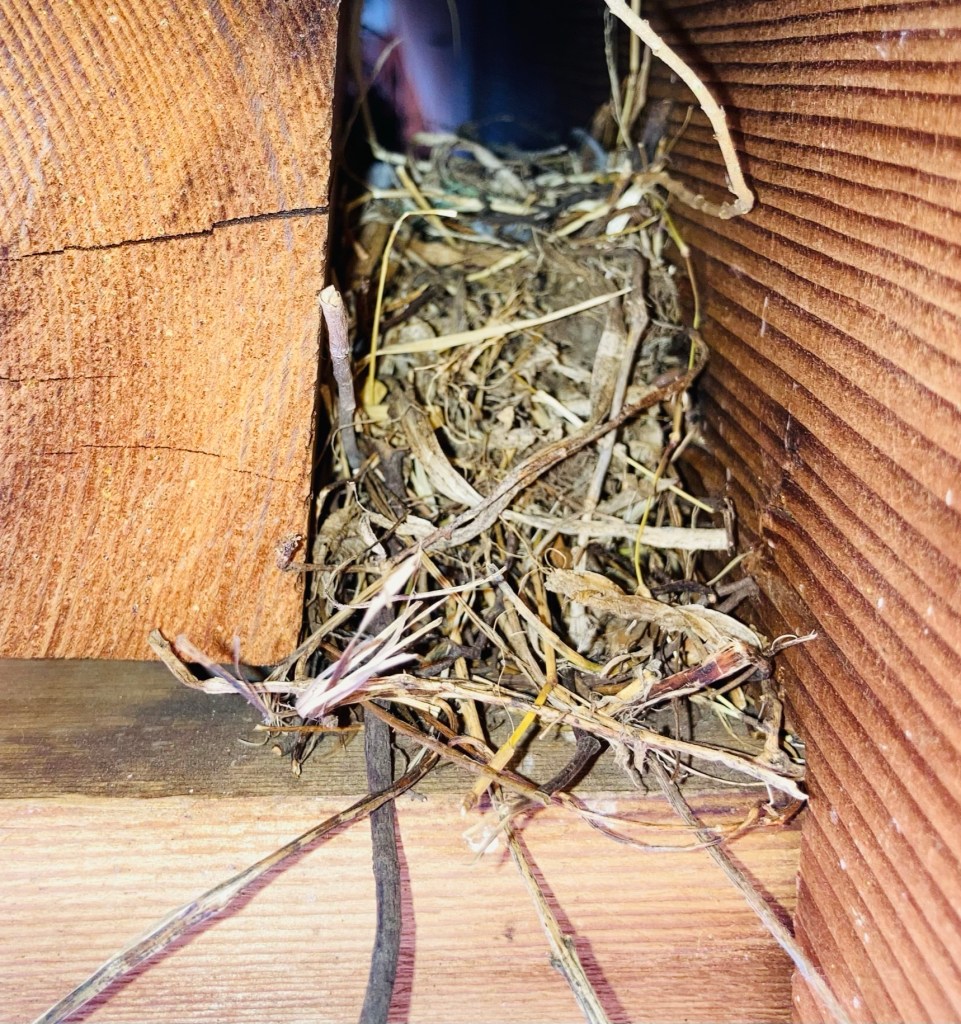
I took the dogs for a long walk just after the sun came up. Afterwards, we played in the yard. I filled the bird feeder. My son rose a while after I did, and we watched the birds together for a bit. A starling tried to attack a sparrow nest as the pair guarded their eggs. The sparrows built their nest under the roof of all that remains of my sunporch, the walls of which we demolished due to a carpenter ant invasion. I am currently planning on having the sunroom rebuilt. Hopefully the baby sparrows will have hatched by the time construction begins, if it does. Plans sometimes elude us.

We all feel under attack sometimes; the world is full of starling-shaped threats. We all have to rebuild; our worlds are perpetually damaged in big ways and small by tiny things that eat away at our foundations.

This year has left many of us simultaneously grateful for our shelter and exhausted by sheltering in place and overwhelmed, as if we are drowning in place. We look around at all that is to be done, still. When I am unable to sleep, these feelings are heightened. The dogs fall back to sleep. The sparrows have chased off the starling. I have no such luck.

This past year, the day-to-day lives within our homes have been relentlessly predictable, but at the same time, we crave the familiar and the predictable within the larger world, within the larger time. We want to know what is next, what comes after this part, even while we know what tomorrow and the next day and the next look like.

Last night, as I considered all the worries roiling in my unsleepable brain, I told myself that some things are not for solving; they simply unfold. I employed the little mindfulness technique I’d just read about to calm anxiety. Things got blurry sometimes, the line between wakefulness and sleeping, like the way a wispy cloud fades into the blue sky. I imagined myself strolling down a little country road in England, where I’ve always wanted to go, a yellow stone cottage on my left, a creek tripping along on my right. I’m sure I slept lightly, a little, but whenever I felt myself falling backward into the pool of deep sleep something shoved me forward, as if I was meant to skip through time, to morning, spring forward, spring forward. Normally I’m impatient for what is next, but sometimes I wish I could remain longer in a dozy half-made world.

In a way, this whole year has been a bit blurry. Having to move in the first few months of the pandemic, and getting settled in a new and unfamiliar place, has left me a bit muddled. As I walk through the neighborhood with the dogs, some faces are becoming newly familiar. At first it was refreshing to shake off all my old history. And I still do feel refreshed, sometimes, but it is also very strange to be waking into this spring, my first here, and finding myself perpetually in a place where I am largely unrecognizable to the people I see, and they, to me. I don’t have any regrets about the move, but I don’t know how to do this yet, and the pandemic has made it difficult to keep in touch in a meaningful way with those I left behind. My story is not unique; we have all dealt with different levels of isolation over the course of this year. And I have been so incredibly fortunate in so many ways.

I am simply . . . recalibrating.

Recalibration is the easiest way I can think of to describe a daily reflection on perspective, a frequent readjusting of the way I look at this circumstance, or that one, whether it is the worry that keeps me up at night or the obstacle that trips me up during the day. I think of the sparrows fending off the starling and realize this: nothing that picks away at the peace I try to carefully construct is a matter of life or death. I am not guarding nest and egg. Though in a way, I am, we all are. I am striving toward many things – wellness of heart and mind, those constructs that house my me-ness, as well toward ensuring the vitality of my own hopes and dreams – those eggs I’m perpetually incubating.

Sometimes I’m unsure about what it is okay to want. What is greedy, what is unrealistic, what will hurt too much to not have. But when I think that way, it feels as if I’m being both the starling and the sparrow egg.

I don’t have anything against starlings, though many loathe them. They are doing what instinct tells them, even if, from the outside, it hurts to watch them ruin little sparrow lives, and we will chase them off if given the chance. We owe it to ourselves to do the same for ourselves.

Love, Cath

On Fallowness and Mud

By Catherine DiMercurio

Sometimes a word grabs me and won’t let go. Yesterday morning, walking the dogs in the strange warmth of February sun, it was “fallow.” Fallow as in, plowed and unsown earth; as in, quietly replenishing after having been depleted.

The recent warmish weather and the thawing of a frozen winter’s worth of snow has got me thinking of what it means to be fallow and waiting. Maybe these thoughts took root at least in part because of the Rilke quote I came across recently: “Have patience with everything that remains unsolved in your heart. Try to love the questions themselves, like locked rooms and like books written in a foreign language. Do not now look for the answers. They cannot now be given to you because you could not live them. It is a question of experiencing everything. At present you need to live the question. Perhaps you will gradually, without even noticing it, find yourself experiencing the answer, some distant day.” (Ranier Maria Rilke, from “Letters to a Young Poet.”)

Like anything that I consider to be a strength, patience, that deep cosmic kind I think Rilke is talking about, plays hide and seek with me. I must peek in corners to catch a glimpse of it, or chase it down, often unsuccessfully, when I need it. I think I do possess it, somewhere, but it is elusive. And there is plenty about myself that feels unsolved, plenty that resists my current capacity to understand. How like fallowness it is, this kind of patience, and how hopeful to imagine there is a latent richness that will produce a surprising yield at some unknown time.

This way of thinking stands in sharp contrast to the restlessness I often feel, to my urgency to know what is going to happen next, in the coming weeks, and years. Often, this anxiety about the future is rooted in past experiences; for me this is true. Many, maybe most, people endure events at some point in their lives that change every version of the future they had envisioned for themselves, and have an awareness as it is happening that this is what is occurring, this loss playing out in full vibrant color all around you. You see the future erasing before your eyes, you see yourself vanishing too, in a way, in all the ways. New things, good things, begin to coalesce and emerge, though. They begin to form themselves into solid figures here and now, and you start to feel healthy and strong in ways you didn’t imagine possible before. Even so, there remains a fog up ahead in which you fear you will lose your footing, or everything.

I would like to think this long, cold, pandemic winter, this period of vigilant caution, of staying put, of worry and fatigue, is all part of a prolonged fallowness, a period of forced patience. Maybe like the soil under a bed of leaves lying beneath melting snow and ice, we are in a process of becoming enriched, we are readying ourselves for understanding what we cannot yet comprehend, truths about selfness and strength. Maybe after the period of fallowness is over, we will understand something we currently do not about the way expectations can vanish, but selves do not.

Still, it is difficult to wait. It is difficult to pursue goals – whether they be artistic, personal, professional, relationship-related – and not see the results we hope for. We wonder, why will this not look the way I thought it would? We wonder if we’re doing it wrong, or if we are simply looking at it from the wrong perspective. Maybe everything is falling into place exactly the way it should, and we have not yet reached the point where we can make sense of it. Maybe it is all still fallow-ing and when we are ready, we will grow – into our selves, and our lives, into our own big hearts and dreams, into the worlds we’ve been constructing for ourselves almost without knowing it. We are tiny lives in iris bulbs building our selves in the rich hidden worlds in the soil all winter long.

So many things do not look the way we thought we wanted them to. I think of my veneration of soil here and wonder how I can be so anxious to get my hands in dirt and plant things, when at the same time, the melted snow and the pounding dog feet have made a mud pit of my little plot of suburban soil. It is all the same substance but when acted upon by external forces, it changes form. We are not so different. Our little selves in iris bulbs transform to stem and leaves with the application of sunlight over a certain number of hours each day. We are all acted upon by time and by the weather of our lives. Even so, we are comprised of the same elements we always were.

Perhaps it is the same with everything we do not yet understand about ourselves. Truths waiting to be seen from another angle. Us, waiting to be acted upon by this force or that until we are ready. But for now, we must be patient, learn to love the mud and the questions, wait for the sun and rich soil, wait for the answers, knowing it is all the same stuff anyway. Maybe in this way we get closer to knowing and loving what we are made of, here, now.

Love, Cath

On Works-in-Progress

By Catherine DiMercurio

For most of my life, home has looked like backyards sutured together with chain link. Neighborhoods comprised of various parts, various wholes, my yard, shared fence, our block. As I was growing up, summertime smelled like charcoal smoldering on grills. We stuck our toes into the gooey tar that mended fissures in the street in front of our house.

gray metal chain link fence close up photo
Photo by Kendall Hoopes on Pexels.com

One of the days I was working at the new house, before I moved, I smelled a neighbor’s charcoal grill and thought of my dad, tending ours when I was little, and I had the sense of returning, as if I’d just peddled home as fast as I could because the street lights were coming on and I heard my father’s distinctive get your asses home now whistle. I’ve chatted with new neighbors across old fencing, and have had thought about how easy it is to feel both at home and out of place amidst the almost familiar.

This morning I arose after waking too early and trying futilely to get back to sleep. There are still boxes to unpack, things I can’t find. At times, when fatigued or overwhelmed, I get unreasonably melancholy. I fret over the fact that I cannot fix things to their proper places here so far. Is this where the coffee cups should go? Why is it so difficult to buy a couch? The kitchen table seems right though, so that’s a beginning.

Sometimes, though I’ve only just begun sleeping here several nights ago, it feels as though I’m only borrowing the place for a little while, though we have put in so many hours and dollars to make it feel new, mine. I hope she likes it when she gets here.

I sort of thought the house would let me know what it wanted somehow. But it’s still making me do all of the work.

This sense of almost being home is perhaps exacerbated by that looming birthday, though I don’t place a lot of stock in fifty as a milestone, despite the countless ways the world says I should. I’m expected to know by now exactly if I’m going to keep coloring my greys or not, and I’m supposed to know why. I’m supposed to not care what people think, and know precisely what I think about this or that or everything. I’m supposed to know more, know me, or, I’m supposed to know how much I don’t know and embrace that.

Perhaps I’m as much almost home as I am almost me.

I do know a few things. I know that possibly I might never stop being at least a little afraid that the good things will slip away if I don’t pay close enough attention. Vigilance and worry aren’t the same as spells of protection, but I whisper incantations nonetheless. Things weren’t always so, and though I can pinpoint the exact moment when this circuit in my brain was tripped, it doesn’t seem to mean that I can access an easy remedy for it. It does mean that there is work to do, and that’s okay. Everyone has their own work to do, and it changes as we go, and as with homes, the work is never quite done, and timelines are a bit unnecessary and perhaps even unhelpful. We must be both patient and diligent, with ourselves and with each other.

I know also how the extent to which love makes so much of this so much easier, possible, fulfilling. Though I sometimes struggle with my shortcomings, though we all do, having those we love supporting us, while we offer the same loving support in return, is what stitches together our little communities of you, me, us. So much of the world around us is mended and bound together and I love the way we mend each other and bind ourselves to one another through kindness and gestures, glances, kisses, effort, words, all of it, all of us.

I don’t always know the best way to tackle the work that needs to be done, and it seems all too easy sometimes to see task after task piling up, to get overwhelmed and undone about it all. I’m trying, in this new almost-home place to give myself the space to figure it out, to get closer to where and how I want to be, to have a little more patience with myself with regard to work in progress. It’s the kindest thing we can do for ourselves, and each other.

Love, Cath

On Thriving and Neglect

By Catherine DiMercurio

Sometimes instead of pulling weeds, you focus on sunshine and water.

Most of us live in a world where resources—our time and our energy—are limited. Sometimes we feel a great sense of urgency to focus on areas of our lives or places in our hearts that have been neglected for too long. Currently there seems to be some huge collective urge to purge and simplify. Sometimes our homes need purging, sometimes our hearts do, sometimes we discover it is time to put away emotions or memories or thoughts we’ve held on to for long enough.

Being Open to Openness

I’m a firm believer in the idea that there is no “too long” with regard to the duration of time we take to work through emotions, ponder old wounds. Things take as long as they take. We react when we are damn good and ready. Sometimes if you have to ask whether or not something brings you joy, it is too soon to be considering the answer. I have learned to be patient with myself, to look for signs that I am ready to put something away, or rid myself of it. I’m learning how to recognize when I am ready to close doors, and to know when I’m truly open to opening them.

What is Thriving?

Sometimes, we have to step back to see what actually is already thriving. We need to recognize when to focus on the doors we’ve opened and those parts of our hearts that are pumping and churning in the background, rather than on the recently healed parts that we watch over protectively, or the wounded, hurting parts trying actively to unbreak. It’s harder to do, in a way, to focus on positivity and vitality. If something is working, even with marginal efficiency, the tendency can often be to let it hum along, doing its thing. Some things cry out for attention – messy rooms, old griefs, painful memories. It is easy to feel as though anxieties and worries have been quietly festering while we’ve been attending to the day-to-day business of life. So, we turn our attention to fixing things, we surge toward repair, toward improvement. This is important work, but it isn’t the only work. And it’s okay to back-burner it.

Knowing What to Neglect, and When

The good thing is that things like anxiety and worry do not thrive on neglect. They require our fevered, obsessed attention, which keeps them well-nourished enough to tangle and choke. Nothing of value thrives on neglect. Not happiness, joy, delight, peace, calm, gratefulness, compassion, empathy, love. They all need our careful, considered attention to flourish. It is easy to get caught up in the need to fix broken things, to clear away items no longer of use to us. But when we nurture healthy states of being, things like pain, trouble, and worry can, and do, get crowded out, like tomato plants in August refusing to give up ground to weeds.

pathway between tomato fruits
Photo by Artem Bali on Pexels.com

Resistance and Happiness and Magic

I think of the way, when threading a needle, the more you try, the more the thread resists, shrugging and fraying. Somehow it takes an odd combination of focus and nonchalance to get it. I have licked the split end to a point, found the good light by the window, but I don’t care if the thread makes it through, I don’t much want this button secured anyway. It’s almost that way when tending to such things as happiness. I see you, you need me. But too much direct, obvious attention makes it somehow pale and ghostly, as if it’s about to evaporate, a wish made at the wrong time and place, without pennies or fountains or the first star at dusk.

There’s a magic to it, but not tricks. There is magic in the sensing and noticing and breathing life into happiness while at the same time not chasing it, not reducing it to formulas, to mathematical if/then equations. Magic doesn’t work that way and neither does happiness. Some things, good things, are arrived at obliquely.

This is all to say, don’t forget on the thriving things too, not just the neglected things. Don’t forget to focus, but focus as in, staring at something with half-closed eyes, blurring the object but heightening the experiential sensation of sight, in that hazy Christmas light manner. This is to say, be patient. Be patient with that thread, the element of chance and change chasing the constant of the needle.

Love, Cath

Lessons for the New Year: On Patience, Love, Effort, and Squirrels

By Catherine DiMercurio

Sometimes we have to follow our hearts the way a hound follows a scent.

As the first hours of 2019 unfold, I’m thinking about patience, and promises. On Christmas Day, we welcomed into our home a new family member, a rescue dog named Dodger. We had already introduced him to our almost-ten-year-old hound mix Phineas at a boarding/training facility. The dogs got along well, so Christmas Day began our “trial period.” Dodger is tall and goofy. He is sweet-natured, but stubborn in the way hounds tend to be. His long ears drape far past his face, and his feet are enormous. We fell in love, the kids and I, with his big heart. When my daughter and I went to the adoption event a week later to officially adopt him, we learned a little more about his past from the woman who fostered him when he was a puppy.

He and his five litter mates, all males, went right into foster care after they were born. The mother was a hound from “the country.” Dodger was adopted when he was four months old, but the owners returned him. At that point, he was boarded at a kennel, which is where he has spent much of the last seven months. He’ll be a year old in mid-January.

IMG_4860

My original thoughts about the family who returned him were angry ones, because, who does that? Provides a home then takes it away. Dodger no longer had an available foster when he was surrendered. I don’t know the reason his owners gave up on him, except that the family had younger children, and perhaps he was too much of a high energy pup for them. They essentially sentenced a four-month-old puppy to growing up without a home, without much, if any, training, love, or daily affection. I can only imagine how an attention-starved, growing-bigger-every-day hound puppy came off to potential adopters. Dodger was not getting any smaller, more well-behaved, or adoptable while living in the kennel. But he was, I can only imagine, getting lonely, desperate, anxious, and stressed both physically and emotionally.

I saw his sweet face on the rescue’s Facebook page and I watched posts about him for a couple of weeks before I finally decided to act. He’s been with us for a week, now. When I begin to feel impatient with his puppy-like behavior—the way he pulls on the leash, or chews things he shouldn’t—I remind myself of his story, try and keep things in perspective. But also, I know my limitations. I’m one of those people that loves just about every dog I meet, but I don’t have that thing that some people have, that inner authoritative calm that dogs respond to. I’m not sure where the line is between being patient as an action and having a calm presence as a state of being. Maybe the former cultivates the latter.

Often, Dodger makes it easy. Despite his past, there is nothing in him that seems wary or slow to trust. He came at our family with a big open heart, ready to love us, which has made it easy to love him back just as enthusiastically. He is playful, and cuddly.

I want to say that the rest will fall into place, the way things do, acted upon both by time and effort. I’ll research different ways to work with dogs on various behaviors. I will try to not take it personally if Dodger once again snatches my reading glasses while I’m warming up my coffee and chews them past the point of rescue. I will be better about not leaving my reading glasses within reach. I remind myself that he is the first dog I adopted as a single person, my post-divorce rescue dog. A commitment.

At the same time, working with a rescue dog, particularly one of this size, is going to be challenging. The rewards are huge, but so is the effort. Dodger has hardly ever been on a leash. We’ve lost the months when Dodger would have been of the manageable size and the impressionable age where better habits are more easily learned. We have a large, full-grown dog who grew up in a kennel. Still. Worth it is an easy concept.

I’m left holding two truths in my heart at the same time, those related to love and to responsibility. I love this dog. And, raising him, working with him, training him—none of that is going to be easy. The loving comes to me as naturally as breathing, as naturally as this hound of mine trees a squirrel. The rising to the occasion and bearing the full weight of the responsibility for caring for him and teaching him can be daunting. I sometimes think, is this more than I can handle? But the heart answers the questions the head can’t help but ask. No, it isn’t too much. Do it. Handle it. Figure it out.

That was a bad walk we had this morning. No squirrel went unhounded, no scent unheeded. Dodger pulled constantly, with his full weight, while I (mostly futilely) tried different tactics to keep him focused on moving forward. Next walk, new tactics, I think, after we return home. In other ways, it was a good walk, too. We expended energy, and I exercised patience, only crying out, “Dodger, no!” in utter despair once or twice. And, I got some ideas. I’ll have a pocket full of treats next time, good ones. We’ll work on shorter, more focused walks. We’ll get the hang of this. Dodger might be a hound, but I’m a DiMercurio. We don’t give up easily either, though we might stomp our feet impatiently from time to time.

I’m not the first to be reminded by an animal I’ve welcomed into my life of a long-standing to-do list that has more to do with my work than his. Cultivate calm. Embrace patience. Understand your history, but don’t let it obstruct your future. These aren’t new lessons but sometimes someone enters your life who reminds you that certain things need attention, again, still.

Looking at Dodger’s face online before I rescued him reminded me of who I want to be, just as this blog does. Someone with a heart like a wide open door, embracing life with open arms. Having him in my home reminds me I’ve always been that person, but like anything worth being, it comes with effort.

I hope you enjoy where the road takes you this new year. Love, Cath