On Mapping, Risk Management, and Clues

By Catherine DiMercurio

Not everyone prioritizes a sense of safety. Some folks are natural risk takers and enjoy adrenaline rushes, and for other people, that rush causes not a pleasurable feeling, but a host of uncomfortable after effects. Everyone is wired differently. Still, most people want to feel emotionally safe and physically safe within their homes and neighborhoods. I suspect that even the natural risk takers prefer to seek out their adventures rather than be surprised by them on a morning walk.

I’m not a natural risk taker, and I’m okay with that. I can be cajoled, either by myself or others, to try new things, because I do value the growth that new experiences invite. But there are certain environments where I think it is reasonable to expect safety, and one of them is when walking one’s dog in one’s neighborhood.

It’s hard, then, to not look at the dog attack my dog and I experienced recently as a violation and a setback, for both my dog and for me. We’re both okay. It could have been worse in so many ways. But the problem with that “it could have been worse” thinking is that while it does invite you to be grateful for all that didn’t happen, it does dismiss what did. And in the frightening moments when something terrifying is happening, you don’t yet know how bad it is or will be. It feels life threatening. Lots of thoughts flash through your head, and in my case, I had no idea, in the midst of the attack, if my dog would escape without serious, or even fatal, injuries. We’d walked past a house I usually avoid. The dogs are tied up, but there’s no fence. You can’t see them at first, because there are always a lot of cars in the driveway blocking the view. We didn’t see the one that must have slipped his collar until he was running across the street, headed right for my dog, ignoring my firm shouts of no, and my stance, squared off in front of my dog, all of which have gotten us out of other situations with loose dogs.

When we finally escaped and returned home, I both panicked and collected myself enough to check my dog over for wounds. I thought of the minutes that we both fought, and how loudly I screamed pointlessly for help that didn’t come. I thought of how long we were followed by the other dog, and how I repeatedly had to shout and stomp him away and keep myself in front of my dog, to avoid a continuation of the attack. I thought about how it felt like my legs were shaking so badly I wasn’t sure how I was going to make it home anyway. I thought of the woman who, a block over from where the attack occurred, came out of her house with a broom to help fend of the dog so my dog and I could make our escape without being followed. It could have been worse. We ended up not needing to go to the vet, though in the days that have followed, I’ve continued to examine my dog, peering through his thick double coat, studying the wound I missed initially. There’s a minor, scabbed-over line? gash? that could have either been from the harness or a tooth or a claw, but it looks to be healing and I haven’t noticed any signs of infection. I never saw any blood on that first day, and yet, it is scabbed, reminding me of the way I’d skin my knee after a fall as a child, and how the abraded skin would sort of bead up but never really bleed, and then a thick scab would form.

I worry I’ve let him down by not finding it sooner. I worry I let him down. I worry.

He continues to be active, playful, and is eating and drinking normally. He was like this almost immediately. For a week, we didn’t go for walks.  We’ve started again, the first time back out being with my boyfriend, which provided us with an added sense of security, in addition to the airhorn I brought along.

Still, I find myself recalling other significant moments in life where my sense of safety has felt similarly erased, as if this event calls up a map, revealing neural shortcuts. I’ve realized in recent days that there are a lot of these shortcuts, and the older you get, the more of them there are. The map is intricate. A song can take us back to a key moment in our past, a smell can, an event can. Every day we have more past than we used to have. Some of the memories we travel back to are beautiful, and some are the worst we’ve experienced. So often, it is the painful memories that surface with ease, seemingly un-dulled by time.
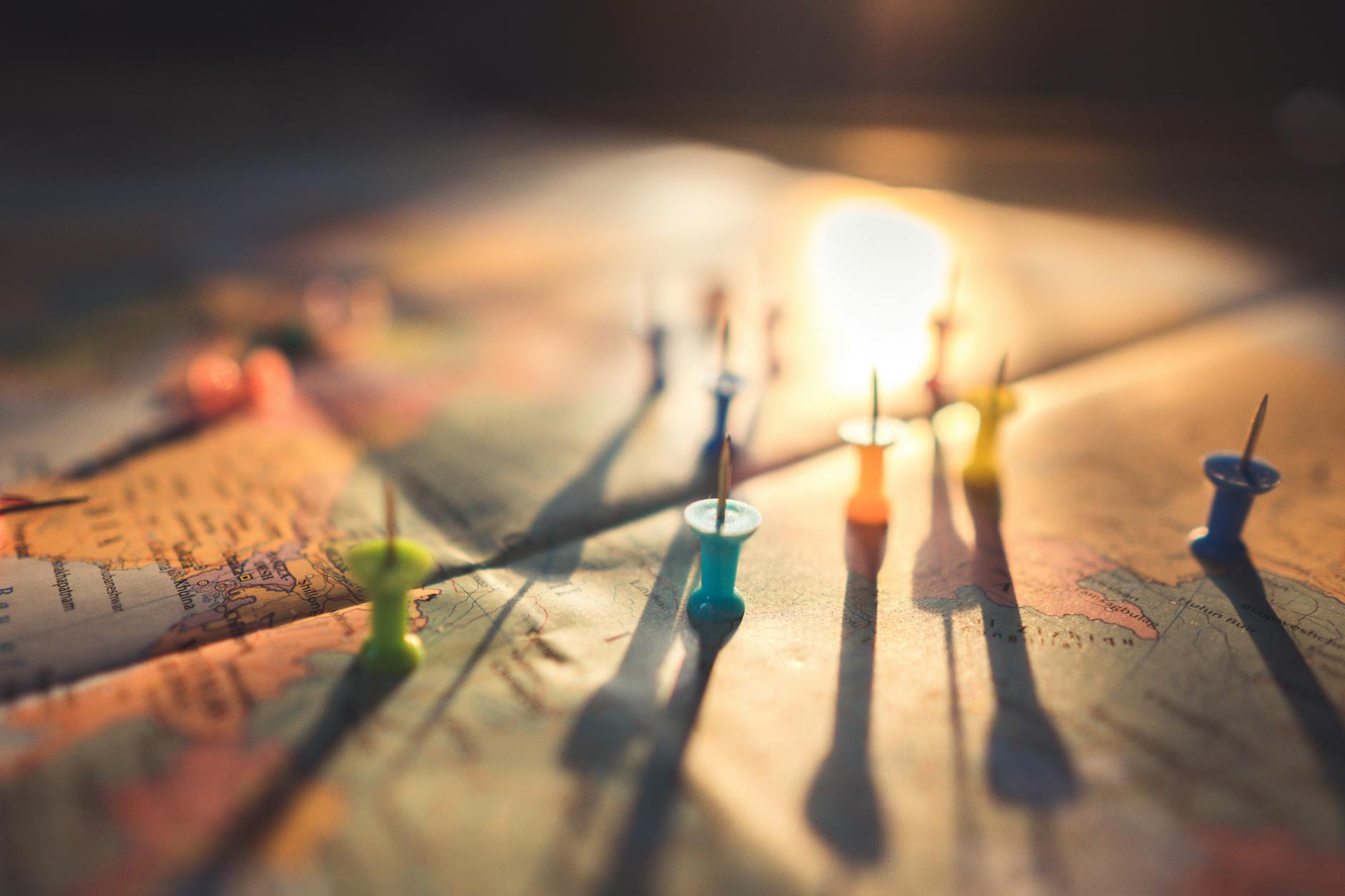
Photo by Aksonsat Uanthoeng on Pexels.com

I remind myself in the aftermath of all this, that it isn’t my job to do everything possible to avoid more pain. It’s to populate that map with so many new, good things that the pathways back to the frightening or wounding memories are crossed over many times with side trails, alternate routes, shortcuts to joyful recollections, to peaceful moments, to delight, to wonder.

Now, though, I’m more fully aware of how wrong a simple dog walk can go. In the past, even though we’ve been approached by loose dogs before, I have felt a false sense of security because the owners have been nearby, or showed up, and things were diffused before they turned ugly. I thought the risk I was managing was more minimal than it is.

At the same time, the usual joy and pleasure of the morning walk is not something I can give up easily. And based on his demeanor the two times we’ve walked since the attack, it isn’t something my dog wants to give up either. We have some work to do. I do think he’s more skittish than usual, and we still need to do things like walk as early as possible so that we can avoid other dog walkers. He was reactive before this, and the attack is definitely not going to help. But, I’m starting a new training plan. I have an air horn. I have pepper spray.

It’s difficult though, to find that sweet spot, where appropriate caution and enjoyment can cohabitate. Where I’m not leaning too hard into risk management, or too hard into peaceful obliviousness. But this is the way with everything. It’s the same in this new relationship I’m in. For the first several months, I felt so self-protective, unwilling to jump all the way into the vulnerability that builds the closeness that I long for. Once you’ve tried to build that over and over with other people and it doesn’t work out, it’s so easy to hesitate, to hold back. Still, things are beginning to change for me, and while I’m not jumping in with wild abandon, I’m wading in, and enjoying the process of slow and deliberate acclimation, and it’s been so wonderful to do that with such a compassionate and loving person by my side. I think he sees my true value because I was finally able to see it (and I see his). All of this encourages the blossoming of trust, which I think of as my body’s and my mind’s own intrinsic from of risk management.

We all have different strategies for getting us through tough times, and sometimes it seems like none of them are particularly effective. I remind myself that the route toward healing is not trying to make myself “feel better.” It’s allowing myself to experience the feelings various events create and trigger. I used to think “working through” things meant thinking my way out of feeling sad or angry or scared. But to a certain extent, I’m starting to understand that being brave enough to not avoid all those heavy feelings is the most direct route toward getting to the other side of them. I often worry that I’m dwelling too much on something, but I believe that sense comes from my habit of trying analyze my feelings instead of simply experiencing them. Maybe it would be better to look at my hyper-focused thought patterns as clues to feelings I need to spend more time with, rather than thoughts that I need to keep rethinking.

I don’t want to feel like I’m prioritizing safety so much so that I’m missing opportunities to experience fun, joy, delight. I want to give my dog a good life, and I want that for myself. As with most things in life, the balance here—between risk management and pleasure-seeking—is hard to achieve. For me, it is important to remember to be patient with myself, and not label my process of bouncing back from a frightening experience as an overcorrection. We were truly in a dangerous situation and the world isn’t telling me to “get back out there,” but a part of me is hearing that anyway.

For now, I’m going to take it slow, and lean into my support system, and populate my map with as many shortcuts to good memories as I can. There’s no right way to do any of this. Safe travels, friends.

Love, Cath

On Safe Spaces and Swimming

By Catherine DiMercurio

Sometimes we undervalue the gift of safe spaces.

Sometimes I think the only thing I did right as a single parent was to offer a safe space for my kids to raise themselves. That is, of course, an exaggeration on a couple of levels. But it speaks to what I told my eldest upon their graduation from college this past weekend. Kids have good instincts, and they seek and need agency. Sometimes trusting our children and getting out of their way is the only way. Obviously it isn’t always the answer. But in they years after my divorce, a lot of things happened to me, and one of them was that anxiety created a sense of hypervigilance. It led me to think about emotional safety a lot, especially about how to provide it to my kids during a difficult transition to our new family structure. With my child’s recent graduation from college, I witnessed, reflected on, and admired who they are and how they have grown and become more and more themselves over these last few years. I hope, at the very least, that I played a role in helping them feel safe and loved and cared for along their journey.

As parents, we work toward where I find myself now—being ancillary in our children’s lives. On a day-to-day basis, our presence is not needed for our older children to function and flourish in the world. It isn’t that they don’t turn to us, and it isn’t that they don’t feel emotionally connected to us, but their lives are their own. When problems arise, they may or may not ask us for advice, they may or may not even tell us there is a problem. They are simply living and handling things. This self-sufficiency is what we have striven for as parents. I’ve always had a sense since my children were very little that everything I did was in preparation for them to leave me. Yet, living on this side of it is a strange and emotional time.

When your child graduates from college it is inevitable that you reflect on your parenting. It is impossible to not recall the first day of preschool and kindergarten, all the ups and downs of middle school and high school. The day you helped them get the dorm room set up is etched on your heart, the way you drove away and left them there, thinking, as you did when you dropped them off at preschool, is this right? This is what people do? We walk away now?

For divorced families, when you think about your child’s upbringing, there is a Before and After. Inevitably you will wonder if you got things right, on either side of that line. Each situation is different. For me, as a single parent I felt as though I was constantly trying to figure out how to make what had been fractured feel whole and safe and enough again.

It occurs to me that after years trying to make my children’s lives feel that way, I am now trying to make my own life feel that way. Whole and safe and enough. With each milestone the kids achieve, with each further step they take into their own lives and futures, I am left with increasingly stark reminders of what I need to do for myself.

My own childhood was populated with a crowd of siblings and two parents who are still together. College was full of roommates, boyfriends. Not long after, I was married and soon after, having children. After the divorce I tried soothing the loneliness of single parenting with relationships that ultimately could not be parlayed into something long-term. Each time something ended, as hard as it was, as disappointing as it was that it didn’t “work out” the way I had hoped, parenting, in many ways, was easier. Flying solo, I was able to try and tune in more effectively to what my kids needed.

But now, I have the time and space to focus wholeheartedly on myself. Yet I have had very little practice trying to figure out how to make that whole and safe and enough scenario happen by myself and for myself.

I’m getting closer, but I’m still not there. And I wonder, too, are we ever truly there? I haven’t even been able to articulate it as a goal until recently. Since I’m always thinking about the future, worrying about it, I imagine scenarios. If I decide I’m okay, if I’m whole and safe and enough on my own, does that mean I’m closing the door on a future with someone? Or is that mindset what actually opens the door to the “right” relationship? I’m thankful to friends who help me consider these ideas, who remind me to spend some time in right now instead of always trying to fill in the blanks ahead.

Sometimes I mentally catalogue when I felt the most whole and safe and enough so I can try and recreate it. There was usually someone by my side. Can I not remember feeling that way when I was alone, or did it never happen? It is easier to remember the times I did not feel that way, far easier to remember the events that left me feeling fractured and unsafe and inadequate. I have spent a long time trying to stop feeling hobbled by heartbreaks. This is precisely what this time is for, this time I have to myself right now. It is a time not only to heal from all the past hurts but a time to reassess how I look at myself.

When was the last time you looked at yourself in a way that freed you from context? How do we see ourselves when we remove all the filters of what we do, who we’re related to, who we live with, who and what we’ve lost?

Photo by Ellie Burgin on Pexels.com

Of course those things are all huge parts of who we are but there’s a self in there who is the one doing all the adapting to all the things that happen to us. I wrote a poem once, called “Minnows.” It opens like this:

Do we learn to love

The way fish learn to swim

Or the way we learn to fish?

There are things we begin to teach ourselves out of instinct, about how to know and love ourselves. These ideas are soon enhanced and/or undercut by other external lessons. Sometimes I think the more we know of the world, the less we know of ourselves.

Sometimes, we are in relationships that are collaborative and supportive and allow us the space and care to help us to know ourselves better. These might be romantic relationships, familial ones, or friendships. And sometimes, we are in relationships that take us further and further away from ourselves. Usually when we’re in them we are not thinking about them in such terms but when we’re out, it all becomes clearer. And of course, some relationships morph from the former to the latter, and it’s hard to tell what’s happening. I wish I’d understood the importance of this distinction sooner. But I’m learning. The more I learn about myself, the more I understand how hollowing it is to be in relationships where I am becoming less of who I am instead of more. It is this knowledge that soothes loneliness when it strikes: at least that isn’t happening.

I often think of this chapter as a rebuilding one, as if I’m putting myself back together, reconstructing, improving. But maybe it is one more characterized by paring down, unwinding, unlearning. Maybe it is just remembering how to be a sleek little minnow learning how to swim.

Love, Cath

On Safe Havens

By Catherine DiMercurio

Sometimes we figure out what we need.

Some transitions take longer than others; or, I am slow to acclimate to change. I think about where I belong and where I don’t and have not come to any conclusions except that sometimes it feels like nowhere, or at least, not here.

A few weeks before my house began a revolt with its perpetually problematic furnace, I finally got out of it for a couple of days. I’d booked a cabin in the woods in a state park not too far from home. I’d painstakingly arranged for care for the dogs, though I worried about my absence being difficult for them. My plan was to go away to write in solitude, but when one of my sisters, who was in need of some solitude herself, asked to join me, I was happy to say yes. She volunteered to take care of all the food, and let me write, and when I needed breaks we’d be able to enjoy each other’s long-missed company, and walk in the woods. Few things are ever exactly what you need, but this was. It felt soft and safe. It felt like the childhood safety and freedom from worry she and I had enjoyed together. It was laughter and peace. And I did get a fair bit of writing done. And we rambled through the woods in the late-September sun.

Back at home, I tried to hold on to that sense of peace and security, but I was also faced with what I had left—living in a house and in a town that I’m still acclimating to after a year, a place that resists feeling like home. Part of it is that in addition to my son leaving for college, the relationship I thought I’d be cultivating here had ended and I have found it difficult to create a sense of belonging to a place that did not have my people in it. For decades, home had been about family. Adjusting to a lack of a human population within these walls has been a bumpy ride.  

It’s a strange thing to make peace with an object as big as a house, and one that at times has seemed like it has wanted to eject me. Look, I say. We just have to make this work. Yet, you are not what you pretended to be. Things I loved about you when we first met all need to be repaired or replaced. Other things I loved about you that no longer matter: you kept me close to someone who mattered.

You were supposed to be a safe haven. But then I remember, that’s my job, not yours.

Safety, in all its forms, is both complex and simple. So easy to lose, so hard to get back. I think many of us experience this loss of a sense of safety at various points in our lives, whether it be in the aftermath of trauma large or, smaller but chronic, or an ongoing familial or financial crises that takes its toll.  We look back and try to remember what it was like to feel safe. Maybe it was so long ago you can hardly remember, or maybe it was a recent loss, sudden or gradual. Or a combination of all these things.

I believe it is also true that many people who feel anxiety or stress are unable to identify its true source as the absence of a sense of personal safety. It is difficult to pinpoint the source of trouble within ourselves, and it is easy to write off a deep, unsettled feeling as “stress.” But I have been wondering if it is actually stress that is the source of the anxiety I often struggle with, or something deeper.

In the course of these past couple of months of adaptation—to the loss of a relationship, to my newly emptied nest, to solitude that wears a different face every day—I have tried to explore troubled feelings when they arise. One of the things I’ve come to recognize is that a chain reaction of harm is occurring, and it is eroding my ability to be what we all need to be for ourselves: unassailable safe haven.

When I have a setback—expensive home repairs, a rejection of a writing submission I was really hopeful about, the text that erases the budding hope for a new potential relationship—my first thoughts are not those that self-soothe and comfort. They are those that self-criticize. Worse, they sometimes wound even deeper, mirroring the act of shaming that others have done to me in the past. What’s wrong with you? How could you let this happen?

How can we ever feel safe with someone who is makes us feel less than, who prods us about things we should have known or done, or belittles us for “bad” decisions, or for outcomes beyond our control? If we told a friend that someone we cared about was treating us this way, they might say, “that’s awful, that person does not love you.” What might our response be? Would we defend? Insist that they are only trying to protect us? What do you do when the person hurting you and tearing you down is yourself?  

There is undoubtedly a part of us that thinks it can protect us by pointing out things we could have done differently, things that didn’t work out well before, in order to try and keep us safe from further harm. There is a part of us that wants us to do better, be better. This critical voice pushes us because it loves us, and when we have pushed ourselves before, when we have tried harder and achieved, it may have seemed that this did make other people love us more. We may have told ourselves that. That people love us better when we can demonstrate that we have achieved certain external success. And that means a lot when we have been unable to create that love and safety within ourselves.

Did we even know we were supposed to? I’m not sure I even knew that as a concrete thing, that it wasn’t going to be enough to let my sense of safety be housed within my relationships instead of myself.

Sometimes we learn too well from all those who have been critical in the past, individuals and institutions that have used shame as a tool to control us. And when we use the same tools on ourselves the result is anxiety and self-doubt and depression. But how can we self-soothe, how can we turn inward for comfort when times are tough, if we have cultivated an inner critic whose voice is louder and meaner than anything else inside us?

For some of us, this all results in a situation in which we feel more at peace with a partner than on our own, because in solitude we have not been able to create a space in which we feel completely safe. This has been true for me. Yet I felt entirely comfortable providing that safety that I withhold from myself to someone else. When it works, when it is mutual, it can beautiful, and some healing can happen there, to feel that your heart is being cared for so tenderly by someone else. You might even begin to learn how to do this for yourself. But if such care is withheld, what often kicks in is not an instinct to self-nurture. Rather, it is the voice that tells us that we were never worth it to begin with.

I think all this is why writing feels so important to me—I can transcribe not just the darkness and hurt, but also the light and the balm, and I can create, in an imaginary world, things that I struggle to create internally. I try to teach it to myself, by showing what works and what doesn’t. This, not that, please.

It is also why rejection in all forms is so difficult. When connection feels like safety, then being told we aren’t someone’s cup of tea, or our creative work is not a good fit, or good enough, can be demoralizing. There is no magic to feeling okay with any of that. However, practicing and learning how to be a source of connection and safety within and for ourselves is the key, and not just to handling rejection. It is the path to being able to cope effectively with all that life throws at us.

We must be able to believe ourselves when we say I am safe. We must be able to give that gift to ourselves. I must. I’m working on it, now that I have finally figured out that this is what I should be doing. If this is your work too, I wish you love and luck.

Love, Cath