On Pottery, Pressure, and Place

By Catherine DiMercurio

Sometimes the pressure we feel is part of the process.

I was driving home alone after dropping my son off at college after the winter break. We stopped by my daughter’s place for a hug and a quick conversation about everyone’s covid concerns about going back to school and work, as well as some recent car trouble and how we would coordinate getting the vehicle repaired. It was a Monday, and I’d taken a couple hours off and would be jumping back into work after a week off as soon as I got home. That evening, I would have my first pottery class, and I was having some anxiety about that.

Somewhere along the line, my excitement about the upcoming class had turned into a not-unexpected collection of worries. I was experiencing my own classroom covid concerns, along with my usual social anxiety, as well as a lot of uneasiness about the learning something new in a public, exposed way.

As I drove home with all these worries tumbling in my brain, I turned the radio on, scanning randomly, and “Under Pressure” came on, by Queen and David Bowie. It all just hit me, on so many levels, how much pressure everyone is experiencing, and I cried and sang, moved by music in a way I hadn’t been in a while.

Oddly, I heard the song again on my way home from pottery class that night. Did I mention that along with all the other ways the class is out of my comfort zone, it also runs from 7 p.m. to 10 p.m., which is a huge breach in my usual routine. So, it was very late for me to be out and driving on a winter Monday night, and I was overwhelmed and intimidated by the class, frustrated with not being able to master the thing you must master before you can really make anything—centering the clay on the wheel—when I heard “Under Pressure” again. I didn’t cry this time, but I felt it deeply. Again, it wasn’t just about me and the pressure I was feeling personally. It was impossible to listen to the song and not thing about what everyone has been dealing with the past couple of years. The song has been in my head all week.

Photo by Pixabay on Pexels.com

At one point when all I could think about before trying to fall asleep was clay, it occurred to me that so much of the struggle of centering is about pressure, which hand is applying pressure on the clay and where and how.

The other thing I’ve been thinking about for a while is place. I’ve been doing some soul searching and trying to figure out what that word means to me, and where I might belong, and how do I get there. But over the past couple of days, I’ve also been thinking about it in terms of where people are from. Some folks are fiercely from a place. Though I’ve lived about a half mile from Detroit for more than 20 years, I never say that I’m from Detroit, because people who are actually from Detroit really hate that, and though I love it, it isn’t my city. It didn’t shape me the way it shaped folks who grew up there, or who have made their life there in a meaningful way over the years. I get it. I don’t get to claim that.

I usually tell people I from Saginaw, which isn’t strictly true either. I grew up in Carrollton Township, a little working-class suburb of Saginaw. That’s what shaped me. There was a sense of community there, largely focused on the school, which I didn’t fully appreciate until many years later. Being from a suburb is kind of a strange thing in that it does not feel distinctive at all. Precisely because it is neither rural nor urban, a suburban upbringing can feel blurry, though suburbs are as different from one another as they are from rural towns or from cities. It is perhaps thought of as the middle ground between extremes, between the clear this or that of the rural or the urban. In fact, it is its own place.

There is much more to be said, and much more for me to explore personally, but it is fair to say that growing up where I did and how I did, the appropriate response to all the pressure I’ve been feeling would be an acknowledging shrug. Yup. That’s just how it is. (Parenting is hard. Everyone has car troubles.) The work ethic would kick in along with an accompanying sense of duty. You made a commitment, so you have a responsibility to stick with it and do your best. (You signed up for this class, so see it through and just keep trying.) The strong sense of community never leaves you, either. We have to help our neighbors when they need it. (We’re all tired—so tired—but it is important to keep protecting ourselves and each other with masks, vaccines, boosters, and common sense.)

In many ways, I have also been feeling a different kind of blurriness, this sense that I am in an in-between place, a mythical suburb of the soul. Maybe it is okay that it feels neither here nor there. Perhaps it, too, is its own place, and this it what it means to learn to belong to yourself.

In C.S. Lewis’s The Chronicles of Narnia, there is a place known as the Wood between the Worlds, where some characters travel on their way between Earth and Narnia. Maybe we all have access to an in-between place like that. Perhaps at times we believe we are in the Wood between the Worlds, when in fact, we have moved through that place into a new world, a new version of self. And perhaps we pass through the Wood more times than we realize in our journey toward self. I have also speculated that it is only in the Wood between the Worlds—in the in-between place we sometimes find ourselves—in which we are truly ourselves, and that journeying there is necessary in order to both forget and to remember our selves, before we move on to the next chapter of our lives.

I think that sometimes the pressure that we experience is the discomfort of transition, of the shaping and reshaping of ourselves that is both natural and difficult. Maybe this centering of self gets easier though. Maybe that’s just how it is.

Love, Cath

On December Moments & a Moon, on Resolve & Routines

By Catherine DiMercurio

Sometimes you look at yourself in a new light.

I try not to make New Year’s resolutions. It feels so contrived. At the same time, contrived or not, I have always felt a kind of magic at the stroke of midnight. With a tick of a hand on the clock, we suddenly turn a page. These are just numbers, arbitrary ways of marking time conceived of long ago by men who needed to do so to efficiently wage war.

This is not an accurate account of the history of time. I have a vague memory of learning about Julius Caesar creating the calendar roughly as we know it, and I imagine him doing so in order to plan empire-building attacks. And “civilized” society grew on such foundations and now we are able to not only war more precisely, but we learned to mark out work weeks. I think I would have preferred just partnering my movements with those of the sun and the seasons.

But, here we are. Everything we do is pushed through the sieve of the clock.

So as this year is ending, I keep thinking of things I want to prioritize in the coming year. Things that have fallen away that I want to get back to, new things to explore.

I always have writing goals, but as I wait for the publishing world to make decisions on my submissions, I feel like I need a new way of looking at success. Is success, or the lack thereof, related to the fact that a tiny fraction of a percent of what I have written has been published? Or is success deliberately cultivating a writing life? Writing every day, learning about writing, finding ways to be parts of different writing communities, reading. There is no new story here. I want to see success as the journey, not the goal, since the goal is elusive and I’m working very hard and want the work to mean something. I imagine there are two types of people who do this: people who have not achieved the goals they hoped to, and people who have, and understand that achieving a goal is not as brilliant as you think it is going to be. You hold it for a moment and then it slips away, and in its place, we fix another goal/hurdle. The fact is, the world is going to define success however it wants to. And the only path to sanity (and one’s ability to remain motivated), is for each of us to decide for ourselves what success means. What if it is that simple?

On the morning of the solstice, I walked with my dog beneath a waning gibbous moon. I paused to notice its particular shape and glow, and decided in that moment that this was my favorite moon phase. Waning gibbous. [Later I will think of the Wallace Stevens poem, “Thirteen Ways of Looking at a Blackbird,” when I consider why the waning gibbous is my favorite: “I do not know which to prefer / The beauty of inflections / Or the beauty of innuendos, / The blackbird whistling / Or just after.” I love the settling calm after the full moon, like a bird’s ruffled feathers hushing back into place.]

A flutter of movement caught my eye, pulled my awareness fully from the moon and toward a young stag, on its way back to the little strip of wood between the golf course and the houses that abut the creek. We looked at each other. My dog was quiet, alert. The three of us paused this way, for several lovely moments. I always hope when something like this happens, on the rare occasions that it does, that it means something. That I’m on the right path.

Photo by Diego Madrigal on Pexels.com

A few days later, on Christmas morning, I awoke to the knowledge that my children once again slept in rooms a few feet from mine, snuggling with the dogs. We haven’t woken up together on Christmas Day in this house before. The knowledge left me with the feeling of peace and anticipation, like opening a letter from someone you missed and hadn’t seen for some time.

Some mornings, my first thoughts upon waking are about what is missing instead of what is present. I imagine someone kissing my shoulder, making us coffee, beginning our day together. Other mornings it is easier to unfold into my own day, rather than my imaginary one, to make the coffee and write and walk the dogs.

I have come to cherish this routine, my routine: waking in the darkness, finding words and purpose, then getting outside. I shake my sleepy head the way the dogs do and see what lands on the page—strange new ideas, one gorgeous metaphor to wrap a sentence around, or sometimes, thoughts I can’t quite string together or make sense of. And then, as the sky begins to lighten, I walk the puppy, who is jumpy still around anything unexpected—a car backing out of a driveway, a dog barking across the street. We move into the world before the world is moving, a short brisk walk where we sometimes dart from smell to smell as he investigates. And then, we return home, and I switch dogs. My senior pup’s walks are long and purposeful. Ahead, ahead, let’s go. Sometimes he stops to sniff but he is about movement, and I watch the way his stiff joints seem to loosen and ease. The joy he takes in his morning walks is spectacular. And even if I’m frustrated from the writing, or how much the puppy pulled or lunged, by the end of this second walk something in me usually loosens and eases as well.

I recall how difficult maintaining this routine was in my last relationship and I’m disappointed that I sacrificed so much of myself to a situation where little was offered in return. But this is how we learn. This past year I have learned so much about what I truly value. About what I like. Not only what I enjoy doing, or what pleases me about my life. I am learning what I like about myself. This is good territory. I’ve been here before but have not inhabited this space. I’ve dropped in for visits but only as a tourist. I’m becoming a local now. I didn’t know you could do that. That I could. If such things are taught some place, I missed the lessons. I feel as if it never occurred to me before to develop a more conscious understanding of myself in this manner. I think deeply and often about my feelings and my past and my flaws, but I have spent so little time in this other region of selfness. I keep returning to this thought: I didn’t know it was okay to want to.

Even as we are dealing with so many stressors and responsibilities, we somehow must learn to be our own guidance counselors, and to put ideas in front of ourselves to consider. For me, it was: have you given any thought to what you like about yourself? One of the benefits of pursuing this line of thinking is that there is so much less time and energy to pursue the endless ruminating on what relationships failed and why. I have ruthlessly covered every inch of that ground, dragging myself through the dark woods over and over again. What did I miss, could another path have been taken, what went wrong, what went right, you better learn from this so it doesn’t happen again. To spend time instead exploring the other worlds inside my heart is a gift. I could chastise myself for not getting here sooner, but I think we’ve covered the ground of self-recrimination in several ways at this point.

So instead, let’s explore lightness and joy. Instead, let’s allow that we have learned and re-learned old lessons, we have dissected mistakes, grief, loss, and failures. Let us now resolve to learn and re-learn what success means to us, what joy does, what self does.

Love, Cath

On the End of the Line, and Catching Your Breath

By Catherine DiMercurio

Sometimes it is hard to trust your instincts.

Sometimes, it takes us years to process something terrible that happened to us, that changed our lives, changed who we were. Are. Those years are spent trying to comprehend the incomprehensible, trying to metabolize pain before it metabolizes us.

And when it involves someone you trusted, trying to understand why and how feels like the most urgent and important thing in the world. It feels possible, but elusive.

If I stopped trying to understand, what would happen? It doesn’t mean I haven’t learned anything. It doesn’t mean that the journey has been a waste of time. To the contrary, the endeavoring was part of my healing process.

But it is also the part that has no where left to go.

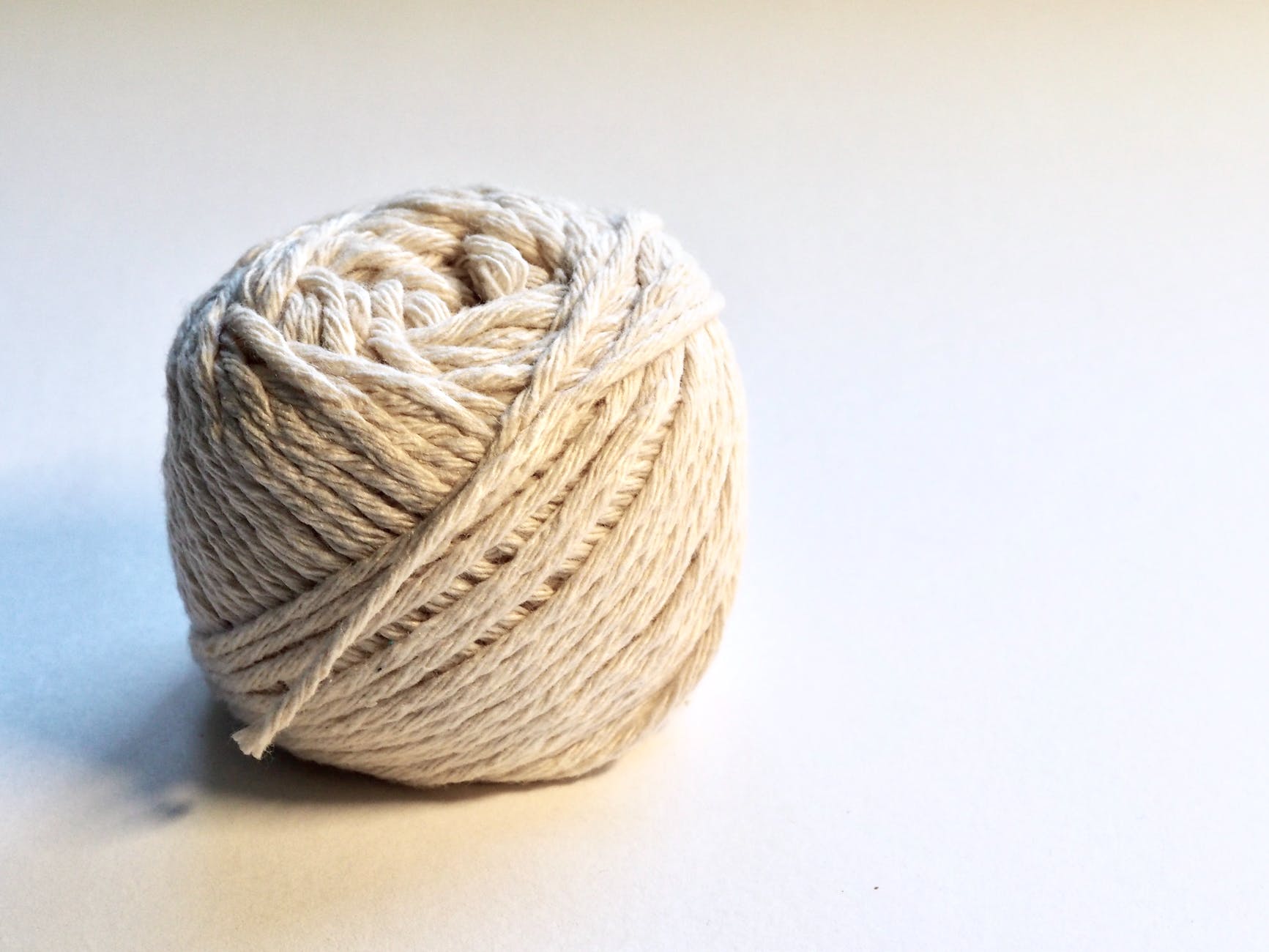
I imagine it this way:  I have been moving forward carrying a large ball of twine that has been unwinding with each step. For years, it was always there, no matter how many steps I took in any direction. But now I find myself holding the end of it, and behind me, it winds all the way back to what happened, and it charts all the ways I tried to see it from all the angles. It’s not a straight line and it is wrapped around memories and snagged here and there so that as I hold it now, it’s taut. There’s no where left to go. To take the next step forward, I have to let go. Maybe I’ve been standing still longer than I realize, holding that last bit of twine, waiting for it all to make sense. It won’t. It can’t. Maybe I know, too, all the ways it connects me to more than just pain. It connects me to things that that were possible that aren’t anymore. Maybe that’s what I’ve been trying to figure out all along. How possibility, at least one thread of it, is cut short.

Photo by Jess Bailey Designs on Pexels.com

For years I held on tight to what hurt. I thought that if I could understand it, it would hurt less, or, it would offer some protection against future suffering. But I don’t think it works that way.

It wasn’t as if I wasn’t living and loving during this time. Hearts do complicated work while performing their function. It isn’t as if my endeavor to understand what happened insisted on being the only story, the whole story. But it was a through line. Life is a complicated interweaving of past and present and pain and love and you just keep going even as you keep working. Even if clumsy, we walk and chew gum. We love, we pursue dreams, we fall into old grief masquerading as new grief, we dig, we think, we learn, we move, we stand still and catch our breath.

Sometimes too, it seems silly almost, that I would have spent so many hours and thoughts and heartbeats and breaths and tears trying to get to a place where I could say, oh, yes, I see. That makes sense, especially when I see others going through different, bigger, harder traumas. But, I can’t change that this is how things felt to me, and this is how long it has taken me to get here. Sometimes things just are how they are. They take the time they need to and that has everything to do with us but nothing to do with choice.

So, what does it mean to open my hand and heart and take the next step without what has become a comfort, my tie to past hurt, my journey to understand it, that umbilical cord feeding me stories of how it used to be and never will be? What is like to move from but, it wasn’t supposed to be this way, to whatever is next? I don’t know yet. I don’t know what is beyond the reach of my tether. I’m still catching my breath. I’m still loosening my grip on that last bit of twine. But I think I’m close. Something in me, some instinct I can finally hear, is saying it’s time.

Peace to you all, wherever you are on whatever part of the journey you find yourself.

Love, Cath

On Clay and Conversation

By Catherine DiMercurio

So much of life depends on how you look at things.

I don’t mean seeing things from a different angle in order to guide yourself toward a more positive perspective. I mean new experiences sometimes hand you a metaphor and give you a way to contemplate something more deeply or fruitfully than you have before.

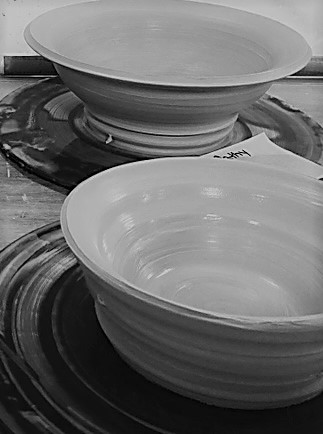
Recently, my daughter and I took a trial wheel-throwing pottery class. It was something we’d both wanted to try for a long time. I was nervous about investing time and money into a semester-long class without first having some idea about how I would feel about working with this medium, so the two-hour workshop format appealed to me.

On the drive over to the studio, I had a strange thought. I was feeling anxious and as I dug around in that feeling I realized part of it was because I did not want to disappoint the instructor, some person I’d never met before. Why on earth would I care about that? Maybe I didn’t want them to think that my inability to follow directions, or create “properly” meant that they were not doing their job well. I wanted to be a good student so they could feel like a good teacher. It was also part of my people-pleasing mentality. [The reasons people do this are varied and complex. Sometimes it is because we’ve lived with emotionally volatile people and we learn to not make waves. Sometimes it is because we need others to think well of ourselves since we have a hard time doing that on our own. This is often a result of us having internalized messages—religious, cultural, societal messages—in such a way that we feel it is necessary to prove that we are, in fact, good people.]

Still, I tried to shelve these ancient worries. I wanted to focus on having fun with my daughter and learning something new. I wanted to prove to myself that I could.

As it happened, my daughter and I were both feeling a little anxious, because it’s normal to feel that way when you’re trying out something you’ve never done before. But once we walked into the studio, met the owners and their dog, and toured the space, I began to feel more relaxed. Shelves of drying cups and bowls and vases, pale stoneware waiting to be glazed. Gorgeous curved and sumptuous shapes. Rows and rows of completed, glazed work, waiting for students to collect them. Oh, the glazes. I love glazes. I wish I had the vocabulary to describe them, understood their chemical composition. Reddish browns, honeyed golds, pale bronzy greens. It all washed over me. I felt both calm and exhilarated. I love that hard-to-come-by feeling.

I couldn’t wait to feel the clay beneath my fingers, to begin to see how it responded to the corresponding forces of my touch and the movement of the wheel. I’d watched enough of a British pottery competition program to imagine what it might be like but now I’d be getting my own hands dirty and trying it out.

One of the owners, Mike, sat down at the wheel and talked us through various processes and techniques. And then suddenly we were doing it. Mike helped when we weren’t sure if our clay was centered, or if a bowl was widening to the point of collapse. He was a good guide.

I wasn’t shockingly good at it for a beginner, though I really wanted to be! I may not have uncovered a hidden talent, but I also did not uncover the disaster I’d been fearing. This wasn’t gym class, and I wasn’t unbelievably horrible at it, as I was with most sports. Have you ever been so bad at something that people are embarrassed for you? Not fun. But here, in the studio, I did have fun, and so did my daughter.

There was some kind of perfect little relief in the newness of it all. A bliss in getting to believe in something else, a different kind of space, a different kind of making. I think my daughter and I both experienced that and it felt important to be able to share that with her.

In the days since the class, one of the things I’ve reflected on is the notion of conversation. Working with the clay, my hands had to be in conversation with one another. They didn’t simply work “together.” They worked in harmony and in response to one another. It is different than say, playing a musical instrument, where your hands are working together, but each is performing a separate task. In building a bowl on the wheel, my hands had to talk to each other, listen to each other, in order to create something together. It was impossible not to see this as a beautiful metaphor for what I hope to one day find in a relationship. If you are not working together, focused on the relationship you’re creating, it will not hold together, things will spin out of control. You must want the same thing. You might end up making something different than what you intended at the beginning, but you’re in on it together. And unless there is a cooperative, positive effort, it won’t be anything at all.

Because my brain works the way it does, I seized upon this metaphor and tried applying it retroactively to past relationships that did not turn into what I’d hoped they would. Maybe this was the way I could make sense of how things happened the way they did. The pottery metaphor provided an effective lens with which to view things and helped me to remind myself of why those things didn’t work out.  

I’ll be honest. Sometimes I need a new way to look at an old thing I’ve been turning around endlessly in my head. The ending of relationships is hard. Grief is real, full, and deep, no matter how much you believe that the ending was necessary. I often find myself reciting the stories and their endings back to myself, so I remember, so I don’t repeat past mistakes. So that, if I’m lucky enough to get a next time, I get to keep it. Grief takes up a lot of space in a heart. In a way, we remain in conversation with our grief, long after the loss that caused it.

Another thing about conversation is that in the past I’ve mistaken emotional or intellectual connection for emotional intimacy. It’s all about conversation, but they are not the same things. We have to look closely and see if what we are offering to our partner is what we are being offered in return. There were times that I was not actually having the conversation that I thought I was. Things take time to reveal themselves. People do. We all try to be the best versions of ourselves when we want something to work out. But we can’t keep that up indefinitely. And one person’s idea of something “working out” can be very different from another’s and in the absence of emotional intimacy it might take a while to figure that out. We may think we are building something with a partner, but unless we are in true conversation with one another, one hand might be trying to create a saucer while the other is trying to make a vase.

Another lesson here for me is about a new kind of open heartedness. It took a bit of pushing myself to decide to take this class. I must remember to do that sometimes, to nudge myself into action, into new ways of looking at things. I admire people who can jump into new things without the anxiety that sometimes holds me back. At the same time, I love that these experiences for me feel special, wonderous, even, given that it wasn’t easy for me to approach them.

We all come at the world and all it has to offer differently, but I don’t believe that there are methods that are superior to others. We go at our own pace and are rewarded in the ways that feel meaningful to us. And we learn the lessons we need to when we are ready for them.

After you make something at the wheel, it goes through many other steps. It air dries, then is trimmed, then dried in the kiln, and then glazed, and then fired once more. Or something like that. My daughter and I didn’t get to do those other steps—that is what the full class is for—but we did get to pick out glazes. I’m eagerly awaiting the call from the studio saying that our pieces are ready. Pottery, it seems, like everything else in my life, is trying to teach me patience.

I’m pretty sure I’m going to sign up for the full class, but the next session will begin in January, and meets for three hours on Monday nights. That’s a big commitment! But I think I’m intrigued enough to take it on.

Wishing you true conversation and a little bit of genuine bliss.

Love, Cath

On Want, Work, and Growth

By Catherine DiMercurio

Sometimes we will try many ways of looking before we can see.

Sometimes when we want something very badly, we will look at it from every angle, multiple times, even creating angles that are not there. Hope can do that – create prisms out of thin air. Shiny things that distract our minds and hearts from difficult truths. But at some point, the blinding brightness of the light is muted by a cloud – of anger, of fear, of sadness – and we are able to see things with a new clarity, and then, to move in the direction we need to go.

I told my sister recently that I’ve been gardening as if my life depended on it, and I wondered if it really did, in a way. Not the fact of my life itself, but the way I want it to unfold. I told her that when there is so much to do, you can hardly even tell I’ve done anything. A lot of the hard work we do can be like that. We wonder and worry about how our efforts will be perceived, though we know how we’ve endeavored.

When we say we want something “very badly” we mean this: we want it very much. Sometimes we are told that what we want is a bad thing to want. It is silly, it is pointless, it is too much, it is ill-defined, you won’t get it, the world doesn’t work that way, who do you think you are, to want such a thing? No one gets what they want. As if wanting the right thing for ourselves and our future is somehow the wrong thing to do. I suppose sometimes it is. I suppose, in some philosophies, the teaching is to eliminate wants, the way some people eliminate carbs. They are bad for us. Maybe that’s true. Or maybe we are all wired differently. Sometimes we simply must respect the differences.

We offer trellises to vines, thinking of future growth. There is planting and wanting and planning everywhere. There is growth in new directions. We are many things at once: the vine, the trellis, and the gardener who plants the vine and places the trellis. We are who we’ve been and who we want to be, as much as we are who we are in this moment. Multitudes, always.

My gardening has involved creating beds and pathways out of an overgrown, weedy, neglected area behind my garage. It was long abandoned when I arrived in this place, about a year ago, and for many reasons, I was not able to make it a top priority. Now, with more time available and some fraught and frenetic energy on hand, I got to it. Digging, planting, creating. It isn’t finished. Like everything good, it is a work-in-progress, something to always tend.

We need the work and the work needs us.

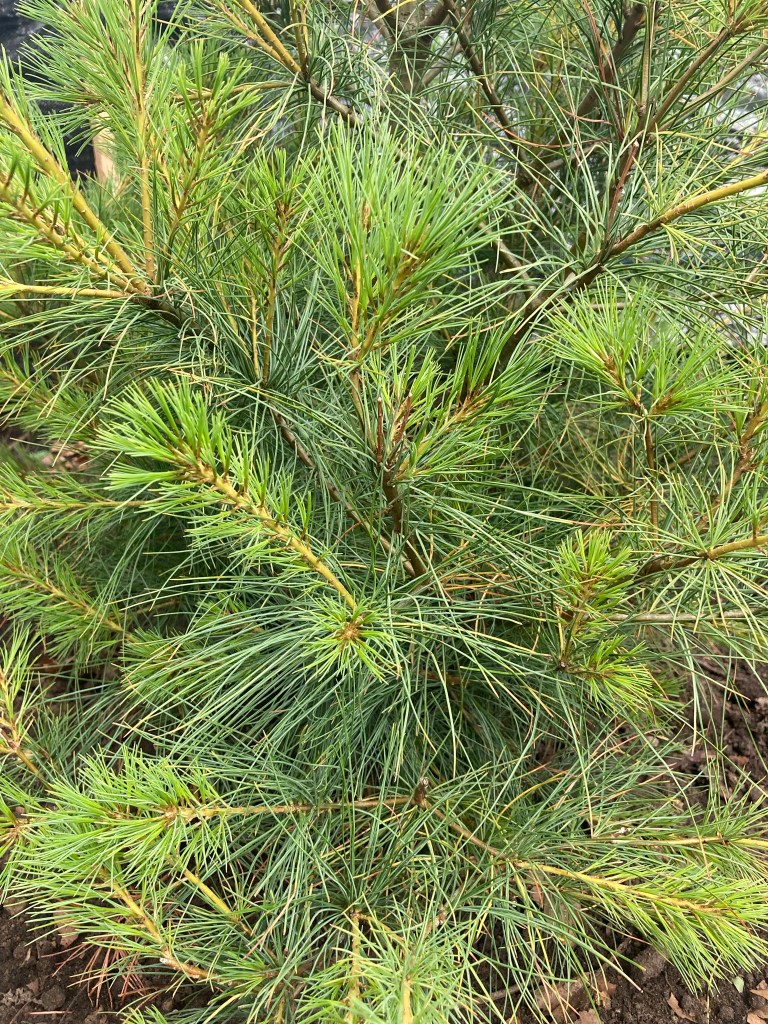
I planted a little baby of an Eastern white pine. I’d been longing to plant a pine tree for a while. I researched them. Realized many of the specimens I thought were pine trees were really spruces. Things often reveal themselves to be something other than what you thought they were.

I looked for trees months ago, but it was too early and none of the gardening or landscape stores had them yet. Then I looked too late, I thought, because I still was not finding what I was looking for. But yesterday, I found the white pine. I greeted this creature, as if knowing it already. There you are, hiding here in the back at this store I never come to. So, there’s hope I guess, buried in gardening metaphors, about timing and finding, maybe. Maybe not. It’s hard to see clearly sometimes. Remember?

My current state of mind is work- and growth-focused. Writing and gardening. Dig, prune. Wait for rain. Be patient. Blossom? Maybe. Sometimes it works out that way.

Love, Cath

On Dreams, and the Shape of Things

By Catherine DiMercurio

Sometimes the true shape of our dreams is not yet known.

Recently, I was asked to take a self-assessment for a professional development workshop. The questions were different than other personality assessments I’ve taken in the past, but the results were similar. Familiar descriptors floated to the surface: introspective, intuitive, creative, nurturing, etc. And I thought, I’ve known all this since before I had words to name these characteristics.

Some things have never been a mystery, not to me, about me.

The mystery lies elsewhere, as our known selves try to find ways to acclimate to the different environments in which they find themselves – to different homes, neighborhoods, jobs, relationships. All those always characteristics adapt into various ways of being, and we come to believe that those behaviors, those ways of expressing ourselves, are the same thing as self. But BEing and ways of being are distinct. At times, they are a close mirror of each other, and it feels as if everything is falling into its place. Then, we find a way to be in our current existence in a manner that is in near-perfect harmony with the self we have always known.

Some mornings, when it is quite early and I want to listen to the quiet in my brain, I warm up what is left of yesterday’s coffee and sit in the half-light of the living room. When there isn’t much coffee left, I add a generous pour of oat milk. It reminds me of the coffee that my mother permitted me to have as child. More milk than coffee, with a little sugar, it is not grownup coffee, and it lets my thoughts be childlike in their wanderings, without a need for order or progress. I remember that younger me having a distinct awareness of a blurriness of self, as if I knew that my consciousness resided in this body and in this existence, but could tell itself apart. I remember a particular moment, sitting in the backseat of my parents’ car, looking out the window at the trees blurring past in the sunlight, telling myself I am me, I am me. I remember discomfort, as if it took some effort to hold within me an understanding of both unity and fracture. The depth of my love for this little thinker, my desire to protect her and that inner world, has never dissipated. When I say that my writing stems from a desire for connection, I do not mean only with others. I mean with myself, including that little girl contemplating matters for which she had no name.

Sometimes, when I’m mulling a tough problem and stumbling up against the self questions that cartwheel in front of me these days, I think of what the people who have known me the longest would say, and then I think of what the people who have only known me since my divorce would say. They are often very different things, which is unsurprising, but which does not help when I’m seeking the through-line. I sense instinctively that there is a truth that I can uncover, as if there is a way in which everything aligns.

We are told to be true to ourselves, but do we know what that means?

When I look at my childhood self I wonder if she is an accurate gauge by which to consider my own current authenticity. Does that put too much pressure on the past, on fallible memory, on a self that, because she is comprised of memories, is more myth than truth?

Our lives are fragmented. We move in between worlds, perpetually navigating different situations and environments and recalibrating ourselves as needed. It is easy to feel as though our understanding of self gets lost along the way. We too quickly become who we are seen as, rather than who we’ve always been.

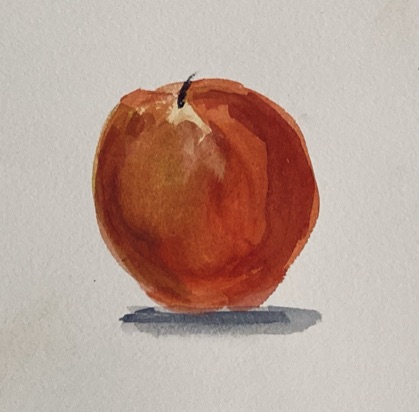
Recently I have looked at my old watercolor paintings with a fresh eye. I’ve hung up some of my first attempts at apples, completed during a class at a community college when my daughter was a baby, and have judged them far less harshly than I once did. I’m not saying they are good. I’m saying that when I look at them, I feel a connection to the experience of being an anonymous and aspiring artist in a classroom full of unknown people. I barely remember the professor, and I certainly don’t remember any classmates. But I recall the feeling of being there and trying. And I see all my curiosity and earnestness in those paintings.

And curiosity and earnestness feel like links to the little girl in the back of the car contemplating her existence.

I think of how many times those words, curiosity and earnestness, have made an appearance in previous blogs. Those concepts catch with me, like the little burrs that stick to your socks when you hike through a field. I think, this is how I want to be. These qualities underpin one of the refrains that chorused through our household when my children were growing up: try your best. Among other things, it is about being open to learning, and being willing to work hard.

Perhaps this comes with a little too much pressure, pressure that I put that on myself. Often, I’m frustrated when the results do not seem to match the effort. I wonder – was that my best? Did I work hard enough? Did I not learn well? I am trying to be more process-oriented, and less results-oriented, but it is not an easy shift, and perhaps, it is not a necessary one. Perhaps working toward a specific result – a better apple, a published story – is a good and motivating thing for me, and maybe all I need to work on is not being overly discouraged by imperfect watercolor fruit and rejected fiction.

However, I wonder if all goals or dreams are well-served by this approach. Maybe some things won’t look the way we always wanted them to, and maybe that’s a wonderful thing. Pursuing a goal that we are only looking at from one angle may result in us giving up on the goal instead of swapping one perspective for another. Some dreams are more complex than we realize and have many facets; maybe when we focus on a singular component, we can’t truly understand the value of the whole.

There was a book I used to read to my children: The Important Book, by Margaret Wise Brown. Here’s an example of the way this book works:

“The important thing about an apple is that it is round. It is red. You bite it, and it is white inside, and the juice splashes in your face, and it tastes like an apple, and it falls off a tree. But the important thing about an apple is that it is round.”

Sometimes we need to clarify for ourselves what the important part about a particular goal or dream truly is. Possibly, and without knowing it, we do harm to our ability to achieve the dream because instead of focusing on the important part we are expending energy on something we mistakenly believe is the important part. Sometimes, we don’t want precisely what we think we want. When we try to know our own hearts, we have to look well beneath the surface. Our true dreams are often obscured, layered over by years of doubt, history, pain – our own, and that of other people, who, though well-meaning, might weigh in on how our own dreams should look and feel to us. It is no wonder we are often plagued by thoughts of, and fears about, loss and lost-ness. Others might try and tell us what should be important to us, and that can nudge us off course. Do you think the most important thing about an apple is that it is round? I do not. But who am I to say what should be important to someone else?

There is no getting around the fact that the process of making our own hearts known to us takes time, and careful examination. This is true for any dream, wish, or goal that we have for ourselves, whether it is concerned with our personal relationships, or our pursuit of our art, or our work, or something else entirely. I do not know the way to reveal that which I cannot yet see, though I’m certain that I must keep exploring my heart and all its sedimentary layers. This discovery process will involve more ambiguity than I am comfortable with, and that is a reality I reckon with daily.

As an example of all this, I can give you a peek into one of my dreams. My writing dream has always involved publication. Yet, I am beginning to explore the idea that instead of this being the most important facet of this dream, it is but one part of a writing life, which is perhaps more what I’m truly after. In truth, I’m not exactly sure what that means, nor am I certain of the path I need to take to get there. For now, I’m focusing more on what I need to say, and how best to say it. In the coming months, I will be immersing myself in a couple of workshop experiences with other writers, led by artists and mentors I trust. The time feels right for this approach, though the work will be challenging.

This is but one of the dreams I’m searching out the true shape of. Everyone has some. We carry pockets full of stones gathered from lakebeds and we don’t know why. We wish for the unknown to reveal itself. We throw pennies into fountains, wishing, wishing.

On the night of the lunar eclipse, I dreamed I was mending an unknown world with pink thread.

Dream on, friends.

Love, Cath

On Throat-Clearing, Self, and Voice

By Catherine DiMercurio

Sometimes we can almost find the melody.

I put a lot of effort into trying to make sense of things that don’t. In my writing, it feels like the practice of untangling knots that can’t be untied, though each story takes a fresh try at undoing. My brain attacks most present worries in the same way.

When I sit still, I sometimes feel both restless and exhausted. This state is a product of many things – pandemic year, new and old anxieties, writing frustrations, aging realities, leaving and moving and settling in.

In my writing, I begin to wonder about voice – what manner of expressing myself is unique to me, my fingerprint of creative expression. And voice, as in, mine, in this world. Lately I have revisited half-begun stories and can’t take them anywhere. I think of a top spinning at the end of its movement, the wobbly tilt and hobble where I find my creative practice these days. Tops get spun again; I don’t worry that I’m done, but wonder where to go from here, and how.

In a way, it feels as though this year of largely staying in place has been one of incubation. During this time, I focused on trying to make my new house feel like mine. I thought a lot about home. I also began to reckon more consciously and deliberately with the notion of aging. I periodically take photos of myself that I show to no one to document the progress of the incoming greys, and to acclimatize myself to the changing terrain of my face.  We have kept ourselves as hidden as possible from the hidden virus, and I have grown tired of hiding myself from myself. But I often don’t recognize me.

I heard somewhere recently that resilience is never losing your enthusiasm in the face of failure. This made me feel angry and a bit deflated, because I want to think of myself as resilient, but I always feel enthusiasm flag when faced with failure. I would counter that resiliency is never losing hope in the face of failure. You can feel defeated, but at the same time you keep fighting for what’s important to you. Enthusiasm feels like a bit too much pressure sometimes. Then again, it is possible that I am not actually resilient. But I am good at hope.

As I’ve noted before in this space, Clarice Lipsector wrote “It is also possible that even then the theme of my existence was irrational hope.” We all have themes, not only as artists but as humans, patterns we observe in our lives, values we attempt to adhere to, wishes we twirl around our hearts. Maybe none of us could extricate ourselves from the themes of our existence if we tried. Some things are as they are. I will find love stories everywhere. I will write them. I will be hopeful about everything and everyone I love. I wonder if all hope is irrational.

Everything I have ever written has turned into a love story. Love, loss, seeking, finding – these are the structural frameworks of most everything I compose. I wonder sometimes, when I feel defeated, and the rejections land solemnly in my in-box, if all I can build are dollhouses, while better writers are busy building cities, universes. But then I think that maybe the world needs dollhouses too. We all need different entry points into the art we interact with. Maybe someone is just waiting for the right-sized door. Maybe it’s all that Alice in Wonderland game of feeling too big or too small to get to where we want to go. But eventually, we find a way to connect.

Photo by Pixabay on Pexels.com

The themes we don’t stray from are, in a way, one path toward maintaining our connection with ourselves. I have a novel manuscript that has undergone more permutations than I care to number. I have left it unsubmitted for a long time and had nearly decided to abandon all hope (and enthusiasm).  But, I have dedicated myself to one more overhaul, and I’m now working with a trusted writer who is helping me take a fresh look at it. I feel hopeful once again, but daunted. Possibly I am not now, nor ever was, up to the task of doing what so many novelists do so well, which is, to do everything well – plot, character, pace, language, theme, subtext, and so on. Everything must be precisely fine-tuned for the work to sing. Currently there is a lack of harmony, there is a lot of out-of-tune warbling, and a fair amount of throat clearing. Sometimes I think the melody’s there though.

I listen for melody too in the world outside my door, but I’m finding it clunky to emerge from this pandemic isolation, as we receive our vaccinations and make plans once again. I see other vaccinated folk pursuing “normalcy” as if they hear a tune and feel compelled to follow it. I can almost hear it. And there are people I’m so looking forward to spending non-masked time with. I can’t wait to spend more than a few odd hours with my daughter, and to see her whole wonderful face the whole time. Yet, in general, I feel both excited and enormously anxious about jumping back into the world at large. Maybe I’m feeling as though I’m still incubating. As with many things, we grow when we learn to be empathetic with regard to the timetables of the people around us.  

When I think of empathy and growth, I think of the way growth often doesn’t always look like growth – it looks like incubation, it looks like cocooned pupae. And when I think of empathy, I remember that I often forget to have it for myself.

This weekend I did a little hiking. It felt good to be in the woods. My son took a picture of me at my request and I’ve looked at it many times since, trying to see what I wanted to see there. A recognizable person. She seemed familiar, me and not-me at the same time, but the setting seemed right and that helped. I don’t know why it feels so difficult so often to know and be at peace with myself. Maybe this year too much happened and too much didn’t happen, and it changed me more than I am consciously aware. Maybe the image in the photo is a reflection of reality and it is my ability to see it truly that has been altered by time and experience. Perhaps how we see changes more than what we see, and how we hear melodies differently from one another explains so many things. This is all the more reason for us to cultivate empathy toward one another and to build our reserves of resiliency and irrational hope, as we attempt to both listen and sing in this world.

Love, Cath

On Swarming and Signifying

By Catherine DiMercurio

Sometimes a swarm has something to say.

A recent rain brought down a bald-faced hornets’ nest that had hung high on a branch of my neighbor’s silver maple. The nest was active last summer but its papery cavities, in the cold months, were excavated by birds for sustenance, or so my son has informed me. The silver maple branch of my neighbor’s tree juts across my back yard, so that the nest hung squarely above my yard, until last week. We discovered the nest at dusk, and in the fading light, it reminded me so much of a giant human heart, misshapen after the fall. When I took the dogs out in the middle of the night, they stood near its eerie mass, not indicating a threat so much as something I should take notice of. This, they seemed to say. In the morning, we studied the nest’s construction, the intricate cavities; we marveled at the engineering. I thought how wonderful it was that the hornets’ well-made home allowed them the safety and security necessary to live out a full life cycle, even if we, their human neighbors, occasionally needed to dodge them in the summer.

When I was little, we had a cluster of forsythia shrubs in the yard. Their long, arching branches wove together at the top, forming a little airy atrium. My two older sisters and I would spread a blanket on the dirt floor of this chamber, and spend many a spring afternoon escaping, planning and plotting, adventuring, and resting there. Sometimes now I would like to ask them: do you remember staring up at the crisscrossing branches above us, looking at all the yellow stars blooming, and feeling safe? And have you ever felt so safe in your lives since? Our baby brother was napping away the spring afternoon, our mother worked in the house, our father was gone to his job, his life away from the house mostly a mystery to us, except when he let us come to the grocery story on Sundays when it was closed, and we’d help him by turning all the cans so their bright labels neatly faced the aisles. It was years before our other sister was born, though sometimes I imagine she was there too, somehow. I think this is the safest I’ve ever felt, long before the sting of any loss, before we tumbled into our adult selves. Nestled in our flowering nest, there was no understanding of anything that couldn’t easily be made better.

Sometimes we are lucky, and we can recognize happiness when it comes along, feel the solid pressure of it aching in our ribs, patiently, until we notice it and name it. It is in these moments of recognition, where, feeling both solid and buoyed, I find myself most vulnerable. Where the mere whisper of a threat to what I’ve so carefully constructed feels like a storm of wind and rain, ready to send it all crashing to the earth. Everyone feels vulnerable to loss. I think when you have very specific memories and a set of circumstances that surround a past, significant loss, part of you becomes hyper aware of what you can lose, and how it will feel. Part of you becomes an ever-vigilant swarm of hornets, swirling in a confused haze around the nest, looking for threats. People talk about “angry” hornets, or wasps, or bees. They are not angry – they are instinctively protecting their collective heart, the nest, or hive. Yet it is easy to wonder, if our perceived-threat response is hornet swarm, how can we ever feel soothed, and what will it take to feel capable of being happy without feeling overwhelmed by the corresponding fear of its loss? I think back to the forsythia days, and how that was the magical quality. There was no fear of loss; we didn’t know what it was. Happiness and love existed like air and sunshine.

I have spent years trying to teach myself to live in the moment, to not what if my life away, to not swoop and swarm when I fear the world could give way beneath me. In no way have I mastered this. But in some ways, I’m managing to navigate, sometimes. In some ways, it is only the swarm of words that can calm the other swarm. I talk my way through, I write my way through, and I talk some more. I wish it were easier. And I’m ever thankful for being loved in returned, and listened to, with empathy. I’ve also considered that there is another way to think of the swarm that tries to protect me from losing what I love. Rather than thinking of the swarm as the dark shape of past fear protecting me against future loss, it can be viewed as a signifier, one that underscores that this love I have is something worth protecting. Like the dogs in the yard hovering over the nest, and the forsythia blossoms hovering over three little sisters, the swarm says simply, This.

Love, Cath

On Art, Home, and Haziness

By Catherine DiMercurio

A friend and I recently were writing to one another about why we write. That conversation yielded for me an understanding that why is a question awkwardly affixed to the relationship I have with writing, which is more akin to the relationship I have with my skin than anything else. In a broad sense, it is something I have, something I need, something that protects me.

On a practical level, yes, writing is also something I do. Sometimes it is an act of artistic creation and sometimes it is an involuntary function that happens automatically and silently, the way my brain tells my lungs to breathe. Things are unfolding all the time in my mind and I wish I could somehow capture more of it. Sometimes writing is my only hope for effectively communicating my heart to the world, (or to the more individual and larger universe of me and you).

Sometimes writing is a job and sometimes it is a wish, but it is always skin.

I’ve spent a lot of time in recent years, weeks, days, minutes, always, trying to pinpoint such facets of my identity throughout the changing circumstances of my life. This intense scrutiny was kickstarted by my divorce, though I had long been focused on issues of identity in my writing, always trying to figure out if we become more of who we are as we age, or less.

As I enter my first spring in this new place, I sat down recently with my coffee and felt myself settling in, to here, to now, to me. And I thought, maybe I’ve been asking the wrong questions about identity and self-awareness. Maybe the most direct route to understanding who am now is this: what makes me feel at home within my own skin, no matter where I am?

The first thing I thought of was the coffee I was drinking, as I sat on my new-ish IKEA sofa in this still-new-to-me home. I then pictured myself at my boyfriend’s place, still new-ish to him. It is a curious thing: you find yourself in a life where none of the places in which you find yourself are ones in which you have much history. So where is home, then, except housed within us, and created anew, sitting next to this person who seems able to keep making space for you, and you for him. You put out the welcome mats for one another, sweeping them off or airing them out if there is ever difficult weather.

Photo by Nathan J Hilton on Pexels.com

It is a marvelous but strange thing to be aware of your own history-making. To contemplate the ways in which home and history are related, but not in the ways you once thought. I recommend keeping an eye out for it, for the art you are making of self, seemingly out of thin air, or from webby gossamer strands, every day.

As I walked around the yard with the dogs one morning, it smelled like summer. Recent rain on thirsty dirt, a damp promise of heat panting in the air. I thought of drinking camping coffee, sitting with the kids in the morning, outside the tent, feeling cozy. The memories collaged in my brain, out of order, but collective. This too is history and home and self. It remains, clean and bright and clear, even in the aftermath of events that left much of the past feeling sooty and smudged.

It may seem strange to utilize list-making and note-taking as paths to self-discovery. Such a process lacks the romance of the quintessential road trip motif. However, sometimes things don’t work that way. It is less a fun, crazy journey and more paying attention and hard work. Mostly, I crave simplicity. I want to create obvious paths to certain self-knowledge, so that I can quickly run toward what I know and like about myself. So I can gallop toward safety, when I’m feeling anxious, or filled with self-doubt, or self-criticism. It is so easy for the negative to overtake us sometimes. We need to have our escape routes planned. Sometimes you have to sit down with yourself and go through the checklist, the way in elementary school we had to ask our parents what the escape plan was if the house were on fire. You have to tell yourself, when dark thoughts begin to suck you in, that there are the paths back to yourself, that you know the way. It is too easy to get lost in the thick haze and smoke of anxiety, depression, fear, or grief.

I feel as though I’m often vacillating between extremes – between being overly candid or completely withdrawn, between whole-hearted enthusiasm and active detachment. I wonder how people find middle ground. I speculate that there is a place thought of as “normal” and most of us hover around the edges, not seeing each other, and the imaginary normal place is teeming with a healthy population of individuals that can communicate with one another with ease and confidence. But in reality, most of us fumble, we hurt and get hurt, we regroup, we take deep breaths and fall silent. We clear our throats, and our eyes, try to speak and see, and be seen once more. Sometimes we manage to get it right, to find a safe, strong hand in the haze, and so we practice the art of holding on to one another.

Love, Cath

On Fallowness and Mud

By Catherine DiMercurio

Sometimes a word grabs me and won’t let go. Yesterday morning, walking the dogs in the strange warmth of February sun, it was “fallow.” Fallow as in, plowed and unsown earth; as in, quietly replenishing after having been depleted.

The recent warmish weather and the thawing of a frozen winter’s worth of snow has got me thinking of what it means to be fallow and waiting. Maybe these thoughts took root at least in part because of the Rilke quote I came across recently: “Have patience with everything that remains unsolved in your heart. Try to love the questions themselves, like locked rooms and like books written in a foreign language. Do not now look for the answers. They cannot now be given to you because you could not live them. It is a question of experiencing everything. At present you need to live the question. Perhaps you will gradually, without even noticing it, find yourself experiencing the answer, some distant day.” (Ranier Maria Rilke, from “Letters to a Young Poet.”)

Like anything that I consider to be a strength, patience, that deep cosmic kind I think Rilke is talking about, plays hide and seek with me. I must peek in corners to catch a glimpse of it, or chase it down, often unsuccessfully, when I need it. I think I do possess it, somewhere, but it is elusive. And there is plenty about myself that feels unsolved, plenty that resists my current capacity to understand. How like fallowness it is, this kind of patience, and how hopeful to imagine there is a latent richness that will produce a surprising yield at some unknown time.

This way of thinking stands in sharp contrast to the restlessness I often feel, to my urgency to know what is going to happen next, in the coming weeks, and years. Often, this anxiety about the future is rooted in past experiences; for me this is true. Many, maybe most, people endure events at some point in their lives that change every version of the future they had envisioned for themselves, and have an awareness as it is happening that this is what is occurring, this loss playing out in full vibrant color all around you. You see the future erasing before your eyes, you see yourself vanishing too, in a way, in all the ways. New things, good things, begin to coalesce and emerge, though. They begin to form themselves into solid figures here and now, and you start to feel healthy and strong in ways you didn’t imagine possible before. Even so, there remains a fog up ahead in which you fear you will lose your footing, or everything.

I would like to think this long, cold, pandemic winter, this period of vigilant caution, of staying put, of worry and fatigue, is all part of a prolonged fallowness, a period of forced patience. Maybe like the soil under a bed of leaves lying beneath melting snow and ice, we are in a process of becoming enriched, we are readying ourselves for understanding what we cannot yet comprehend, truths about selfness and strength. Maybe after the period of fallowness is over, we will understand something we currently do not about the way expectations can vanish, but selves do not.

Still, it is difficult to wait. It is difficult to pursue goals – whether they be artistic, personal, professional, relationship-related – and not see the results we hope for. We wonder, why will this not look the way I thought it would? We wonder if we’re doing it wrong, or if we are simply looking at it from the wrong perspective. Maybe everything is falling into place exactly the way it should, and we have not yet reached the point where we can make sense of it. Maybe it is all still fallow-ing and when we are ready, we will grow – into our selves, and our lives, into our own big hearts and dreams, into the worlds we’ve been constructing for ourselves almost without knowing it. We are tiny lives in iris bulbs building our selves in the rich hidden worlds in the soil all winter long.

So many things do not look the way we thought we wanted them to. I think of my veneration of soil here and wonder how I can be so anxious to get my hands in dirt and plant things, when at the same time, the melted snow and the pounding dog feet have made a mud pit of my little plot of suburban soil. It is all the same substance but when acted upon by external forces, it changes form. We are not so different. Our little selves in iris bulbs transform to stem and leaves with the application of sunlight over a certain number of hours each day. We are all acted upon by time and by the weather of our lives. Even so, we are comprised of the same elements we always were.

Perhaps it is the same with everything we do not yet understand about ourselves. Truths waiting to be seen from another angle. Us, waiting to be acted upon by this force or that until we are ready. But for now, we must be patient, learn to love the mud and the questions, wait for the sun and rich soil, wait for the answers, knowing it is all the same stuff anyway. Maybe in this way we get closer to knowing and loving what we are made of, here, now.

Love, Cath