On Baking Bread, and Meditating, and Un-Failing

By Catherine DiMercurio

Sometimes we need to remind ourselves what failing is not.

I have forgotten how to meditate. I once utilized meditation techniques as tools for cultivating calmness, and then, when I needed peace the most, could not summon the energy necessary to pursuit it. There was only the exhaustion of surviving and rebuilding.

Life feels fairly well rebuilt now, but even so, there are snags. Everyone gets tripped up sometimes. Do you ever feel that life was once so chaotic and overwhelming, it now only takes a few small stressors piling up to make you feel exactly the same way? I sometimes think: Why does it feel like everything looms and threatens? These are little things, everything is okay. But sometimes things feel bigger than they are, because they once were bigger and more dangerous, and every cell in our bodies remembers the past.

At my calmest and most generous, I see myself as capable of peace and growth, capable of mastering the pain of the past, along with the anxiety such pain has been reborn as in my current life.

I remember this from meditation: you do not try to avoid the stray thoughts that creep in; rather, you acknowledge them and let them float by, and away. I imagine mastering pain and anxiety in this way. I see you but you will not infiltrate my peace. What I don’t remember is what it is I am supposed to actually focus on. My breathing? A blank page? An image?

Perhaps this is the difficulty I have now: I am more focused on what to do with all that intrudes than I am on what remains. What are we, in the absence of the intrusions of past grief and present worry about future troubles? And, what self is not composed at least in part by these molecules?

Yesterday, I once again tried to bake bread. I approached this activity the way I approach the rest of my baking: Here is a recipe. I have most of these ingredients. I could swap that. All I need are general proportions and an understanding of process. This works for most things I attempt: cookies, cakes, pies. It has not, thus far, worked very well, if at all, for bread. I have discovered that this process is also how I approach any creative endeavor: writing, watercolor painting, crocheting. I learn enough to get started and then I wing it. There have been times I attempted greater discipline. I took a watercolor class. I read crocheting patterns and occasionally actually follow a recipe for a cake. My successful pursuit of an MFA in creative writing was a defiant attempt against my own nature to be disciplined about craft. I wish I could do it again. To force myself with a financial and temporal commitment to learn how to be a better writer.

All things considered, though, I like the way I bake, even if things don’t always turn out. It feels like art to me, more of a creative exploration than the experience of following instructions. I realize you need both for things to be successful, some instruction and some creativity. I worry that in too many areas of life, I rely too heavily on figuring it out as I go rather than following instructions or sticking to a plan.

I liked school, so I’m not sure where this resistance to instruction comes from. I do remember, as a child, possessing a strong dislike for anything I would not be competent at from the beginning. (This, along with the lack of any natural ability, accounts for my failure at any and all sports-related activities.)

Photo by Pixabay on Pexels.com

About the bread. It didn’t turn out very well. I was asking a lot of my ingredients, did not have enough of the right kind of flours. I used a recipe for guidance but tried to make it work with what I had. It is easy to think of it as a failure, as far as bread goes. Most people would.

There used to be a corporate buzz phrase going around the office for a while: fail fast. In grad school, we used to say, fail better. I understand the ideas, mostly, but really what the phrases point to is that we all struggle to find a way to make failure mean something, as if by talking about failure in the right way we can make success somehow more achievable.

I wish we could call “failure” something else. It probably does not matter what we call our process. It is never going to feel spectacular to have something not work out as we hoped. It is always going to feel as though we wasted some resource, our time, our money, our energy. In the end, we all know that the only thing we can do is give it another go. This is true for every aspect of our lives, for our careers and relationships and interests and artistic endeavors.

That being said, the bread isn’t a disaster. It has a pleasant flavor, and the texture is not as bad as I originally thought, now that it has cooled. It does not reflect mastery, but it was intentional effort.

That being said, what else do we think of as failure that is really far from it, that is the opposite, that is un-failing?

We cannot clutch our past failures so tightly to our hearts that we allow them to become prophesies of the future.

We cannot allow ourselves to hold on this way because soon, or eventually, we will get to the why even bother part of this thinking. It is entirely likely we will want to give up before we achieve success, if we regard every effort as failure instead of another step in the journey.

What I keep coming back to in so many blog posts, is this: like many people, I am in the process of figuring out what I am all about now. For me, the now markers are fifty-years old, half a dozen years post-divorce. It is clear that I’d like to feel less anxious, more peaceful. To do that, I’ll need to be tuned in to the weird lessons my life reveals every day, in little things, like baking imperfect bread. To look at the idea of “failure” as a only a word, and one that my life is rigorously attempting to empty of meaning and power. And, I like this process, this figuring out self in this deliberate way, where I’m making a conscious effort to be awake to what I’m doing and why.

I wish you happy baking, endeavoring, figuring, and un-failing.  

Love, Cath

On Calm, and Quirks, and Being

By Catherine DiMercurio

Sometimes I don’t want to calm down, because I’m not sure what to do once I get there. I wonder if I know how to do more than visit. I’m so used to allowing my anxiety as much space as it needs that it feels more like home somehow, to be worried. To be in the void, the one at the center of calm, to be without the fluster and fear, means dealing with a situation instead of reacting to it. In a way, there is safety in not-calm. It shields us from work we haven’t learned how to do, or that we were forgot we were competent at. Or, from work that needs doing, but sometimes we are so very tired of doing it.

Photo by Evie Shaffer on Pexels.com

Recently, I was startled by the sudden and violent death of a mourning dove who’d been grazing on the snowy ground at the base of the bird feeder in the back yard. We first noticed the large hawk, hunched over something. It dawned on us then that he must have killed something. After he flew off, carrying the body, we traipsed through the snow and viewed what remained. A scatter of grey and cream colored feathers surrounded a circle of blood-stained snow. Surmising it must have been one of the mourning doves we had noticed earlier, we cleaned up what we could. As I used a plastic grocery bag to gather up feathers and bloody snow in shaky fistfuls, I thought, abstractly, “the dogs,” not able to articulate my worry over them examining the scene. It simply seemed bad to allow them to investigate and possibly consume anything left of the bird. And then I was startled by a sudden grief for the mourning dove I’d invited to the feeder.

When I was attending my graduate school residencies, I heard a lot of talk about “liminal spaces.” The term liminal wasn’t part of my usual vernacular. This notion of in-between-ness felt writerly. It was a lofty concept, an emotionally self-aware and intellectual way of looking at things, and I liked it. Wanted to inhabit a me whose boundaries encompassed the use of such words. I remember thinking about how much living existed in the space between our words. I found myself fully invested in exploring this concept, probably because I was in such an in-between place myself, in between versions of myself, headed away from a married me, and becoming a divorced me, but not really knowing what it was supposed to look like, who I wanted her to be. The liminal eventually became a meaningless concept for me because I felt as though I would be perpetually unable to leave behind one existence and inhabit the next. I felt trapped in an existential game of Twister, limbs tangled and reaching back and forward and everywhere at the same time, grasping urgently for a sense of self. I thought, rather than arriving at the next iteration of myself, I would succumb to becoming a not-me. As if I was nothing more than this tangle of selves, rather than someone who insisted on her own certain form. A scatter of feathers and blood. No longer bird, but still evidence of bird.

In a way, calm itself is liminal. It is an in-between space, the place that exists between anxiety and the next part, work. The work of undoing or repairing or rebuilding whatever sent you falling in the first place. I think of the place in between bird and not-bird and realize it is a very different thing than transitioning from one state of mind to the next, from anxiety to calm to work. It is final. Full stop. Though moving oneself from a state of anxiety to a state of calm can inspire dread and more fear, we always know it is a journey we have to make. But, it takes time. Sometimes we need help, sometimes we need solitude to regroup. Yet it is always characterized, eventually, by movement, not by stopping.

I think about the little movements, like a flutter of breath once we realize we’ve been holding it, that invite us toward calm. The half-formed thought that suggests the difference between the instincts we trust and the hazy, malformed notions that are more remembered grief than the deeper knowledge that points us to what we need, when we need it. Admittedly, it can be hard to tell the difference sometimes. It is even harder to tell the difference when our state is not calm.

I wonder sometimes if it is healthy to spend so much energy considering such abstract things as anxiety and fear and states of mind and states of being. But I also don’t know how to exist, how to be me, without also considering my whole self and my place within the larger world. I think too that such considerations play a vital role in allowing us to grow together and harmoniously with those close to us.

We must keep sharing our real selves with our people, and encouraging them to do the same.

How lucky we are when they allow us to do so without out judgement. I consider myself to be an open, heart-on-your sleeve person. But at the same time, I carry around a certain level of shame and embarrassment about the things I don’t love about myself, like my easily triggered anxiety, or certain weather-related phobias, or the panic my periodic insomnia induces. I admit, I hoped to downplay these qualities to my boyfriend, worried about how he would perceive them. But who we are simply and without fail reveals itself. And, I’ve happily discovered that I am with a person who seems able to accept everything about me, even when my quirks seem unexpected or incomprehensible. We have been together two years now, and it is beautiful to be able to offer one another this grace, this space to be who we truly are with one another.

I’m wishing you all calm today, and am supporting you in being who you are, who you are becoming. If you have a chance, take a moment to hug or thank the people who are happy to let you do that.

Love, Cath

On Wishing and Light and Shadow

By Catherine DiMercurio

Sometimes wishes are better than goals.

Fear does crazy things to our brains and our hearts. I don’t mean that fun kind of crazy like in a road trip movie where the unexpected detour leads to laughs and adventure. I mean crazy as in dangerous and suffocating. In the past two weeks the world has given us much to be fearful about, and for many of us, the looming specter of fear out there in the world serves as a reminder to our body’s chemistry that threats are imminent, that we could lose all the things we are most afraid to lose, even if the reality of that threat is a bit illogical.

For the past two weeks I have felt exhausted by the leapfrog game fear and anxiety and anticipatory grief have played with my soul.

I had some relief on a recent walk I took at dusk with my dog. The pale pink and grey sky, the fading light, the deepening purple shadows, they all allowed something to loosen. And I could breathe a little again and I thought about the constricting grip big emotions have had around my throat. I took a moment to inhale and exhale the January air, and as oxygen and relief flooded me, a thought popped into my fatigued mind: my only goal for 2021 is to have no goals.

I decided I am not not even going to “try and be a better person.” I think I’d like to take a shot at being this person as she is now and see how I feel about her. This is not to say I’ll ignore the things I’ve decided it is important to work on. I know that cultivating patience will benefit me and the people around me, and I’ll continue to do that work. I have a hunch that if I remove the time-bound constraints that I have been taught distinguish wishes from goals, the work will be easier, and the results more fulsome.

I am learning a beautiful lesson, but not easily, and not quickly. You know that idea that someone can be mad at you and still love you? The one we’re supposed to learn as children? I think it got lost somewhere along the way, and I’m trying to rediscover it. I’m also endeavoring to apply it to myself, to remind myself that I can be angry and frustrated by my flaws and shortcomings and still love who I am. I can be patient with myself for not having everything figured out yet.  

I have looked at every past relationship through a lens clouded with the smudges of what did I do wrong and how can I avoid those mistakes again. As if I was always supposed to intrinsically know the right thing to do. As if in any situation, I was somehow the only one of us who had work to do.

In the aftermath of my divorce, my thinking initially was that if I was to ever be happy again, I had a lot of work to do, and that if I didn’t do it properly, and soon, then failure – in love, in life – was imminent. I constructed this scenario out of the same goal-oriented mindset that had gotten me through life thus far. I was to study hard, get good grades, get a job, and get married.

But sometimes you work hard with good intentions toward goals you were taught to value and then it all doesn’t add up the way you thought it was supposed to. Then what? I was taught: messes are for cleaning up. Good people work hard at that, and they get what they deserve. Unspoken but implied was the message, if you didn’t get what you thought you deserved, either you did not deserve it, or you didn’t really work hard enough.

But maybe what we call a mess is something else entirely. Maybe that place where we embrace whatever the opposite of if-then thinking is, that beautiful place where we become something new instead of accepting that we are something damaged/failed/broken because the if-then construct failed us, maybe that is the place where we let ourselves live and breathe and love.

The whole world tells us that there is an order to which you do things, and a timeline. I lost count of the times people told me over the years since my divorce: how long grief should last; what the steps of recovery should look like; how long it takes to move past something; how many relationships you need to go through to learn x, y, and z, about yourself before you get to the next part; how long you should wait before you say I love you; and on and on.

I long to arrive at a place in my thinking – my heart thinking and my brain thinking – where wishing and creation are all that is needed. When do we learn that being gentle with ourselves is acceptable? When do we learn to trust ourselves to be firm when we need to be, to push ourselves toward the wishes we’d like to actualize, and to be soft and sweet with ourselves when we need it?

We are snails – sometimes we are as tough as our shells, and sometimes we are the tender organisms housed within. How is it that we so easily forget to keep inching toward ourselves? How is it that we watch the play of light and shadow on the living room floor as the day rolls along only so that we know when it is time to make dinner, instead of just reveling in the joy and beauty of light and shadow? Sometimes my son reminds me to take a deep breath. I wish it wasn’t so easy to forget that.

Love, Cath

On Aging, Magic, and Waterfowl

By Catherine DiMercurio

Sometimes you look for magic, or it finds you, and it gets you through.

I don’t think I have ever stopped looking for magic, not since I read the Chronicles of Narnia as a child. The thrill of wonder that overtakes me at times connects me to my childhood self, but also, to something else, something I have a difficult time shaping with words into a recognizable form.

A few afternoons ago, I was out walking with my son and our dog. We live near some wooded areas, a golf course, a creek. On a few occasions, at dusk or dawn, I’ve been lucky enough to catch glimpses of deer in the neighborhood. I’ve seen a couple of fawns, and recently, a buck. There always seems to be some magic to it, somehow, though I know it isn’t an uncommon thing. I suppose it is the juxtaposition between wildness and domesticity that moves me. When we were walking, we came upon a scattering of deer scat right on the sidewalk. My son and my dog barely gave it a second a glance, but I stopped in my tracks in wonder. He was here! I thought, thinking it was the same buck I’d seen previously.

I am not a person who easily identifies things to love about myself, but I’ll admit, being able to feel the sense of wonder and magic that I felt when gazing at deer poop is one of them.

Moments like these stand in sharp contrast to those times when I walk by a mirror and find the face looking back to be somewhat unrecognizable. There is some other force working here, one absent delight and wonder, one that instead offers confusion and dismay.

Time and experience mark us in different ways. Periods of intense stress seem to accelerate the aging process, but even in the spaces in between, a process that seems slow and gradual in your thirties begins to pick up steam in your forties. And now I am fifty and keenly aware of all that time and the world have wrought in my life. When I look in the mirror I have the distinct sense of looking at someone who seems familiar, in a way, but whose face I can’t quite place.

Obviously, aging brings with it a host of physical issues, and mental ones, too. I have not reached a way of looking at all these changes that I’m comfortable with yet. I’m torn between resignation and resistance. I hate that aging frightens me, and I have yet to dissect all the reasons that this is true. At the same time, I admit to a certain sense of shame that I haven’t embraced gracefully where I am in life. That I stumble still in trying to figure out how to inhabit myself.

I think of the ugly “duckling,” who eventually grew up to be not a duck but a swan. When I was little, I thought the point of this story was that one should be relieved to grow up beautiful, and that if you feel ugly, don’t worry, it might work out for you if you happen to be a swan. Or, baby ducks are cuter than baby geese, but grown up swans are more beautiful than grown up ducks. It wasn’t lost on me that the story was about belonging, but it was also about very much about beauty. What a tricky story to tell a child. The cygnet felt out of place in a duck’s world, but only because the ducks were so cruel about his appearance. And then he grew up and became what he was, and he felt better about himself, which was easy to do once he realized he was a beautiful swan. So often, particularly as we age and notice our appearance changing rapidly, we feel like we can’t quite find that sense of comfort or confidence in our own skin, or feathers. It’s a mirror image of adolescence, but what is on the other side of this transition is different. Aging brings us closer to our own sense of mortality, so it is tempting to not make peace with the process. It is much easier to not think about such things at all. But our faces and bodies refuse to let that denial happen.

Other people seem to know themselves better as they age. I look at how many times I’ve written about the idea of multiplicity of selves and consider that while I’m making a greater effort to understand myself than I have before, the effort is more complex than I imagined it would be. Perhaps I’m overthinking it. Perhaps that’s precisely how it’s done.

Sometimes, I cast myself out into the future and look for myself there, wondering what that person will be like. Will she have settled into herself finally? How long will it take? I wonder if it is unfair to rush the process. Maybe I’m not supposed to un-confuse myself about myself quite yet, maybe this is part of the journey. Nothing else can be rushed, so why should this be any different? And haven’t I been trying to learn patience all my life?

It is easy to regard aging as an accumulation of losses, though intrinsically I know the fallacies embedded in this way of thinking. As uncomfortable as it is to have an awareness of all that I do not know about myself, there is a freedom, too, in the understanding of all there is to discover, all there is to create.

For a moment, imagine the beauty and mystery of a found feather. Image imagining what type of bird it came from, imagine imagining yourself that way, as a beautiful bird in flight, leaving clues for someone to discover, to discover themselves.

Imagine the power of creating a story about yourself, not the one in which you have parsed each and every failure, mapped each and every wrinkle and scar, but the one in which you take flight, and recognize your reflection in the water beneath you as you soar, and recognize yourself as beautiful and strong.

I’m currently writing a story about a woman, who, enduring a grief, looks to magic for solace. I think maybe it isn’t in the mirror where we should look for a familiar face, because that face is going to keep changing. Maybe the trick of it is to find the through lines, the magic that has always made you feel like yourself. Maybe the way to keep learning who we are now is to keep in touch with who we’ve always been. Of course time and experience change us, change our faces, change our hearts. But I think that there is always something elemental within us, something it takes a little magic to access, something that eludes definition or description.

These days are difficult ones for many of us, for many reasons. On the other side of this, we will all be older, we will all look into the mirror and see an altered self. The way we look at the world will also be changed. We must hold close the things that keep us feeling connected to each other and to ourselves. Wishing everyone reading this love, self-love, and of course, magic.

Love, Cath

On Water, Identity, and Focus

By Catherine DiMercurio

Sometimes I’m very much aware of how much water I’m comprised of.

When I began this post, it was raining again, and I had an odd sense of inexplicable relief. I had spent the previous night painting malformed moths with watercolors, struggling with the shapes, but delighting in the relationship between pigment, water, pulp. Last week I dipped my feet into Lake Erie, the biggest water I could get to quickly. And this weekend, my Love and I greeted the sun rising over Lake Huron. I have been so drawn to water in these recent days I have become almost overwhelmed by it.

When we think of what it means to be human, we must also think of what it means to be water.

I think of the Great Lakes, their depth, churning toward shores without really knowing how or why. I think of what I used to know about being human, years ago, when I thought I understood my history, and when I was naively confident that I knew the general shape of my future. Then suddenly, these understandings and beliefs dissolved. I think of the paper crane in a puddle, that image from a story, maybe one that I wrote, and the way water returned it to pulp, and then nothing.

Sometimes our past is not what we thought was, and we have no easy path back that allows us to remember what we were before. And sometimes the future we thought we were building simply dissipates, revealing that it was never really a constructed thing, it was only vapor, which has now evaporated.

Life does that sometimes, reminds us that we are water, and we are churning, and we don’t really know where we came from or where we are going but we are going nonetheless, toward shore, toward sky, moon, toward ourselves, maybe.

I’ve stumbled across a lot of incidental philosophy that instructs on the moment, the now, being all that we have, all that we can be sure of. My reaction to this concept is always a dual one: I feel simultaneously the logical truth of it, and I feel a hint of dread. I have always wanted to know the future, its contours, and always used to feel that I understood how the past has shaped me. Now, though, I see the present, less like a moment and more like a vast lake. We churn with the waves, toward somewhere, and from somewhere.

And despite all the mysteries of past and future, the water knows itself anyway. Molecule by molecule, it understands its selfness.

I forget sometimes, forget the understanding of self that I possessed before I was conscious of experience or memory, forget the identity I already lived when emerging into this world. Maybe that is why I’m so drawn to water, despite being a poor swimmer. I’m not seeking sport, but self. Sometimes it feels like I’m always trying to remember that me, the one emerging from water into air, a whole self, even though this world had not yet imprinted me with experience. We are always whole, always were. Why is it so difficult to remember that sometimes?

Our true self has nothing to do with anything that ever happened to us or anything we ever knew or anything we have ever hoped for. How ridiculously easy it is to wrap that being in thing-ish notions that feel real, the things we tell ourselves about ourselves. I am this quality or that, how many times do we listen to ourselves, watch our words forming apology shapes as we admit our perceived flaws. Why do we let ourselves conform to those notions? I believe it is because we have an understanding, however misshapen it may be, of what the world expects. How presumptuous to assume that the world knows better than we do how to be ourselves. What if in our efforts to fit, to appear less alien, we appear more so? Worse, what if, in our efforts to fit, we become less of who we are? I am not sure if it is possible to lose that sense of our true self entirely, but I do believe it is far too easy to drift further and further away and make it harder and harder for ourselves to return.

Maybe the trick is learning to know water in all its forms. Maybe if I hold my breath and dive below, I can see who and how I was long ago, and not so long ago. Maybe, surfacing, I can hold my focus long enough and see a little of the future. Not all of it, all at once, in grand cloud formations, but glimpses, in the water droplets captured and rising in the air when I splash with joy in the pink sunrise.

As for the present, we live in a world of uncertainty. I know that many introspective folk like myself consider their understanding of their own identity, their relationship to past and future versions of themselves. Personal transitions lend urgency toward such explorations, and journeying toward self in this way during the times we live in can feel chaotic and confusing. So, embrace and thank and love those people in your life who have the ability see the self you are seeking, even when you cannot. [Thank you, as always, my Love]. And let us also allow ourselves to be embraced for the same reason. Our clarity of vision can be as much of a boon to others as theirs is to us.

Be open to and available for the love that is being presented to you. Let us focus and see through each other’s endeavors to mimic what the world expects, and instead see the people in our lives truly. Let us give and receive that gift, and be thankful, and bold, and authentic.

Love, Cath

On Sycamore Selves and Unknown Things

By Catherine DiMercurio

Sometimes we are unsolved selves.

I walk a lot in my new neighborhood and have been watching the leaves begin to change, and I have been talking to trees.

Several streets here are lined with sycamores, and they often stand in some proximity to birches, silver maples, and the like. It would be easy, at this time of year, to take greater notice of the fiercely crimson and orange maples, or the cheerful yellow hues of the birch leaves. But, a mature sycamore is casually elegant. There is some kind of exuded wisdom you get a whiff of, along with a heady scent that reminds me of honey and hops. The bark of the trunk peels off in strips or patches, leaving behind swaths of varying shades, a silver-grey-green-brown palette that is beautiful, and charming, and comforting. The branches perform unique twists and turns, and the bark on these smaller limbs has an almost swirled coloration, again the silvery greys and browns along with a breath of green. The fallen leaves are yellow or brown, and have their own kind of vibrancy, green and amber heartbeat.

We are learning a lot about each other, these sycamores and I. Fallen branches provide new opportunities to understand the mysteries of how they grow, what they look like up close, up there.

You are strong and mysterious, I say to the sycamore out front, whom I call Henry, for now. I imagine he has observed my own somewhat strange behavior, the jumbled and overwrought moods I sometimes leave the house in when I walk the dog. The calm that often leads me home. Perhaps he thinks I’m strange, too, perhaps he worries about how much I worry. He says, maybe, why do you not see how strong you are?  

Today as I get ready for my walk, I decide I will leave my hair unbrushed and wild from sleep, so that I can be more like Henry. I look out the window at him and he tells me that’s not what makes you wild. Sometimes I imagine I’m part witch and that my friendship with Henry is a real and normal thing, and that my humanized translation of our conversation is an ability my coven was known for long ago and part of it still lives in me. And I tell myself I’m crazy and that I should write a short story about it instead of this little essay, which might make people worry about me, and Henry just shakes his leaves a little. I wonder if I’m actually part tree, not part witch.

Sometimes, I get the sense that I’m part me as well, which is a relief.

[It is worth noting that my Love has a special intuitiveness with plants and animals, and he seems to have good instincts about Henry, too. He and Henry had a nice moment together recently one golden autumn morning, and I get the sense that Henry approves of him.]

On my walk today I pocketed pinecones and leaves that caught my eye and was reminded of how often I did so with my children when they were little. I’ve had such a strong instinct to gather these treasures lately that I’ve been tempted to start bringing a bucket with me like I did with the kids so long ago. Shiny chestnuts freed from spiky green shells, leaves, cones, sticks, stones, blades of pretty grass, dandelions.

Sometimes we want to gather close to our hearts all the things that make us feel solid and safe, all the things that bring us back to ourselves when random fears, anxieties, and stresses all make us feel like we’ve been scattered. Too far. Too wide.

On today’s walk I noticed that the dry, fallen leaves from the sycamore trees are louder than all the others when they skitter on sidewalks. The sycamore voice is similarly strong when the wind blows through its leaves.

It makes me smile, thinking that Henry doesn’t really whisper any better than my daughter, which is fine with me, because I’ve never had much use for secrets.

Sometimes, it is difficult for me to tell the difference between a secret and an unknown thing, between a truth deliberately kept hidden and a thing that has not yet made itself known. There is uncertainty in both, and uncertainty can be especially frightening if you’ve ever lost more than you ever thought you would. We try to protect ourselves, once we are strong again, but we don’t really know how. We are clumsy with our defenses because the enemy is a vague and foggy thing – usually the unknown itself. We don’t know its intentions and our instinct is to shield ourselves. Sometimes, too, we are the unsolved thing, which can feel too wild. Maybe this is what Henry meant. Maybe, when life has been full of transitions, it seems as though we need to answer questions, solve for x, know the future, listen for whispers, listen through them.

Sometimes Henry seems so heroic to me. He doesn’t need to fathom the nature of the things that might threaten him, and he doesn’t waste time on false senses of security that might be gained through defense mechanisms, because he doesn’t really have any, except for being what he is. If he loses a branch to weather or to a tall truck passing by, he lets go, and keeps growing. He keeps being his sycamore self because it is the only thing a sycamore can do. I tell him how beautiful this is. And somehow, I know he’s rooting for me, hoping I settle into my sycamore self, or whatever kind of tree, or witch, or me, I am.

Love, Cath

On Suns, Swimming, and Floating

By Catherine DiMercurio

{Sometimes you have to look at the sun.}

As my children get ready for the next part – for my son, beginning college, living away from home, for my daughter, beginning her junior year, formulating plans for what post-undergrad looks like for her – it is impossible to avoid looking at the sun of it all. Sometimes the shifts in our lives and relationships are small and gradual and we adapt to them almost without noticing the effort, but sometimes the shifts announce themselves brightly; they greedily signal their significance.

beach dawn dusk ocean
Photo by Sebastian Voortman on Pexels.com

Looking back, I see the inevitable trying too hard, the flurries of energy expended in multiple directions, the lack of calm that often characterized my efforts as a parent. I tried to be better than myself for them, tried to shape myself to tasks that shifted at the very moment I thought I know how to accomplish them, or at the very moment I realized I had no idea what I was doing. I tried to unmake the damage of divorce with deluges of emotion, with little proofs of the constancy and consistency of love, with notes, lots of talking, and sleepless nights full of worry, with hugs, cookies, gifts, lectures, as many meals together as we could, everything I could think of. I tried to pick up jagged shards of broken hearts, and puzzle the pieces back together. I tried to make everything count. I gave up sometimes, angry, resentful, tired, lost. I tried to relax, tried to not be cannibalized by guilt when I got things wrong, when either child was obviously hurting or struggling. I wanted more beach time and forests for us. More breakfasts, more stories, more magic – always. More pasta, too, and road trips fueled by potato chips and coffee. More holding hands. More laughter. More books, more lake-smoothed stones, more stars, moons, more wishes.

Sometimes I think of the curly brackets, or braces, these: {}, and I think being a parent is somehow like them, full of mysterious and elegant purpose, an effort to order, shape, contain the infinite nature of love. I admit, I don’t really know what they mean, for math, or language, and I don’t know what I mean, for my children, but I know that by some cosmic calculus, they have made me who I am, and that I am for them, always. Please know that, wherever you are. I am for you, always.

For me, now, I do what any mammal does when their young grow hearty and capable and ready. Send them off, let them go, and then I return to the den. After that, who knows. The nature shows seem to leave that part out, the camera follows the juveniles as they seek out new lives, not the lumbering mother bear or the lioness, or fox, or hare.

This is like any other part of parenting. You know you will be challenged and changed, but you don’t always know in what ways and you can’t quite predict how you’re going to feel about it.

I’m always amazed at our ability as parents to keep at it even once we realize that everything we do is focused on preparing our children to leave us. We practice goodbye, early, often. The first day of preschool is marked indelibly upon my heart and brain, the exact shape of the moment when I hugged each child, the way their arms felt around my neck. I knelt on the sidewalk. My daughter received and returned my embrace, tight, quick, and then she squirmed away to wait in line in front of the door. My son lingered, waiting, uncertain. He was always a naturally curious child who loved to learn but this sudden separation seemed unexpected and a bit unnecessary to him.

The separation that begins tomorrow is less unexpected, and is clearly a next step that he is more than prepared for. Our mutual sometimes-sadness is rooted quite simply in knowing we will miss each other, and in comprehending that his childhood has ebbed. Is it okay to regard this as a kind of grief for an ending, even though it is surrounded by the joy and excitement about what comes next? And we are, joyful and excited. For both of us, there is new, there is growth and learning, there is a fresh independence, and discovery.

I think of all the energy and urgency I put into parenting and I wonder what becomes of it, and does it turn inward or toward other relationships, or is it so unique to parenting that it exists for itself only. I’m sure it is different for everyone. I know I am not suddenly done parenting, but it is necessarily time to float instead of swim. I am curious what the coming weeks will reveal, if that will feel like a natural movement or a forced one. Will it seem as unfamiliar and urgent as learning to swim felt?

I wrote a while ago about trying to replace anxiety with curiosity and I do try to remind myself of this. A lot of my writing about this transition is a part of that effort, a way to pay attention to what our hearts and brains do during changes like this, a way to wonder and perceive. There is not dread here, only a surplus of emotion.

But surpluses do have a way of overwhelming us sometimes and I have found that this is one of the ways I teach myself about how to manage them. I think that is what we are called to do, perpetually, is to continue to teach ourselves how to manage the multiplicity of evolutions we experience in our lives. We learn, we lean on each other. We celebrate the joys and let ourselves feel the griefs and make ourselves and each other whole through all of it, through the celebration and tears and puzzling the pieces together and swimming and floating and leaning.

Love, Cath


On the Dwindled Familiar

By Catherine DiMercurio

Sometimes you are out of step and looking for something familiar within yourself.

Lately and often, I’ve been considering the impact of erosion, the way events and transitions and life can lead to a dwindling of the sense of familiarity between ourselves and the world around us, and/or between ourselves and ourselves.

For most people in this chaotic, viral year, familiar routines and habits have evaporated. In the midst of it, as I’ve been writing about here, I’ve moved to a new home, and my son is preparing to leave for college, where he’ll join my daughter on campus, and I’ve been trying to acclimate to it all.

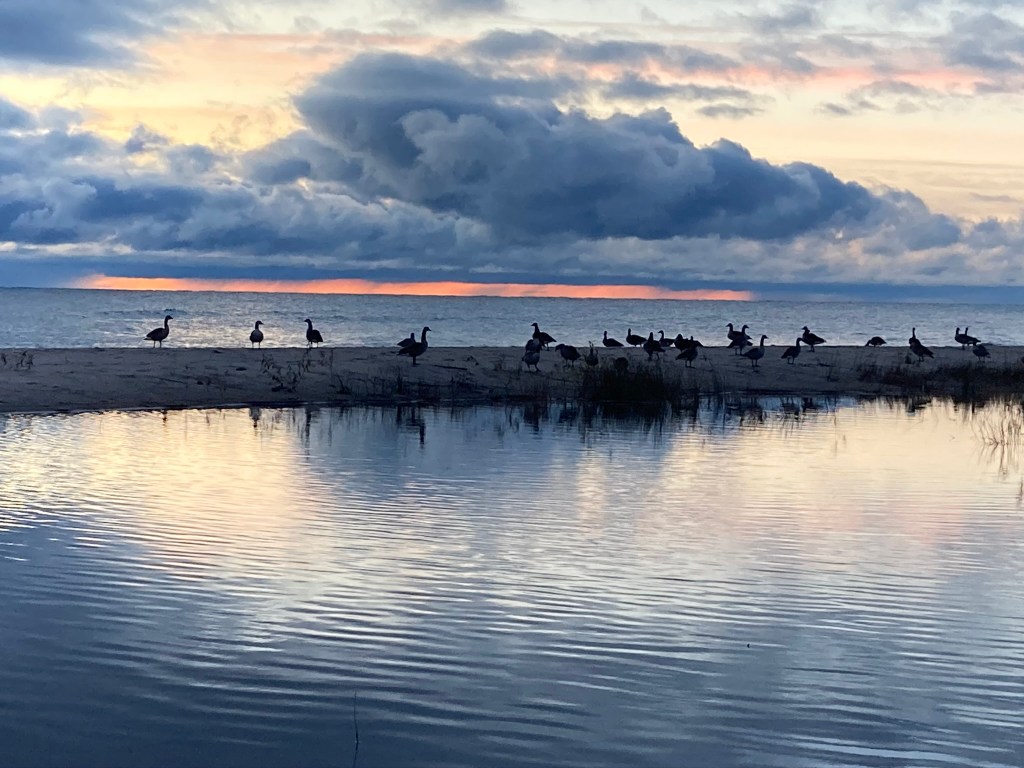
A couple of days ago, my son and I visited my daughter. She’s moved back in with her housemates and is also awaiting the new school year. The three of us walked through the collection of small buildings that form the dorm complex where my son will live. We drove to the river, watched the swans prune, the ducks play, and the geese eat and eat. After ordering some takeout bibimbop, we sat on my daughter’s porch, quietly devouring our spicy rice and vegetables and tofu. We talked about ways to be safe.

two person hold hands
Photo by NEOSiAM 2020 on Pexels.com

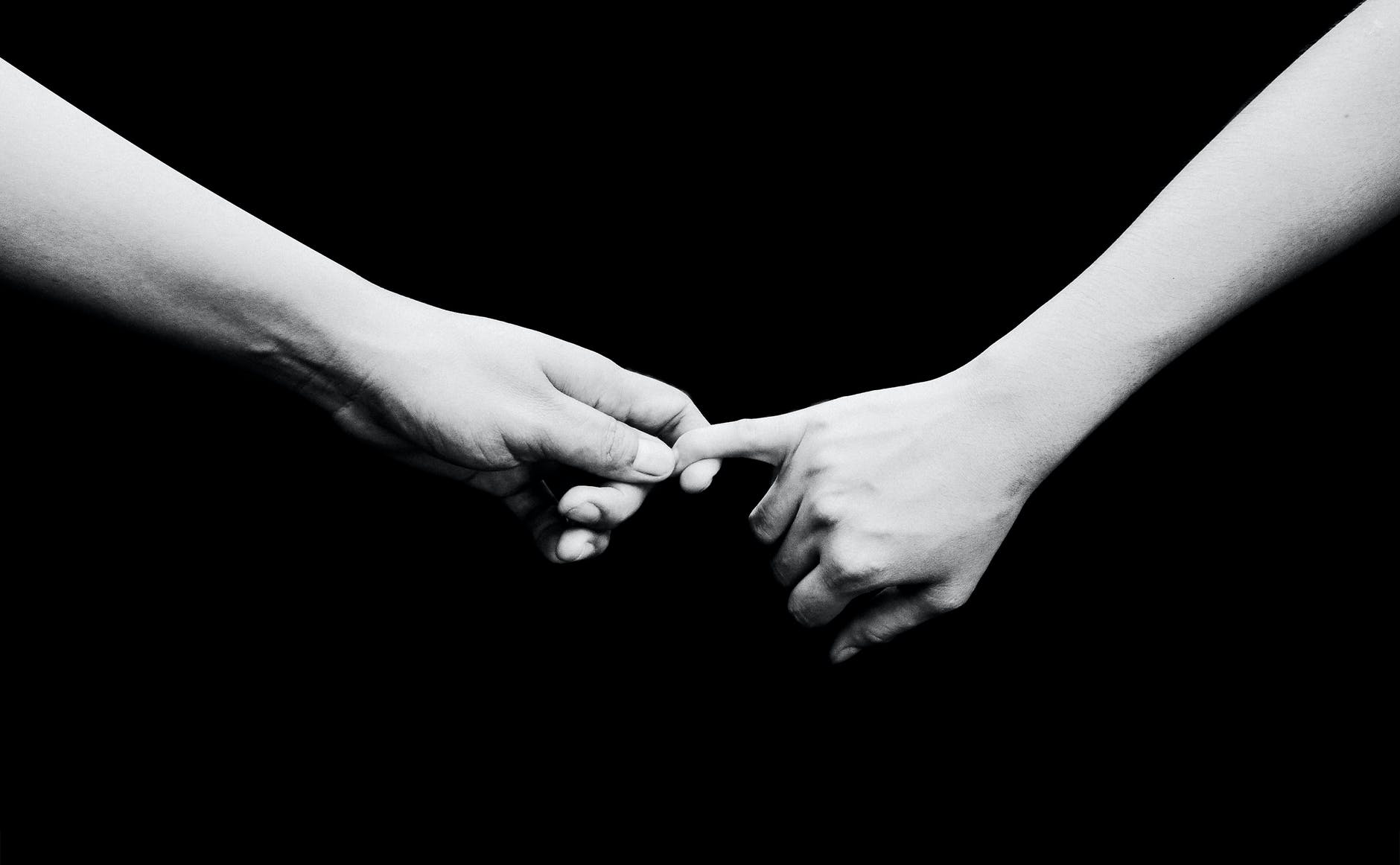
I sat on the porch swing, close to my daughter and I held her hand, as if she were my five-year-old once more, and I missed her suddenly and intensely now that we were together again. I listened to the two of them talk to one another about their class schedules, their futures.

It is not that I’ve been oblivious to how much of their life now unfolds without me in it on a regular basis, but sometimes it just hits you.

This part is over. Has been over, actually.

I was slow to realize.

With my daughter, even though she’s beginning her junior year and talking about what faraway things come next for her after she graduates, it still almost felt like I had time for everyday moments. Even though, despite a brief pandemic-induced period where she moved back home, I haven’t lived with her for some time. Maybe it is because my son is about to leave too that the truth of it all is clarifying for me. Whatever privileged status I may hold in their lives as their mother will not necessarily translate into daily relevance.

At home, at this home-in-the-making, I walk through the house in the morning, letting the dog out, making the coffee, making the bed, and none of it has quite coalesced as familiar. Sometimes, I only feel as at home here as I would in any place where I like the décor. Those books. That pottery vase. The pink tile in the bathroom. The way the light moves through the house throughout the day is pleasing. And we have begun building memories here, a birthday, morning coffee on the back porch, a wide sweep of conversation. Tears and laughter, sleep and restlessness. Meals prepared and eaten together. At the same time, the notion of familiarity can feel elusive.

I am only slowly realizing that familiar does not always have to do with what the things I thought it did – time, memory, history, objects.

I have new possessions and old ones here in this new place, but the old things have the same hum as the new, though I know them better. Possibly I’m confusing the notion of familiarity with something else.

And then suddenly sometimes it all shifts into place with a soft sigh. I am not always half a step off from the general flow of things, but with all the churn and shove of these transitions, I can be a beat behind. I’m noticing too that people notice what I haven’t, like how long I pause sometimes before I’m able to catch up. I tried explaining this recently to my son but I don’t think I was able to make much sense of it.

At times, I feel at once melancholy and joyous, as if both of these are simultaneously my natural states, and I am perpetually tugged in one direction or the other, and the unease I feel within my own skin sometimes is a side effect of the journey from one state to the other.

This is all to say that sometimes our world and the miniscule and the enormous upheavals therein cause us to feel unfamiliar to ourselves, as we try to respond to all the things we need to. Sometimes we try and fail. Sometimes we try and are slow to realize that we aren’t failing. We are in a state of trying. We are earnest. We are tugged between versions of ourselves. We are tugged in and out of the flow that everyone else seems to keep pace with.

Perhaps the most centering power, the thing that consistently brings me back to myself, is the act of looking into the eyes of those people I love, and being recognized. The warm brown eyes of my son, kind and astute, grounded and curious. My daughter’s sea gaze, all grey and green, passion and power and depth. The blue sky eyes of my love, a soar of melody and truth, wisdom and sweetness.

We are all moving through our own states, and sometimes we are trying to catch up to ourselves and to each other and to the world. We owe ourselves and each other recognition and respect, patience and compassion.

Love, Cath

On Works-in-Progress

By Catherine DiMercurio

For most of my life, home has looked like backyards sutured together with chain link. Neighborhoods comprised of various parts, various wholes, my yard, shared fence, our block. As I was growing up, summertime smelled like charcoal smoldering on grills. We stuck our toes into the gooey tar that mended fissures in the street in front of our house.

gray metal chain link fence close up photo
Photo by Kendall Hoopes on Pexels.com

One of the days I was working at the new house, before I moved, I smelled a neighbor’s charcoal grill and thought of my dad, tending ours when I was little, and I had the sense of returning, as if I’d just peddled home as fast as I could because the street lights were coming on and I heard my father’s distinctive get your asses home now whistle. I’ve chatted with new neighbors across old fencing, and have had thought about how easy it is to feel both at home and out of place amidst the almost familiar.

This morning I arose after waking too early and trying futilely to get back to sleep. There are still boxes to unpack, things I can’t find. At times, when fatigued or overwhelmed, I get unreasonably melancholy. I fret over the fact that I cannot fix things to their proper places here so far. Is this where the coffee cups should go? Why is it so difficult to buy a couch? The kitchen table seems right though, so that’s a beginning.

Sometimes, though I’ve only just begun sleeping here several nights ago, it feels as though I’m only borrowing the place for a little while, though we have put in so many hours and dollars to make it feel new, mine. I hope she likes it when she gets here.

I sort of thought the house would let me know what it wanted somehow. But it’s still making me do all of the work.

This sense of almost being home is perhaps exacerbated by that looming birthday, though I don’t place a lot of stock in fifty as a milestone, despite the countless ways the world says I should. I’m expected to know by now exactly if I’m going to keep coloring my greys or not, and I’m supposed to know why. I’m supposed to not care what people think, and know precisely what I think about this or that or everything. I’m supposed to know more, know me, or, I’m supposed to know how much I don’t know and embrace that.

Perhaps I’m as much almost home as I am almost me.

I do know a few things. I know that possibly I might never stop being at least a little afraid that the good things will slip away if I don’t pay close enough attention. Vigilance and worry aren’t the same as spells of protection, but I whisper incantations nonetheless. Things weren’t always so, and though I can pinpoint the exact moment when this circuit in my brain was tripped, it doesn’t seem to mean that I can access an easy remedy for it. It does mean that there is work to do, and that’s okay. Everyone has their own work to do, and it changes as we go, and as with homes, the work is never quite done, and timelines are a bit unnecessary and perhaps even unhelpful. We must be both patient and diligent, with ourselves and with each other.

I know also how the extent to which love makes so much of this so much easier, possible, fulfilling. Though I sometimes struggle with my shortcomings, though we all do, having those we love supporting us, while we offer the same loving support in return, is what stitches together our little communities of you, me, us. So much of the world around us is mended and bound together and I love the way we mend each other and bind ourselves to one another through kindness and gestures, glances, kisses, effort, words, all of it, all of us.

I don’t always know the best way to tackle the work that needs to be done, and it seems all too easy sometimes to see task after task piling up, to get overwhelmed and undone about it all. I’m trying, in this new almost-home place to give myself the space to figure it out, to get closer to where and how I want to be, to have a little more patience with myself with regard to work in progress. It’s the kindest thing we can do for ourselves, and each other.

Love, Cath

On Hermit Crabs and Habits

By Catherine DiMercurio

Sometimes we seek ourselves in our habits.

A few days ago, as I was out walking, I decided to see how running felt again. It had been a while, and when I was a little younger it was easy to start again after a lull. I’ve noticed in the past few years that getting back up to speed has taken longer, been a little more clunky. So, I took it slow. I interspersed some running into the walk and it felt like maybe I’d do it again. I ordered new shoes the next day. At the same time, I know how easy it is for me to fall out of the habit when life gets busy, and I wonder, if I loved it so much why does that happen? And I wonder, is wanting to try again more of an effort to connect the current me to a past version of me? Perhaps I am seeking running again, because it makes me feel strong, and I need evidence of strength right now.

With all the transition happening related to moving, which I’ve been writing about here for some time, I am feeling very vulnerable in many ways. I was sitting at my desk trying to work and I kept thinking of hermit crabs, and what I remembered of them from the Eric Carle story about the hermit crab, a children’s book I had read to my children long ago. They live in discarded shells from other sea creatures. When they outgrow one shell, they must leave it behind and find another more suitable one. I’ve been ruminating about this period of exposure, the seeking, the being in-between places. I think of this current house not so much as something I’ve outgrown, but as something with a shape better suited for another family. I’ve evolved differently, and it has been fitting awkwardly these days, as familiar as it is. Maybe that’s why I’m in search of some external marker of strength, as I’m moving between shells and the exposure is getting to me.

crab macro hermit hermit crab
Photo by William LeMond on Pexels.com

Sometimes I feel that we are evaluated in the same way that we explore a prospective new space. It is a relief to be recognized as something having both potential and current value, even when all our flaws are on display, as they especially are when the stress of transition exposes us.

I think too of the way humans in general move into someone else’s former shelter and make it their own. Some people do build houses specifically to suit their own tastes, but in general we search for something that will do the job. We fit ourselves into a space and are constrained by external factors like cost and availability, yet within such parameters we try to find something that suits our personality and our needs. We seek out something that mostly fits and we adapt.

I suspect many of us feel like hermit crabs right now, tucked away in a home that might be starting to feel too small, even if the fit seemed just fine early in March. Inside our homes we make attempts at keeping up habits that feel good, discarding some, taking on new ones. I try to keep writing, keep up with that habit. I’m revisiting the running habit. I imagine what these activities will look like in my new house, which I now can visualize. It’s there waiting for me, pending paperwork. Or any other disaster that a worrier like me can easily imagine.

Our habits are a huge part of our ability to adapt to new circumstances. We talk a lot these days about “normal” and “new normal.” But I don’t think we participate in various habits because they make our lives feel normal. I think we do them because they make us feel like ourselves. Washing the dishes in my new house will help acclimatize me to the new space, the performance of a routine domestic activity that says life goes on, here in this space now, instead of there and then. But the things that will help me to truly adapt will be cooking for people I love, writing, gardening, exploring the new neighborhood on walks and runs. We have habits that are integral to who we are, for better or worse, and our personal evolution is tied to which ones we hold on to and which ones we let go of. And we all have some we wish to let go of. I find it very easy to lose myself in an anxiety loop and I don’t know how much of that is a conscious embrace of a habit, or a chemical stress response I don’t have much control over. I think it is both – first one, then the other, so I continue to work on what I can control, I work on letting go of the habit, and I look forward to seeing if it’s easier to do in a new environment.

All this leads me to consider how much our homes make us who we are. Do they? Or are they reflections of who we are? Perhaps the answer is both, first one, then the other, but I don’t know which comes first. Perhaps this is another way we are like the hermit crab. We are this version of ourselves in one space.

We are what we inhabit.

And then we inch toward something else, changing either something about our home to better suit us, or finding a new space all together. We inch forward, we adapt, we inhabit a new version of ourselves, here and now.

Love, Cath