On Spring, and Little Mysteries, and Soft Truths

By Catherine DiMercurio

It’s been a bizarre spring. The last time I wrote, it was just the beginning of it. Now we’re in the thick of it, the irises are blooming and the peonies are about to burst and the buckthorn is proving to be its annual nuisance. Last time I wrote, I was figuring out some paths forward and now they all look a little different.

When I began this blog about open-heartedness, I invited my readers to wander with me, to explore heartbreak and wholeness and everything in between. I think this blog has been around for about eight years, and one of the main things I have discovered in that time is that there is wholeness even in heartbreak, there is wholeness when we feel healed and wholeness when we feel broken. To be human is to be whole; the breadth and depth of our experience is encompassed by who we are in this life and nothing—not pain, loss, grief, fear—can deplete the full richness of our identity. We absorb it all, we metabolize it, transform it, re-emerge as new versions of ourselves over and over again.

The wholeness can feel elusive sometimes. In parsing out recent events, I tell myself I don’t have anything to prove, but my brain cycles through the discussions I’ve had with myself, formulating a defense for decisions I’ve made, paths I’ve taken, as if I have to account for them to anyone other than myself. She has a high threshold for what “makes sense,” this internal judge of mine, and hears arguments daily, usually when I’m in the shower and relitigating my past. I sense it is time to move past such habits, that my energy is needed elsewhere.

But still, I have a strong desire to be “fair” and “reasonable,” and to be perceived that way, so holding myself to account is habitual but sometimes excessive, often unnecessary, and occasionally, cruel. Looking back over my life, I see the ways in which my gut was right, but that it was also right to test its theories, as guts don’t always see nuance, or the need to have certain experiences anyway. But that gut has a good head on her shoulders. I’m learning to be mindful of what she’s instructing. I find that I’m often wary about going with my gut instinct right from the get-go because it is difficult to determine if something is actually and truly wrong when I get that “something feels off” kind of feeling, or if the discomfort I’m feeling is a natural and necessary part of a particular growth journey.

There is also some work to be done when I consider what I just said a few sentences ago, about my desire to be perceived as fair and reasonable. Who is my target audience and why should their perception matter to me so much? Ralph Waldo Emerson wrote, “What I must do is all that concerns me, not what the people think.” I remember reading that in college, being struck with the boldness of that statement. I feel as though I’ve internalized a lot of expectations about who I’m supposed to be and how I’m supposed to behave, and I get caught in the trap of overexplaining, even to myself, why I’ve chosen a particular course of action. Maybe to be regarded as fair and reasonable is so important because I’ve always been a sensitive person who was often told she was overreacting or misperceiving a situation. So I’ve grown accustomed to overcorrecting and interrogating myself, as if there is some value in making my life make sense to other people. There used to be value there. I craved the validation of others, people I trusted saying good thinking, and yes, that makes sense. It’s always nice to hear but in truth I haven’t needed it for some time, though part of me doesn’t entirely know that yet.

It is a strange thing to consider walking through this world and accepting mystery and to say, maybe I don’t need to understand that. Maybe I can stop trying to figure out why I feel better alone than when I’m in a relationship. When I knew myself less, the opposite was true. I thought I was a better me in partnership. But just as my understanding of myself has improved, so has my understanding of what does and doesn’t constitute a partnership. Maybe when we’ve done all the philosophizing and therapizing we can, all the studying and soul-searching, we can say, for now, I accept this as a mystery of life, a mystery of love, a mystery of the universe and of my own soul. Maybe my energy is needed elsewhere, maybe yours is. Possibly it will all make sense when we’re ready. Or, we are ready and it does make sense and we are slow to acclimate to the truths of our existences.

Photo by Valeria Boltneva on Pexels.com

This morning I was preparing to go outside at dawn with my coffee and my dog. He usually sniffs around the yard and I fill the birdfeeder. I examine what’s blossoming: currently, irises, dahlias, snapdragons, impatiens, columbine. I usually hope to see cardinals and woodpeckers before the sparrows and grackles arrive, but lately that hasn’t been the case. Today, though, when I looked through the window before opening the door, I saw a fawn grazing near the overgrown herb bed. I looked past her and noticed two other deer nestled in the myrtle at the back of the yard. Soon, one rose, another fawn, who also began grazing in the yard. The larger doe who I assumed to be the mother remained reclined. She laid there so long after her offspring had risen and wandered that I began to wonder if she was hurt, or, perhaps even giving birth to another baby. I watched the three for a while through the window, feeling glad that they felt safe and nourished in my yard. I left them to their quiet morning routine, told my dog we’d go out in a little bit. I returned after about twenty minutes; they had gone. When I finally wandered out into the yard with my dog, I could see the indented places in the myrtle where they had lain and I wondered if they had cozily bedded down for the whole night in my yard. It gave me such a feeling of peace to cede my space to them for a little while. I imagined that the myrtle was still warm in the chilly morning from their soft brown bodies.

There has been some grief this spring, some loss of a sense of safety and well-being in my little circle. I know that this morning’s sighting of the white-tail deer in my yard was a chance occurrence but also I don’t know if it wasn’t a tiny little gift from the universe, a brief glimpse of a mother and her two youngsters feeling safe and fed and content and together. Maybe mornings like these are for embracing little mysteries as they come to us, and in them, we sense our own enough-ness.

Love, Cath

On Adjustments, Distractions, and Tools

By Catherine DiMercurio

On a mid-May morning, mid-week, I take my dog out to the backyard. It’s just after 6 a.m. We won’t go for a walk today because it’s garbage day, and though he is fine with walking past the loud trucks and even the workers, he struggles with the people dragging cans to the curb, sometimes with an unleashed dog tagging along. A month after a loose dog attacked us, I try to minimize the risk of another such encounter. So instead, I train in the yard, running Zero through commands that he does without fail in the house. This is a training step I skipped over when he was smaller, working through familiar things but with added distractions. I was eager and impatient to add walks into our routine and pushed him through a lot of things too quickly. So now I’m taking a step back, trying some things again, but still endeavoring to keep several walks a week incorporated into our schedule. We walk early these days, armed now with an airhorn and pepper spray. Walking just after the sun begins to rise, we see mostly rabbits, and deer. We know the schedules of the folks who have to leave their house before 6:30.

As I try to extend the duration of a “stay” command in the yard, with Zero battling the distractions of birds, squirrels, scents of all kinds, I myself get distracted by the sweet and slightly herbal scent of iris blossoms, newly bloomed. It is hard for both of us to stay focused sometimes.

Mid-May also marks the one-year anniversary of the death of my older dog. It took Zero and I at least half a year at least to stop expecting to see Phin in his favorite napping spots. With every walk I take with Zero, avoiding his triggers, I think of walking Phin, and his joy at being out, trotting along in front of me, excited but also in his own peaceful, exuberant state of mind. He was friendly with everyone, afraid only of loud noises or being left alone. Without Phin, Zero and I have made adjustments, to our schedule, to the way we interact with one another, to the way we interact with our space, a home without Phin in it.

And just before that sad anniversary, we celebrated my son’s graduation from college. I’m now the parent of two college graduates, two people who are healthy and strong and surrounded by people who care about them. I make adjustments in this area of my life, too. I have to, to the way I think of my children and how our relationships have evolved, and will evolve now that this milestone has been achieved. It’s been a while since either of them has lived at home. They’re self-sufficient, and I’ve marveled at how readily they’ve taken on various forms of independence in the years since they’ve been at home. I wonder and worry about how our relationships will change, even though we’re close. We talk and text often; we visit as frequently as makes sense for everyone’s schedules. They have full and wonderful lives of their own and whenever we see one another it strikes me how honored I am to be a part of their current worlds.

In my relationship with my boyfriend too, we are often making adjustments. We navigate, communicate, gain deeper insights about the other as things come up. I’m learning that there is and there isn’t a trick to all this. There isn’t some magic that eliminates the need to do any work. There’s nothing that makes everything easy all the time. But there are ways to make communication more effective. There’s a way to listen with an open heart and a way to speak without defensiveness, and when both people are willing and capable of those things, tough conversations unfold differently than they used to for me. They don’t leave me feeling confused or attacked, but rather, heard and respected.

Life is constantly throwing things at us. I’ve spent long portions of my life believing that you could wait things out, that there would be periods where nothing was being thrown at you and in those times, happiness awaited. But then you learn that not only can you not predict when those “down times” will be, you can’t expect them to last, and when you’re in them, you’re not always aware of it. And even if you are, you might be recovering from the stuff you’ve just dealt with, or feeling anxious about what’s coming next. I get that this is why we get so many messages about “living in the moment” but that can be incredibly difficult to do. For me, this is another adjustment I’m constantly making. I often need to tweak my perspective, and not beat myself up for not having everything figured out. If I was adroit at planning several steps ahead, maybe that would lessen anxiety a bit, or maybe that would simply extend future-worry even farther ahead in the timeline.

So how do we manage anxiety about the future, or concern over how we’ve handled things in the past? How do we cope with the ways things are changing, constantly in a state of flux? How do we accomplish not just making the most of the times in between turbulent parts of our lives, but find some sense of calm even during the storms?

For me, there is a lot of reframing, a lot of conversations with myself where I try to put various things into perspective. Sometimes we have to remind ourselves: I’m safe or I’m strong or I’ve got this or I’m loved. When I’m worried about whether this scenario or that will come to pass, and I’m doing all the what-iffing worriers do, I have to remind myself of things I have handled, have gotten through.

When I was spending time with my son recently, I was marveling at the way, throughout college, both he and his sibling handled their housing situations. After the first stint in the dorm, they each found living situations that they could afford based on the jobs they’d secured for themselves; they found housemates, they signed leases. They handled things. No one was calling me to ask for advice on how one does this, or what does that mean in the lease, or how to handle a roommate or landlord situation. Of course, I would have tried to help if they’d needed it or asked, but they both figured out so much. I was telling my son how impressed I was that both of them did this and my son replied that they’d learned it from me, from the way I figured things out after the divorce: how to be a single parent, how to find and adapt to a full-time job after years of freelancing, how to refinance the house, how to sell a house, buy a house, and how to navigate relationships and grad school in the midst of all this. My son reminded me of how much I hadn’t known how to do or hadn’t been prepared for, and how I just kept figuring things out. He said that’s how he had approached things he wasn’t sure of.

What a gift, to have this conversation, and for him to be able to share that with me. And it was such a timely reminder for me, that even through all the recent changes in my life, I can keep figuring things out, that I do know how to do that.

There are so many things in my life that I thought I’d get to keep. Various loves, imagined futures. I also thought that once I’d achieved a belief in myself, it would simply thrive inside me without needing attention. I’m learning that it needs to be nurtured like anything else. You don’t get to keep anything without taking care of it. Nothing is free, nothing a given. We know this is true for all the relationships in our lives, but I sometimes forget that it is also true for the relationship we have with ourselves. I don’t only need quiet time to myself, and good sleep and exercise, and time to write and do pottery, I need to continually cultivate a healthy mental state, be a supportive friend to myself.

Sometimes this surprises me, that something in me calls for my own attention in that way, but I’m also pleased to observe that other things that I’ve tended without apparent payoff have come to fruition in their own time. A couple of years ago, I divided the irises I’d inherited in this yard and moved some to other locations in the yard. Last year the transplants were still alive, but hadn’t bloomed. This year, the plants are filled with snowy white blossoms, and deep purple ones too, which are about to open. I worked hard and then I waited and things came together on their own timeline. The thing about the waiting is, I didn’t know I was waiting. I had not given up, but I also was not actively hoping. I thought, who knows if these will ever bloom?  It makes me wonder what else is preparing to bloom in people’s lives, things we’ve put work into, things we’re not consciously waiting for, things we keep nurturing anyway, because it feels like the right thing to do, it feels like we’re compelled to. It’s the same reason I write, going long stretches without anything getting published. Why I keep signing up for the next semester of pottery. It’s why we try.

There is so little sense to be made out of life. But it is also sort of ridiculous to think it is supposed to make sense. This is another way I try and reframe things. It doesn’t make sense to want it to make sense. All we can do is make our own order here and there, make the adjustments and do the work that allows things bloom in our lives, try to do good and be good. I feel like we do get guidance here and there, about where to direct our energy. Trying to lean into the things that make us feel connected or safe or exuberant or peaceful or joyful—this makes sense. But the world is going to knock us around anyway, and we’re always going to have to make adjustments to the way we respond to all that happens in our lives. I think it is such a delicate endeavor, recalibrating our responses and perspectives as life unfolds, and change is inevitable. We need a variety of tools and skills to keep being able to make the necessary adjustments, and maybe the most important one is patience, with ourselves, as we learn to keep adapting and blooming.

Love, Cath

On Mapping, Risk Management, and Clues

By Catherine DiMercurio

Not everyone prioritizes a sense of safety. Some folks are natural risk takers and enjoy adrenaline rushes, and for other people, that rush causes not a pleasurable feeling, but a host of uncomfortable after effects. Everyone is wired differently. Still, most people want to feel emotionally safe and physically safe within their homes and neighborhoods. I suspect that even the natural risk takers prefer to seek out their adventures rather than be surprised by them on a morning walk.

I’m not a natural risk taker, and I’m okay with that. I can be cajoled, either by myself or others, to try new things, because I do value the growth that new experiences invite. But there are certain environments where I think it is reasonable to expect safety, and one of them is when walking one’s dog in one’s neighborhood.

It’s hard, then, to not look at the dog attack my dog and I experienced recently as a violation and a setback, for both my dog and for me. We’re both okay. It could have been worse in so many ways. But the problem with that “it could have been worse” thinking is that while it does invite you to be grateful for all that didn’t happen, it does dismiss what did. And in the frightening moments when something terrifying is happening, you don’t yet know how bad it is or will be. It feels life threatening. Lots of thoughts flash through your head, and in my case, I had no idea, in the midst of the attack, if my dog would escape without serious, or even fatal, injuries. We’d walked past a house I usually avoid. The dogs are tied up, but there’s no fence. You can’t see them at first, because there are always a lot of cars in the driveway blocking the view. We didn’t see the one that must have slipped his collar until he was running across the street, headed right for my dog, ignoring my firm shouts of no, and my stance, squared off in front of my dog, all of which have gotten us out of other situations with loose dogs.

When we finally escaped and returned home, I both panicked and collected myself enough to check my dog over for wounds. I thought of the minutes that we both fought, and how loudly I screamed pointlessly for help that didn’t come. I thought of how long we were followed by the other dog, and how I repeatedly had to shout and stomp him away and keep myself in front of my dog, to avoid a continuation of the attack. I thought about how it felt like my legs were shaking so badly I wasn’t sure how I was going to make it home anyway. I thought of the woman who, a block over from where the attack occurred, came out of her house with a broom to help fend of the dog so my dog and I could make our escape without being followed. It could have been worse. We ended up not needing to go to the vet, though in the days that have followed, I’ve continued to examine my dog, peering through his thick double coat, studying the wound I missed initially. There’s a minor, scabbed-over line? gash? that could have either been from the harness or a tooth or a claw, but it looks to be healing and I haven’t noticed any signs of infection. I never saw any blood on that first day, and yet, it is scabbed, reminding me of the way I’d skin my knee after a fall as a child, and how the abraded skin would sort of bead up but never really bleed, and then a thick scab would form.

I worry I’ve let him down by not finding it sooner. I worry I let him down. I worry.

He continues to be active, playful, and is eating and drinking normally. He was like this almost immediately. For a week, we didn’t go for walks.  We’ve started again, the first time back out being with my boyfriend, which provided us with an added sense of security, in addition to the airhorn I brought along.

Still, I find myself recalling other significant moments in life where my sense of safety has felt similarly erased, as if this event calls up a map, revealing neural shortcuts. I’ve realized in recent days that there are a lot of these shortcuts, and the older you get, the more of them there are. The map is intricate. A song can take us back to a key moment in our past, a smell can, an event can. Every day we have more past than we used to have. Some of the memories we travel back to are beautiful, and some are the worst we’ve experienced. So often, it is the painful memories that surface with ease, seemingly un-dulled by time.

Photo by Aksonsat Uanthoeng on Pexels.com

I remind myself in the aftermath of all this, that it isn’t my job to do everything possible to avoid more pain. It’s to populate that map with so many new, good things that the pathways back to the frightening or wounding memories are crossed over many times with side trails, alternate routes, shortcuts to joyful recollections, to peaceful moments, to delight, to wonder.

Now, though, I’m more fully aware of how wrong a simple dog walk can go. In the past, even though we’ve been approached by loose dogs before, I have felt a false sense of security because the owners have been nearby, or showed up, and things were diffused before they turned ugly. I thought the risk I was managing was more minimal than it is.

At the same time, the usual joy and pleasure of the morning walk is not something I can give up easily. And based on his demeanor the two times we’ve walked since the attack, it isn’t something my dog wants to give up either. We have some work to do. I do think he’s more skittish than usual, and we still need to do things like walk as early as possible so that we can avoid other dog walkers. He was reactive before this, and the attack is definitely not going to help. But, I’m starting a new training plan. I have an air horn. I have pepper spray.

It’s difficult though, to find that sweet spot, where appropriate caution and enjoyment can cohabitate. Where I’m not leaning too hard into risk management, or too hard into peaceful obliviousness. But this is the way with everything. It’s the same in this new relationship I’m in. For the first several months, I felt so self-protective, unwilling to jump all the way into the vulnerability that builds the closeness that I long for. Once you’ve tried to build that over and over with other people and it doesn’t work out, it’s so easy to hesitate, to hold back. Still, things are beginning to change for me, and while I’m not jumping in with wild abandon, I’m wading in, and enjoying the process of slow and deliberate acclimation, and it’s been so wonderful to do that with such a compassionate and loving person by my side. I think he sees my true value because I was finally able to see it (and I see his). All of this encourages the blossoming of trust, which I think of as my body’s and my mind’s own intrinsic from of risk management.

We all have different strategies for getting us through tough times, and sometimes it seems like none of them are particularly effective. I remind myself that the route toward healing is not trying to make myself “feel better.” It’s allowing myself to experience the feelings various events create and trigger. I used to think “working through” things meant thinking my way out of feeling sad or angry or scared. But to a certain extent, I’m starting to understand that being brave enough to not avoid all those heavy feelings is the most direct route toward getting to the other side of them. I often worry that I’m dwelling too much on something, but I believe that sense comes from my habit of trying analyze my feelings instead of simply experiencing them. Maybe it would be better to look at my hyper-focused thought patterns as clues to feelings I need to spend more time with, rather than thoughts that I need to keep rethinking.

I don’t want to feel like I’m prioritizing safety so much so that I’m missing opportunities to experience fun, joy, delight. I want to give my dog a good life, and I want that for myself. As with most things in life, the balance here—between risk management and pleasure-seeking—is hard to achieve. For me, it is important to remember to be patient with myself, and not label my process of bouncing back from a frightening experience as an overcorrection. We were truly in a dangerous situation and the world isn’t telling me to “get back out there,” but a part of me is hearing that anyway.

For now, I’m going to take it slow, and lean into my support system, and populate my map with as many shortcuts to good memories as I can. There’s no right way to do any of this. Safe travels, friends.

Love, Cath

On Magic, Tricks, and Magic Tricks

By Catherine DiMercurio

There’s something about being in a new relationship in your fifties that leaves you with a whole deck of new thoughts and feelings, which get shuffled around and presented to you, as if some sprite doing the universe’s work is trying out a magic trick. Is this your card?, they say with a flourish. And you study it, trying to figure out if it is, in fact, your card.

Photo by Israel Garcia on Pexels.com

What I mean to say is that all new relationships can leave you feeling a little perplexed. After a divorce, no matter how long after, and after other relationships that didn’t work out, no matter how many, when you’re in your fifties and feeling careful and cautious, you don’t immediately believe in the magic part of the magic trick. You’re kind of looking for the trick.

So, this summer, a year after I had reached out to a guy on eharmony and it hadn’t gone anywhere past an initial exchange, he emailed me. I’d had the foresight to give him my email address the prior year, knowing I was about to be done with dating apps. This past August, when I read his email, it took me a minute to connect the dots back to that initial exchange on the app. I then remembered why I had initially reached out: he was a fellow writer, and a professor (I’d joked with my friends about dating a professor. Where’s my professor? I’d ask). It seems he showed up. He also liked some of the same things I did, such as exploring the natural world, hiking. He was a parent, too. There were possibilities here. I had the sense that if I didn’t write back immediately, I would talk myself out of it, and part of me felt like I should give him a chance. I decided to write back before I could change my mind. I was candid about the fact that I was content on my own, and not sure I even wanted to date anymore.

After my last break-up, I had settled into a largely peaceful rhythm that involved following my interests and instincts, enjoying time with family and friends, and reveling in the absence of the particular anxieties my last relationship had wrought upon my heart and brain. Not that this period was angst-free, but when I poked around the notion of what if this is the way it always is—just me and my dog and writing and pottery and family and friends—I was largely okay with that. While I worried that at some point I would wish I had found someone to grow old with, I also was comforted by the idea that alone wasn’t truly something that I’d be, because I have a lot of good people in my life.

Still, I was curious. I suggested that we could email one another and get to know each other that way, as a start. He was agreeable.

We did this for a couple of weeks, and as writers, the format suited us. We sent long missives back and forth on a variety of topics—our pasts, our beliefs, our likes and dislikes, random observations, books, the writing process. It felt like during this period of writing long emails back and forth, we were in a way approximating the feeling of a developing friendship, one that might have taken place in the real world, had we met, say, at a bookstore. I admit though that during this time of correspondence, I was on the lookout for anything I might construe as a red flag, or anything I sensed might spell trouble or be a sign of incompatibility. When I could find none, much to my surprise, I suggested we meet for a hike.

Since that time things have progressed in a way that continues to be dissimilar to any experience I’ve had in the past. He lives over an hour away. There has been little opportunity to just meet for a bite to eat or something, so we squeeze in our time on the weekends. I was finding recently though that I missed the solo down time I used to have on weekends, so I requested we take a weekend off. My ability to make this request speaks volumes. In past relationships, I would have found it very difficult to say something that the other person might perceive as a pulling away or a pushing away. I would have worried that to ask for time for myself would have resulted in their loss of interest. But in this relationship, not only did I feel confident enough of our connection to not worry about my request being misperceived, but I was also keenly aware that I needed this time for myself. I have worked diligently and purposefully toward the goal of being able to recognize and respect myself and my needs, so being able to advocate for myself feels like a necessity, not an option. I know I am a better person and a better partner when I am taking care of myself, not only trying to take care of the relationship. The fact that he received and understood my request without hesitation or negativity was a relief, though not unsurprising when viewed within the context of what I’ve come to know about him.

Still, this is all unfamiliar. It feels healthy and good but the way in which it hasn’t followed the patterns of past relationships has been at times both affirming and unsettling. Hence the aforementioned sprite with the deck of cards and the magic trick. My brain often reverts to questions that seem to assume a norm, a standard. I ask myself: is this how it’s supposed to be (i.e., am I doing this right)? But of course it won’t feel like the past. Not only were there a lot of unhealthy aspects to those past relationships, I am a different person now and am bringing a completely different energy to this relationship. There’s less urgency, less anxiety. I have the sense that we are building something with different tools and materials than what either of us have used in the past. And of course it is going to look and feel different from what other people have; every couple has its unique origin story and history. I love the feeling that we’re building our own story, figuring out the next phase and phrase as we go.

And yes, this is going to mean that at times we pause, looking for the trick. When you’ve had the rug pulled out from under you a couple of times, you tend to be careful of your footing. Or skeptical about the magic trick that seems to be happening in front of your eyes. My instinct is to slow things down, watch mindfully the way it’s all playing out. But sometimes you can’t spot any trickery. Sometimes maybe the magic is just the magic.

Love, Cath

On Coloring Inside the Lines and Owls at Midnight

By Catherine DiMercurio

It’s a strange world to be in, where it feels like it is falling down all around us but we’re expected to still be our best selves, working, keeping a roof over our heads, pursuing our own dreams and our own happiness. It’s hard to make sense of.

I certainly don’t have any answers. I’m just over here coloring inside the lines, keeping my head down and staying focused on my work, whether it’s the job that pays the bills or my creative work. I try to be a good mom when I’m needed, a good friend, a good girlfriend, a good sister and daughter. I try to stay true to myself, pay attention to the world around me. But I also have to resist taking in too much when it makes me feel like I’m drowning.

Still, all of that can feel like you’re keeping busy watering the plants while the house burns down around you. I have dreams about various apocalypses, global and personal.

I try and focus on the whispers of good things, to amplify them, the little moments that breeze through our lives and feel like happiness, joy, silliness, small victories. A laugh shared with my kids, moments of connection with my friends or family, a hug with my guy. Recently, before I went to bed, as I was turning the heat down, I noticed the battery monitor on my thermostat was at one bar. I flashed back to years ago in my old house, not long after my divorce. It seemed that the furnace had stopped working. I had several long moments of panic, and then somehow realized it might be the battery in the thermostat. I couldn’t remove it from the wall though, to get to the batteries. I ended up breaking something on the flimsy plastic housing and then having to tape it back together. Every time I touched that thermostat afterwards, I was angry with myself for having broken it, frustrated that I didn’t have it in me at the time to replace it and figure out how to rewire it. I just lived with it broken but functional. This time, in this new house with the new thermostat that the repair man installed after doing some expensive work on the furnace, I proceeded differently. I was being proactive in replacing the battery, instead of waiting to have the thermostat stop working. I googled how to get this particular model off of the wall, and I changed the batteries (I actually had the right batteries to replace the old ones!). I went to bed, warm and safe, with nothing being broken. Small victory. Such a small victory. But I clung to it nonetheless.

It was hard not to think about how such a simple domestic chore could represent change and growth. We live long stretches of our lives, feeling broken but functional. And eventually, we become new. Well, new-ish. There’s no magic in it. It’s a series of choices, consequences, broken heartedness, healing, and continued striving. It’s work. And often, the amount of work that we’ve done is not apparent until we look back over the years.

When I started writing this post, it was different; it was about belonging. I had attended a pottery show/market with my boyfriend and one of my closest friends and her husband. I saw many people from the studio where I take my class, and I felt like part of the “club” each time I greeted someone, or they greeted me. Later in the week I learned that one of my stories had been nominated for a literary award. It was affirmation, that I am on the right path with my writing. It was a nod to the fact that I belonged here too, in this club of writers. But it was only because I spent years cultivating a different sense of belonging, that I could enjoy these other types. It took me a long time to feel as though I belonged to myself, and without that foundation, I don’t know that these other instances would have resonated as they did. I think my self-criticism would have found a way to outweigh the good things.

Of course, there is still self-doubt, about relationships, creative work, life in general. Sometimes we don’t know if we’re growing or regressing. Sometimes we’re just as nervous about good things actually happening as we are about bad things potentially happening. That certainly doesn’t feel like growth, but in its own way, it is. That is, having an awareness of what we’re feeling and being able to name it is so much better than feeling awash in a vague discontent or despair that we can’t pinpoint. We have cultivated an awareness about uncomfortable feelings in our bodies—an upset stomach, a tight chest, tensed muscles—and we understand that it is because we’re anticipating something. Even when it is a good thing, our bodies sometimes feel this way. And though we’d love to get to a point in our evolution where good things aren’t something we brace for, the growth is in the fact that we get it. We understand that this happens sometimes, that we experience a nervousness and tension, which is part excitement but part anxiousness about the unfamiliar, or which is a sense of caution about potential danger. Sometimes that caution hangs around us like a fog even when we’re standing in the sun. Knowing ourselves in this way, when we haven’t understood such feelings before, and knowing that we can work through them, is growth. But that doesn’t mean it feels comfortable. And it doesn’t mean that working through them is linear.

When I couldn’t sleep recently, I listened to the neighborhood Great Horned owl sometime after midnight. It’s hard to think of a more peaceful sound than such a magnificent bird calling out at night. I read online that the particular call I was hearing was a “territorial” one. I recalled the way I move through my house sometimes, looking at objects that represent my personality or my journey, and I think “mine, mine.” So, I understand the territorial call, the need to mark out space as your own. There is a part of me that remembers every detail of every battle that led me back to myself. That part of me recognizes that being the person I am today represents a hard-won victory, and not a small one. There is another part of me that appreciates the need for a softer approach, especially at the beginning of a new relationship. Not a relinquishing of self, but some kind of flexibility as two people try to understand how to share their lives. That part feels unfamiliar and ill-defined after a long time on my own, and an even longer time getting the balance wrong, relinquishing too much in past relationships.

It’s no wonder that the territorial part of me is hooting in the night, as if to remind me not to forget who we are and how we got here. And that’s okay. That’s the part I’m on. At the beginning of something new, of course this is going to be what comes up as I begin to draw close to someone. But, it’s navigable. The owl knows and navigates the night, and so do we. What’s more, we know and navigate ourselves.

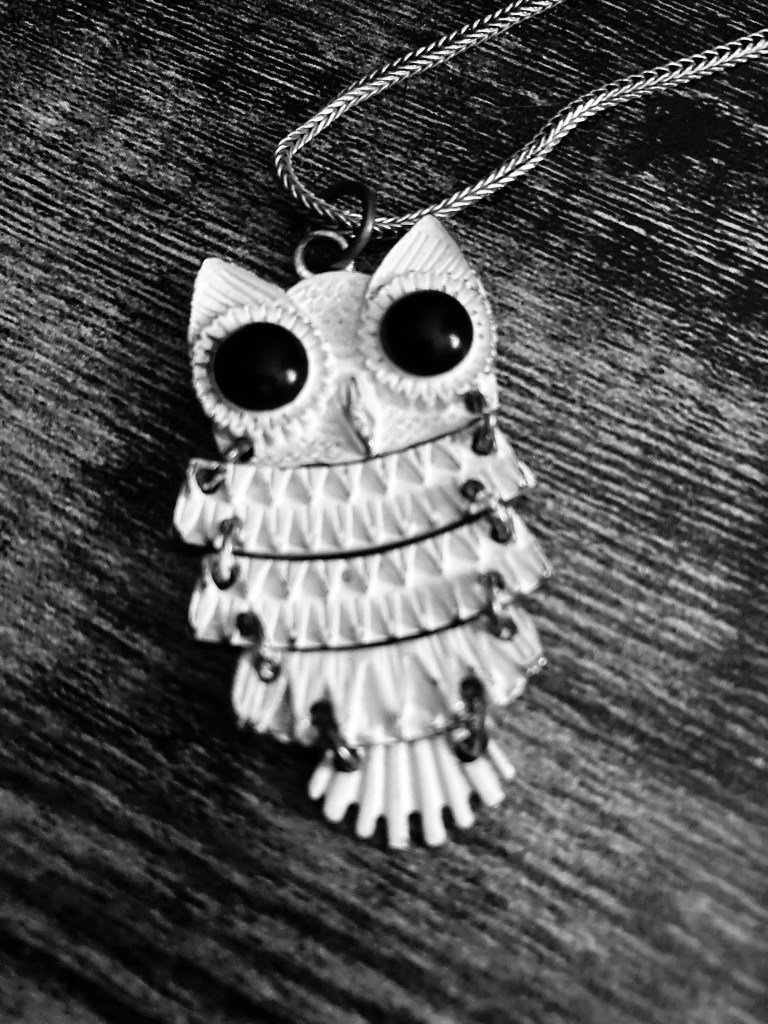
On my desk is a kitschy owl pendant I’ve had for over a decade. I rediscovered it recently, wear it sometimes. It landed on my writing desk at some point in the last week or two. It is almost unfathomable to recall who I was when I first wore it and who I am now. And I’m startled too to think of continuity, and what we retain of ourselves through all the years and all the changes, what has always been a part of us. What a victory, to be able to recognize and embrace all these parts and versions of ourselves, and where we are right now at this precise point in time.

Love, Cath

On Socket Wrenches and Sight Reading

By Catherine DiMercurio

I keep thinking about Carl Sandburg’s poem, “Fog,” which opens with the lines “The fog comes / on little cat feet.” In the very brief poem, the fog arrives, hovers briefly over the city, and moves on. I’m thinking about those little cat feet because it seems like some of the best things come into our lives this way, quietly and softly.

Sometimes when you’re starting something with someone new, life feels disrupted in a loud, jangling way. This is not always a bad thing and sometimes that’s what we’re hoping for: someone to shake things up, knock us off center, sweep us away. But once we’ve learned who we are and how to center ourselves, once we have come to understand our own person and the value of being centered, the storminess of off-center relationships feels a lot less pleasurable and a lot more threatening to our sense of peace.

Though, maybe the images of little cat feet and fog are not quite the right ones either. Dogs have always been such a big part of my life that I’m imagining what sort of weather might come in on dog feet. Maybe a day of boundless sunshine, maybe a cloudy day that’s made for nothing but snuggling. Maybe that’s how this new person has entered my life, softly and gladly. The sunlight padded in on friendly dog feet. . . .

I wrote a poem once about an ex, about the way he seemed like a stray cat, showing up sometimes for a scratch or a bowl of milk, the way he knew that he’d not be sticking around and the way I believed I could keep him. And the way I showed up like a stray dog, content to misinterpret affection for love. Now, in this new relationship, the energy is different. It’s mutual and earnest, playful and affectionate. And I don’t feel like a stray; I feel like I belong. I may still get a bit wary sometimes out of habit. But I also have the sense that everything is entirely genuine.

Sometimes I have to remind myself that it is okay to let people in, to accept care and hugs and kindness. I went from not knowing how to provide such attention for myself, to relishing in my ability to do so, to wondering if I had to do so all the time now, and no longer knowing if there was something wrong with wanting and needing it from other people. It’s hard to find the right balance.

There was a moment a couple of weeks ago where I very much felt as though I was standing at a crossroads. I was having a bad day, wanting a hug, feeling like I wanted to crawl under my desk and hide from the world. All the defense mechanisms kicked in—the walls, the isolation, the I-will-just-handle-it-myself. The man I’m dating had offered to stop by and give me a hug. I was worried that it was too out of his way and he didn’t really have much time. I didn’t want to be an inconvenience. But he said “I’d be happy to stop by and I’d love to give you a hug.” On my lips were the words “no” and “I’m fine” and “thanks, anyway,” but there was a voice inside saying it was okay. To say yes. To be hugged and comforted and cared for.

Do you ever have that feeling that you are poised between two worlds, and a small decision feels much bigger than it is? There’s the world in which you know are fine on your own and another one, the one in which someone is trying to be there for you, the one in which you let yourself have the comfort they are offering. It is a long moment, and you swing as if dangling from a pendulum between the two worlds.

Many thoughts flash through your head. You think of all the times people who promised to be there for you weren’t, or, the times the person who was coming through for you kept score, metering out how many times they had to show up. Or the times showing up for you was a tool they would later use against you. But this is a new time, this is a new person, you are a new person. We are.

The pendulum swings and you take a deep breath and say, “That would be nice. If you stopped by.” And they do and it IS nice, it is better than nice, and you feel the victory in letting yourself have this, a hug from someone who wanted be there for you.

It is one of the hardest things to do, letting someone be there for you. We are praised for our independence and chastised for our “neediness,” and experience teaches us that we simply have to be able to handle so much on our own because sometimes that’s all we have. We all want to be capable and confident in our own abilities, and those are good things, but so is being able to accept help when it is offered. Or being able to ask for it. That, too, takes incredible strength.

I am thinking too of how wonderful it feels to show up for someone else. Recently my sister needed a favor, which is a rare thing. She’s the oldest of the five of us siblings, and she’s independent in such a thorough and awe-inspiring way that I was completely delighted when I offered my assistance and she accepted. All I did was drive her to pick up her new car and help get the license plate off of her old car, but it gave me a lift all day to have been able to do that for her (and to be in possession of the universal socket wrench that got the stubborn bolt removed). It feels good to be able to return a favor when you have been lucky enough to receive so many.

Since that moment a couple of weeks ago when I accepted the out-of-the-way hug, things have progressed with my new person in promising ways. I’m looking for old anxieties and not finding them. I seem to have found someone who, like me, is not truly capable of being someone he is not. In my last relationship, I wanted things to work out so much that I tried to be very accommodating. I attempted to pretend that uncertainty and unclear communication didn’t bother me. In that way, I was being disingenuous, and it felt terrible, so as things progressed, I tried to be more of who I was instead of who I thought I was supposed to be. I tried to be clearer about what I wanted, though that didn’t really work either, because we wanted such different things. In this new relationship, after two years of focusing on myself, I find the only thing that feels right to me is to be exactly who I am, and I am discovering how delightful it can be to be with someone who appreciates that, who respects not only the action of being me being who I am, but the actual person that I am.

I have had such trouble writing this and I’ve been trying to understand the nuances of why that is. Certainly, part of it is that this new person will likely be reading this. How strange to read about yourself and the way your new relationship is unfolding in someone else’s blog. It is challenging to write about something that is ongoing instead of something in the past, but writing always helps me process, and writing for an audience is an exercise for me, in elevating that processing in a way that reveals something of the way hearts work (not just mine). I think there are universal properties to the way people love and I am always attracted to writing that I connect with, where I can see a little bit of myself.

What do you see of yourself in this? Have you found joy in being able to show up for someone—a partner, a family member, a friend—who usually seems like they don’t need it? Can you recall a time where being your true, full self did not feel safe or appreciated? Are you learning who you are and being who you are, and at the same time continuing to learn to love yourself while learning to love someone else? I think that is what’s happening to me. In this new relationship, it feels very different than the ways I “fell” in love with people in the past. I feel like I’m growing into it, learning it as I go, as I learn more about him. It is as if we are sight reading the relationship, ourselves, each other.

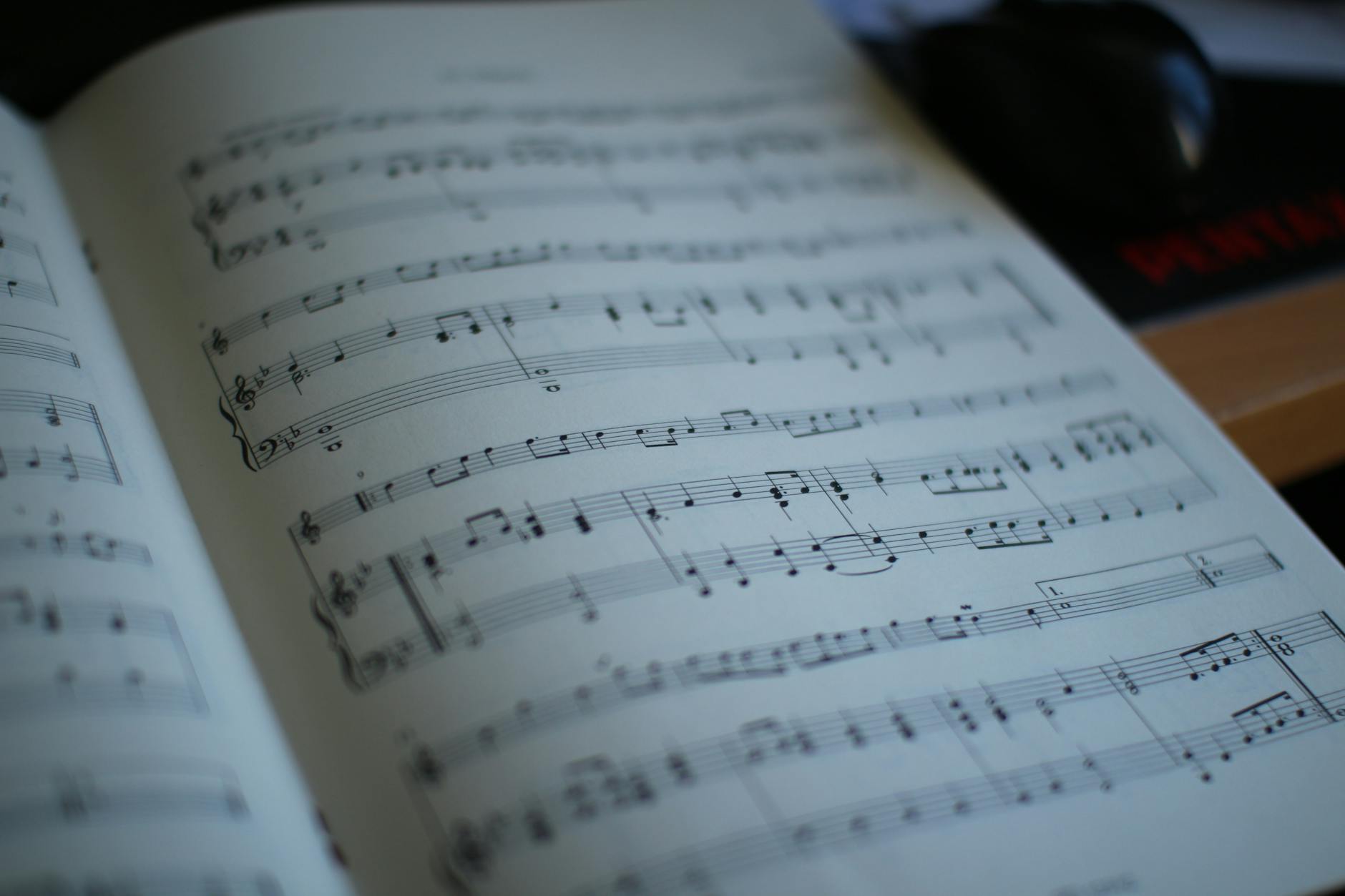
Photo by Pixabay on Pexels.com

[Until my children were in orchestra, I had no idea what sight reading was. In a competition, the whole orchestra gathers to play a piece they’ve never seen before. As a group, they briefly study a new piece of music, are guided by their orchestra teacher, and somehow manage to play something they’ve never seen or heard before. This is an oversimplification, and I don’t play an instrument, so my understanding is limited, but the magic in that music, in that collaborative, focused effort, is breathtaking.]

So, though I am often made uncomfortable by new things, any discomfort in the “new” of this relationship is being diffused as we go, as we learn this new music together. And I’m grateful for that.

Love, Cath

On Vantage Points and Variables

By Catherine DiMercurio

My blog pace has slowed somewhat in recent weeks, which happens when I’m deep into processing new things or big things or sometimes, recurring things. But occasionally, life offers a little sidestep, a time and place away from the rush of everyday life to think, or not to think.

Last weekend, the weekend of the autumnal equinox, my sister and I took a camping trip to Michigan’s Leelenau Peninsula. We were anticipating a cool fall weekend, but it ended up being more like summer. Michigan loves to play those kinds of games. We weren’t complaining. The nights and mornings were chilly enough for campfires and sweaters, while the warm, sunny days had us wading, or dunking ourselves, in Lake Michigan.

I have three sisters and a brother, and I wish I could take a solo trip with each of them, but this trip was for me and the sister closest to me in age; we are 14 months apart. We shared a room our whole lives, until we left for college. Our high school boyfriends were best friends. People often thought we were twins. This is all to say, we’ve always been close.

Well, not strictly always. I mean, it was always there underneath, but we have ebbed and flowed with our life events, as people do. But we always find a way to return to each other. I wish life made it easier. But I love that we made it happen for these brief days near September’s close.

We had a beautiful campsite, a literal stone’s throw from Lake Michigan. A cluster of cedars demarcated the perfect place for our tent. We’d set up camp to our liking and made dinner. As we sat down to eat, someone ran by the campsite warning of a storm blowing through in nearby Northport. We could look out over the water and see it brewing. So we threw what we could back into the car, and hurriedly threw up some tarps over the tent as an added layer of protection, though, I’d just re-waterproofed it, but still. No one likes a soggy tent. We could feel how quickly the weather was changing and though we finished before it did more than sprinkle, it had turned into a “team building” exercise. Did we occasionally squabble? Of course. But with my sister, these things melt away. I’m glad things still melt away.

One of the things I’ve come to understand after a couple of years being single is that I’ve been prone to deprioritize lots of other relationships when I’m in a romantic relationship. These last couple of years, I’ve made an effort to refocus on friendships and family connections that I found hard to attend to while I was in the midst of past relationships. As I’m [suddenly and surprisingly] embarking on something brand new, one of the promises I make to myself is that I’ll do better this time. I will pursue balance. I won’t let go of so many things that are important to me as I’ve done in the past. The amazing part is that I’ve already talked about this with the new person in my life. What I mean is that I’m amazed that I am comfortable enough now with myself to have conversations I would have previously avoided, and that me being me is already so well received.

I was grateful, on this camping trip, to find the close bond with my sister was at the ready, not rusty or eroded, despite the toll of the past few years, the events in our lives, Covid, etc. What I wanted to offer was the same thing I seek in my own close relationships: a safe place.

The best relationships—family, friend, romantic—provide this, but not only safety as in, a place free from harm, though that is the cornerstone of any healthy relationship. But also, safety, as in, a place to grow. A place to be supported, a place to nurture dreams, a place to push that border between peaceful comfort and sometimes painful progress. Because let’s face it, growth is often uncomfortable.

As a parent, I remember thinking some mornings that my children grew measurably overnight. I would be standing in the kitchen making lunches, and morning hugs with the kiddos would suggest limbs and torsos newly stretched. The sleep tousled hair on their sweet noggins was somehow nearer my chin. You grew. You keep doing that. This sudden gain of a centimeter was accompanied by aches and pains, and a new but short-lived clumsiness as their brains tried to catch up with their bodies. So much non-physical growth is like that too. We often feel off-balance as we try to catch up to what our inner-selves are doing, how they are adapting to changing circumstances.

I think this is why, as I’ve started dating someone, I feel a discomfort that has nothing to do with this kind, smart, and earnest man who wants to spend time with me. With him, I feel at ease. In the in-between times, there are all sorts of recalibrations happening within me. Some of it is the anxiety I’ve always lived with. Some of it is the what-iffing that is completely natural when entering into something new. But beyond that, it’s as if I’ve been trying to solve an equation without enough information, and with each of our interactions, I’m given the quantity of one of the countless variables, so the figuring begins anew. (Math people – forgive what is likely a faulty metaphor!) This is the self-protective part of me, and I am watching her evolve and adapt. (Initially, she wanted nothing to do with meeting anyone new, but the curious part of myself and the self-protective part negotiated.) She enumerates the ways closeness has yielded loss in the past. And, there is this frantic figuring. Solving, or trying to, exactly how things will go, and what will happen, and how we can magically be prepared for it all.

It is hard to find the right way to explain to her that sometimes safety is in the action of leaving, rather than hunkering down. Whether it is leaving a bad situation or leaving one’s comfort zone to explore a new situation that has good written all over it, leaving is sometimes the way we move toward growth. It is not the safety of stillness (though this too has its season and should never be undervalued); it is the safety of becoming more and more ourselves, of embracing the strength this movement and growth entails. It is the safety of balance, in a way, of learning how to regain it when the unknown happens, when we move toward or away from something and stumble.

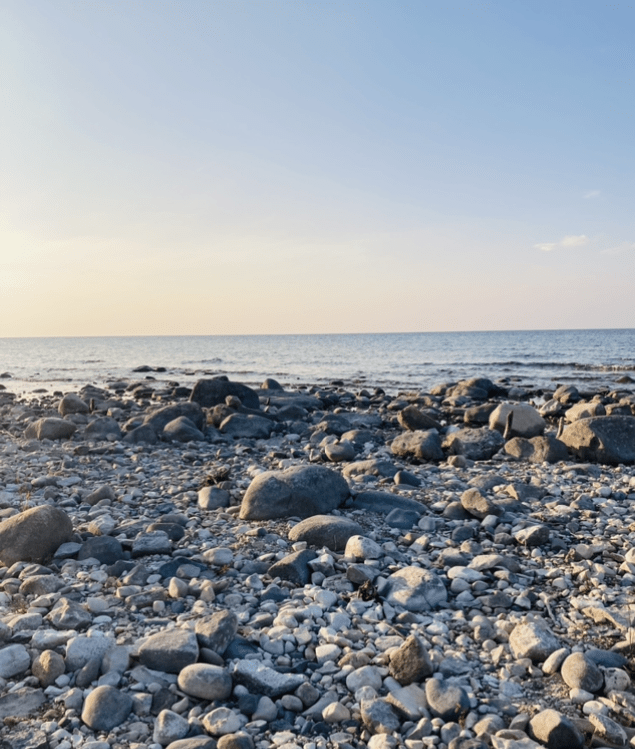
As my sister and I hunched over the rocky shoreline near our campsite, pecking around for pretty stones, we talked. About heavy things and about light things. I watched the way she sought out round, flat stones, the way she stacked them in little cairns everywhere we went. We visited several beaches, and she left these in her wake everywhere we went. I could see in them the precision and care that has always been part of her character, the artistry in both the selection of stones and their deliberate placement, their balancing. I could see the way this activity both calmed and delighted her. I loved the way we were able to fashion for ourselves this time in which to be calmed and delighted near each other, by each other.

The way the campground is situated at the tip of the peninsula meant that we had the perfect view of both sunrise and sunset, partially over the water, and partially over the rocky shoreline. I think about that now, this perfect positioning, this sense of being precisely between one thing and another. Certainly, it means something different for everyone who finds themselves there. For me it was a vantage point, from which to consider what’s next, as I move between the safety of stillness toward the safety of growth, even though I know I can never solve for all the variables.

Love, Cath

On Rage and Other Big Things We Don’t Like to Talk About

By Catherine DiMercurio

I took my rage for a walk the other day because the only thing that made sense was tiring it out. I wondered if it was more like a toddler in tantrum or like a puppy full of energy to spend. But the rage—my rage—was unlike either of those things. It wasn’t innocent frustration opposing the structure of its world and it wasn’t joyful and bored and antsy. It was more sophisticated and self-aware, and I couldn’t think of it in a way that made it seem cute and small and not very dangerous. It was not cute, and it felt volatile and intimidating.

On my drive out to the woods, the rage quieted. Simmered. Waited. I was tired of trying to talk myself out of it, just because I didn’t know where it came from. I was tired of trying to figure out all the reasons I felt so full of this surging and unpredictable reactive energy. But I did it anyway. Was it because of the world at large and all the ways it is hateful and crumbling? Was it frustration with life and how there’s no way off this treadmill of working to pay for a roof over your head and having little time or resources to ever do much else? Was it this new and uncontrollable bristling I feel when I encounter inauthenticity? Or was it the powerlessness I feel when I witness people abandoning themselves the way I once did, in service of people or situations that were hurting them? Or was it simply grief’s companion, still flailing over all the things that still hurt?

I don’t know that I learned how to properly self-soothe as a child. People tell you to calm down but they don’t tell you how. I’ve spent a lot of time figuring out what to do with myself when emotions feel too big for my body. When my kids were young, I would tell them to not do anything with their hands when they were angry because we’re so much stronger when were mad. Mostly this was to keep them for hurting each other when they were upset. We talked about different things they could do when they felt that way. Scream into or punch a pillow. Jump up and down. Take deep breaths. But we probably didn’t talk often enough about all this. I was still learning myself, but I suppose a lot of parenting is like that.

Now, as I began walking a trail covered in snow, several inches deep but packed down by other feet and frozen into other shoe shapes, my own boots slipped and slid. I had decided by then to just let myself be angry instead of trying to figure out why it had appeared out of the blue without an obvious trigger. I tried to not be resentful this time. Fine, be mad, I sometimes told myself, all the while feeling a meta-anger, that sense that I was mad about being mad.

This time, I tried to be agreeable about it all. Okay. Today we’re going to be mad, I guess. It’s okay to be mad. I tell myself this now. Because it is, even though I don’t like how it feels inside my body. And I did try to impart this to my kids, too, that it’s okay to be mad but it’s not okay to take it out on other people. But whenever I tried to apply this lesson to myself, I kept trying to talk myself out of my feelings. Maybe I was told too many times that I didn’t have anything to be mad about.

I have this idea that as an adult I’m supposed to be calm and in control of my emotions all the time. I have a habit of judging myself for the “negative” emotions that take me over. In a way, trying to figure out all the reasons I might be mad felt like an attempt to justify, to counter the “you don’t have anything to be mad about” charge, like part of me was yelling, yes I do! It’s as if I’ve been seeking permission from myself to be angry. I have embraced sorrow. When it visits, I let it stay as long as it needs to. I feel it, I talk to it, I cry. I let it have its say, and that seems to matter. But I’ve been afraid of doing this with rage. It feels too big, unstable, uncontrollable.

As I hiked through the snow, I turned on the path that leads to a loop through a big, open, hilly field. It’s a less popular trail and the snow was fresher here, less hard-packed by the few hikers who had passed this way before me. It was deeper to trudge through, and it felt good, pushing through the snow. I checked in on my rage and it felt like it was diffusing a bit. By the time I’d finished five miles, I felt tired and refreshed. The rage had loosened its hold on me, glad perhaps that I didn’t try to tell it to go away, that it didn’t have a right to be here.

On the other side of rage, it is sometimes easier to see that it’s often about fear and things we have no control over. I always want to understand it because I’m afraid I’ll miss something. People say that you should listen to your anger because it’s trying to tell you something, point you in the direction of something that needs healing.

But the tricky part about healing is that it doesn’t mean something stops hurting. At least, not so far.  Sometimes we’re pointed in the direction of our pain and all we can do is recognize and honor it, just like we do with the emotions that brought us there. We self-soothe as best we can. We cry, take a hot shower, go for a snowy hike, scream into a pillow, ask for help or a hug, snuggle the dog. Sometimes we simply must take a deep breath and get on with our day.

Maybe healing is simply showing up for yourself, again and again, without judgement. Without criticizing yourself for having grief, or rage. I think all of us are all the time trying to heal, from big psychic wounds that we never saw coming and stay with us for decades, and from all the little things that gouge at us more recently.

For a week I was not able to pinpoint what it was that had made my insides churn with a rage that seemingly had nothing to do with my life at the moment. Everything had been relatively calm in the days preceding and then I woke up and the rage just hit me. I’ve spent the week thinking about it, and telling myself to stop thinking about it, that the why doesn’t matter. That I did the right thing in finding a way to let myself feel it safely. Anger is a big emotion and it made sense to enlist the woods and the solitude and snow to help absorb it, and that worked.

Photo by Kris Lucas on Pexels.com

But it still bothered me that I couldn’t pin it down. This morning, a week to the day, I woke up, and as my amorphous thoughts gathered into language like raindrops on a windowpane melting into one another, I thought, I’m mad at myself for still feeling grief. I don’t want to feel this way. I don’t think I should. But I do. As I walked myself back through the previous week I realize it all started with a dream. I’d woken up, been frustrated that my subconscious was still nursing old wounds, but I didn’t give it another thought. Then as the morning wore on I realized this rage had seeped in from someplace, seemingly all of the sudden. My dream had been forgotten. And I didn’t put it all together until now.

Our minds and hearts operate in strange ways. In the calm and safe world I’ve built for myself, my brain works on things while I sleep, in ways I do not understand, but in waking life, I’m left to process it all along with the residual emotions. I suppose it is all happening the way it should. The part of me that has waited for me to be ready to do this part of the work is nudging me. But sometimes it feels like a war between two voices inside me, one saying you don’t get to be mad at yourself because things still hurt, and one saying, just watch me.

Maybe it’s my job to be the peacemaker. To tell myself that my anger is a valid response, especially since, if I pick it apart, I can see that it isn’t solely anger at myself for still hurting, it’s anger at the people who hurt me, and anger at myself for “letting” them. In peacemaking, I can allow safe spaces for the anger to exist and expend itself, to rise up when it needs to, just like I’ve learned to allow with the grief. Maybe my anger just needs some time alone with me, away from grief.

I don’t know if it will ever all dissipate, or if all these disparate parts of myself will peacefully coalesce, like those raindrops on a windowpane. For now, though, there’s not much I can really do except keep listening, and making space when the big emotions show up and demand attention. Maybe healing is simply showing up for yourself, again and again, without judgement. Maybe life is.

Love, Cath

On Connection vs. Alignment

By Catherine DiMercurio

On a recent frigid Saturday, I gave myself permission to write all day and to not have to worry about anything else. I planned on it all week. I looked forward to it Friday night before I drifted off to sleep, the puppy snuggled against my legs. I woke early, made a big pot of coffee. I threw on some sweatpants and shrugged myself into a sweater. Hours later, when I happened to look in the mirror, I had to laugh at how I’d buttoned it, all askew. I can’t tell you how many times I’ve buttoned my sweaters this way. It started me on down a path though, thinking about alignment, because I can’t unsee metaphors when they jump out at me that way.

Clearly, my desire to write, my writing goals, my writing life—none of that feels aligned with the day-to-day structure of my life. At present, there’s no way around it. Maybe one day there will be away to live differently, where a full-time job with benefits isn’t so necessary, but I’m far from that now. As it is, I’m lucky to have a job where I’m interacting with books for a living. There are worse jobs a writer could be doing.

But I was also thinking about the idea of alignment in terms of relationships. As I’ve discussed here in recent posts, I find myself no longer clear about what it is I want, which comes as a surprise to me. I keep asking myself, do I even want to be in a relationship now, ever again? I saw someone on social media saying that men think they are competing with the top ten percent of other men for women’s affection, but they are really competing against the peace a woman feels in solitude. I know a number of women for whom this is true, and it definitely struck a chord with me.

Whenever I test the waters, start exploring how I might be feeling about the possibility of trying dating again, I invariably think about past relationships. One of the things I have prized most when I’m in a relationship is sharing a deep sense of connection with my partner. I’ve heard myself saying this to friends, whenever I dip into lonely and maybe, that it is this, perhaps, that I miss the most. Connection. I’ve said it so much that I have finally started asking myself what I truly mean by connection. I think, in a romantic relationship, it has several components. Chemistry is one. That feeling you get when you meet someone and feel like something instantly clicks. But that is only a small, shallow part of it. There’s also the intense bond that begins to grow as you share more and more about yourselves, your beliefs, your past. I find the tenderness of vulnerability to be deeply appealing. I have always been more attracted to vulnerability than confidence. In many men, you can see it underneath a surface bravado, like bright, beautiful, curious fish swimming under a surface of thin, clear ice. And I have romanticized this, the idea that I will be the one to tap into that. I think Gen-X women in particular were taught to do this in pretty much every teen movie that came out in our youth, the sweet guy lurking beneath either the bad boy or the cool kid image. The thing is, a lot of men were taught to be this way too, to hide part of themselves away. Maybe some of them believe the “right” person will be able to see them for who they are, maybe some of them just kept building up layers and not letting anyone in.

Photo by Maria Orlova on Pexels.com

Still, as I thought about this more, recalled conversations where I believed a connection to be building and deepening, I began to understand that my desire for this type of connection was something that could be, and had been, easily manipulated. While I was opening myself up, ready to share honestly and deeply, the men I dated were more spare in what they shared of themselves, doling out confidences in doses designed to keep me interested, and themselves in control. It’s hard to say what was intentional and what was simply a learned but unconscious behavior, but it created an imbalance that always left me wanting more. And I thought that was the point, that energy, the craving, I thought it all meant we had this intense connection. But, I think that everything I believed connection to be, everything I wanted it to be, was standing in for something that I truly hoped for but have never found: alignment.

I don’t know if my understanding of alignment actually aligns with how the word is sometimes used in some pop psychology/relationship circles. It’s often discussed as shared values and having the same vision for the relationship. I think there’s a little more to it than that. The notion of shared values is a tricky idea. If you’re really into someone it is easy to interpret behaviors as evidence of a shared value, or to think, “close enough!” and shove that square peg in a round hole and call it aligned. What I’m thinking of goes a little deeper. What I hoped for in relationships, what I allowed a type of connection to stand in for, was a common way of being.

I got this wrong too, in the past. I thought after marriage to a mostly extroverted person, that dating mostly introverted people, people like me, meant that I was finding people who approached the world the same way I did. And again, I allowed that to confuse things, allowed myself to believe that there was a connection that was deeper than it truly was.

But those things are different than my way of being in this world. I’ve been trying to pin down with language the way I would describe how I see myself interacting with the world. Where does the “too sensitive” label that was always attached to me arise from? Is it empathy? I do think of myself as an empathetic person. I was the type of kid who felt personally injured whenever I knew someone else’s feelings to be hurt. But, that wasn’t quite exactly the full story.

I’ve been drawn to men who seem to possess qualities compatible with my empathy, men who wanted to make the world a better place, or who had a gentle way with animals, or who were deeply loyal to their friends or family. But as I got to know them better, I also saw other things. It wasn’t that they didn’t behave in kind or empathetic ways. In fact, it was glimpses of those traits that made be attach myself more eagerly to them. But something was missing. It was different for each of them, but I think as I look back, I can see that they all shared some similarities, a conviction of their own rightness in how they looked at the world, as well as some kind of determination to keep a part of themselves closed off from me. There was a lack of curiosity about the way other people, myself included, approached the world, and a lack of openness to other perspectives, to me.

Yes. Openness. And here we are. I feel like I’ve just come full circle, writing this. No wonder I named this blog Chronicles of the Open Hearted. This is it, how I approach the world. My way of being in it. Openness. Empathy is a part, but not all of what I’m talking about. I am not guarded, though I have tried to be. In new social situations, though my introvert self feels quiet, and easily overwhelmed, my empathetic self is eager to find something in common, to make the situation feel less awkward, and invariably, I feel like I’m a little too much myself, too open, sharing too much. Ironically this tends to make things more awkward because people don’t often know what to do with someone that seems incapable of being glib and guarded until you get to know someone better.

I guess what I’m realizing now is that I want to see those bright and beautiful fish right away, without having to glimpse them through a layer of ice. I want heart-on-your-sleeve. I want true vulnerability and earnestness, not a performance of it. I want curiosity and openness, to me, new ideas, the world.

So, what is your way of being? Are you and your partner aligned in this way? If not, how do you make it work? If so, how does that feel? What challenges do you face? If, like me, you’re unpartnered, have you begun to realize, like I have, that you have built friendships with people who share aspects of your alignment?

I can see now how all the things I attributed to connection—chemistry, heady conversations, emotional vulnerability—all these things felt good, but they also created a cloud of sorts, a fog that kept me from seeing what was missing. I was hyper-focused on developing the connection because I believed that to be the foundation of a good relationship. It certainly doesn’t hurt, but both partners must be trying to build it. Still, it shouldn’t be standing in for alignment. At least, not for me. That’s not what I want. I’ve tried it over, and over, and over again and it does not work.

But, it feels good to have arrived at a better understanding of myself. And five years in, I’m understanding this blog a little better. It is about me wanting to connect with you, and always has been. It’s about wanting both of us to feel less alone. But it’s also about openness, because I don’t know how else to be, where to put all these ideas that crowd my brain. It’s my own curiosity, an exploration of ideas as a way of (hopefully) starting conversations, maybe even just the one you have with yourself in your own head.

Love, Cath

On Not Knowing, or, (Not) Navigating Deep Water

By Catherine DiMercurio

I’m not sure why, but part of me still clings to this idea that the clarity I look for as I navigate some of the things I’m struggling with is something that will reveal itself to me as a shout, as a brand new beginning, the shiny other side of the coin, freshly tossed. I want to cross over along the timeline, from one side of a vertical line to the next. To say, definitively, I am here now.

But what the world has tried to teach me over and over is that everything is non-linear. Even a circle would be a welcome, familiar shape, but my life is not that either. Despite the continuity of my days, my carefully cultivated habits and routines, my inner world zig zags, soars and dives, as much as the chaos of the world outside my door.

I began writing this several days ago, firmly convinced I understood my mindset on a particular issue. I had decided I was Done, yes, with a capital D, with dating apps, Done searching for a partner, Done with the false (?, hopefully false) urgency of a timeline. Done with that feeling that I would somehow run out of chances or will or heart if I didn’t meet someone in a certain number of months or heartbeats. I don’t think there is a biological clock to this part. Though, I suppose future-me might wake up one day and wish I had tried harder sooner. But we do what we can, when we can. Don’t we? Don’t I? I mean, it is already too late for some of the dreams I once had. I have run out of time to ever celebrate a 61-year anniversary with someone, as a friend’s post about her parents celebrating their anniversary reminded me. I once had dreams of celebrating those types of anniversaries, but I’m aging out of that possibility. Letting go of that, as I’ve tried to do for some time now, means there really isn’t a clock ticking in that sense anymore. If I do meet someone, I’ll likely wish we’d had more time together, whether I met him tomorrow or in five or ten years.

So, I had let myself be Done. For now. For as long as it feels good to be doing the kind of growing and listening to myself as I’m doing now. Until I know how to do that no matter what. Until it’s like breathing, and something that won’t be abandoned like an ill-conceived New Year’s resolution the second I’m dating again.

Because I don’t want to go back to that way of loving, and I’m scared that I will. I wonder, was the reason it felt so good to be completely consumed by a relationship that I had little knowledge of or respect for myself? Did I enjoy losing myself because myself was such a flimsy concept, easy to let go of, so much so that I didn’t realize that she was lost?

Before I decided to be Done, I had grown more careful, deliberate, about who I entered into conversation with on those apps. I didn’t want to enter into anything nonchalantly. If I was going to expend my limited social capital, it had to be on someone I thought there was a chance with. I didn’t want a collection of first dates with men I didn’t plan on seeing again; I wanted to meet someone who was also looking for something long term, not just gathering with me out of sense of gathering loneliness.

I’m not lonely, which comes as a surprise to me. I have periodic moments or hours, maybe even a day or two at the most, of deep, sharp loneliness. But it is something that happens to me and falls away. It isn’t what I am.

I’ve leaned into that. What does it mean, then, to not be pursuing a relationship? I have always been in a relationship, or in between relationships. Being single but open to something happening still felt for a long time like many things: expectation, hope, wish. The natural order of things had been, for so long, that I was partnered. I always thought that I was a better me with someone else, but I didn’t have much to compare it to. If my time alone were drops of water, they would have filled a few drinking glasses, whereas my time with a partner over the years, between my marriage and my post-divorce relationships, filled up bathtubs. A swimming pool maybe. But, on my own, I am something else entirely. Something that can’t be measured by way of shallow, domestic containers. On my good days I feel like a lake, carved fathoms-deep by ancient glaciers. I have always been this same person, even when in relationships, but I didn’t know her yet. And if I didn’t, neither did the men I was with. How could they?

Photo by Miguel on Pexels.com

I often feel slow to understand things. My comprehension feels impaired by an onslaught of input. I’ve regarded myself as deep-thinking, but not quick-witted. Brains work differently. Mine is full of images and words, teeming with them. I can only handle so much external input at a time. So when I look back at what it was like to be in relationships where I prioritized the needs of my partner over my own (and unpacking that tendency is a whole different series of essays) it is no wonder that I have been slow to know myself. Think of all that additional input! Not that you can’t learn anything about yourself in a relationship. I can and did. But because of the way I was going about being in a relationship, there were things that I couldn’t learn about myself until I was on my own.

But for some reason I felt as though I needed to commit to the idea of being Done. To say, I am here now, on this side of that line. I felt as though I had to say, I know exactly what I want and it is this. That way, I know what to do, or not to do, next. When I had a tug of longing to be with someone, I then wondered, did I commit to the wrong idea, the wrong game plan? Do I still want to find someone?

The bottom line is, I don’t know, and I’m not comfortable not knowing what I want. It feels like failure. It feels like lack of insight, not knowing my gut. It feels wrong, and as if it must be remedied. It feels like wasted time. If I knew what I wanted, I could pursue it, and get on to the next part that much faster. It feels like something I ought to be ashamed of and I’m not sure why. Maybe it is because by now I should have this part figured out?

How can I not know what I want? I feel like I was always supposed to know. What do you want to be when you grow up, where do you see yourself in five years, etc. We’re supposed to be able to visualize it so we can manifest it, right?

I think one of the reasons I don’t know what I want in terms of a partner is that I’m figuring out what I want in other areas of my life. I know that I want to continue to pursue both writing and pottery, and I know that I can’t do either of those things without my “real” job that keeps a roof over three heads, mine and the two dogs. And I want a big enough roof so that when my kids come home to visit everyone has a place. And I want to nurture relationships with family and friends, connections that mean so much to me, that have on and off over the years been largely neglected when I was busy being totally consumed by romantic relationships that I let swallow me up. All of this adds up to a fullness I didn’t realize was possible. Sometimes I can’t imagine where a partner would fit into all that, possibly because I’ve never had a partnership where the fullness of both people’s lives was respected and nurtured in a healthy way.

I think the most important thing for me right now is the idea of embracing the mindset of not knowing, instead of fearing it, or, embracing it and the fear. It’s a little like swimming in deep water with no shore in sight. Yet, when I think about it, when we struggle with understanding ourselves, we are, in a way, both the swimmer and the deep water. We can keep ourselves afloat, or we can pull ourselves under. We are vast and deep, not easily navigated, and there is no shame in that. Oddly, what I am finding, is that a person can be true to themselves without having it all figured out. 

Love, Cath