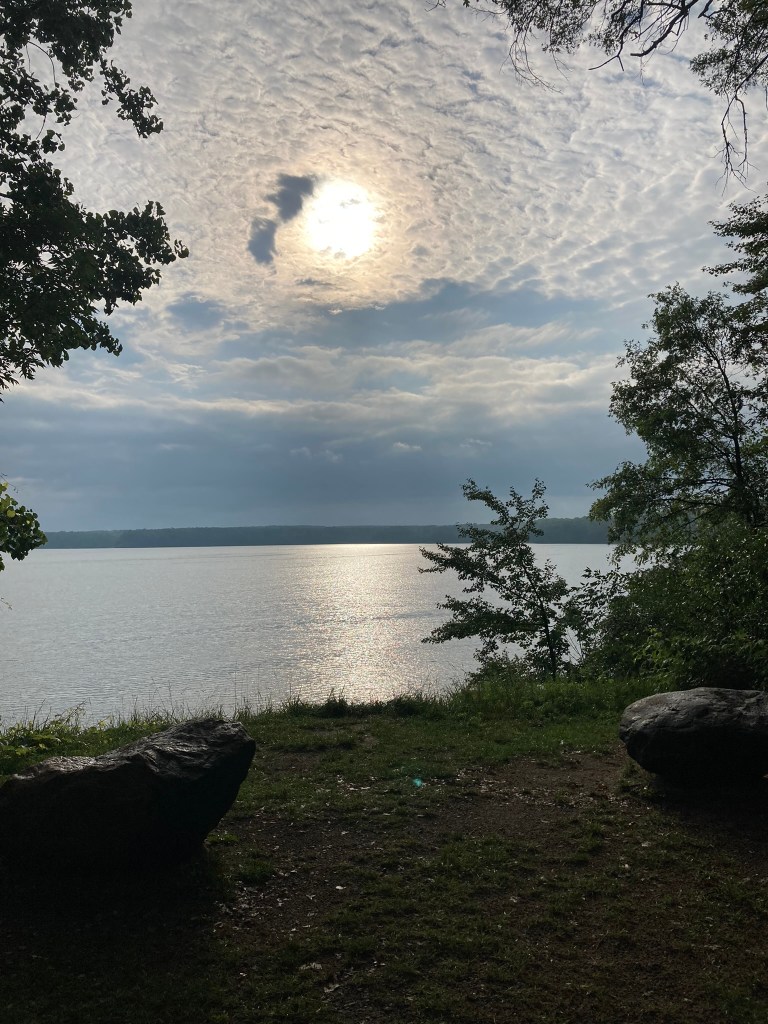
On Be-ing, Figuring, and Breathing

By Catherine DiMercurio

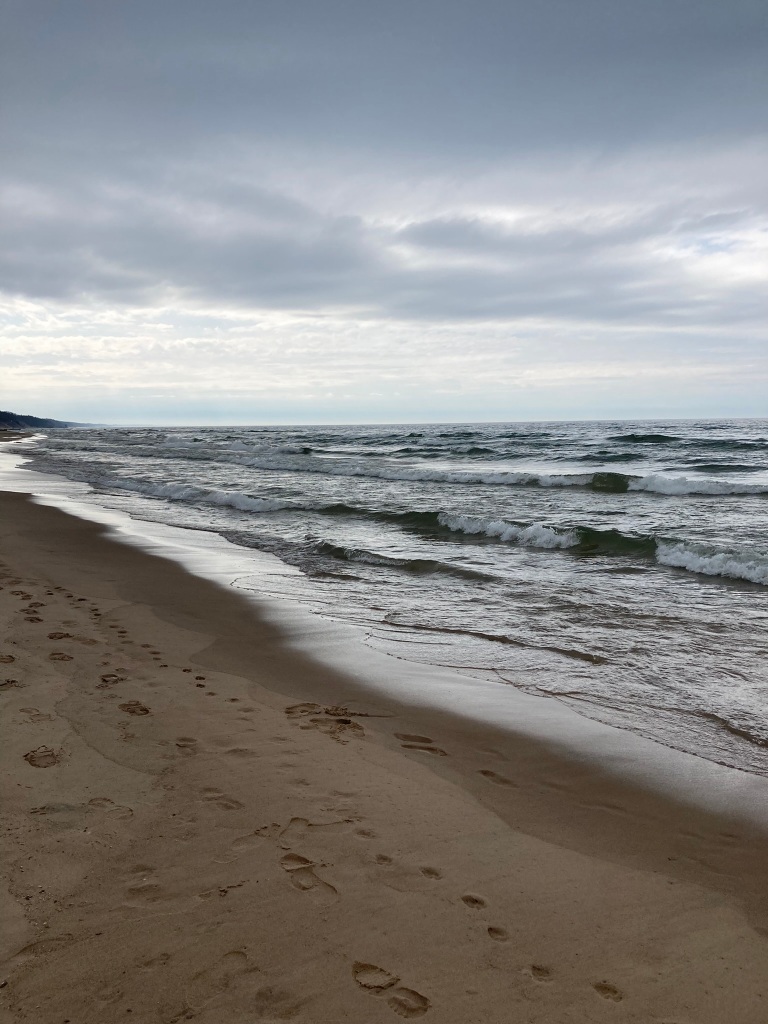
I don’t recall a time when part of my long walk entailed two miles barefoot at the water’s edge. Where Lake Michigan splashed at my ankles as I strode south. I don’t recall ever being able to go to the beach four times in one week. These are some lovely benefits to completely reshuffling your life.

It’s still a bit surreal, the move. There is so much that I’m still processing with the way this year has unfolded so far. I’m trying to pause more. Throughout this whole process, with a million little and huge steps along the way, I have felt catapulted from one thing to the next. Have barely been able to take a moment to enjoy a sense of accomplishment at meeting various milestones, because the process doesn’t let you rest. Even on the day of the move, an enormous, choreographed event, I was barely able to take a moment to consider the enormity of it, to congratulate myself for choreographing it. There was a brief period of time where I sat with my sister at the picnic table out back while the movers unloaded the trucks when I tried to catch my breath, tried to let the big truth of the moment sink in. I had done it. Moved to a lakeside town. Gotten myself as close as possible to the lake. I had, against the backdrop of some heavy personal turmoil, gotten my old house ready to sell, endured the ups and downs of all the showings and waiting for an offer, accomplished all the work to prepare the new house for my occupancy. Shepherded my anxious, reactive dog through it all. And I had moved farther from my children, from most of my family, from all of my friends, too. All of these things swirled through my mind—the work, the pros, the cons, the hopes, the fears—for a few overwhelming moments before I was pulled back to the reality of a house so chocked full of boxes I could barely make my way through it.

And then I faced the next enormous task. Unpacking. The tiny home was barely navigable. A narrow path led through a maze of boxes. I slept on the couch, unsure how I would even move things around in order to put my bed frame back together. But in two days I created some sense of order out of the chaos, and then I worked for two days in the office I’d managed to set up, and then spent most of the weekend unpacking the rest of the boxes. I can breathe a bit again and am no longer surrounded by cardboard. The basement is still a disaster and will likely remain so for some time. I want to take a few days and just feel normal, want to immerse myself in my regular routines, but my brain is already worrying about organizing the basement, and finding a new vet and dentist and doctor, and calculating when I’ll upgrade the electrical panel and replace the aging appliances.

There is always The Next Thing. There is never a clear deck with no items waiting for our attention. I’ve known this for a long time. It’s a lesson everyone learns at some point. It makes no sense to scramble and scramble trying to get all the Things attended to for the foreseeable future so that you can relax and be happy. It just is not reasonable to postpone feeling okay until all of the worrisome items are attended to. We have to keep figuring out how to find peace and joy in the middle of it all.

But knowing this doesn’t make the mindset adjustment any easier. If there are simple ways for moving the Things to Worry About to the edges so there’s some clear space to breathe, I don’t know them. The ways I know are about conscious, deliberate efforts. Maybe this work is easy for some. For me, it’s a huge mental challenge, a heavy lift. Some of it is self-protective. There is a part of me that is convinced that the only reason I get things done and avoid having important things fall through the cracks is because I do worry. It’s as if I need to worry because that’s the only way things will be ok.

It might seem like a whole lot of exhaustive nonsense if this is not the way your brain works. I think one of the things I love so much about being at the lake is that it is capable of taking me out of that mindset. The water is a live, physical presence; the experience of being there is multisensory. It diffuses worry, calms the loud thinking and overthinking. It’s the only shortcut I know. This past weekend, I took a long walk, some of which was barefoot along the shoreline. At one point, the absence of racing thoughts became apparent. It was shockingly peaceful. For a moment, I felt like Winnie the Pooh, just strolling along, with a hum-de-dum sort of song in my head. “Pooh just is” is a line I remember from Benjamin Hoff’s The Tao of Pooh. And striving for that state of just be-ing feels impossible sometimes.

Part of the problem isn’t just a brain that is wired (by so many things, some of it innate, for sure, but some of it experiential) for worry. Part of the problem is a world that’s all digital and hurry up and loud and bright and urgent and in so many ways frightening and terrible. Of course we want to remain in a cozy bubble, try to feel good and safe and separate. To eliminate as many of the things to worry about as possible until there’s nothing to worry about anymore so we can just be.

I want to believe that while there is no end to worry (do you ever worry that there is something you forgot to worry about?), that the opposite is true, that there’s no end to peace, as in, isn’t there a well of peace within us, a transcendent and universal peace? And if so, how do we get there, how do we find it when we’re lost in all the other stuff. I don’t expect to stay there, I don’t know how people could do that with life being what it is but finding a path there, an easy path, a good path, a clear one, would be nice. I’m trying meditation but it’s quite a challenge.

Maybe I have found a path, maybe that’s why I moved here. It’s surely different for everyone and probably not everyone wants to go looking for that kind of peace. Maybe we’re not supposed to because don’t we need to stay worried so that we can fix little parts of the brokenness in the world? Or do we do that by finding and being peaceful within ourselves, and bringing that energy to everything we do?

Photo by Athena Sandrini on Pexels.com

Yesterday after work I attended a program at a beautiful historic library. It was a book discussion led by a professor from a nearby university, for a book I really loved, about a man who sails Lake Superior in a dystopic, near-future Midwest. The framework of the talk was “dystopia and hope.” I contributed a lot to the conversation. It felt good. And then I drove the few minutes to the lake, strolled on the beach, watched the sun start to set behind the churning waves. I didn’t worry about finding a vet or a dog trainer or a dentist, or work, or what I’ll do with Zero if I want to go visit my people on the other side of the state. I didn’t think about the boxes in the basement, and the logistics of that space. These are things I have to figure out. But for a brief window of time, I was exploring my new community, interacting, living outside of my own thoughts, and getting soothed by the lake. I felt a greater sense of belonging than I have in a while.

I probably won’t ever stop being a worrier, but here there seem to be more opportunities to take breaks from it, and that’ll be good for me. I don’t worry that I will fail to figure out the things I need to. I just don’t always want to go through the figuring out process. It gets tiring dealing with the obstacles that come along with so many decisions. And obviously I feel a bit drained from having navigated a major life change, and that’s okay, is what I remind myself. We get decision fatigue, along with plain old regular fatigue.

But, I do know that I’ll figure out a lot of it. Maybe not all of it, and not at the same time, and often not elegantly. But I’ll do my best, as we all do, and maybe it’ll be a little easier now, here, to stay even-keel through it most of the time.

Be well. Love, Cath

On Moving through This Particular Time and Space

By Catherine DiMercurio

These past several months I have felt as if keeping my head above water takes most of my energy. Each moving-related milestone felt less like a hurdle overcome and more like a wave crashing down on me, until it is over, and I can float a little, catch my breath a little, until the next wave hits. In the midst of all the painting I was doing this past week at the new house, I was fighting to do just that, catch my breath. The task felt overwhelming, the number of walls, the trim to either paint or tape off, the cutting in, the multiple coats, the clean-up, the way the plaster was so thirsty and gulped up all the paint, the cove ceilings and their delicate curves, the yucky and ancient vinyl floorboard molding in the kitchen, the ruined window frame in the living room.  

It’s been over a year since I got it in my head that I was going to move. I took my time with the process, knowing how much I loathe how urgency makes me feel. Winter and early spring were focused on clearing out the basement and making plans, and then in April and May I began to ramp things up with house repairs. Then things really sped up in June when I listed my house for sale and began searching for a new home in earnest. Now, I’ve closed on both houses. I spent a long weekend at the new house organizing some initial improvements—tearing out carpet and having a fence built—and cleaning. This past week, I went back to paint. It’s a task I always enjoy in the beginning, but by the end, I’m ready to be done. And this time the end didn’t come until the fourth room was painted on the fourth day. It was a big job, and like any home improvement task, it came with unexpected obstacles.

But, this isn’t going to be a boring home improvement post. I thought I wanted it to be about how good it felt to let this new-to-me but old house breathe and feel cared for again after a couple of years of vacancy. I thought I wanted to write about how I was trying to make this random place feel like my home. And I thought it was going to be about what a long, sometimes scary journey it has been.

Yet what is hitting me most right now, as a sit in my cozy current home now that I’ve returned from the painting week, is how confusing and chaotic prolonged transitions feel. Many people are in the midst of them now, with grown children off on new adventures or otherwise finding their footing in adult life. People are ending relationships, or starting them, or moving, or grieving, or changing jobs. Sometimes we go through big changes with others and sometimes we go through them alone. And we might have folks helping out where they can, but when we’re flying solo, the upheaval of big changes can hit especially hard.

Somewhere between wrapping up the painting of the bedroom and the office and the hallway and beginning the painting of the kitchen, I felt particularly wrung out and empty, and then I sort of remembered why I was where I was. Two miles west of me was one of the best stress-busters I’ve ever known: Lake Michigan. So that morning I made my coffee and loaded Zero in the car, and we drove the short five minutes to the lake to see the morning light play on the waves. We just stayed in the car, because we see off leash dogs all the time and that is not a great thing with a reactive dog whose training got derailed. I wanted this to be a moment of calm, so we stayed cozy, and watched the other early morning people go by, or do the same thing we were doing, viewing the lake from our cars as if we were at a drive-in theater. I’m looking forward to when I’m actually living at the new place, and I can go grab moments of lake-calm for myself whenever I need to. In this particular moment, I marveled at the way the light of the morning could be both bright and soft at the same time, and the way a gull sounds different when it’s swooping around the shoreline than a gull sounds in the old Kmart parking lot in the puddle of my childhood memories.

That moment was also a reminder to seek out calm wherever I am, lake or not. Because life can feel so big and so chaotic, whether or not we’re in periods of momentous transition. It’s not as if I forgot that I need to do that, or like I wasn’t trying all along to manage my stress with yoga and walks and early morning coffee in the yard with Zero and chats with family or friends. But sometimes we tell ourselves there’s no time, or that it won’t help anyway because there’s too much to do or our feelings of overwhelm are too great.

We tell ourselves a lot of things when we’re tired or drowning in all there is to do every day. We tell ourselves there’s not enough time to sit quietly in a safe place and catch our breath. Maybe we even tell ourselves there are no safe places, and it is tragic when that is true. But sometimes we’re still learning to be our own safe place and that takes time and practice. Sometimes we tell ourselves that we miss things that weren’t particularly good for us. Sometimes there were good parts to miss, but that doesn’t change things. We might ask ourselves why we ever thought we could handle the enormity of moving farther away than we’ve moved before and then we remind ourselves that we are, in fact, handling it. We’re almost there. We’re almost home.

And still, that doesn’t erase the hard parts. Holding two opposing truths within us at the same time can cause a bit of inevitable heartache. For reasons of financial and mental health, I need to go. To follow the dream of living near the lake, I need to go. Because I want to love where I live, I need to go, and at the same time, the fact that I’ll be almost three hours from my kids instead of half an hour hurts like hell. I haven’t made peace with that. I don’t know how to. And I guess, I don’t really want to make peace with it. I want that angst to keep motivating me to find ways to make it easier for us to see each other. I don’t want to slip in to “but it’s so far and everyone is so busy.” I want to remain highly motivated to find someone who can watch my sweet but challenging pup so I can take off for a long drive and a short visit, or to take a weekend here and there to see friends and family. People figure this stuff out all the time and I will too. It’s just, in moments of high contrast, the difficult parts feel sharper. Having just had time to hang out with my kids, the prospect of missing them is looming large.

It’s as if we have to keep finding ways to be bigger on the inside than we are on the outside, so we can hold all that life seems to ask us to hold. And sometimes there is no more room, and we have to become willing and able to put something else down so we can hold on to what we want to hold on to. Maybe there are old griefs I can leave behind so that there’s space to manage this new challenge of geography and proximity to the people I love. Maybe the perplexing problems I have for so long felt gnawing at me are less about algebra (as in, how do I solve for all these variables) and more about physics (as in, this is about the realities of force, mass, and acceleration, as in, how can I move myself forward through this particular time and space). Maybe the math analogy is bad but what I’m saying is that maybe it’s time to get practical instead of theoretical.

We’re all moving—together and separately—through this particular time and space and I hope we all find ways to allow ourselves to lean on one another and to be strong when we can’t and to be strong when someone else needs to lean on us.

Love, Cath

On Identity, Negative Space, and Sand

By Catherine DiMercurio

Sometimes I feel as though this world has pinched whatever eloquence I might have once possessed, and all I can do is write earnestly about the twists and turns of my own journey. I’ve been thinking a lot lately about how, in the face of such bizarre twists and turns of this current American reality, do we keep on keeping on, keep on living our lives and pursuing dreams to the extent that we are able. But at the same time, how do we do otherwise? One of the most meaningful things we can do is to keep on living meaningful lives, right?

Part of my own such quest has long focused on the pursuit of belonging and connection, and the way the natural world informs that journey. For many years, I’ve yearned to find a way to live closer to places that ground me, and that’s what I’m currently pursuing.

In line with that goal, I got to spend some time recently by Lake Michigan. It was a grey, rainy couple of days and I was there, in a little lakeside city, to do some research. At times, I am completely overwhelmed by the prospect of moving again. There’s no getting around how demanding, complex, and disruptive it is, no matter how much you’re looking forward to the destination.  I’ve made a good home in my current location, but it wasn’t necessarily a place I was in love with. It was a practical decision and the right one at the time. In some ways, it will be hard to leave. I have good neighbors. I’m relatively close to family and friends. Within these walls, I remade myself, as we often must do during various transitions in life. There are plenty of times where I think it would be easier just to stay.

But, it’s always easier to stay, isn’t it? I have a low tolerance for chaos, always have, and moving is nothing if not chaotic. And easier isn’t always the point. Sometimes we need easy, we need to rest, and regroup, we need to feel settled and calm and peaceful, and then, we’re ready to unfold in a new direction. We all unfold and stretch and grow in different ways and at our own pace.

There are huge unknowns. Though, most of life is that way, so that should not really dissuade anyone (myself included) from exploring new possibilities. Will I be able to find and build some sense of community there? Will I feel like I belong? Will it be a good place for my dog? Will I be able to find a pottery studio? Will I find a way I can contribute to my new community?

One of the many perplexing things about life is that it is short, and therefore we should leap into our dreams but also, we have bonds with people who we find ourselves leaping away from, and we don’t want to lose those either, the dreams or the bonds, and how is all that supposed to fit together? And all those people have their own dreams and bonds, their own journeys, and we can’t anticipate all the ways and reasons people move around in their lives.

After a weekend near the lake, I have sand in my car. I like that. I like what it represents. I like the idea of living someplace with street names like Seaway and Lakeshore Drive and Beach Street. I love the frequent calls of gulls mixed in with house sparrows and robins. It sounds like a place I could call home.

I think a real sense of connection to place is hard to come by, at least it has been for me in the last several years, and I don’t know if I will have it there, in a new place, where I have no history at all, no people. I’m craving the feeling of having something fall into place and hoping to accomplish it by having me be the something falling into a new place.

Five years ago, I was preparing to move from the home I’d lived in for 20 years, where I raised my kids, and in many ways, where they raised me. I wrote a lot about the meaning and nature of home, and here I am again. At the time, I remember feeling as though the emotional work of the next part of my life needed to focus on learning to be at home with myself, wherever I was. In these last five years, I’ve tried very hard to do just that; it is an ongoing journey.

Here, in this house, I weathered the bulk of the pandemic. Here, I became an empty nester. Here, I ended a relationship. Said goodbye to the sweetest, most beloved dog, said hello, to another sweet, rambunctious furry soul. Spent a couple of years in relative solitude, on my own in all these new and different ways. At times the most lonely I’ve ever felt, at times the most free I’ve ever felt. Here, I started a new relationship.

People talk about finding yourself as if it is something you’re supposed to do when you’re young, or something people crash into doing at middle age because they never did it when they were young, but all of that is wrong. At least, we should acknowledge that it is something that can and should be ongoing our whole lives. More than anything, it is a mindset, rather than something that always requires big actions. It’s about looking, about cultivating an awareness of how we experience the world and who we want to be in it, who we are in it.

Shouldn’t we be out there looking for ourselves every day, in each little action, getting truer and truer as we go along, and finding our way back to ourselves if we get lost? We probably have to get a little lost here and there. Sometimes it is the accumulation of wrongs that points the way to what’s right for us.

My first-born is an artist, among many other things, and right now I am looking at a linocut print they made of a snail, and marveling at the way such a beautiful image is built line by line, the way with linocut, the image is revealed as a result of what is removed, the way the negative space that is created allows what remains to receive the ink.

It’s the same with the continuing process of learning who we are, and relearning that as we change and grow. What is removed from us through loss or through getting lost, or whatever life takes out of us, keeps revealing a new image of who we are now and who we are becoming.

I didn’t think I’d have sadness about leaving this place; when I moved in I did have the sense that it would be transitional. It was what I needed at the time. Things are different now. Things are always different now.

As I’m getting this house ready to sell, I think of all the ways it has held me, and all that I have put into it. All the living it has contained. And how I don’t really have to leave if I don’t want to. But just because it is hard, and just because there’s sadness, and just because I could stay if wanted to, doesn’t mean it’s not time to go.

I go over it all in my head, crunch the numbers, crunch the reasons, trust my gut, find the way. On the one hand, what’s the big deal, right? I’m just moving across the state. On the other, it’s another leap, farther than the last one. I’ll no longer be 30 minutes from where I used to live. In some ways, this feels more akin to moving away from home for the first time than it does to any of the other moves I’ve made in the past.

When I was at the lake two weeks ago, I plunged my feet in the icy water, ran barefoot along the beach, drew hearts in the sand with my toes. I felt the way the lake unlocks something in my chest, allowing me to breathe deeply and feel a big sense of centeredness I can’t seem to feel too often anywhere else. Later, I brought my dog down to the water. I know how much people like to let their dogs run on the beach, and Zero and off-leash dogs don’t mix, so I was hesitant, went early on a rainy Sunday morning. The waves were loud, but not overly large. We were only by the water a few moments, because I could see people with a dog further down the beach and didn’t want to take the chance that the dog might give chase. Zero wasn’t keen on getting too close to the water. He’d take a couple of steps toward it while the waves receded, and then dart away when the waves rushed in. I don’t know if he’ll ever be a beach dog and that’s okay. I’ve probably got enough beach dog in me for the both of us.

I observed Zero’s hesitancy as he surveyed the unknown terrain, the way he looks at me sometimes with both trust and concern. It’s as if he’s embodying what’s in my head, the part of me that’s not so sure and the part of me that trusts that I’ll get this right. Sometimes I wonder if he and I are extensions of one another, and then I wonder if we all are. It’s easy to feel that connection, to everything and everyone, even when I’m alone at the lake with my dog who kind of isn’t sure he wants to be there; he just wants to be with me.

Stay connected, and keep looking for yourself.

Love, Cath

On Wishes and Finding Our Way

By Catherine DiMercurio

We are here again, edging our way toward the end of another year, bracing ourselves for whatever is next and trying to inch forward in our own lives, no matter what’s next.

I’m still in the habit of trying to solve my own future, solve for x, study each element of the equation as if some part of me truly believes there is a right answer to find. I do believe we are very much comprised of the stories we tell ourselves about ourselves. But sometimes experiences knock us around, begin to shape those stories, and we have to spend years trying to unbelieve words that have written themselves onto our hearts.

I tell myself stories about belonging because it often seems that I find myself living in places I don’t feel connected to. In truth though, everything ebbs and flows, and discontent arises when I don’t feel connected to myself, and for me it is also true that this disconnect happens less often and less intensely when I’m in natural spaces—near woods and water. And so I keep trying to connect those dots, find the path to where I am supposed to be.   

Today is the solstice and I have been writing different versions of this essay for weeks. The words have had a tough time finding their way because I have plans in the works that I want to talk about but I also feel it is premature to talk about all that, so I keep writing around it all, even though it impacts no one whether I say this or that. What I want to tell you is that I’m trying to move again but I also don’t want to say it out loud in case something gets in the way and my plans are thwarted. I don’t want to jinx it, but I also want to make it real, call it into being. Saying I’m trying to move near Lake Michigan feels like a bold statement but being vague is confusing, and since this is one of the biggest things tumbling around my head and impacting my life, it is hard to say nothing at all. It is hard to write about anything else. When your heart’s on your sleeve, it’s impossible to play things close to the vest. And it is the solstice which is a magic day and therefore good for wishing.

Because of this trying to move, this deciding, this moving toward a lifelong goal, I am making other decisions, like take a break from pottery, which feels uncomfortable and necessary and like there will be a gap, a big place where something is supposed to be, like when you lose your first molar as a child. How is it gone, and don’t I need that, and how long will it take for something to take its place? My ceramics journey is far from over but there are times when we need to pause. I tell myself it is an artist’s decision, to move toward inspiration and peace and wildness and curiosity, and even though it means saying goodbye to one place, one community, I will find another and art often thrives in such curious and tumultuous circumstances. But I left the studio in tears the night of my last class. I don’t know the last time I was more grateful that I had pushed myself into something new, into that first pottery workshop I did with my kiddo.

While the point of pausing pottery is to focus on getting my house ready to sell, the pause might also be a good opportunity to embrace some writing projects that have stalled a little. But it is also a good time to remember that we can only do so much. We can’t underestimate the toll of the full-time job, especially when it asks more of us than ever before. We have to hold so many conflicting notions in our heads at the same time—being grateful for meaningful work and a paycheck but also feeling that work often leaves us little time or energy to enjoy the rest of our lives, to pursue our other dreams. Sometimes I start out by focusing on gratitude but then find myself down a rabbit hole where gratitude is muddied by things that ought not to be the way they are, where corporate greed impacts so much of our lives, and so on. I am working on finally building a meditation practice that will hopefully keep me away from rabbit holes for a few minutes every morning. Which is not to say that there are issues in this world that we should look away from. Gratitude for what we have should not blind us to what we need to bear witness to.

Still, it is a beautiful, cold morning here and I am lucky and grateful for it. Zero and I spent some time outside at sunrise, while the gibbous moon still shone above us. I feel as though I have more questions than answers at this point in my life and I am always looking for signs and guidance, am always wanting to know if I’m on the path I should be on. While standing out there in the cold at dawn, I stomped my slippered feet lightly on the worn pavers to stay warm, and Zero snuffled around in the frozen grass, and I lit a little candle and did my wishing. It reminded me of the kind of early morning where you might find a lamppost shining in the woods, as if we could be so lucky to find any kind of sign that was so obvious. It was a silly thing to want, yes, but it didn’t stop me from wanting it. If someone else said any of this to me, I would reassure them that the path they are on is the right one by virtue of them being on it. We will get to where we need to go, one way or another, and learn what we need to even if we veer in a direction that later seems “wrong.”

Photo by Boys in Bristol Photography on Pexels.com

Maybe one day I will accept my own answer, that it is okay to make wrong decisions, and it is more important that I am approaching life with curiosity and openness and love than it is to worry about doing something that might hurt me or cost me in some way later on, so much so that I stay frozen. This approach treats inaction as if it is some kind of protection. “Bad” choices and situations are going to happen, even when we’re trying to do everything right, because there is way too much we can’t control. I think once you go through a few such things and feel tired of the consequences, the hurt, you get to a place where you just don’t want to choose anything. It’s okay to move slowly, choose our next step with care but it is an illusion to think staying still makes us invisible to the world and to the challenges it wants to throw our way. Still, we are allowed to rest, and take our time.

Maybe too we can be lanterns for one another, glowing lampposts in the winter woods, helping if not to guide one another, at least to show each other that we’re not alone in our wandering.

Wishing you peace,

Cath

On Stress, Right Answers, and Noticing

By Catherine DiMercurio

I cherish calm, routine days. I think I’ve always been that way, but at this point in my life, I am more thankful than ever for peaceful stretches of time where I’m able write, exercise, work, hang out with my dog, and spend time with people I care about, without anything disrupting that flow. I had the thought recently that I need to figure out how to hang on to that sense of peace when I’m stressed. But a new thought dovetailed into that one. Once I’m stressed, that feeling of peace or well-being or calm is lost or distorted. What I actually need to do is to keep that stress outside of me.

Can we deal with stressful situations without becoming stressed? Is it possible not to internalize it? I have started to wonder not only if it is possible, but if it is the way many people already know how to handle it. Can I simply decide to not let it in? Sometimes I think of stress as a cold shadow, and though I try and stay warm and in the sunlight, I get cold and dark anyway.

Maybe it has less to do with what we let in and what we don’t. Like many people, I use the terms “emotions” and “feelings” rather interchangeably, but there’s a lot of information emphasizing that they are two different things. A Psychology Today article I read provides an example of the emotion of discomfort one might experience at a party. Your stomach might constrict and your breathing becomes shallow and rapid. Maybe you start to perspire. One person might interpret these physical cues as feeling anxious our awkward. Another person might experience the same physical cues and describe feeling excited. I certainly have tried to tell myself at times that the physical experiences that I associate with anxiety, often about a social situation, are actually excitement, hoping that if I labeled it differently it would calm me. It usually doesn’t.

Whether stress in particular is a feeling or an emotion seems a little blurrier. It certainly involves physical changes in the body that we label as “feeling stressed” but it is bigger than that. The Mayo Clinic notes that stress affects our body, thoughts, feelings, and behavior. I feel as though my big “revelation”—the idea that maybe I can choose whether to internalize or externalize it—will not be so simple to enact, given that an external situation that is stressful causes immediate physical reactions in my body; this happens before thought, or regardless of thought.

Is it possible then to experience the physical signs of stress—to be having an internal, bodily response—but still try to externalize the stress? As in: there is a stressful situation happening over there. I can feel my heart beating harder in my chest and my breathing is shallow. And while I recognize that I am experiencing physical discomfort and am feeling fearful, the situation itself is still happening over there. I can choose to react to it differently. I can take deep breaths and stretch and I can trust that I will find a way to handle the details of that situation.

Yet a stressful situation is stressful because some part of us feels threatened. Whether it is related to our own experience or that of someone we care about, we might feel that physical or emotional safety is threatened, or financial stability jeopardized, or there might be some other fear we feel deep down in our bones. It might also be very difficult to see it as something external if it is something related to our own bodies, like an injury or illness.

I suppose some of the best advice is just about noticing. When we’re in a heightened, uncomfortable state, we can notice what we’re experiencing in our bodies and how we’re labeling it. Then we can try to bring our bodies back to a state of calm—by breathing deeply, stretching, jumping, dancing, shaking it out, crying. I wonder if the most important part is avoiding what many of us do: we try to talk ourselves out of feeling what we feel. But what if instead, we attempt to love ourselves through it, and to be curious about why we’re responding the way we are.

Sometimes, the most comforting and grounding way for me to respond when I observe that my body is  tense, and my mind is swirling with worry, and my feelings are overwhelming me, is to say to myself: hey, it is normal for you to be feeling this way in this situation. This is a natural response to stress, especially given the circumstances (whatever those may be). Sometimes it is that permission to respond in the way I am responding that makes the path through it a little clearer. This is a generous, loving response that I had to teach myself slowly and painstakingly over a long period of time, that I am still teaching myself.

What’s key here is that when faced with a stressful situation our bodies often have an immediate intrinsic response. It is incredibly challenging to move ourselves toward a calmer state of being if we tell ourselves we should not feel the way we are feeling. But maybe it is possible to take it in steps. Our bodies and minds are going to have that immediate response to something stressful, and that’s normal and healthy. They want to protect us. But once we manage those physical symptoms, and after we’ve been gentle with ourselves and acknowledged the existence of those normal feelings, can we then try to separate the stress from ourselves, can we other it, externalize it, place it “over there” as a set of problems to be solved or details to be managed? It’s worth a try.

Perhaps there is some danger too, in the idea of externalizing stress. That is, we don’t want all big and uncomfortable feelings to be something we see as separate from ourselves, right? I think when we separate ourselves from our grief or rage for example, we lose an opportunity to work through them in a healthy way. But stress is a special beast and maybe it needs special rules to tame it, and to treat its effects on us. It is a strange thing in many ways to try and extricate ourselves from stress and its effects. What I mean is that the world and its energy is woven throughout us and always has been. We can’t float along through this life untouched by things we’d prefer not to experience. It is hard to be soft, to let ourselves have a permeable barrier that allows us to take in as much love as we can, without taking in pain too. It’s hard to live fully and to also protect ourselves. The act of living and pursuing our dreams invites stress and risk.

Photo by Kevin Malik on Pexels.com

One of the things that always comes back to me—wise words from a long time ago—is that there is no right way to do this. No right way to heal, or grow, or explore new things, to say yes to some things and no to others. There is no standard, no road map. As a kid, I always wanted to have the right answer, and in school, there always is one. I wanted to get the “A” and to be ready in class if I was called on. I think of my hand, shooting up into the air, ready to be the one to get it right. Throughout my adult years, I have searched out the “right” answer. The right way for me to live, to love, to be, to be me. It’s been hard to trust that I have ways of doing things that are the right way for me, especially since I look at the way my path has been different from that of a lot of people I know. My way doesn’t have to be someone else’s.

Sometimes when I’m not sure about what to do, I feel as though if I listen hard enough and in a particular way, I will be able to figure out what I truly want. I have worried that I’m on the wrong path because I’m not listening well enough.

What I forget is that there is a chance that the part of me I turn to for the “right” answers for myself might not know yet. It’s one thing to trust your gut, but sometimes your gut is still working on things. It’s hard to be patient, to trust in the timing as well as the answer, to trust that I’ll know what I need to know when I need to know it. I wonder, what if I miss it? What if the answer is too subtle, or I’ve been waiting so long I’ve forgotten to listen?

Perhaps, this is when it all comes back to noticing. We must be ready to notice what our instincts, our gut, is trying to tell us, in its own time. Maybe we must strive to dwell in a state of awareness. Perhaps this is part of what I had in mind, without fully knowing it, when I started this blog. Being an open-hearted person means being open to what is happening around us and inside us; it is about cultivating a rich, fulsome awareness. I think of that same hand shooting up in the air, not to proclaim the right answer, but simply to feel the air, simply to notice.

Love, Cath

On Adjustments, Distractions, and Tools

By Catherine DiMercurio

On a mid-May morning, mid-week, I take my dog out to the backyard. It’s just after 6 a.m. We won’t go for a walk today because it’s garbage day, and though he is fine with walking past the loud trucks and even the workers, he struggles with the people dragging cans to the curb, sometimes with an unleashed dog tagging along. A month after a loose dog attacked us, I try to minimize the risk of another such encounter. So instead, I train in the yard, running Zero through commands that he does without fail in the house. This is a training step I skipped over when he was smaller, working through familiar things but with added distractions. I was eager and impatient to add walks into our routine and pushed him through a lot of things too quickly. So now I’m taking a step back, trying some things again, but still endeavoring to keep several walks a week incorporated into our schedule. We walk early these days, armed now with an airhorn and pepper spray. Walking just after the sun begins to rise, we see mostly rabbits, and deer. We know the schedules of the folks who have to leave their house before 6:30.

As I try to extend the duration of a “stay” command in the yard, with Zero battling the distractions of birds, squirrels, scents of all kinds, I myself get distracted by the sweet and slightly herbal scent of iris blossoms, newly bloomed. It is hard for both of us to stay focused sometimes.

Mid-May also marks the one-year anniversary of the death of my older dog. It took Zero and I at least half a year at least to stop expecting to see Phin in his favorite napping spots. With every walk I take with Zero, avoiding his triggers, I think of walking Phin, and his joy at being out, trotting along in front of me, excited but also in his own peaceful, exuberant state of mind. He was friendly with everyone, afraid only of loud noises or being left alone. Without Phin, Zero and I have made adjustments, to our schedule, to the way we interact with one another, to the way we interact with our space, a home without Phin in it.

And just before that sad anniversary, we celebrated my son’s graduation from college. I’m now the parent of two college graduates, two people who are healthy and strong and surrounded by people who care about them. I make adjustments in this area of my life, too. I have to, to the way I think of my children and how our relationships have evolved, and will evolve now that this milestone has been achieved. It’s been a while since either of them has lived at home. They’re self-sufficient, and I’ve marveled at how readily they’ve taken on various forms of independence in the years since they’ve been at home. I wonder and worry about how our relationships will change, even though we’re close. We talk and text often; we visit as frequently as makes sense for everyone’s schedules. They have full and wonderful lives of their own and whenever we see one another it strikes me how honored I am to be a part of their current worlds.

In my relationship with my boyfriend too, we are often making adjustments. We navigate, communicate, gain deeper insights about the other as things come up. I’m learning that there is and there isn’t a trick to all this. There isn’t some magic that eliminates the need to do any work. There’s nothing that makes everything easy all the time. But there are ways to make communication more effective. There’s a way to listen with an open heart and a way to speak without defensiveness, and when both people are willing and capable of those things, tough conversations unfold differently than they used to for me. They don’t leave me feeling confused or attacked, but rather, heard and respected.

Life is constantly throwing things at us. I’ve spent long portions of my life believing that you could wait things out, that there would be periods where nothing was being thrown at you and in those times, happiness awaited. But then you learn that not only can you not predict when those “down times” will be, you can’t expect them to last, and when you’re in them, you’re not always aware of it. And even if you are, you might be recovering from the stuff you’ve just dealt with, or feeling anxious about what’s coming next. I get that this is why we get so many messages about “living in the moment” but that can be incredibly difficult to do. For me, this is another adjustment I’m constantly making. I often need to tweak my perspective, and not beat myself up for not having everything figured out. If I was adroit at planning several steps ahead, maybe that would lessen anxiety a bit, or maybe that would simply extend future-worry even farther ahead in the timeline.

So how do we manage anxiety about the future, or concern over how we’ve handled things in the past? How do we cope with the ways things are changing, constantly in a state of flux? How do we accomplish not just making the most of the times in between turbulent parts of our lives, but find some sense of calm even during the storms?

For me, there is a lot of reframing, a lot of conversations with myself where I try to put various things into perspective. Sometimes we have to remind ourselves: I’m safe or I’m strong or I’ve got this or I’m loved. When I’m worried about whether this scenario or that will come to pass, and I’m doing all the what-iffing worriers do, I have to remind myself of things I have handled, have gotten through.

When I was spending time with my son recently, I was marveling at the way, throughout college, both he and his sibling handled their housing situations. After the first stint in the dorm, they each found living situations that they could afford based on the jobs they’d secured for themselves; they found housemates, they signed leases. They handled things. No one was calling me to ask for advice on how one does this, or what does that mean in the lease, or how to handle a roommate or landlord situation. Of course, I would have tried to help if they’d needed it or asked, but they both figured out so much. I was telling my son how impressed I was that both of them did this and my son replied that they’d learned it from me, from the way I figured things out after the divorce: how to be a single parent, how to find and adapt to a full-time job after years of freelancing, how to refinance the house, how to sell a house, buy a house, and how to navigate relationships and grad school in the midst of all this. My son reminded me of how much I hadn’t known how to do or hadn’t been prepared for, and how I just kept figuring things out. He said that’s how he had approached things he wasn’t sure of.

What a gift, to have this conversation, and for him to be able to share that with me. And it was such a timely reminder for me, that even through all the recent changes in my life, I can keep figuring things out, that I do know how to do that.

There are so many things in my life that I thought I’d get to keep. Various loves, imagined futures. I also thought that once I’d achieved a belief in myself, it would simply thrive inside me without needing attention. I’m learning that it needs to be nurtured like anything else. You don’t get to keep anything without taking care of it. Nothing is free, nothing a given. We know this is true for all the relationships in our lives, but I sometimes forget that it is also true for the relationship we have with ourselves. I don’t only need quiet time to myself, and good sleep and exercise, and time to write and do pottery, I need to continually cultivate a healthy mental state, be a supportive friend to myself.

Sometimes this surprises me, that something in me calls for my own attention in that way, but I’m also pleased to observe that other things that I’ve tended without apparent payoff have come to fruition in their own time. A couple of years ago, I divided the irises I’d inherited in this yard and moved some to other locations in the yard. Last year the transplants were still alive, but hadn’t bloomed. This year, the plants are filled with snowy white blossoms, and deep purple ones too, which are about to open. I worked hard and then I waited and things came together on their own timeline. The thing about the waiting is, I didn’t know I was waiting. I had not given up, but I also was not actively hoping. I thought, who knows if these will ever bloom?  It makes me wonder what else is preparing to bloom in people’s lives, things we’ve put work into, things we’re not consciously waiting for, things we keep nurturing anyway, because it feels like the right thing to do, it feels like we’re compelled to. It’s the same reason I write, going long stretches without anything getting published. Why I keep signing up for the next semester of pottery. It’s why we try.

There is so little sense to be made out of life. But it is also sort of ridiculous to think it is supposed to make sense. This is another way I try and reframe things. It doesn’t make sense to want it to make sense. All we can do is make our own order here and there, make the adjustments and do the work that allows things bloom in our lives, try to do good and be good. I feel like we do get guidance here and there, about where to direct our energy. Trying to lean into the things that make us feel connected or safe or exuberant or peaceful or joyful—this makes sense. But the world is going to knock us around anyway, and we’re always going to have to make adjustments to the way we respond to all that happens in our lives. I think it is such a delicate endeavor, recalibrating our responses and perspectives as life unfolds, and change is inevitable. We need a variety of tools and skills to keep being able to make the necessary adjustments, and maybe the most important one is patience, with ourselves, as we learn to keep adapting and blooming.

Love, Cath

On Coloring Inside the Lines and Owls at Midnight

By Catherine DiMercurio

It’s a strange world to be in, where it feels like it is falling down all around us but we’re expected to still be our best selves, working, keeping a roof over our heads, pursuing our own dreams and our own happiness. It’s hard to make sense of.

I certainly don’t have any answers. I’m just over here coloring inside the lines, keeping my head down and staying focused on my work, whether it’s the job that pays the bills or my creative work. I try to be a good mom when I’m needed, a good friend, a good girlfriend, a good sister and daughter. I try to stay true to myself, pay attention to the world around me. But I also have to resist taking in too much when it makes me feel like I’m drowning.

Still, all of that can feel like you’re keeping busy watering the plants while the house burns down around you. I have dreams about various apocalypses, global and personal.

I try and focus on the whispers of good things, to amplify them, the little moments that breeze through our lives and feel like happiness, joy, silliness, small victories. A laugh shared with my kids, moments of connection with my friends or family, a hug with my guy. Recently, before I went to bed, as I was turning the heat down, I noticed the battery monitor on my thermostat was at one bar. I flashed back to years ago in my old house, not long after my divorce. It seemed that the furnace had stopped working. I had several long moments of panic, and then somehow realized it might be the battery in the thermostat. I couldn’t remove it from the wall though, to get to the batteries. I ended up breaking something on the flimsy plastic housing and then having to tape it back together. Every time I touched that thermostat afterwards, I was angry with myself for having broken it, frustrated that I didn’t have it in me at the time to replace it and figure out how to rewire it. I just lived with it broken but functional. This time, in this new house with the new thermostat that the repair man installed after doing some expensive work on the furnace, I proceeded differently. I was being proactive in replacing the battery, instead of waiting to have the thermostat stop working. I googled how to get this particular model off of the wall, and I changed the batteries (I actually had the right batteries to replace the old ones!). I went to bed, warm and safe, with nothing being broken. Small victory. Such a small victory. But I clung to it nonetheless.

It was hard not to think about how such a simple domestic chore could represent change and growth. We live long stretches of our lives, feeling broken but functional. And eventually, we become new. Well, new-ish. There’s no magic in it. It’s a series of choices, consequences, broken heartedness, healing, and continued striving. It’s work. And often, the amount of work that we’ve done is not apparent until we look back over the years.

When I started writing this post, it was different; it was about belonging. I had attended a pottery show/market with my boyfriend and one of my closest friends and her husband. I saw many people from the studio where I take my class, and I felt like part of the “club” each time I greeted someone, or they greeted me. Later in the week I learned that one of my stories had been nominated for a literary award. It was affirmation, that I am on the right path with my writing. It was a nod to the fact that I belonged here too, in this club of writers. But it was only because I spent years cultivating a different sense of belonging, that I could enjoy these other types. It took me a long time to feel as though I belonged to myself, and without that foundation, I don’t know that these other instances would have resonated as they did. I think my self-criticism would have found a way to outweigh the good things.

Of course, there is still self-doubt, about relationships, creative work, life in general. Sometimes we don’t know if we’re growing or regressing. Sometimes we’re just as nervous about good things actually happening as we are about bad things potentially happening. That certainly doesn’t feel like growth, but in its own way, it is. That is, having an awareness of what we’re feeling and being able to name it is so much better than feeling awash in a vague discontent or despair that we can’t pinpoint. We have cultivated an awareness about uncomfortable feelings in our bodies—an upset stomach, a tight chest, tensed muscles—and we understand that it is because we’re anticipating something. Even when it is a good thing, our bodies sometimes feel this way. And though we’d love to get to a point in our evolution where good things aren’t something we brace for, the growth is in the fact that we get it. We understand that this happens sometimes, that we experience a nervousness and tension, which is part excitement but part anxiousness about the unfamiliar, or which is a sense of caution about potential danger. Sometimes that caution hangs around us like a fog even when we’re standing in the sun. Knowing ourselves in this way, when we haven’t understood such feelings before, and knowing that we can work through them, is growth. But that doesn’t mean it feels comfortable. And it doesn’t mean that working through them is linear.

When I couldn’t sleep recently, I listened to the neighborhood Great Horned owl sometime after midnight. It’s hard to think of a more peaceful sound than such a magnificent bird calling out at night. I read online that the particular call I was hearing was a “territorial” one. I recalled the way I move through my house sometimes, looking at objects that represent my personality or my journey, and I think “mine, mine.” So, I understand the territorial call, the need to mark out space as your own. There is a part of me that remembers every detail of every battle that led me back to myself. That part of me recognizes that being the person I am today represents a hard-won victory, and not a small one. There is another part of me that appreciates the need for a softer approach, especially at the beginning of a new relationship. Not a relinquishing of self, but some kind of flexibility as two people try to understand how to share their lives. That part feels unfamiliar and ill-defined after a long time on my own, and an even longer time getting the balance wrong, relinquishing too much in past relationships.

It’s no wonder that the territorial part of me is hooting in the night, as if to remind me not to forget who we are and how we got here. And that’s okay. That’s the part I’m on. At the beginning of something new, of course this is going to be what comes up as I begin to draw close to someone. But, it’s navigable. The owl knows and navigates the night, and so do we. What’s more, we know and navigate ourselves.

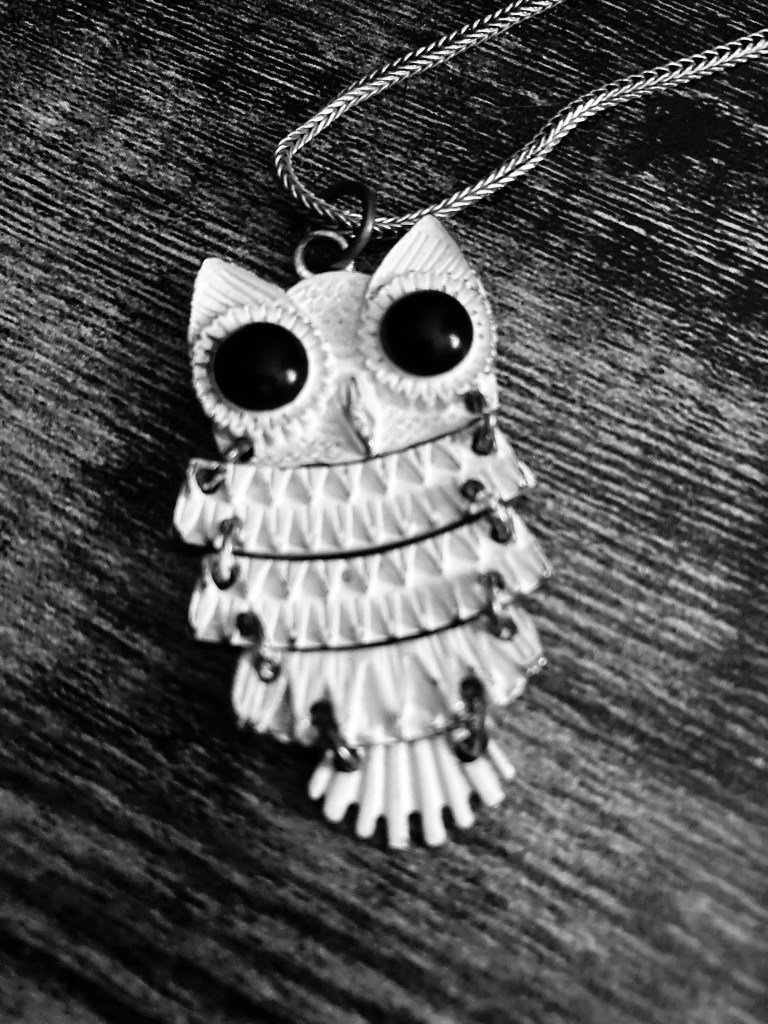
On my desk is a kitschy owl pendant I’ve had for over a decade. I rediscovered it recently, wear it sometimes. It landed on my writing desk at some point in the last week or two. It is almost unfathomable to recall who I was when I first wore it and who I am now. And I’m startled too to think of continuity, and what we retain of ourselves through all the years and all the changes, what has always been a part of us. What a victory, to be able to recognize and embrace all these parts and versions of ourselves, and where we are right now at this precise point in time.

Love, Cath

On Curiosity and Conversation

By Catherine DiMercurio

How strange that September is beginning is a thought that chirps through my brain these days. This time of year is so laden with transitions it is easy to feel unprepared. The loss of light has been startling, and though temperatures have spiked this weekend, there has been a coolness to the nights and mornings that smells of autumn. The softer light and cooler air touch your skin differently. I don’t mind grabbing a sweater.

There’s much to love about what comes next, but for me, each season always feels too short (except for winter). In this space, I’ve written often about transitions and transformations.

Sometimes transitions sneak up on us the way fall does. Softly but inevitably. Not urgently, but with a quiet sureness. And internally, we feel ourselves needing to recalibrate, wondering how we hold on to the best parts of one season as we enter another.

I think of what I’ve been loving about summer and how to carry that into fall, despite shorter days and cooler temperatures. I no longer have the busyness of shifting from children’s summer vacations to back-to-school, so the seasonal shift is gentler than it used to be. But it can feel jarring, nonetheless.

At a farm stand in Ann Arbor, I bought a small watermelon, some peaches, and a couple of apples, and I thought how wonderful September is, that it encompasses all this, that it is summer and fall, in conversation with one another.

It’s easy to think in terms of conflict, where we focus on the ending of one thing and the beginning of another, and the summer people and the fall people on social media are either lamenting or rejoicing. It’s easy to look at our own apparently competing desires as an equation to be solved, where the variable, “x,” will equal something when we’re done figuring it out. We will do the math and the result will be an answer to the problems that plague us, to the what-iffing we do about both the past and the future. I’m curious about the conversation between the “this or that” scenarios we paint for ourselves. And how, amid all this contemplation, do we sustain an attachment to the present moment? How do we position ourselves fully in who and what we are right now, when we are so busy trying to solve the past and anticipate the future? We fixate on healing and learning from the past, on preparing for a future we can’t possibly know, but we try to know it anyway. Meanwhile in the present we are trying not to disappear.

Maybe the problem starts when we are little, when we are constantly being asked what we want to be when we grow up, and do we have a girlfriend or boyfriend. Why do people do this to children? This felt like a fairly common practice when I was a child. The goals were laid out definitively for us, even if we were unable to articulate them as such as elementary schoolers. We were not even allowed to live in the present as eight-year-olds. It’s no wonder it is difficult to do so now. The messaging we got from so many angles was that the whole point of life was work and a partner. So when one or both of those things don’t work out how we planned, of course everything feels scrambled. And even if everything goes according to plan, many people still find themselves with a persistent “now what” sort of feeling, since everything they’ve pursued has been external.

These days, I try to train myself to savor the current moment and it has meant a certain type of negotiating. For me, being able to fully experience the present means that I must stop trying so hard to eliminate anxiety about the future or analysis of the past. I don’t want to fight myself anymore. It’s exhausting, and it has begun to feel uncomfortable and disingenuous to wish I was different than I am. For me, the thing to do is to focus on what else is also existing right now, amidst the familiar habits of worry and rumination. Can I shine a light on it? Is it excitement? Hope? Curiosity?

I feel as though the path, for me, is peace-making with the parts of me that admittedly feel in the way sometimes. Maybe instead, I should listen to what they need to tell me, listen with a compassionate ear for hearing, not solving. Maybe if I simply say, I understand your concerns. It’s normal for you to feel that way, they will feel heard. They won’t have to shout anymore because I’ve stopped trying to ignore them. And they’ll stop feeling like I’m trying to figure them out of existence. In a way, given that anxious tendencies develop from vulnerable parts of ourselves, we have to be as patient as we would with a child, and sometimes repeat ourselves, with kindness and empathy.

Then, perhaps, once they quiet down, I can listen to the other parts of myself that don’t always get the attention, the quiet ones, who say softly that things are good, that there is much to delight in, even amidst the anxiety. They remind me to trust myself. To be curious and have fun and to not forget about open-heartedness.

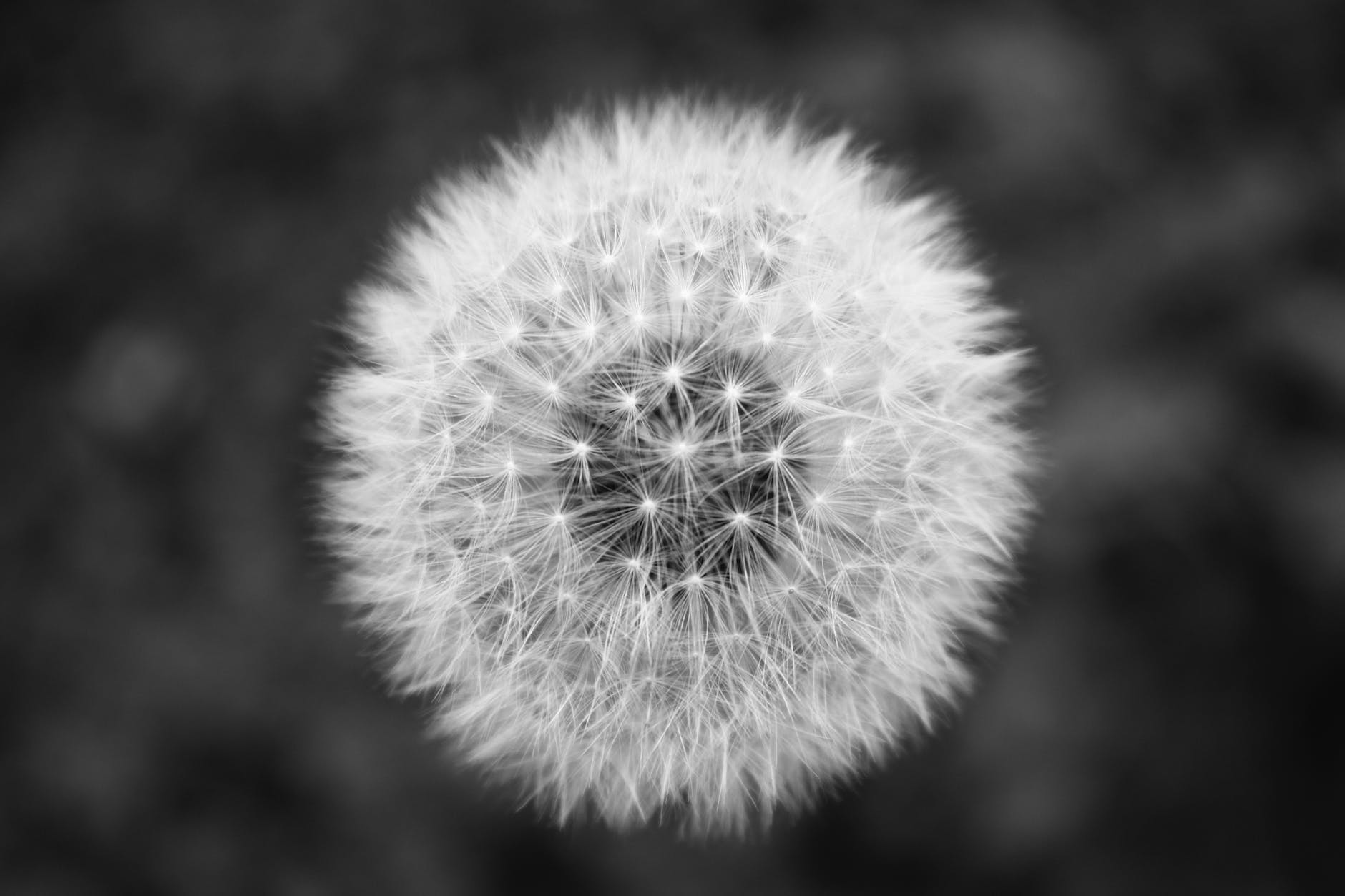
Though I sometimes must remind myself to be playful and silly, I never regret it, and it always connects me with that curious, light-hearted, open part of myself. My son tips me off to the best boxed vegan mac and cheese, and I splurge and buy 12 boxes so I always have something yummy and easy on hand, childhood comfort food. I giggle as I feed my dog bites of ice-cold watermelon and he nudges me for more, his whiskers tickling the bare skin of my summer-brown knee. I sing along to the radio on the way home from pottery, windows open, bright light from the full moon shining down. I make wishes on dandelion puffs. I play with the waves at the beach.

Photo by Jack Hawley on Pexels.com

I remember how to do this, to be delighted, to give this part of myself a seat at the table. But usually, she doesn’t want to sit still. She is laughing and playing freeze tag in the back yard with her siblings, running through her father’s perfect lawn in her bare feet, not minding that she’s “it” again. She is me, I have to remind myself sometimes, and our lungs are full of waiting wishes.

Love, Cath

On Growth and Stillness and Glow

By Catherine DiMercurio

When I was at the pottery studio recently, we were waiting for the raku kiln to reach its final temperature of 1850 degrees Fahrenheit. We worked while we waited. I attached handles to mugs I’d thrown the previous day. I will mention here the details that occur to me as mattering. I worked with reclaimed clay. Scraps once discarded and brought back to new life with water and time and reshaping. I practiced different techniques for crafting the handles, all of which I find difficult, none of which resulted in the graceful form that I’d hoped for, all of which will be fired and glazed and useful and beautiful anyway.

The woman sitting at the table behind me was talking about how she did not like how the nights were getting cooler and that she could hear crickets now. As soon as you hear the crickets, she said, you know summer is coming to an end.

Had I been facing her or had I known her better, I might have started a cricket discussion with her. Is this true? I might have asked. I have cherished cricket song for as long as I can remember, and often lament the summers when it seems to start so late. I had just been thinking earlier that week of how nice it was to finally hear crickets at night. In my memory, crickets are associated with summer, all of it, not the end of it, but mind and memory tends to blur time and boundaries. Cricket song will always be one of my favorite sounds regardless of when in the summer it begins. But I’ve been thinking about what she said.

I thought about how, if this is true, about crickets being a harbinger of the end of summer, then in a way, they are like my favorite moon phase, the waning gibbous, which I’ve written about here before. It is something that to me symbolizes a period of calm in the aftermath of the large, chaotic wildness of the full moon. It also reminds me of the lines from one of my favorite poems, Wallace Stevens’s “Thirteen Ways of Looking at a Blackbird”:

I do not know which to prefer,   

The beauty of inflections   

Or the beauty of innuendoes,   

The blackbird whistling   

Or just after.  


There is so much I love about “just after” moments. Maybe for me, it is a way to prolong a moment, because in the moments after, if you are of a mind (and a heart) that is able to fully savor, it’s almost as though you are still living the actual moment.

Sometimes I wonder, though, if I have difficulty in fully living in the moment. Is the pleasure I take in the “just after” moments merely the counterpoint to the anxiety or anticipation that I often experience before the moment? And do both overshadow my experience within the moment itself? Maybe sometimes. Not always.

Take the raku firing for example. It was explained to all us students the timeliness of what would happen the instant the kiln was opened, how we must briskly but safely retrieve our pieces. Sometimes, based on the choreography of the kiln, we’d need to wait a moment until someone else removes their piece before we can safely access our own. Such was the case with my piece. And in that moment of waiting, I stared at the vase glowing in front of me. At that temperature, all the ceramics glowed like bright stars. My piece had some carving in it, vines and leaves. And because in those places the clay is thinner, they shone even brighter. And it felt like the image was burning itself into my memory. I wished I had been able to take a picture, but there is no time for such things. You have to move quickly and get your piece into a metal bucket filled with newspaper. The paper catches on fire. After it burns for several seconds, you put the lid on it. This is a reduction environment, with a limited amount of oxygen, and it is where the magic happens. The oxygen is consumed by the burning of the combustibles. This creates beautiful effects in the glaze.

Still, regardless of how much you make of a moment, or just after, or just before, they are all only moments. We might be able focus our consciousness during them to experience them more fully, but they last as long as they last.

When I think about how I want to live, I think about moments a lot, and how to make the most of them, whether they are blazingly beautiful and exhilarating or whether they are strikingly ordinary. I think too, of the moments we’d like to forget. Certainly there is a lot of talk about learning from difficult things, and how this is the method to discover value in mistakes and tragedy. Too often, too many of us get stuck there, in this search for meaning. I get overwhelmed by the need to understand the whys and hows of bad things. I replay them in my head from all the angles and look at what could have been done differently. And I do that because the world has suggested that this is a way of making them “okay” somehow, if I at least learned from them. But, what if I didn’t learn the right lessons? What if I didn’t learn enough? We are told we are doomed to repeat past mistakes unless we really and truly learn all the right lessons. But we are also told not to dwell on the past.

Because my brain has formed this habit of overanalyzing past pain, errors, and difficulties, I began to believe that if I failed to learn from the past—enough things, the right things—then I invited nothing but pain and tragedy in the future. But this is a miscomprehension, and one that can leave you frozen. It’s not that the past has nothing to teach us, but it is one class in a full schedule. It’s not the only way, or the only thing, we learn.

Photo by Skyler Ewing on Pexels.com

And one of the things I’ve learned is that it takes focus and endurance to shift our gaze from past lessons and look at other areas of experience. Sometimes we have to keep opening our hearts and looking at the world with a fresh eye. We focus, with all our strength, on the unfurling of fern fronds, and the way lake water baptizes our hearts into their new whole selves, and the way peace stretches roots within our lives when we invite it there every day, and on the star-glow of freshly fired clay. Maybe we must be clear about what we’ve won, not only what has slipped away as loss, and be just as clear-eyed about what we willingly trade every day, as in, I will accept the occasional storm of loneliness so that I can steep myself in calm for as long as I need to, for as long as it shows me how to grow, even though unfurling happens in increments so whisperingly minute it looks like standing still. But it isn’t.

I’d like to say that I find myself at an inflection point: tired of trying to learn everything I am supposed to from the past and ready to refocus my gaze. Yet, I’ve been inflecting. I’ve been at this, refocusing, shifting, turning, for many moments, but because it is so gradual, I sometimes forget that what looks like standing still from the outside can feel like standing still from the inside too. But it’s not. [And also, is there anything wrong with stillness? No.] Physical growth can be demarcated on a wall, a pencil line scratched into poplar molding glossed with white latex paint. I remember the smell of my children’s hair as I marked their height, the earthy sweetness of their sweat, the scent of the summer air clinging to each beautiful strand on their scalp. But how do we mark out our own growth as adults, out of the lattice work of our own pasts and into who we are now? There is no pencil for this, no wall, we simply keep going and wondering. We are unfurling, whether or not anyone can see it. When we think but I am trying so hard we must believe in the efforts we are making, whether or not our growth can be demarcated with pencils or moments or star-glow or nothing at all.

Love, Cath

On Roles and Poses

By Catherine DiMercurio

A scene from Wes Anderson’s new film, Asteroid City, keeps playing in my head. In it, actor Jason Schwartzman plays actor Jones Hall, who is playing the role of Augie Steenbeck in a play called “Asteroid City.” Jones breaks out of his role as Augie to tell the play’s director, Schubert Green, played by Adrien Brody, “I still don’t understand the play!” Jones expresses his angst, asking “Am I doing it right?” Schubert tells Jones that it doesn’t matter. “Just keep telling the story,” the director insists.

The film makes use of a multilayered frame narrative. It opens with a scene from a 1950s television special about a playwright (Conrad Earp, played by Ed Norton) and his play, “Asteroid City.” Throughout the film, the actors are not just playing their role in Wes Anderson’s film; they are playing their role as the actors in the play. As actors in they play, they periodically step out of their roles and interact act with one another (as characters in Wes Anderson’s film). Get it? All of that can be a little hard to follow, but it speaks to something essential about the ways we enact multiple roles in our lives, how interconnected those roles are, and how often we find ourselves sitting with that question: am I doing it right? Anderson’s film and his characters are as self-reflexive as we are.

The director’s answer—It doesn’t matter, just keep telling the story—sticks with me, both as an angsty human with a hazy understanding of her own role in this world and as a writer with a similarly foggy grasp of how to approach that role.  

When I was in my twenties and just getting started on my how-to-be-a-writer journey, I had joined a local writers’ group in the town in Illinois we’d just moved to. My then-husband had accepted an engineering position at an automotive plant. The Michigan-based company he worked for often had its contract engineers do a stint out of state for a couple of years before being hired in directly. This was the path we were on. We knew the post was temporary, which made everything feel temporary. There was no sense in putting down roots since we knew we’d be headed home before too long. I knew no one, and had begun freelancing, so I didn’t have a workplace to meet people. So, I joined a writing group. They were an eclectic mix of people. They had an annual gala where everyone read from their work. I was working on a novel at the time. I had never read my work in front of people before, and I was terrified. Yet, I really wanted to belong, to behave as a writer would, so I promised myself I would do it.

At around the same time, my husband and I had also decided to take a yoga class together, a first for both of us, at the local YMCA. Our instructor used to tell us to “relax into the pose.” I clutched this notion like a life preserver as I approached the podium the evening of the writers’ gala. I told myself to relax into the pose of writer. It helped, somehow.

I think of that now because the phrase, which has often returned to me at various points in my life, recalls the themes of Anderson’s film, and reminds me of all the ways we struggle in our various “poses” or “roles.” We ask ourselves, am I doing this right? Because often, it doesn’t feel as though we are. Am I being a good parent, a good friend. Is this the kind of person I want to be. What kind of partner am I. What kind of artist. What kind of me. Sometimes it feels wrong, or strained, or unfamiliar, to be who we are or where we are, or we find ourselves in roles we never expected to be in.

And sometimes we have the opportunity to isolate ourselves from our roles. I recently returned from a solo camping trip. In the woods, setting up my tent, or out on a hike or kayaking, it was impossible to avoid memories of past trips, to see myself through the lens of my various roles. Camping was something the kids and I always used to do together, so I thought of what it was like to be a parent on such a trip. I also thought of a former role, that of “wife,” because I didn’t start camping until I married. After the split, the kids and I continued to take a camping trip every summer.

But now, out there on my own, flooded with memories as I was, I also experienced a whittling away. The memories came and went, leaving me focused on the tasks of camping: gathering firewood and kindling, pumping water from the hand pump, guarding against rain, cooking, and cleaning up. And there was quiet and solitude. I had time to decide based on my own whim what I wanted to do next. Read for hours? Go to the beach? Haul the kayak down to the water for a paddle? Take a hike along the ridge that looked out over the lake? There were a number of instances where I was keenly aware that it was just me, as me, out there.  The absence of responsibility to anything but my own needs was essentially an absence of roles. And in that space, I found that my brain was able to disconnect from the perpetual figuring it out that it is always compelled to do, the spider web of concerns and ideas and emotions I feel daily as a home owner, an employee, a potter, a writer, a mom of on-their-own kids, a mom-guardian-friend to my dog, a friend, a freelancer, a sister, a daughter.

I love my roles. They, and the absence of them, make me who I am. I exist both in relation to the people (and dog!) and activities in my life as much as I exist in relation to no one. I think these two modes of being are in dialog with one another, under the surface, in ways we don’t comprehend or have an awareness of. And maybe what I have been trying to do my whole life is to connect with that awareness, that unity that hums beneath it all. Sometimes there is a sense of fracture, the feeling that we are broken apart into pieces, fragments of ourselves. There’s an undercurrent of anxiety or urgency at times, one that is hard to put a finger on, where things feel off, misaligned. Sometimes it seems that our various roles are disparate, independent identities but they are all yoked to the core of who we are, and in that way, are connected to each other. Though, we live in a world where it is not always encouraged or advantageous to bring our whole selves into everything we do, so the prickly sense of fragmentation persists.

After all the afters—after the kids moved out, after I moved out of my old house, after my last breakup, etc.—there were moments I experienced a specific kind of hollowness. The roles I’d been playing to that moment all needed to be redefined, reshaped. But, I wasn’t entirely clear how to do it. I tried to figure out if the roles themselves—understanding them, inhabiting them—were supposed to be my purpose, or, what was the game plan, what did unity and alignment feel like now?

Consequently, I often ask myself am I doing this right? Is this how it is supposed to be? Is this how you do it? Is this how I do it? To see Jason Schwartzman’s character in Asteroid City asking the same questions was piercing, enlightening, and a relief.  I always feel as though I’m trying figure IT out. My role. Life in general. The nature of purpose and being and doing. Trying to understand it all feels at once vital and futile, as if, at birth I was assigned a quest that it was not humanly possible to complete. I do not remember a time when I did not have a sense of wonder and confusion about the nature of self, in all its fracture and unity. Trying to wrap my head around what I was and what I was doing here is in fact one of my earliest memories. I don’t think I’m supposed to stop doing that. I’ve realized lately that I don’t want to stop doing that, that I don’t need to. For some time, I wondered if, in the ceasing of that effort, some sort of peace or perpetual happiness waited. Maybe it does, but to get there I have to stop being who I am, and if that is the path, it is not one I am ready to be on.

At the same time, doing all that gets exhausting. It often doesn’t feel like I’m relaxing into anything. Which is why I knew I needed the break that camping provided. Where whim was the guiding force, where all of the talking and wondering and chatter in my brain quieted down. I am getting more in tune with how that balance works for me, between the busyness of figuring out how all the roles exist and talk to one another, and the quiet, blank-slate absence of roles I know I can find when I need to.

I don’t want to be any other way than how I am, when I think about it. Maybe I have more figured out than I think I do, maybe we all do, and the issue we deal with is that this world is loud and full of messages that compete and contradict and confuse. It is full Stuff to Deal With. Jobs that pay the bills but also sap our energy, things that go wrong, that fail in our houses and cars and bodies and hearts.  It is so easy to get shaken up, shaken off course, shaken to the bone. Of course we’re going to wonder if this is how it is supposed to be and if we’re doing it right. How could we not wonder that?

Maybe the secret is not to eliminate the questions and the angst, but to stop resisting it. We need to make room for it, get comfortable with it. Relax into it. I think in the end, that’s what was so freeing and elating about the director’s response to Jones’s question in Anderson’s film. It doesn’t matter. Just keep telling the story. It was permission. As if someone gave me, gave us all, permission to not have the answer. We can keep trying to figure it all out, if we feel compelled to, if we like it, if that’s the way our brains work, but we are allowed to not find the answer; there is no failure in not coming up with a tidy explanation or an essay on synthesis. We’re allowed to just keep telling the story. It’s our story after all. We can tell it any way we like.

Love, Cath