On Obstacles, Works-in-Progress, and Works of Art

By Catherine DiMercurio

This week, I’m thinking a lot about work. How we look at work and reward impacts so many areas of our lives.

If we do creative work, focusing on what many define as success or reward will leave us feeling defeated and discouraged. If success is selling the product of your effort, then unless you are both extremely lucky and wildly talented, you will be discouraged over and over again. It is just the nature of trying to smoosh creativity and capitalism together. The world is full of creative folk trying to get their work “out there,” and monetizing it is tricky business. But for many creative people, the joy is in the process, in learning your craft and practicing it, and in being a part of a community of like-minded people, in sharing our work in ways that have little to do with recognition or gain. We shape words or pigment or clay or musical notes in an effort to capture truth, beauty. And even if no one is buying we are still making, because we have to.

When I was growing up, I gradually came to understand a couple of things about work and reward. At school, working hard yielded good grades, which seemed to matter a lot to my teachers and parents and I felt happier when no one was grumpy with me. And I didn’t have to work that hard most of the time. At home, I observed my parents working hard to provide for us, so I assumed that this was a given in life. Work is necessary, and if you’re going to do it, you may as well do it well was another message I got. If you’re going to do something, don’t do it half-assed, my father would say.

Yet, the work-reward model left me to conclude that not achieving a hoped-for reward meant that you didn’t work hard enough or you didn’t work long enough, or both. Those conclusions don’t always lend themselves to a healthy way of looking at ourselves. Work tends to feel futile, or washed over with something the color of failure. It took me a long time to understand that some rewards remain elusive no matter how long and hard you work, to understand that in pursuing difficult-to-achieve rewards, I was benefitting in ways I hadn’t expected.

I have had to reexamine the way I look at work and reward since my divorce. This life-changing experience, also washed over with something the color of failure, makes you look at a lot of things differently. The work of relationships is one of them. Good relationships don’t just happen, and good relationships take more work than bad ones.

I don’t know of any relationship that doesn’t take effort to maintain. Certainly, some are easier than others, but how people relate to us and us to them in any given moment is influenced by everything that has brought us each to that moment. My past has created me, in everything I learned from it and everything I didn’t, just like yours has.  

People talk a lot about “baggage,” especially when you’re dating in your 50s. I don’t think anyone’s so-called baggage is the sum of every bad thing that has happened to them. I do think we carry the weight of everything we haven’t learned from those experiences. That is why there is always work to do. With each person we interact with, our past experiences reveal themselves in new ways. We may believe we have worked through and healed from difficult events or difficult people, but we cannot foresee all the ways something will impact us. We are forever works-in-progress. That is a beautiful thing, or can be, if we turn ourselves again and again to the work that we our called to do. If we lovingly embrace that we are living, breathing works of art.

Many of the things I considered to be challenging aspects of past relationships were pointing to things I needed to learn from myself and for myself about myself. But that learning could benefit the relationship as well. For example, if a partner and I fought because I responded strongly to their avoiding communicating about their feelings, it was a chance for both of us ask why. Understanding why a person withholding their feelings triggered such a deep anxiety in me helped to pinpoint what I needed to work on, and allowed me to explain my response to my partner and ask for support. But I could only do my part. A partner unwilling to ask himself why he avoided communicating about his feelings meant that not only could he not give me the support I needed, but that he could also not ask me for the support he needed. So the issue continued to sow conflict. Instead of two people working in partnership to improve the relationship, two people suffered individually with not getting their needs met.

Not everyone sees value in this work, and not everyone is ready to do it. I think we are all able, capable of such introspection and responding to it. It is uncomfortable, but why wouldn’t we be willing to do this work for ourselves and each other? Isn’t this growth what makes us better partners, better parents, better friends, better people?

It is difficult to accept that someone can look at you, see the value in what you bring to the table, understand that there is unattended work in themselves that would present obstacles in a relationship, and choose to embrace the obstacles instead of you. They equate the obstacles, which are often learned behaviors, with their identity.

The say this is how I am.

But obstacles aren’t identity. Yes, our past gives us things to stumble over. But we are not the boulders in our way.

We are the way.

We are as much the path behind us as the path in front of us. But we are not our experiences. We are not the coping behaviors we adapted ourselves to. We are neither our joys nor our traumas. We are everything we told ourselves in response to those experiences. We are what we tell ourselves we are.
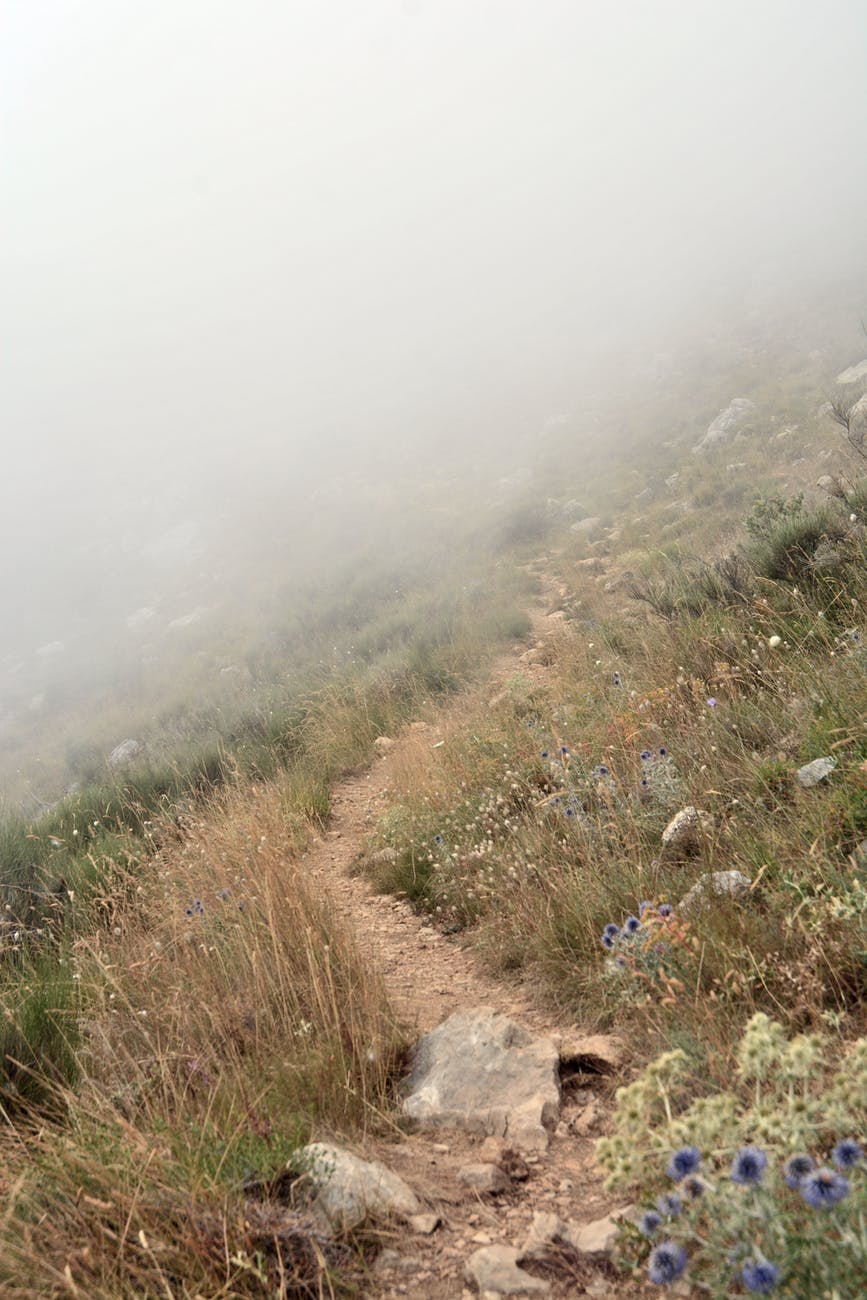
Photo by Jim Richter on Pexels.com

The beautiful thing is that as we grow and become increasingly self-aware, our responses to our experiences feel more like choices (because they are), instead of reactions that just happen.

So often people insist that they won’t change for anyone, can’t change. What do we have a right to expect of others? What should we expect of ourselves? How do we sort out what is a (maladaptive) behavior or response that we have learned from a painful experience and what is truly part of our identity? Perhaps trying to find the difference between those things only matters if there is something you wish to change about yourself, only matters if you see value in, and the need for, self-improvement. We can love ourselves for who we are at the same time that we seek growth. Those are not mutually exclusive concepts.

Perhaps it is a question of risk and reward rather than work and reward. If the journey toward self-discovery and growth could lead you toward a relationship with the potential to either be the beautiful bond you’ve dreamt of or another possible heartbreak, maybe it is a self-protective mechanism to insist that change is impossible, that this is how I am, take it or leave it, accept me as I am or walk away.

How often I have been told just that, and remained in the relationship, still pursuing my growth while trying to see how that fit in with a partner who proclaimed they would not or could not change. For me, it hasn’t worked, and I am learning to be as willing to love myself as I am to love other people.

For me, that has meant walking away, and continuing to do my own work, while I look for someone who understands that growth is a non-terminal journey. That each day gives us the opportunity be in the present in a new way, with a new understanding of what has brought us here together.

Our brains are designed to adapt to new circumstances and to one another. We have evolved to be in community with one another. We can accept who we are, and what has happened to us, and that we are flawed individuals. That is normal. That is human. But so too is taking stock of all that, and wondering how we can build on it, learn and grow from it. Is that not part of what binds us to those we love, the desire and sense of duty to learn to love one another better? And like all things, this journey begins with ourselves.

Remember, they don’t call it a “work of art” for nothing. We work hard and in that work, we are breathless, we are breathtaking.

Love, Cath

On Seedlings, Rip Currents, and New Things

By Catherine DiMercurio

Solitude is one of those gifts that doesn’t always feel like one. There is much delight in self-discovery, but the responsibility to make the most of this time can be troubling. Yet in the absence of other humans to react to and with on a daily basis there is a freedom to observe ourselves, to re-learn what makes us tick.

For me, this prolonged period of solitude has provided the opportunity to ask questions. What does being me look like when I am not in the mode of daily parenting or in a state of being partnered? In a way, being in solitude is like being the control group in an experiment about my own identity.

Here, I have the time and space to observe what affects my mood, my sense of well-being. What stressors alter the course of my day, how do I respond to them? How did I respond differently when I lived with my children, when I was with a partner? What do I like about the way that I live and think and feel, and what would I like to improve?

Here is something I’m learning about growth. Imagine one of those old, time-lapsed photography videos of a germinating seedling, the way it pushes through the dirt up to the warm sunlight and begins to unfurl. I wish my growth was like that, unconscious and inevitable, rooted in the instinct to move toward the light. When a human chooses to pursue growth—emotional, psychological, relational, etc.—they bump up against obstacles that can feel more troublesome than the soil a seedling faces. We must move through them somehow to get to where we want to go. It is not an instinctual movement with a clear direction. For many, growth requires confronting fears, and most fears stem from old wounds, from past relationships that reach all the way back through our childhoods. Our growth often requires that we dig down before we can inch up.

Photo by Gelgas Airlangga on Pexels.com

One of the things I have learned about myself is about the way I pursue things, or avoid pursuing them. Sometimes I can’t sink my teeth into something that intimidates me until I have run out of all the excuses to avoid trying. Sometimes I can’t truly let go of someone—even after the relationship has ended—until I have exhausted myself trying to figure out why it didn’t work. Things take as long as they take. Especially because we have to live life at the same time we are doing this work.

We owe ourselves these searches, these explorations of wounds to be done grieving, of lessons to be learned. But it’s hard and we need to take breaks. And the work does not have an exclusive claim to our time. We have other things to do. I have a full-time job, writing goals, hobbies, dogs who are strangely like best friends half the time, and mysterious toddler-like creatures with a never-ending set of demands the other half.

Some people seem better equipped to live in the moment. I feel as though I’m almost ready for whatever moment I find myself in, I just have to think about a few more things first.

In having all this time to myself, I decided it was time to learn something new. I had two aims in mind: learn the new thing, and, to learn something about myself in the process. One of the reasons I wanted to learn the new thing is that I have begun to understand the extent to which I have lost myself in past relationships. So, I am exploring the lost self, the remaining self. Further, I have a duty to undertake this exploration openly and honestly, to side-step self-criticism, and to nurture myself through this process with as much care as I would treat anyone who is going through transition or transformation.

The new thing, if you’ve read any of my recent blog posts, is pottery. It is an artform rich in metaphor. It is an artform where proficiency is elusive. Developing even rudimentary skills is challenging, more so than I ever imagined. Instead of being able to feel relaxed, or excited, or joyful, or curious about learning this new thing, I have found with dismay that I’m often frustrated or anxious. It is a disappointing reaction. I try not to be disappointed. I try to dig. Anxiety tries to point us in certain directions. Just like pain is our body’s way of telling us something is wrong, our anxiety is a way of our brain telling us that something is off. Certainly, there is nothing much actually dangerous about pottery, so why was I reacting this way, with so much worry? Was it more than just wanting to do well and struggling to get there?

I was about to head to the pottery studio and my anxiety was jangling so loudly it felt like I could hear my teeth rattle. Instead of ignoring it, or trying to distract myself, or telling myself to knock it off, I decided to talk myself through it. I asked myself a series of questions that kept whittling down the issue to a couple of difficult past experiences (long past!) and the years of emotional residue they left. I let myself experience the emotions those memories brought with them.

Sometimes anxiety makes us feel as we are in current danger even though our brains are remembering something else. So, this time, I tried to be aware of what was remembered, and feel it, and understand it, and forgive myself and the people around me. Miraculously, the anxiety that had gripped me so tightly evaporated. I didn’t realize it at first. I just found myself packing my tools, and I sensed that I felt better, calmer. I went in and spent three hours making a lot of mistakes on the wheel and when I was finished, I didn’t feel terrible about the mistakes as I had done in the past. I thought, this is great; my hands are getting used to how the clay feels, how it behaves. I was able to enjoy the process of failure.

If you’ve ever swum in Lake Michigan you may have seen the signs posted about dangerous rip currents, and how they pull unsuspecting swimmers away from the shore. The signs instruct you, should you get caught in a rip current, to swim parallel to the beach, so that you can get out of the rip current, before heading back to shore. Though I have never experienced a rip current, this is what anxiety sometimes feels like. There is no current (immediate) danger, but there is current danger (danger of getting pulled under and away by the current). The moment when I started asking myself questions about the anxiety that I felt was key. I took it seriously and didn’t panic. I realized that while I was not in imminent danger physically, I was in danger of the anxiety taking over, pushing me under. My questions allowed me the opportunity to swim parallel to the shore. Arriving at the studio in a calm state was much better than having to fight the jangling the whole time.  

While pottery is the new thing I am using to try and learn about myself as I learn about the art itself, life is going to give us all other new things. I think it is important to try and understand ourselves so that when things come our way, we know what to do with them, how to handle them, what holds us back, what pushes us under, what moves us forward.

I have a Post-it note stuck to my computer monitor. It reads: curiosity. I’m trying to let that guide me. To be curious rather than skeptical about new things and to wander through this part of my life with the open-heartedness with which I started the blog in the first place. Happy wandering! May your next new thing be good to you.

Love, Cath

On December Moments & a Moon, on Resolve & Routines

By Catherine DiMercurio

Sometimes you look at yourself in a new light.

I try not to make New Year’s resolutions. It feels so contrived. At the same time, contrived or not, I have always felt a kind of magic at the stroke of midnight. With a tick of a hand on the clock, we suddenly turn a page. These are just numbers, arbitrary ways of marking time conceived of long ago by men who needed to do so to efficiently wage war.

This is not an accurate account of the history of time. I have a vague memory of learning about Julius Caesar creating the calendar roughly as we know it, and I imagine him doing so in order to plan empire-building attacks. And “civilized” society grew on such foundations and now we are able to not only war more precisely, but we learned to mark out work weeks. I think I would have preferred just partnering my movements with those of the sun and the seasons.

But, here we are. Everything we do is pushed through the sieve of the clock.

So as this year is ending, I keep thinking of things I want to prioritize in the coming year. Things that have fallen away that I want to get back to, new things to explore.

I always have writing goals, but as I wait for the publishing world to make decisions on my submissions, I feel like I need a new way of looking at success. Is success, or the lack thereof, related to the fact that a tiny fraction of a percent of what I have written has been published? Or is success deliberately cultivating a writing life? Writing every day, learning about writing, finding ways to be parts of different writing communities, reading. There is no new story here. I want to see success as the journey, not the goal, since the goal is elusive and I’m working very hard and want the work to mean something. I imagine there are two types of people who do this: people who have not achieved the goals they hoped to, and people who have, and understand that achieving a goal is not as brilliant as you think it is going to be. You hold it for a moment and then it slips away, and in its place, we fix another goal/hurdle. The fact is, the world is going to define success however it wants to. And the only path to sanity (and one’s ability to remain motivated), is for each of us to decide for ourselves what success means. What if it is that simple?

On the morning of the solstice, I walked with my dog beneath a waning gibbous moon. I paused to notice its particular shape and glow, and decided in that moment that this was my favorite moon phase. Waning gibbous. [Later I will think of the Wallace Stevens poem, “Thirteen Ways of Looking at a Blackbird,” when I consider why the waning gibbous is my favorite: “I do not know which to prefer / The beauty of inflections / Or the beauty of innuendos, / The blackbird whistling / Or just after.” I love the settling calm after the full moon, like a bird’s ruffled feathers hushing back into place.]

A flutter of movement caught my eye, pulled my awareness fully from the moon and toward a young stag, on its way back to the little strip of wood between the golf course and the houses that abut the creek. We looked at each other. My dog was quiet, alert. The three of us paused this way, for several lovely moments. I always hope when something like this happens, on the rare occasions that it does, that it means something. That I’m on the right path.

Photo by Diego Madrigal on Pexels.com

A few days later, on Christmas morning, I awoke to the knowledge that my children once again slept in rooms a few feet from mine, snuggling with the dogs. We haven’t woken up together on Christmas Day in this house before. The knowledge left me with the feeling of peace and anticipation, like opening a letter from someone you missed and hadn’t seen for some time.

Some mornings, my first thoughts upon waking are about what is missing instead of what is present. I imagine someone kissing my shoulder, making us coffee, beginning our day together. Other mornings it is easier to unfold into my own day, rather than my imaginary one, to make the coffee and write and walk the dogs.

I have come to cherish this routine, my routine: waking in the darkness, finding words and purpose, then getting outside. I shake my sleepy head the way the dogs do and see what lands on the page—strange new ideas, one gorgeous metaphor to wrap a sentence around, or sometimes, thoughts I can’t quite string together or make sense of. And then, as the sky begins to lighten, I walk the puppy, who is jumpy still around anything unexpected—a car backing out of a driveway, a dog barking across the street. We move into the world before the world is moving, a short brisk walk where we sometimes dart from smell to smell as he investigates. And then, we return home, and I switch dogs. My senior pup’s walks are long and purposeful. Ahead, ahead, let’s go. Sometimes he stops to sniff but he is about movement, and I watch the way his stiff joints seem to loosen and ease. The joy he takes in his morning walks is spectacular. And even if I’m frustrated from the writing, or how much the puppy pulled or lunged, by the end of this second walk something in me usually loosens and eases as well.

I recall how difficult maintaining this routine was in my last relationship and I’m disappointed that I sacrificed so much of myself to a situation where little was offered in return. But this is how we learn. This past year I have learned so much about what I truly value. About what I like. Not only what I enjoy doing, or what pleases me about my life. I am learning what I like about myself. This is good territory. I’ve been here before but have not inhabited this space. I’ve dropped in for visits but only as a tourist. I’m becoming a local now. I didn’t know you could do that. That I could. If such things are taught some place, I missed the lessons. I feel as if it never occurred to me before to develop a more conscious understanding of myself in this manner. I think deeply and often about my feelings and my past and my flaws, but I have spent so little time in this other region of selfness. I keep returning to this thought: I didn’t know it was okay to want to.

Even as we are dealing with so many stressors and responsibilities, we somehow must learn to be our own guidance counselors, and to put ideas in front of ourselves to consider. For me, it was: have you given any thought to what you like about yourself? One of the benefits of pursuing this line of thinking is that there is so much less time and energy to pursue the endless ruminating on what relationships failed and why. I have ruthlessly covered every inch of that ground, dragging myself through the dark woods over and over again. What did I miss, could another path have been taken, what went wrong, what went right, you better learn from this so it doesn’t happen again. To spend time instead exploring the other worlds inside my heart is a gift. I could chastise myself for not getting here sooner, but I think we’ve covered the ground of self-recrimination in several ways at this point.

So instead, let’s explore lightness and joy. Instead, let’s allow that we have learned and re-learned old lessons, we have dissected mistakes, grief, loss, and failures. Let us now resolve to learn and re-learn what success means to us, what joy does, what self does.

Love, Cath

On Safe Havens

By Catherine DiMercurio

Sometimes we figure out what we need.

Some transitions take longer than others; or, I am slow to acclimate to change. I think about where I belong and where I don’t and have not come to any conclusions except that sometimes it feels like nowhere, or at least, not here.

A few weeks before my house began a revolt with its perpetually problematic furnace, I finally got out of it for a couple of days. I’d booked a cabin in the woods in a state park not too far from home. I’d painstakingly arranged for care for the dogs, though I worried about my absence being difficult for them. My plan was to go away to write in solitude, but when one of my sisters, who was in need of some solitude herself, asked to join me, I was happy to say yes. She volunteered to take care of all the food, and let me write, and when I needed breaks we’d be able to enjoy each other’s long-missed company, and walk in the woods. Few things are ever exactly what you need, but this was. It felt soft and safe. It felt like the childhood safety and freedom from worry she and I had enjoyed together. It was laughter and peace. And I did get a fair bit of writing done. And we rambled through the woods in the late-September sun.

Back at home, I tried to hold on to that sense of peace and security, but I was also faced with what I had left—living in a house and in a town that I’m still acclimating to after a year, a place that resists feeling like home. Part of it is that in addition to my son leaving for college, the relationship I thought I’d be cultivating here had ended and I have found it difficult to create a sense of belonging to a place that did not have my people in it. For decades, home had been about family. Adjusting to a lack of a human population within these walls has been a bumpy ride.  

It’s a strange thing to make peace with an object as big as a house, and one that at times has seemed like it has wanted to eject me. Look, I say. We just have to make this work. Yet, you are not what you pretended to be. Things I loved about you when we first met all need to be repaired or replaced. Other things I loved about you that no longer matter: you kept me close to someone who mattered.

You were supposed to be a safe haven. But then I remember, that’s my job, not yours.

Safety, in all its forms, is both complex and simple. So easy to lose, so hard to get back. I think many of us experience this loss of a sense of safety at various points in our lives, whether it be in the aftermath of trauma large or, smaller but chronic, or an ongoing familial or financial crises that takes its toll.  We look back and try to remember what it was like to feel safe. Maybe it was so long ago you can hardly remember, or maybe it was a recent loss, sudden or gradual. Or a combination of all these things.

I believe it is also true that many people who feel anxiety or stress are unable to identify its true source as the absence of a sense of personal safety. It is difficult to pinpoint the source of trouble within ourselves, and it is easy to write off a deep, unsettled feeling as “stress.” But I have been wondering if it is actually stress that is the source of the anxiety I often struggle with, or something deeper.

In the course of these past couple of months of adaptation—to the loss of a relationship, to my newly emptied nest, to solitude that wears a different face every day—I have tried to explore troubled feelings when they arise. One of the things I’ve come to recognize is that a chain reaction of harm is occurring, and it is eroding my ability to be what we all need to be for ourselves: unassailable safe haven.

When I have a setback—expensive home repairs, a rejection of a writing submission I was really hopeful about, the text that erases the budding hope for a new potential relationship—my first thoughts are not those that self-soothe and comfort. They are those that self-criticize. Worse, they sometimes wound even deeper, mirroring the act of shaming that others have done to me in the past. What’s wrong with you? How could you let this happen?

How can we ever feel safe with someone who is makes us feel less than, who prods us about things we should have known or done, or belittles us for “bad” decisions, or for outcomes beyond our control? If we told a friend that someone we cared about was treating us this way, they might say, “that’s awful, that person does not love you.” What might our response be? Would we defend? Insist that they are only trying to protect us? What do you do when the person hurting you and tearing you down is yourself?  

There is undoubtedly a part of us that thinks it can protect us by pointing out things we could have done differently, things that didn’t work out well before, in order to try and keep us safe from further harm. There is a part of us that wants us to do better, be better. This critical voice pushes us because it loves us, and when we have pushed ourselves before, when we have tried harder and achieved, it may have seemed that this did make other people love us more. We may have told ourselves that. That people love us better when we can demonstrate that we have achieved certain external success. And that means a lot when we have been unable to create that love and safety within ourselves.

Did we even know we were supposed to? I’m not sure I even knew that as a concrete thing, that it wasn’t going to be enough to let my sense of safety be housed within my relationships instead of myself.

Sometimes we learn too well from all those who have been critical in the past, individuals and institutions that have used shame as a tool to control us. And when we use the same tools on ourselves the result is anxiety and self-doubt and depression. But how can we self-soothe, how can we turn inward for comfort when times are tough, if we have cultivated an inner critic whose voice is louder and meaner than anything else inside us?

For some of us, this all results in a situation in which we feel more at peace with a partner than on our own, because in solitude we have not been able to create a space in which we feel completely safe. This has been true for me. Yet I felt entirely comfortable providing that safety that I withhold from myself to someone else. When it works, when it is mutual, it can beautiful, and some healing can happen there, to feel that your heart is being cared for so tenderly by someone else. You might even begin to learn how to do this for yourself. But if such care is withheld, what often kicks in is not an instinct to self-nurture. Rather, it is the voice that tells us that we were never worth it to begin with.

I think all this is why writing feels so important to me—I can transcribe not just the darkness and hurt, but also the light and the balm, and I can create, in an imaginary world, things that I struggle to create internally. I try to teach it to myself, by showing what works and what doesn’t. This, not that, please.

It is also why rejection in all forms is so difficult. When connection feels like safety, then being told we aren’t someone’s cup of tea, or our creative work is not a good fit, or good enough, can be demoralizing. There is no magic to feeling okay with any of that. However, practicing and learning how to be a source of connection and safety within and for ourselves is the key, and not just to handling rejection. It is the path to being able to cope effectively with all that life throws at us.

We must be able to believe ourselves when we say I am safe. We must be able to give that gift to ourselves. I must. I’m working on it, now that I have finally figured out that this is what I should be doing. If this is your work too, I wish you love and luck.

Love, Cath

On Feathers and Full Moons, Equinox Rain and Wheel Barrows

By Catherine DiMercurio

Sometimes we find lost things and lose sleep.

On a recent early, early morning when I couldn’t sleep, I pulled out a notepad to try and capture the things that were making me anxious and unsettled. I often can’t sleep around the time of a full moon. When I return to such notes, I’m often saddened and alarmed at how amplified my worries can be at this dark hour, how they reach and seep, inky and dark. For me, so many of the things that keep me awake at night hinge on the notion of self, on what I believe I am and am not capable of.

I think of the line from the William Carlos Williams poem: “So much depends / upon a red wheel / barrow.” So much depends on how I view myself, so much depends on the idea that I can be depended upon. On the longing to depend on myself, and the fears of falling short. So much depends upon the notion that I must be useful, effective, sturdy as a wheel barrow waiting to carry the weight and do the work.

How quickly when something isn’t going well my brain shifts all its patterns to shame. Many of us worry that we will be perceived as weak, unable to handle this or that. Not worthy of the work, not useful, not effective. Why is it, when we acknowledge that we struggle, that we are compelled to feel shame or embarrassment? I see how readily people judge one another on social media, how prevalent the notion of shame is in our society, a hungry mouth fed by religion and class or other similarly contrived ideas about worth.

I often wonder how to let go of expectation – mine and yours. Is it an act of will or fatigue?

What I wrote on that sleepless notepad was this: If hope is the thing with feathers (as Emily Dickinson suggested) then I must be doing it wrong, because there is no downy softness, no lightness, no promise of flight. And I have felt it leaving me sometimes, like a lover in the early morning. I have wondered if hope is more thorn than feather, but maybe I’m getting it mixed up with something else. Expectation, maybe.

Sometimes I try and think about what connects us all, and I think about love and loss. We have all loved and lost in so many ways, yet we get stuck in our own heads. I do. I get stuck. It’s easy to do, isn’t it? So much of life is pulling oneself out of the muck. For some of us, it takes a lot of endeavoring to cleave to the higher ground, to keep our perspective focused on what moves us forward instead of what is wrong, what has gone wrong, what might go wrong. Our accumulated griefs are heavy and they conspire against us in the form of fear of future pain. We anguish over the possible fading of strength and loss of will to do heavy work, to carry and pull our weight.

Photo by Sourav Mishra on Pexels.com

The persistent rain outside my window has erased the steamy summer days that preceded it. It is an equinox rain and you can feel autumn in the space between the rain drops. I have set things in motion to look forward to this fall – a writing weekend away, a pottery workshop, a pile of books that I vow to turn to instead of collapsing in front of the television at the end of a workday. I know that when I feel as though I’m falling, I have to throw myself a rope here and there in the near future. Maybe that can be another thing that connects us.

A few moments ago, I heard a bird singing in this downpour. I thought it strange, wanted it to seek shelter. But also, I considered the rest of Dickinson’s opening stanza:

“Hope” is the thing with feathers –

That perches in the soul –

And sings the tune without the words –

And never stops – at all –

And then some magic drew me into its circle again. It is often like this for me when the changing season corresponds to a personal transition. Things feel weighty and moods shift in pendulum parabolas. It is a time of deep thinking, of reflection on where I’ve been and where I’m going. This is my way. I’m not sure I truly was cognizant of it before now, the way sleeplessness coincides with full moons, and a deep sense of reckoning coincides with changing seasons.

This is what writing does for me. It crystalizes things, translates and distills it all, so I know what to focus on. Some people find this through nature, prayer, meditation, physical exertion, this clarity. But I think we all seek it, each in our own ways, which is another thing that perhaps connects us.

This rumination begins in the middle of a stream of thought and seems to go nowhere when I read it through, but at the same time, it is doing what I need it to do. It pins down a moment, arrests a thought in flight long enough to view it a little more closely. And it reflects where I am and where I suspect a lot of us are in these turbulent times. We are uncertain, not confident, wondering what we are made of and what we will be when we grow up and into the next part of our lives. We are at once in the middle and at the end and at the beginning again, waking from a hazy dream during a full moon in the middle of the night. We are listening to a few notes of birdsong in equinox rainfall.

Wishing you wisdom and clarity.

Love, Cath

On Want, Work, and Growth

By Catherine DiMercurio

Sometimes we will try many ways of looking before we can see.

Sometimes when we want something very badly, we will look at it from every angle, multiple times, even creating angles that are not there. Hope can do that – create prisms out of thin air. Shiny things that distract our minds and hearts from difficult truths. But at some point, the blinding brightness of the light is muted by a cloud – of anger, of fear, of sadness – and we are able to see things with a new clarity, and then, to move in the direction we need to go.

I told my sister recently that I’ve been gardening as if my life depended on it, and I wondered if it really did, in a way. Not the fact of my life itself, but the way I want it to unfold. I told her that when there is so much to do, you can hardly even tell I’ve done anything. A lot of the hard work we do can be like that. We wonder and worry about how our efforts will be perceived, though we know how we’ve endeavored.

When we say we want something “very badly” we mean this: we want it very much. Sometimes we are told that what we want is a bad thing to want. It is silly, it is pointless, it is too much, it is ill-defined, you won’t get it, the world doesn’t work that way, who do you think you are, to want such a thing? No one gets what they want. As if wanting the right thing for ourselves and our future is somehow the wrong thing to do. I suppose sometimes it is. I suppose, in some philosophies, the teaching is to eliminate wants, the way some people eliminate carbs. They are bad for us. Maybe that’s true. Or maybe we are all wired differently. Sometimes we simply must respect the differences.

We offer trellises to vines, thinking of future growth. There is planting and wanting and planning everywhere. There is growth in new directions. We are many things at once: the vine, the trellis, and the gardener who plants the vine and places the trellis. We are who we’ve been and who we want to be, as much as we are who we are in this moment. Multitudes, always.

My gardening has involved creating beds and pathways out of an overgrown, weedy, neglected area behind my garage. It was long abandoned when I arrived in this place, about a year ago, and for many reasons, I was not able to make it a top priority. Now, with more time available and some fraught and frenetic energy on hand, I got to it. Digging, planting, creating. It isn’t finished. Like everything good, it is a work-in-progress, something to always tend.

We need the work and the work needs us.

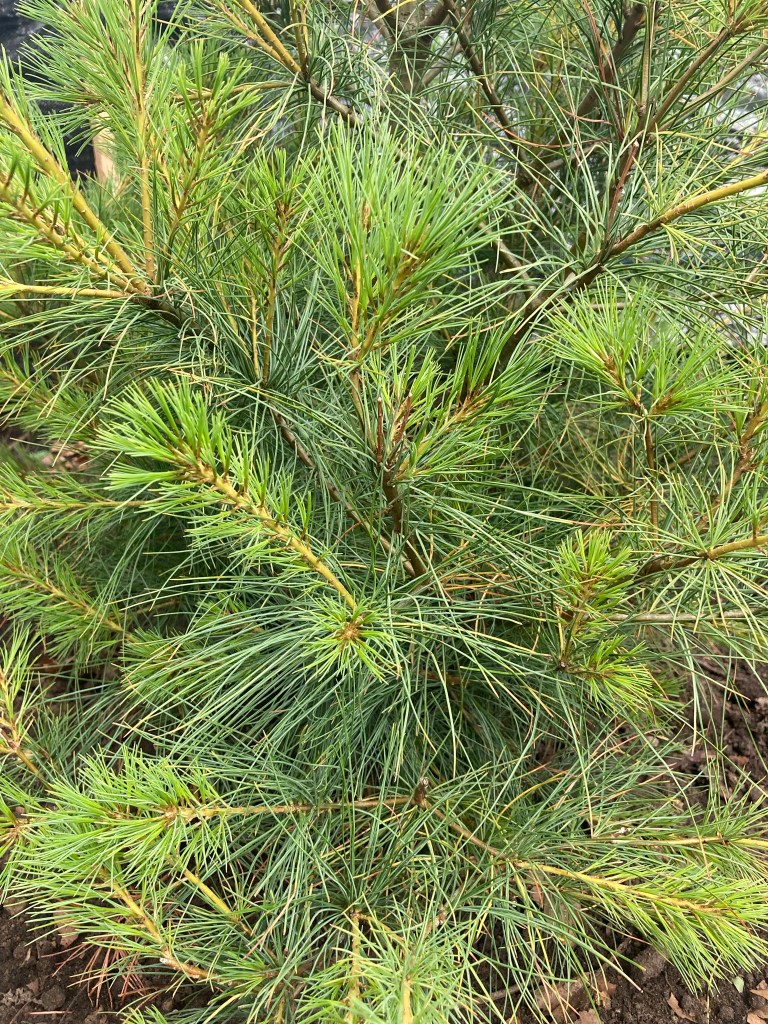
I planted a little baby of an Eastern white pine. I’d been longing to plant a pine tree for a while. I researched them. Realized many of the specimens I thought were pine trees were really spruces. Things often reveal themselves to be something other than what you thought they were.

I looked for trees months ago, but it was too early and none of the gardening or landscape stores had them yet. Then I looked too late, I thought, because I still was not finding what I was looking for. But yesterday, I found the white pine. I greeted this creature, as if knowing it already. There you are, hiding here in the back at this store I never come to. So, there’s hope I guess, buried in gardening metaphors, about timing and finding, maybe. Maybe not. It’s hard to see clearly sometimes. Remember?

My current state of mind is work- and growth-focused. Writing and gardening. Dig, prune. Wait for rain. Be patient. Blossom? Maybe. Sometimes it works out that way.

Love, Cath

On Art, Home, and Haziness

By Catherine DiMercurio

A friend and I recently were writing to one another about why we write. That conversation yielded for me an understanding that why is a question awkwardly affixed to the relationship I have with writing, which is more akin to the relationship I have with my skin than anything else. In a broad sense, it is something I have, something I need, something that protects me.

On a practical level, yes, writing is also something I do. Sometimes it is an act of artistic creation and sometimes it is an involuntary function that happens automatically and silently, the way my brain tells my lungs to breathe. Things are unfolding all the time in my mind and I wish I could somehow capture more of it. Sometimes writing is my only hope for effectively communicating my heart to the world, (or to the more individual and larger universe of me and you).

Sometimes writing is a job and sometimes it is a wish, but it is always skin.

I’ve spent a lot of time in recent years, weeks, days, minutes, always, trying to pinpoint such facets of my identity throughout the changing circumstances of my life. This intense scrutiny was kickstarted by my divorce, though I had long been focused on issues of identity in my writing, always trying to figure out if we become more of who we are as we age, or less.

As I enter my first spring in this new place, I sat down recently with my coffee and felt myself settling in, to here, to now, to me. And I thought, maybe I’ve been asking the wrong questions about identity and self-awareness. Maybe the most direct route to understanding who am now is this: what makes me feel at home within my own skin, no matter where I am?

The first thing I thought of was the coffee I was drinking, as I sat on my new-ish IKEA sofa in this still-new-to-me home. I then pictured myself at my boyfriend’s place, still new-ish to him. It is a curious thing: you find yourself in a life where none of the places in which you find yourself are ones in which you have much history. So where is home, then, except housed within us, and created anew, sitting next to this person who seems able to keep making space for you, and you for him. You put out the welcome mats for one another, sweeping them off or airing them out if there is ever difficult weather.

Photo by Nathan J Hilton on Pexels.com

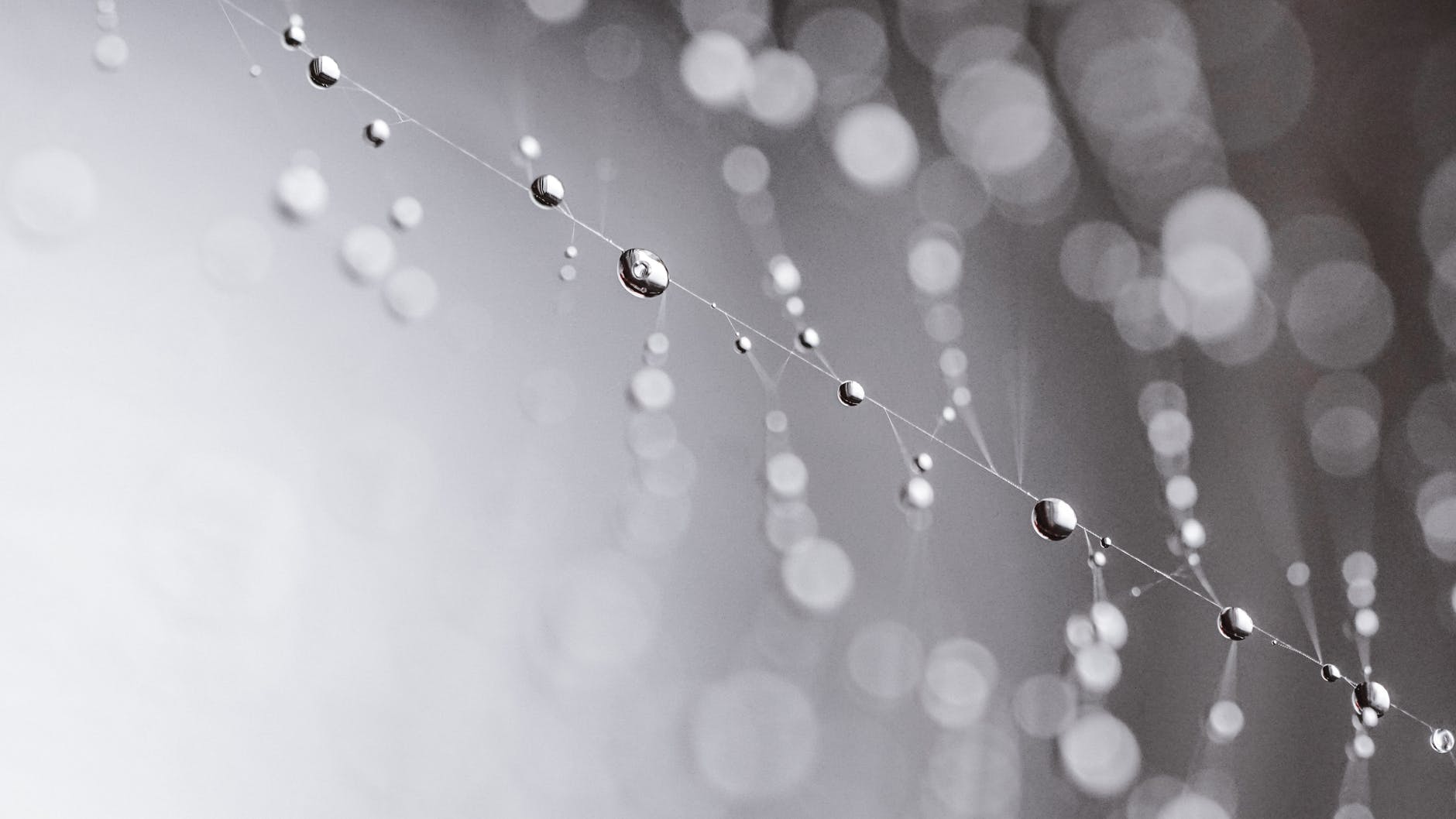
It is a marvelous but strange thing to be aware of your own history-making. To contemplate the ways in which home and history are related, but not in the ways you once thought. I recommend keeping an eye out for it, for the art you are making of self, seemingly out of thin air, or from webby gossamer strands, every day.

As I walked around the yard with the dogs one morning, it smelled like summer. Recent rain on thirsty dirt, a damp promise of heat panting in the air. I thought of drinking camping coffee, sitting with the kids in the morning, outside the tent, feeling cozy. The memories collaged in my brain, out of order, but collective. This too is history and home and self. It remains, clean and bright and clear, even in the aftermath of events that left much of the past feeling sooty and smudged.

It may seem strange to utilize list-making and note-taking as paths to self-discovery. Such a process lacks the romance of the quintessential road trip motif. However, sometimes things don’t work that way. It is less a fun, crazy journey and more paying attention and hard work. Mostly, I crave simplicity. I want to create obvious paths to certain self-knowledge, so that I can quickly run toward what I know and like about myself. So I can gallop toward safety, when I’m feeling anxious, or filled with self-doubt, or self-criticism. It is so easy for the negative to overtake us sometimes. We need to have our escape routes planned. Sometimes you have to sit down with yourself and go through the checklist, the way in elementary school we had to ask our parents what the escape plan was if the house were on fire. You have to tell yourself, when dark thoughts begin to suck you in, that there are the paths back to yourself, that you know the way. It is too easy to get lost in the thick haze and smoke of anxiety, depression, fear, or grief.

I feel as though I’m often vacillating between extremes – between being overly candid or completely withdrawn, between whole-hearted enthusiasm and active detachment. I wonder how people find middle ground. I speculate that there is a place thought of as “normal” and most of us hover around the edges, not seeing each other, and the imaginary normal place is teeming with a healthy population of individuals that can communicate with one another with ease and confidence. But in reality, most of us fumble, we hurt and get hurt, we regroup, we take deep breaths and fall silent. We clear our throats, and our eyes, try to speak and see, and be seen once more. Sometimes we manage to get it right, to find a safe, strong hand in the haze, and so we practice the art of holding on to one another.

Love, Cath

On Companionship and Work

By Catherine DiMercurio

Sometimes being part of the pack means doing your share of the work.

With a head full of the fog of disrupted and insufficient sleep, I listen gratefully to the peaceful snoring of two dogs. I have two dogs again. In truth, I hadn’t been contemplating getting another dog for very long. Until recently, I’d still been discovering the new rhythm to the days after my son moved home from college. My son and I get along quite well, but when it was time for him to move into the dorm in the fall, he was ready for the next part, as was I. I admit that single parenting since the kids were eleven and thirteen had in many ways exhausted me. It was a beautiful, joyful, painful, bittersweet collection of years, and the three of us grew in strange and fascinating directions during that time. It felt as though we were always finding our footing, but we kept finding a way to make it work. Still, when my son left for college, as trepidatious as I was, for him and for me, I was looking forward to it.

He moved home before Thanksgiving, as the university was announcing that next semester would be exclusively remote for most students. What was supposed to be several weeks home for the end of the term and winter break began to unfold differently. It was now the beginning of something longer: the end of term, and then the break, and then the next semester, and then summer. We tried once more to find our footing, unsure of what the balance between independence and family time should look like, now. Other things were happening, too. My eleven-and-a-half-year-old dog, Phin, had begun to visibly pine for the companionship of the husky that lives behind us. As I worked in the yard, Phin would position himself by the fence and stare at Apollo’s back door, waiting for the moment when the dog would bound toward the fence and play chase along the fence line. And at the same time, a friend was fostering a pregnant dog who had just given birth to a litter of eight. Daily, my boyfriend and I watched the progress of the puppies on Facebook. We began to consider the reality of what it might be like to adopt one. We pondered the logistics. And when I contemplated one obstacle or another, I thought of Phin, staring through the fence at the neighbor’s backdoor, waiting for the companionship of one of his own. Isn’t that what we all crave? I kept thinking, we’ll figure it out. We’ll just figure it all out.

Zero is the puppy we adopted. Phin was overjoyed when we brought him home, though the excitement has been tempered by reality. We knew it was going to be a lot of work; Phin did not. The work has begun in earnest. For now, the focus is on potty training and redirecting the natural puppy inclination to chew on everything that moves and everything that doesn’t. Phin is playful and patient, and sometimes, too tired to be either of those things, but the relationship shows every indication of being the type of canine friendship I’ve long wanted for Phin, and the kind that Zero clearly wants too, particularly in the absence of his seven siblings.

Consequently, I’ve been thinking a lot about companionship, and the work it entails. About the relationship I’m cultivating with my boyfriend. About the ever-changing relationships I have with my children, each tended differently, but earnestly. I think of the friendships I try to maintain, and those that have been difficult to keep up with. Like Phin, most of us seek the companionship of our own kind. In my boyfriend, I see a sensitive, artistic, empathetic thinker, a fellow introvert who often looks at the world the same way I do. We are not like-minded in everything, but to me, it seems as if his heart and brain are filled with as many curious twists and turns as mine. From the time I met him, I sensed he was one of my kind. Being near him, I feel both at ease and exhilarated. I lean in, like one big dog greeting another.

This post has been written in fits and starts. I’ve lost track of how many times I’ve let the puppy outside, or redirected his chewing. Yet, it is my job to teach him. It is my responsibility to help him grow into his friendship with Phin, to help him become a good companion for our whole family. Growth and learning are funny things, at once organic and structured. A balance must be struck between intentional guidance and wild abandon. I think of my own growth and learning in a similar way, characterized by focused attention on the things I struggle with and the permission to be unabashedly joyful. Throughout the course of this year, I’ve tried to monitor my own ups and downs, my growth and my continued struggles. I don’t imagine I’m always the best companion for the people around me. None of us can be at our best all the time, and it has been a bizarre and challenging year. However, working with Zero is reminding me that I am responsible for continuing to learn how be the person I want to be. When my anxiety spikes, regardless of the nothing or something that triggers it, I witness myself as if from a distance, reactive and fearful. Anxiety is a specter that has haunted me for many years, and sometimes I tire of the work it takes to feel in control of it. It nips at me sharply and persistently, and leaves me feeling harried and hounded. It hampers the way I handle stress and conflict; I become defensive and prickly, though what I want is to be open and sensitive, confidently able to do the work of working through things that come up.

We all have our own work to do, and this is mine, this taming. We keep finding our footing, we keep figuring it out, and we keep supporting our pack in the process.

Love, Cath

On Magic, Work and Worry, and Joy Like a Canary

By Catherine DiMercurio

Sometimes magic finds us; sometimes we have to go looking for it to get through the day.

Part 1. In Which Magic Infiltrates the Everyday

I find myself thinking about magic lately. I think about peeking in wardrobes, and the half-expectation of seeing a snowy landscape and a lamppost on the other side. To be clear, I’m not talking about actually expecting to walk into another world – Narnia, or anywhere else. I’m talking about a spark of feeling that is at once wonder, hope, joy, and something else I’m not sure I’ve been able to pinpoint.

Sometimes, life is all alarm clock and schedule and commute and cubicle. But one recent morning I walked my dog at dawn. The sky blushed, nudging away grey remnants of night, and the chill in the air had no pinch in it. My almost-eleven-year-old-galoot trotted and pulled in his undignified way, lurching toward the joy of the day, of scents and fresh air and movement and company. Rounding a corner as we headed downtown, I saw that the little city tree branches had already been strewn with holiday lights. The glow of the bulbs, set against the peaches and pinks of the dawn, that companionable contrast, made me grin out loud; there was more magic in that moment than I had expected from a Tuesday pre-work walk. Maybe the magic was in how long it stayed with me.

defocused image of illuminated christmas lights
Photo by Miguel Á. Padriñán on Pexels.com

And for the rest of the day, my wandering thoughts strayed Narnian. I thought of all the other things that work their magic on us day by day, though it can be easy not to notice.

I want to notice, and I want to remember the noticing.

I get a little lift when squeezing dish soap into the sink and a stray bubble floats toward the ceiling. It reminds me of my sweet brown dog who died before he should have had to, and how delighted bubbles seemed to make him. He always stayed with me in the kitchen when I did the dishes. And something about that dish soap bubble does more than make me think of him. In that moment the melancholic pull of missing him evaporates, and in its place is that moment of inexplicable delight and peace and . . . something else.

[I think, too, of the way my heart lurches when a certain text tone chimes, pulling all of me along with it, toward joy, as if my heart is the dog on the walk and the rest of me is leash.]

We move through our day, through ordinary moments, walking the dog, doing the dishes, sending and receiving texts. If we are observant, we might find ways to layer joy onto the bones of the moments in our days.

I look at this as some sort of everyday magic. I think that it is in fact miraculous that there is an emotion that lives near joy, hope, wonder, peace, love, delight, all these things, that I cannot name. What a gift that is, especially when you look at the spectrum of nameable emotions, and how familiar we are with the names of all of them, even and maybe especially the less pleasant ones.

Part 2. In Which the Magic is Too Easily Overcome

A couple of mornings ago, I went for a run for the first time in a while. I’ve been avoiding the cold. I used to like running in the cold. I reminded myself of that. I reminded myself that it wasn’t snowy or icy, and that the temperature, though below freezing, was above 0. It was 20 degrees out. Throughout the run, I thought of being done with the run. I thought about how I should have warmed up, and how I was forcing my muscles to do what I often force my brain to do – figure things out as I go. I didn’t have time for a warm-up. Finding my cold weather layers, that was pretty much my warm-up. I thought about metaphors and I thought about my knee and about little crystalline ice formations in my lungs.

I tried to pretend to be some kind of bad-ass when I got home, because I ran a couple of miles in the cold. The dog was not impressed. I tried to hold on to the post-run lift, to hold on to all the things that made me smile throughout the week. I was marginally successfully. But it got to be too much work when costly car troubles and other normal life stresses combined with holiday stresses began to pile up.

Stress and worry seem to weigh so much more when gathered up than all the moments of peace and happy and magic I’ve been storing up weigh. Or, I notice them more than when the stresses dribble in one at a time. But then life happens and the stresses pool together. They somehow increase in density and seep heavily into everything, groaning in a deep bass tone at the base of my skull that their totality is greater than the sum of their parts.

Part 3. In Which Overthinking Leads to Perspective and Turns Out to be Just the Right Amount of Thinking

It is easy to sink, hard to pull myself back into equilibrium. I have to be on both sides of the leash to lurch myself back into what feels like a more natural state sometimes.

Does it sound selfish, this gluttonous desire for joy and love and peace and peace of mind and hope? Why can’t we though, why can’t we want that, why can’t we throw the weight of our selves and seeking behind such pursuits?

I think how upside down the world is, of how much time we spend fighting for the things we care about and how little is left for the caring. Sometimes I feel the panicked pull of it all and I just want reprieve, and when I find it, it is in the presence of the people I care about and I’m reminded that the reprieve is actually the world, and everything else is the noise and clutter. The reprieve is the place where we can’t be hurt and fatigued and wearied by everything outside the door. And sometimes we find it in the quiet place within us, in solitude, though like anything, there can be too much of that.

I wish I could un-upside-down the world, and make the reprieve take up slightly more time than the clutter, noise, work and worry. I’m not good at rationing, though and who knows what balance looks like. I’m trying to be better about savoring, enjoying to the fullest all the moments of reprieve that I can collect throughout a day, a week. I try to not be resentful that the pile of bills or the cubicle or repairs to home and car whittle away at it all, thin it out in the middle.

It takes work, sometimes, keeping ourselves living in the mindset we want to maintain. I like my goofy optimism, I like try-your-best, look-for-magic thinking. I get resentful of the way life eats at that. I think we all do. It’s hard to not take it personally sometimes.

I think that all the art I’ve ever loved in some way captures the joy that exists within a world designed to see it fail, joy like the proverbial canary, like a doorway at the back of a wardrobe that only sometimes opens to a fantastic place, and you can’t always find it anyway. And I suppose that’s why we seek art, because it makes us feel understood, whether it be a painting, film, image, song, or collection of words. Maybe it’s just the art we compose every day, in the way we frame the world the way we want it to be, seeing the way a tree-lit night ebbs into an apricot-colored dawn.

We make art, we make joy, we make love, we make reprieve, we make magic. Because we have to.

Love, Cath

On Circles, Themes, Acceptance

By Catherine DiMercurio

Sometimes you have to accept your themes.

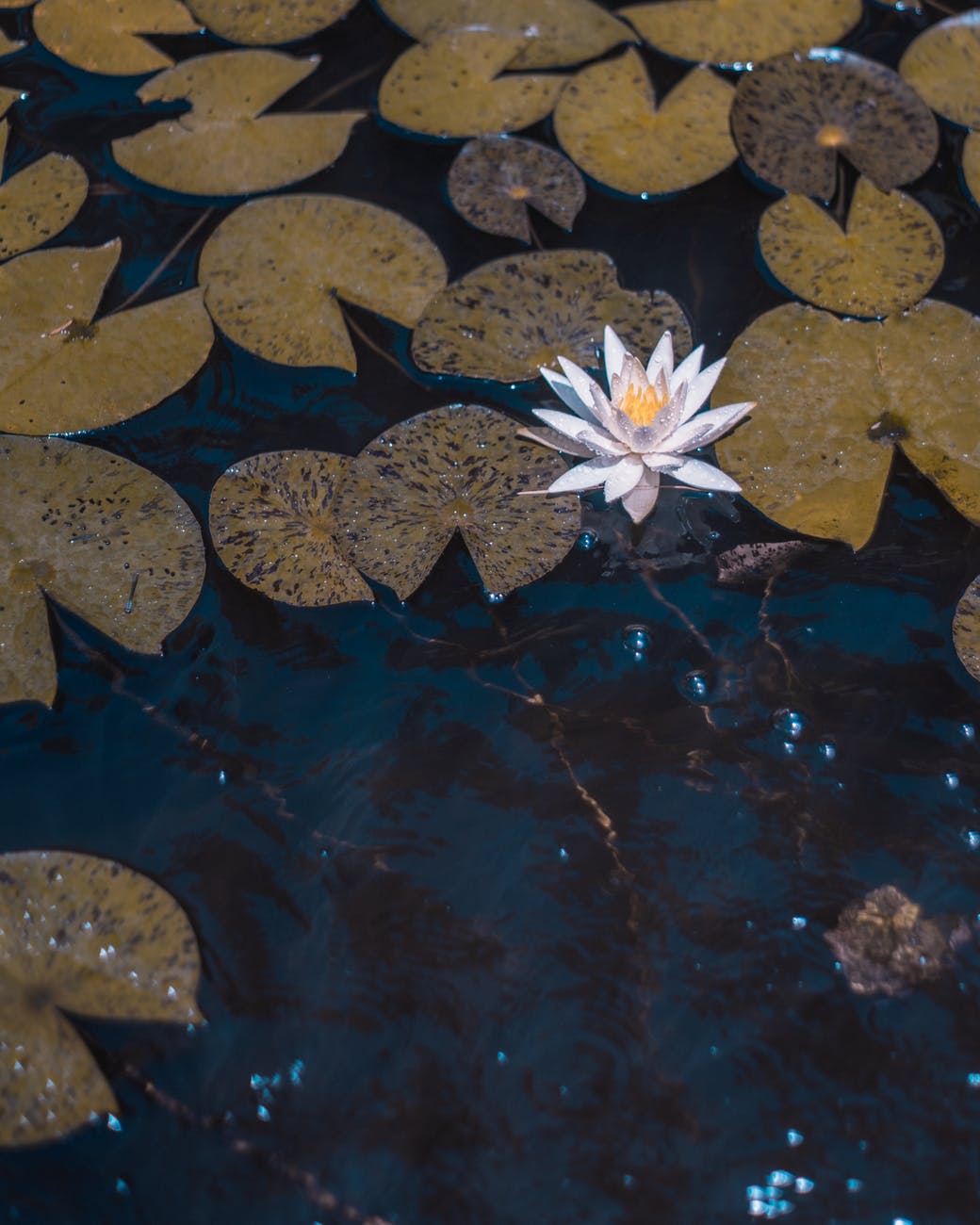
It’s cold. I want to write something beautiful. I want to sleep better, more. I’ve started and stopped and started this post over and over. I find the ideas of sleep and dreams floating to the surface. But at the same time, my thoughts are scattered, a little murky. I think of the pond in the nature area where my kids and I sometimes walked, and the lily pads, and the weeds, and the rocks where the turtles sun, and how much my thoughts feel like that sometimes, all a part of an ecosystem, but appearing at any given moment to be quite disparate. Over there floats a blog post about earnestness, there’s one about sleeplessness, and still another about the things we imagine about our future selves. Sometimes it all comes together into a cohesive thread, as I write about it, and I can finally see the themes that have woven themselves into my consciousness for the past days. Other times, things will not coalesce.

photo white water lily flower on body of water surrounded by leaves
Photo by Jacoby Clarke on Pexels.com

Currently, continuity feels elusive, and I wonder if that’s the point of things right now. That sometimes it doesn’t all fit together, and we can’t find the meaning. This week hasn’t been the first time my son has chided me about my desire to figure out the meaning or lesson in something. Like anyone, he has a collection of anxieties he carries with him, but he also possesses a calm, almost Taoist sort of perspective, that things just are. [I should note here too that my understanding of Taoism derives largely from Benjamin Hoff’s The Tao of Pooh.] It’s a view that makes my little mental quests seem frantic and unnecessary sometimes. But, if things just are, then, too, this is just the way am, so sometimes I have to accept the fact that my desire for synthesis and understanding will sometimes reward, and may just as often thwart and frustrate.

We get stuck in loops sometimes. In various ways, we are taught to look for patterns, in our lives, in our work, in art, music, architecture, politics. Everywhere repeated motifs call out to be recognized. We swoop, circling understanding. I don’t think this effort is without value. We emphasize lessons to and for ourselves. We find new ways to look at the same things we’ve studied for years, how to love, how to grow, how to be brave, how to be vulnerable. We study what things are worth.

At the same time, we can only pay attention to so many things at a time. What’s in our peripheral vision, and what do we fail to notice? I think sometimes of the way we laugh when we see a dog chasing his tail, but I maybe it’s not so funny for him. We catch glimpses of a threat out of the corner of our eye. There’s not much to do once it’s caught. It’s untenable to keep holding on – it is, after all, our own tail – but letting go feels dangerous, because, what if it isn’t? What if it’s something bigger than us? And so we are caught, circling. We are dizzied, we exhaust ourselves, we hold on unreasonably to things that keep us spinning instead of letting go and letting ourselves move differently, forward, playfully, peacefully.

I think of how many times I have written on the same themes, trying to see them from new perspectives. We don’t always know why things feel important to us; or, we don’t know if they should feel as important to us as they do; we don’t know if we should fight impulses, or explore them. Yet, things are as they are; you are, I am. You have your themes, I have mine. Maybe it’s best to not question our themes too much, maybe we should simply acknowledge them as part of us. Does the dog let go once he realizes it’s his own tail? Even so, it’s still his tail. The perceived threat may dissipate, but the thing itself is still a part of him.

This is all to say, fine, then. Let me expend mental energy thinking about time and identity and transitions. Let me think about what it means to be a mother, and ponder “home” as an emotional construct. These are the themes of the hour, or year, of my mind right now. They are not chasing me, demanding my attention; they are part of me, and as such, they simply will infuse what I think, feel, do, and write. I wonder, if the act of such acceptance is what opens the space for new ideas. Once the dog is not so focused on the threat or wonder posed by his tail, is he able to take part in a new activity? Run to a loved one, find a sunny place to nap, discover a treat in his food dish? Who doesn’t love love and sun and naps and treats?

Some things are part of us, whether or not we want them to be, and they remain so whether or not we focus our attention on them. Maybe, sometimes, at the very least, it is okay to take a break from them for a little while. To notice what/who is there in our peripheral vision.

This is not beautiful, not this metaphor, not this idea, not this prose. But some things just are and maybe it is for someone else to apply descriptors. Maybe nothing bad will happen if we stop for a moment, stop trying to figure it all out, though this can seem like an alarming concept, particularly if life has given us the message that unless we pay attention, bad things will happen. So we chase our tails, worried about the proximity of threat, unable to distinguish self from trouble. When the whirl and whine of it become too much and we collapse, exhausted, it is often only to sleep, then to take up the chase again the next day, without pause, without fail, but often full of failure, failure to think other thoughts, to break out of patterns that keep us focused and working hard, but often to no end.

Sometimes it takes only a gentle nudge from someone nearby, a simple, “hey,” to point us in a new direction, to help us, as Ralph Waldo Emerson says, to “draw a new circle.” Sometimes it takes sheer force of will. Sometimes the work we do is unclenching our jaw, letting go, and simply noticing.

Love, Cath