On Synthesis and Momentum and Messiness

By Catherine DiMercurio

I’ve been single two years to the day. Since the breakup that started this chapter of my life, I’ve spent a lot of time exploring my history and finding patterns and doing long-delayed work. I’ve focused on writing and pottery and self. I’ve mourned old things that it was too hard to fully manage before and I’ve mourned new things and I’ve found unexpected joys in solitude. Despite the periodic bouts of loneliness there’s a lot that simply feels better now. I have worked at discovering what wounds have followed me from childhood and into all of my adult relationships, and have explored many different ways of tending to such things. I’ve found ways to provide for myself things that were missing in a lot of relationships, like emotional safety and respect.

Still, there’s a part of my brain that seems exclusively devoted to tallies. It counts and categorizes the things that have hurt me and the things that helped me to grow. It tells me to keep writing and throwing clay and wandering in the woods. It reminds me of how good it feels to be near a lake and suggests we don’t forget about the plan to move closer to one. It encourages growth and development, but in the ways least likely to cause me pain. It’s very practical, this part.

There’s another part of my brain that unfurls itself like a flag in the wind, singing to me about being in love, and don’t I remember what that’s like, and don’t we want that again? The other part of my brain taps a pen against its clipboard and says something like, “according to the data, this course of action would not be a wise investment of resources. . . .”

They are at odds, and so am I. So for now, I check in with them to see how we’re feeling but stay busy with all the other things. Busy is an easy way to be, between a full-time job, pursuing writing as a serious endeavor, and pottery as art and hobby, maintaining my house and yard, caring for my dog, and trying to exercise and eat well and sleep well, and to generally stay healthy. That all gobbles up a lot of available energy.

At the same time, after my older dog died a few weeks ago, I spent a lot of time just sitting in the sun and watching the irises bloom. Sometimes everything needs to pause. It’s been nearly a month somehow and I’ve been trying to regain my footing. I feel as if I’ve been moving slowly and carefully through the world these last couple of weeks, trying to make sure nothing else breaks.

All this is to say that you get to a certain point and you get to feel very self-protective. I used to feel braver, at least when it came to putting my heart on the line. My loneliness outweighed everything else and it felt like I’d already been through a pretty rough heartbreak, and nothing could be worse than that, so I kept throwing my hat into the ring. But it doesn’t work the way I thought it did. A breakup after a two-year relationship can hurt just as badly as a breakup after a two-decade relationship. They just hurt differently. Hearts seem to have a lot more surface area than you’d expect and can break in a lot of places. And you keep mending it until you have this beautiful piece of art, mended with the gold of all your best efforts at healing, but you tend to get more careful with it. Mended, it’s strong, maybe even stronger than it was in the beginning, but you’re less likely to want to test out that theory.

I think this is why so many people turn to art. It can still break your heart in mighty ways, but they are easier to bounce back from. Art—specifically, my writing—has saved me and picked me back up time and time again. The physical act of it. My pursuit of it, following through with a low-residency MFA program in the middle of a divorce. The people I met, and the community I found. And I swear when I started pottery it was just like falling in love, full of angst and euphoria, and settling into the beautiful harmony between exhilaration and calm. And now there are so many different ways to grow and explore, it can feel overwhelming at times and at other times, I find so much relief in the knowledge that I could study and practice for a thousand years, or at least, the rest of my life, and still have more to learn. And again, I have found a new community.

Sometimes, when I’m not practicing one of these art forms, or actively engaged in one of the other activities that both soothes and invigorates—hiking in the woods, baking, hanging out with my dog, having coffee with a friend—I slip into rumination, or find it hard to stay engaged with work that needs to be done, whether it be my job, or housework, or other routine and necessary things. I’m trying to figure out how to find both joy and contentment in the mundane too, since that occupies a bigger proportion of my time most days than the other things. It was easier to not get so lost in my head when I didn’t spend quite so much time alone, but between working remotely and the kids having moved out and the breakup, it’s been a quiet two years. This time has allowed me plenty of time to do both productive work and to descend into rabbit holes I then have to work to clamber out of.

Photo by Vansh Sharma on Pexels.com

I’ve often looked back on the moment of impact that changed my life and felt as though it separated me from my shadow, and she became something more substantial, as if an outline had been drawn and filled in with tangible darkness. When times are tough, she seems to gain strength, and when I’m feeling good and strong, she retreats. And what I’ve been thinking a lot about lately is integration. Of attaching that shadow back to me the way it’s supposed to be; of the artistic with the mundane; of joy with responsibility and routine. Maybe it’s more synthesis than integration but there has to be a way it all fits together, for fragmentation to gently morph into wholeness.

When we center clay on the wheel we talk about the way this process encourages all the particles in the clay to move in the same direction, and we learn ways to shape the clay that works with its momentum, and that isn’t at all about forcing it to look the way you want it to. I think that’s a good goal for me too, working with my momentum, and gently encouraging all the disparate parts of me to start moving in the same direction, and enjoying the messiness of the process. It’s all a good reminder too that growth is multidimensional, not linear. It can look like you are spinning your wheels, but you are actually creating something extraordinary.

Love, Cath
On Clay and Conversation

By Catherine DiMercurio

So much of life depends on how you look at things.

I don’t mean seeing things from a different angle in order to guide yourself toward a more positive perspective. I mean new experiences sometimes hand you a metaphor and give you a way to contemplate something more deeply or fruitfully than you have before.

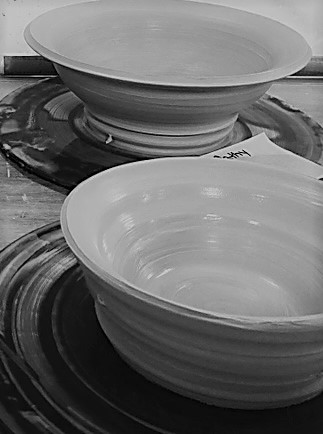
Recently, my daughter and I took a trial wheel-throwing pottery class. It was something we’d both wanted to try for a long time. I was nervous about investing time and money into a semester-long class without first having some idea about how I would feel about working with this medium, so the two-hour workshop format appealed to me.

On the drive over to the studio, I had a strange thought. I was feeling anxious and as I dug around in that feeling I realized part of it was because I did not want to disappoint the instructor, some person I’d never met before. Why on earth would I care about that? Maybe I didn’t want them to think that my inability to follow directions, or create “properly” meant that they were not doing their job well. I wanted to be a good student so they could feel like a good teacher. It was also part of my people-pleasing mentality. [The reasons people do this are varied and complex. Sometimes it is because we’ve lived with emotionally volatile people and we learn to not make waves. Sometimes it is because we need others to think well of ourselves since we have a hard time doing that on our own. This is often a result of us having internalized messages—religious, cultural, societal messages—in such a way that we feel it is necessary to prove that we are, in fact, good people.]

Still, I tried to shelve these ancient worries. I wanted to focus on having fun with my daughter and learning something new. I wanted to prove to myself that I could.

As it happened, my daughter and I were both feeling a little anxious, because it’s normal to feel that way when you’re trying out something you’ve never done before. But once we walked into the studio, met the owners and their dog, and toured the space, I began to feel more relaxed. Shelves of drying cups and bowls and vases, pale stoneware waiting to be glazed. Gorgeous curved and sumptuous shapes. Rows and rows of completed, glazed work, waiting for students to collect them. Oh, the glazes. I love glazes. I wish I had the vocabulary to describe them, understood their chemical composition. Reddish browns, honeyed golds, pale bronzy greens. It all washed over me. I felt both calm and exhilarated. I love that hard-to-come-by feeling.

I couldn’t wait to feel the clay beneath my fingers, to begin to see how it responded to the corresponding forces of my touch and the movement of the wheel. I’d watched enough of a British pottery competition program to imagine what it might be like but now I’d be getting my own hands dirty and trying it out.

One of the owners, Mike, sat down at the wheel and talked us through various processes and techniques. And then suddenly we were doing it. Mike helped when we weren’t sure if our clay was centered, or if a bowl was widening to the point of collapse. He was a good guide.

I wasn’t shockingly good at it for a beginner, though I really wanted to be! I may not have uncovered a hidden talent, but I also did not uncover the disaster I’d been fearing. This wasn’t gym class, and I wasn’t unbelievably horrible at it, as I was with most sports. Have you ever been so bad at something that people are embarrassed for you? Not fun. But here, in the studio, I did have fun, and so did my daughter.

There was some kind of perfect little relief in the newness of it all. A bliss in getting to believe in something else, a different kind of space, a different kind of making. I think my daughter and I both experienced that and it felt important to be able to share that with her.

In the days since the class, one of the things I’ve reflected on is the notion of conversation. Working with the clay, my hands had to be in conversation with one another. They didn’t simply work “together.” They worked in harmony and in response to one another. It is different than say, playing a musical instrument, where your hands are working together, but each is performing a separate task. In building a bowl on the wheel, my hands had to talk to each other, listen to each other, in order to create something together. It was impossible not to see this as a beautiful metaphor for what I hope to one day find in a relationship. If you are not working together, focused on the relationship you’re creating, it will not hold together, things will spin out of control. You must want the same thing. You might end up making something different than what you intended at the beginning, but you’re in on it together. And unless there is a cooperative, positive effort, it won’t be anything at all.

Because my brain works the way it does, I seized upon this metaphor and tried applying it retroactively to past relationships that did not turn into what I’d hoped they would. Maybe this was the way I could make sense of how things happened the way they did. The pottery metaphor provided an effective lens with which to view things and helped me to remind myself of why those things didn’t work out.  

I’ll be honest. Sometimes I need a new way to look at an old thing I’ve been turning around endlessly in my head. The ending of relationships is hard. Grief is real, full, and deep, no matter how much you believe that the ending was necessary. I often find myself reciting the stories and their endings back to myself, so I remember, so I don’t repeat past mistakes. So that, if I’m lucky enough to get a next time, I get to keep it. Grief takes up a lot of space in a heart. In a way, we remain in conversation with our grief, long after the loss that caused it.

Another thing about conversation is that in the past I’ve mistaken emotional or intellectual connection for emotional intimacy. It’s all about conversation, but they are not the same things. We have to look closely and see if what we are offering to our partner is what we are being offered in return. There were times that I was not actually having the conversation that I thought I was. Things take time to reveal themselves. People do. We all try to be the best versions of ourselves when we want something to work out. But we can’t keep that up indefinitely. And one person’s idea of something “working out” can be very different from another’s and in the absence of emotional intimacy it might take a while to figure that out. We may think we are building something with a partner, but unless we are in true conversation with one another, one hand might be trying to create a saucer while the other is trying to make a vase.

Another lesson here for me is about a new kind of open heartedness. It took a bit of pushing myself to decide to take this class. I must remember to do that sometimes, to nudge myself into action, into new ways of looking at things. I admire people who can jump into new things without the anxiety that sometimes holds me back. At the same time, I love that these experiences for me feel special, wonderous, even, given that it wasn’t easy for me to approach them.

We all come at the world and all it has to offer differently, but I don’t believe that there are methods that are superior to others. We go at our own pace and are rewarded in the ways that feel meaningful to us. And we learn the lessons we need to when we are ready for them.

After you make something at the wheel, it goes through many other steps. It air dries, then is trimmed, then dried in the kiln, and then glazed, and then fired once more. Or something like that. My daughter and I didn’t get to do those other steps—that is what the full class is for—but we did get to pick out glazes. I’m eagerly awaiting the call from the studio saying that our pieces are ready. Pottery, it seems, like everything else in my life, is trying to teach me patience.

I’m pretty sure I’m going to sign up for the full class, but the next session will begin in January, and meets for three hours on Monday nights. That’s a big commitment! But I think I’m intrigued enough to take it on.

Wishing you true conversation and a little bit of genuine bliss.

Love, Cath

On Throat-Clearing, Self, and Voice

By Catherine DiMercurio

Sometimes we can almost find the melody.

I put a lot of effort into trying to make sense of things that don’t. In my writing, it feels like the practice of untangling knots that can’t be untied, though each story takes a fresh try at undoing. My brain attacks most present worries in the same way.

When I sit still, I sometimes feel both restless and exhausted. This state is a product of many things – pandemic year, new and old anxieties, writing frustrations, aging realities, leaving and moving and settling in.

In my writing, I begin to wonder about voice – what manner of expressing myself is unique to me, my fingerprint of creative expression. And voice, as in, mine, in this world. Lately I have revisited half-begun stories and can’t take them anywhere. I think of a top spinning at the end of its movement, the wobbly tilt and hobble where I find my creative practice these days. Tops get spun again; I don’t worry that I’m done, but wonder where to go from here, and how.

In a way, it feels as though this year of largely staying in place has been one of incubation. During this time, I focused on trying to make my new house feel like mine. I thought a lot about home. I also began to reckon more consciously and deliberately with the notion of aging. I periodically take photos of myself that I show to no one to document the progress of the incoming greys, and to acclimatize myself to the changing terrain of my face.  We have kept ourselves as hidden as possible from the hidden virus, and I have grown tired of hiding myself from myself. But I often don’t recognize me.

I heard somewhere recently that resilience is never losing your enthusiasm in the face of failure. This made me feel angry and a bit deflated, because I want to think of myself as resilient, but I always feel enthusiasm flag when faced with failure. I would counter that resiliency is never losing hope in the face of failure. You can feel defeated, but at the same time you keep fighting for what’s important to you. Enthusiasm feels like a bit too much pressure sometimes. Then again, it is possible that I am not actually resilient. But I am good at hope.

As I’ve noted before in this space, Clarice Lipsector wrote “It is also possible that even then the theme of my existence was irrational hope.” We all have themes, not only as artists but as humans, patterns we observe in our lives, values we attempt to adhere to, wishes we twirl around our hearts. Maybe none of us could extricate ourselves from the themes of our existence if we tried. Some things are as they are. I will find love stories everywhere. I will write them. I will be hopeful about everything and everyone I love. I wonder if all hope is irrational.

Everything I have ever written has turned into a love story. Love, loss, seeking, finding – these are the structural frameworks of most everything I compose. I wonder sometimes, when I feel defeated, and the rejections land solemnly in my in-box, if all I can build are dollhouses, while better writers are busy building cities, universes. But then I think that maybe the world needs dollhouses too. We all need different entry points into the art we interact with. Maybe someone is just waiting for the right-sized door. Maybe it’s all that Alice in Wonderland game of feeling too big or too small to get to where we want to go. But eventually, we find a way to connect.

Photo by Pixabay on Pexels.com

The themes we don’t stray from are, in a way, one path toward maintaining our connection with ourselves. I have a novel manuscript that has undergone more permutations than I care to number. I have left it unsubmitted for a long time and had nearly decided to abandon all hope (and enthusiasm).  But, I have dedicated myself to one more overhaul, and I’m now working with a trusted writer who is helping me take a fresh look at it. I feel hopeful once again, but daunted. Possibly I am not now, nor ever was, up to the task of doing what so many novelists do so well, which is, to do everything well – plot, character, pace, language, theme, subtext, and so on. Everything must be precisely fine-tuned for the work to sing. Currently there is a lack of harmony, there is a lot of out-of-tune warbling, and a fair amount of throat clearing. Sometimes I think the melody’s there though.

I listen for melody too in the world outside my door, but I’m finding it clunky to emerge from this pandemic isolation, as we receive our vaccinations and make plans once again. I see other vaccinated folk pursuing “normalcy” as if they hear a tune and feel compelled to follow it. I can almost hear it. And there are people I’m so looking forward to spending non-masked time with. I can’t wait to spend more than a few odd hours with my daughter, and to see her whole wonderful face the whole time. Yet, in general, I feel both excited and enormously anxious about jumping back into the world at large. Maybe I’m feeling as though I’m still incubating. As with many things, we grow when we learn to be empathetic with regard to the timetables of the people around us.  

When I think of empathy and growth, I think of the way growth often doesn’t always look like growth – it looks like incubation, it looks like cocooned pupae. And when I think of empathy, I remember that I often forget to have it for myself.

This weekend I did a little hiking. It felt good to be in the woods. My son took a picture of me at my request and I’ve looked at it many times since, trying to see what I wanted to see there. A recognizable person. She seemed familiar, me and not-me at the same time, but the setting seemed right and that helped. I don’t know why it feels so difficult so often to know and be at peace with myself. Maybe this year too much happened and too much didn’t happen, and it changed me more than I am consciously aware. Maybe the image in the photo is a reflection of reality and it is my ability to see it truly that has been altered by time and experience. Perhaps how we see changes more than what we see, and how we hear melodies differently from one another explains so many things. This is all the more reason for us to cultivate empathy toward one another and to build our reserves of resiliency and irrational hope, as we attempt to both listen and sing in this world.

Love, Cath

On Art, Home, and Haziness

By Catherine DiMercurio

A friend and I recently were writing to one another about why we write. That conversation yielded for me an understanding that why is a question awkwardly affixed to the relationship I have with writing, which is more akin to the relationship I have with my skin than anything else. In a broad sense, it is something I have, something I need, something that protects me.

On a practical level, yes, writing is also something I do. Sometimes it is an act of artistic creation and sometimes it is an involuntary function that happens automatically and silently, the way my brain tells my lungs to breathe. Things are unfolding all the time in my mind and I wish I could somehow capture more of it. Sometimes writing is my only hope for effectively communicating my heart to the world, (or to the more individual and larger universe of me and you).

Sometimes writing is a job and sometimes it is a wish, but it is always skin.

I’ve spent a lot of time in recent years, weeks, days, minutes, always, trying to pinpoint such facets of my identity throughout the changing circumstances of my life. This intense scrutiny was kickstarted by my divorce, though I had long been focused on issues of identity in my writing, always trying to figure out if we become more of who we are as we age, or less.

As I enter my first spring in this new place, I sat down recently with my coffee and felt myself settling in, to here, to now, to me. And I thought, maybe I’ve been asking the wrong questions about identity and self-awareness. Maybe the most direct route to understanding who am now is this: what makes me feel at home within my own skin, no matter where I am?

The first thing I thought of was the coffee I was drinking, as I sat on my new-ish IKEA sofa in this still-new-to-me home. I then pictured myself at my boyfriend’s place, still new-ish to him. It is a curious thing: you find yourself in a life where none of the places in which you find yourself are ones in which you have much history. So where is home, then, except housed within us, and created anew, sitting next to this person who seems able to keep making space for you, and you for him. You put out the welcome mats for one another, sweeping them off or airing them out if there is ever difficult weather.

Photo by Nathan J Hilton on Pexels.com

It is a marvelous but strange thing to be aware of your own history-making. To contemplate the ways in which home and history are related, but not in the ways you once thought. I recommend keeping an eye out for it, for the art you are making of self, seemingly out of thin air, or from webby gossamer strands, every day.

As I walked around the yard with the dogs one morning, it smelled like summer. Recent rain on thirsty dirt, a damp promise of heat panting in the air. I thought of drinking camping coffee, sitting with the kids in the morning, outside the tent, feeling cozy. The memories collaged in my brain, out of order, but collective. This too is history and home and self. It remains, clean and bright and clear, even in the aftermath of events that left much of the past feeling sooty and smudged.

It may seem strange to utilize list-making and note-taking as paths to self-discovery. Such a process lacks the romance of the quintessential road trip motif. However, sometimes things don’t work that way. It is less a fun, crazy journey and more paying attention and hard work. Mostly, I crave simplicity. I want to create obvious paths to certain self-knowledge, so that I can quickly run toward what I know and like about myself. So I can gallop toward safety, when I’m feeling anxious, or filled with self-doubt, or self-criticism. It is so easy for the negative to overtake us sometimes. We need to have our escape routes planned. Sometimes you have to sit down with yourself and go through the checklist, the way in elementary school we had to ask our parents what the escape plan was if the house were on fire. You have to tell yourself, when dark thoughts begin to suck you in, that there are the paths back to yourself, that you know the way. It is too easy to get lost in the thick haze and smoke of anxiety, depression, fear, or grief.

I feel as though I’m often vacillating between extremes – between being overly candid or completely withdrawn, between whole-hearted enthusiasm and active detachment. I wonder how people find middle ground. I speculate that there is a place thought of as “normal” and most of us hover around the edges, not seeing each other, and the imaginary normal place is teeming with a healthy population of individuals that can communicate with one another with ease and confidence. But in reality, most of us fumble, we hurt and get hurt, we regroup, we take deep breaths and fall silent. We clear our throats, and our eyes, try to speak and see, and be seen once more. Sometimes we manage to get it right, to find a safe, strong hand in the haze, and so we practice the art of holding on to one another.

Love, Cath

On a Revolutionary Way of Trusting

By Catherine DiMercurio

Maybe vulnerability and trust are not connected in the way we thought they were.

Being away from our usual routines often affords us new insights, but sometimes it isn’t until we return home that new ways of looking at things emerge. I recently travelled to the Vermont College of Fine Arts for a week-long writing retreat. While there, I attended a panel discussion with other writers, led by the retreat’s faculty members, on being vulnerable and what it means as a writer. Inevitably, in the days that followed, I considered what it meant to be vulnerable as a regular woman-person, not exclusively as a writer-person. Like many people, I have experienced the emotionally wrenching side effects of vulnerability. I don’t see much difference between allowing one’s self to be emotionally vulnerable and the notion of being open hearted. It is a deliberate choice, an act, to open ourselves to others.

As writers (in our relationship with our work and with our audience), and as “regular” people (in our relationships with the loved ones in our lives), the risks of vulnerability include pain, rejection, being misunderstood—in short, isolation. We expose ourselves in order to seek connection, and the risk we take is that the opposite effect will occur. And the more we’ve been hurt in our past, or misunderstood, or rejected, the greater the perceived risk of this exposure. We simultaneously want to protect ourselves and want to be open, to seek out all those things that make us feel good about being a person in this world.

Most of us want to understand and be understood, regardless of our perspectives as writers, artists, lovers, family members, friends. But I think it goes a bit deeper than this longing. In endeavoring to connect with one another, we seek to reveal not just what we think, but how our brains operate, not just that we love but how our hearts function. It is in the intricacies of these processes of thinking and loving that we truly engage with one another, and understanding them in ourselves and in others offers us pathways to the sought-after connection.

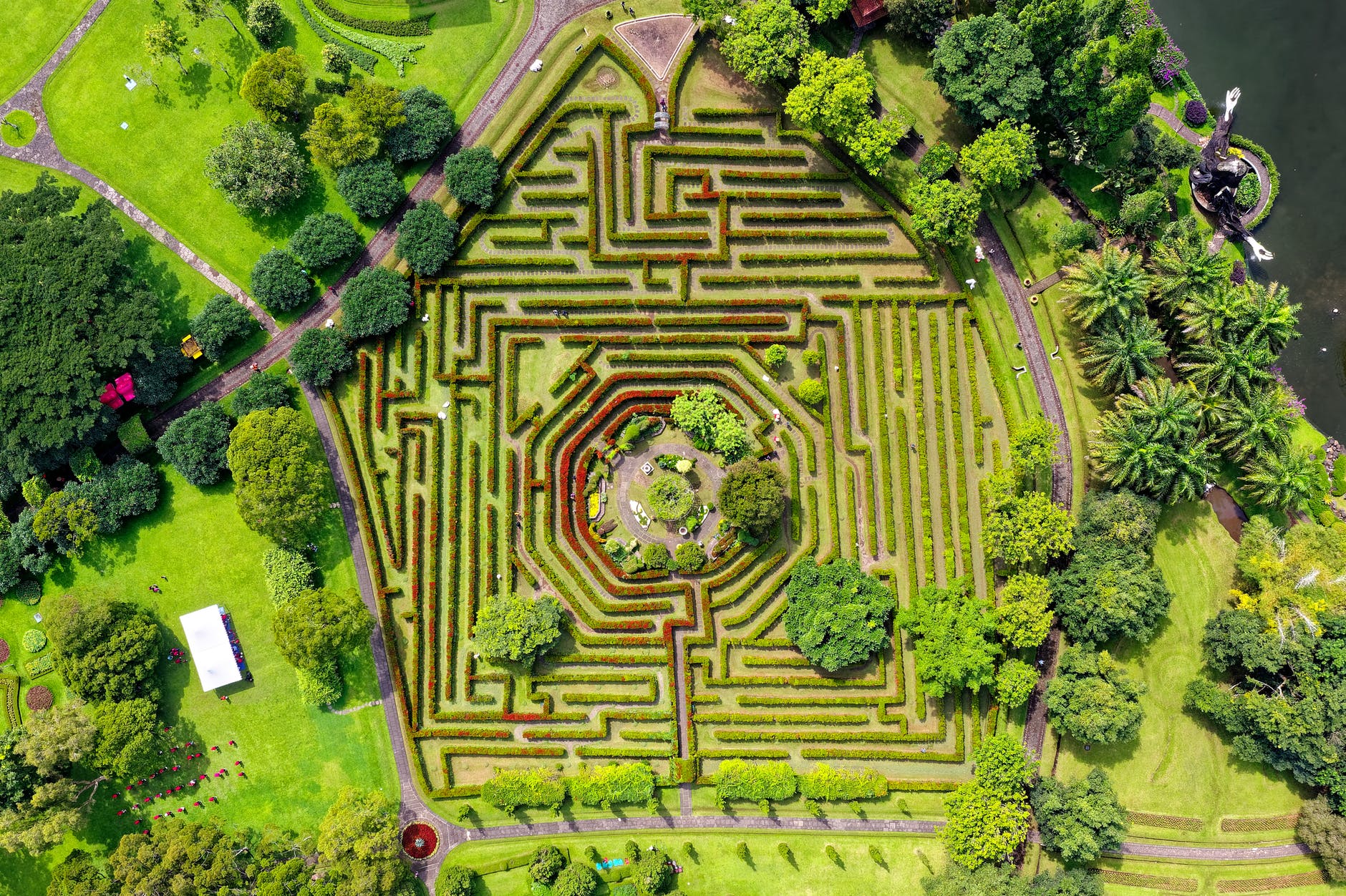
We want roadmaps as we wander through the mazes of each other’s heartscapes, and each of us in our own way wants to offer the same guidance to those we welcome into our worlds. It is not just why some people make art, it is why we all read it, see it, hear it, touch it, taste it.

aerial shot of maze
Photo by Tom Fisk on Pexels.com

Being vulnerable, or, opening our hearts to each other, is an act of trust. It is an act of relinquishing (perceived) control of outcomes. But when we extend and open ourselves in this way, we are often filled with self-doubt. Will isolation instead of connection be the result of our exposure? We can’t know. But we trust. In many ways, in all of the emotional interactions we seek out, we place our trust in the other party – whether it be a partner, a family member, a friend, or those who consume our art. We place our trust in them, hoping that what we offer will be accepted, that the roadmap will be decipherable, that the other person or people will willingly journey with us. We hope that in return, we may receive the reciprocal invitation to understand and connect. It is a seemingly simple conversation, an exchange, but beneath it exists a complex system of highways and byways, along which race countless thoughts and emotions as we try and gauge the success or failure of a particular act of vulnerability.

I think though what we often fail to realize is how unfair all that is, and the burden it places on those we care about. We delude ourselves into thinking we are entering into a pact and in doing so we are obligating others to behave in a certain way.

How freeing it would be to look at it another way, to consider that when we decide to be vulnerable, we are only making an agreement with ourselves, trusting that in opening ourselves in this way, we are welcoming whatever good may come of it. And if there is pain, or sorrow, or rejection, we welcome that too, not for the hurt itself, but for the growth that comes from it.

How kind it would be to those with whom we seek connection to let them off the hook, to not have any expectations of reciprocity.

How loving it would be to invite them into our worlds, offer them that roadmap, and then, simply be. Be there when they get there. Be understanding if they got lost along the way. Be joyful if they are delighted for the opportunity for connection and welcome us with open arms into their headspace and heartspace.

Maybe trust should not be about what we hope for from one another. Maybe it should be about what we are offering, and why.

We are never in control of outcomes that are tied to the emotional responses of others, and that is a beautiful thing. Maybe it is about trusting ourselves to know what is best for us, trusting ourselves to offer our world to those we love, to those we seek connection with. Our vulnerability lies in our willingness to do that, regardless of how we will be responded to.

Our lives are so full of uncertainty, in so many areas, professionally and personally. It is understandable that we want to control an outcome here or there, understandable to think that we actually can. At the novel retreat, participants were invited to read from their work to the other writers present, participants and faculty members alike. As a group, we discussed this as an act of vulnerability, this offering of our art in a public way, when we know all the ways it could be misunderstood, deemed unworthy, when we know that our physical performance too is under scrutiny. At the time, I looked at this endeavor under the dual lens of vulnerability and trust, and I told myself that it was my ability to trust this room of writers to be open to me that allowed me to be up at the podium reading my work. They did not let me down. They were kind and generous in their response to me and to my work. Yet, I could have entered into the reading in another way, trusting my desire to share my work, trusting that regardless of how it was received, this was what I wanted for myself. Audiences will receive us how they will.

It would be disingenuous of me to say that this way of looking at trust is anything but experimental. It feels sort of revolutionary to me to consider that trust perhaps has, or should have, little to do with the other party. But what right do we have to obligate others, however obliquely, to respond to us in a certain way? If I expose thoughts and emotions, my true self, to others in a vulnerable way, and I do so because I trust both my instinct and my willingness to accept the outcome of this particular exposure, it is a gift to bear witness to how this act of exposure is received. Consider too how miraculous are the gifts offered to us by others, when those we love are expressing themselves in a space free of demand, obligation, or expectation. Perhaps being vulnerable and being truly trusting work quite differently than we thought.

Love, Cath