On Pebbles, Fish, and Feathers

By Catherine DiMercurio

Hope and perseverance take various shapes these days. My house is up for sale, and there’s a hopeful contender on the west side of the state just waiting for me. I’m starting to picture where I’m going to land, how I’ll arrange the furniture. I’m trying to do two things at once: fan the flames of my hopefulness to keep it alive, and also, maintain it at only a steady low burn so I’m not overly disappointed if things don’t go my way. That’s not an easy balancing act.  

Still, when I recently visited the town I’m moving to and spent some time by the lake, I had that feeling, the one where my heart wakes up, fluttering and thundering in my chest. There is a simultaneous tug of calm peace and wild joy that tells me this is it, I belong here. I once thought love was supposed to feel that way, and maybe sometimes it has, here and there, and maybe that’s asking a lot of love.

A lot has to happen before I can move, and I’m often wondering if I’m doing it right. I don’t know the rules. I think that’s because there aren’t any. I must have made that part up, that rules exist for How to Do Things. Somewhere along the way, I convinced myself that if I could a) learn the rules and b) follow them, then the result would be everything making sense and falling into place. I imagine the gentle way it will happen, the falling into place, like a gull feather softly floating from the sky, and sighing into the sand at the water’s edge. I think I’ll sit on the floor in my new house and I’ll say, I did it, I got us here. I know it won’t make the world make sense again, but it will feel better, it will feel right and good and like home. That’s what I hope. And then I’ll get to go to the lake whenever I want, and my heart will hop and dance and trip over itself on the way, clumsy and glad.

When I say that I made that part up, about those rules existing, that isn’t entirely true. I willingly bought into beliefs and norms and societal conventions and turned them into rules inside my head because on some level, rules make me feel safe. Knowing the boundaries makes me feel confident. As in, here is a closed system and once you know how it operates you can function in a predictable way and get predictable results.

Even though I learned quite some time ago that the world doesn’t work that way at all, there is a small part of me, a thin little shadow, that stomps her feet in disbelief and frustration when things happen in ways they’re not “supposed to.” And when life gets overwhelming and more variables enter the equation, that thin little shadow grows into something larger and more solid. It’s okay. It’s something you have to learn to live with. Something I learn to live with, the shadow to bargain with, that is really just a version of me that wants to feel safe and understood. I can give her that at least, even if the world can’t. I can try.

If none of this is making sense to you then maybe you were lucky enough to play by the rules whether you believed in them or not and things fell into place for you, so much so that you’re surprised when things don’t work out for other folks. Maybe you figure that they just didn’t work hard enough, like you did. Or they weren’t positive enough or whatever enough, whatever it is that you believe got you where you are.

But if this is making sense to you, then hey, nice to see you here, hope things are going okay.

Photo by Ku00e1ssia Melo on Pexels.com

It’s hard, isn’t it, to live in this liminal space with all this uncertainty unfolding in multiple directions? It almost forces you to be the calm center of it, as if there are so many forces pushing at you from the outside that all your chaotic, uncertain, wayward and worried energy is forced back toward you, and you have to learn to metabolize it all. Because if you don’t metabolize it, you start to feel like it is crushing you. I’ve felt that way recently, like I was getting smaller and smaller. Just a pebble, really. Though, pebble-sized, everything happens around you, not to you, so maybe that’s the right way. How else does one metabolize all that chaos? Maybe it passes through you, like water through fish gills, and we take in what we need to breathe and nothing else. There probably isn’t a right way. Maybe sometimes it is a pebble day and sometimes it is a fish day.

But we all have stuff coming at us all the time. Theoretically, we could reduce the amount of chaos coming at us if we could diffuse our own response, our worry and fear and what not, and only deal with the outside forces, the unpredictable things in our lives that make us feel like things are overwhelming or out of control. But that is easier said than done. Sometimes the only thing that shows us the way is our own exhaustion. When we have no more energy left to worry because we’ve been too busy coping with what life is throwing at us. There is some relief in that somehow, in being too spent to work up enough energy to thrash against uncertainty like a caught fish in a net. That’s when we get to the point of saying, I’ll just have to roll with whatever happens next. And maybe when we’ve done that enough times we won’t have to wait until we’re completely exhausted to adopt that mindset. It’ll be a choice instead of a consequence. Sometimes that’s where the growth is; some of us only learn lessons the hard way.

When I think about leaving this house, I think about all the work I put into it, and how I turned it into a safe place to land after all. It’s a cozy refuge that has served me well. I hope it will let me go, will work its charm on the right person who is ready to make an offer any moment now, so the next set of things can fall into place for everyone.

But for now, it’s wait-and-see mode. I have moments where I’m okay with that, with the not knowing, with the in-between-ness, and there’s a part of me that actually does feel confident that I’ll be able to adapt to however the situation evolves. It’s hard to hold on to that mindset, when part of me wants to lean in so badly the particular details of how I want things to happen. Hope is a funny creature to tend to, being wild and capricious and hungry and fragile all at once.  That’s another thing there aren’t any rules for, the care and feeding of this creature called hope. Maybe we’ll all get it a little bit right today.

Love, Cath
On Identity, Negative Space, and Sand

By Catherine DiMercurio

Sometimes I feel as though this world has pinched whatever eloquence I might have once possessed, and all I can do is write earnestly about the twists and turns of my own journey. I’ve been thinking a lot lately about how, in the face of such bizarre twists and turns of this current American reality, do we keep on keeping on, keep on living our lives and pursuing dreams to the extent that we are able. But at the same time, how do we do otherwise? One of the most meaningful things we can do is to keep on living meaningful lives, right?

Part of my own such quest has long focused on the pursuit of belonging and connection, and the way the natural world informs that journey. For many years, I’ve yearned to find a way to live closer to places that ground me, and that’s what I’m currently pursuing.

In line with that goal, I got to spend some time recently by Lake Michigan. It was a grey, rainy couple of days and I was there, in a little lakeside city, to do some research. At times, I am completely overwhelmed by the prospect of moving again. There’s no getting around how demanding, complex, and disruptive it is, no matter how much you’re looking forward to the destination.  I’ve made a good home in my current location, but it wasn’t necessarily a place I was in love with. It was a practical decision and the right one at the time. In some ways, it will be hard to leave. I have good neighbors. I’m relatively close to family and friends. Within these walls, I remade myself, as we often must do during various transitions in life. There are plenty of times where I think it would be easier just to stay.

But, it’s always easier to stay, isn’t it? I have a low tolerance for chaos, always have, and moving is nothing if not chaotic. And easier isn’t always the point. Sometimes we need easy, we need to rest, and regroup, we need to feel settled and calm and peaceful, and then, we’re ready to unfold in a new direction. We all unfold and stretch and grow in different ways and at our own pace.

There are huge unknowns. Though, most of life is that way, so that should not really dissuade anyone (myself included) from exploring new possibilities. Will I be able to find and build some sense of community there? Will I feel like I belong? Will it be a good place for my dog? Will I be able to find a pottery studio? Will I find a way I can contribute to my new community?

One of the many perplexing things about life is that it is short, and therefore we should leap into our dreams but also, we have bonds with people who we find ourselves leaping away from, and we don’t want to lose those either, the dreams or the bonds, and how is all that supposed to fit together? And all those people have their own dreams and bonds, their own journeys, and we can’t anticipate all the ways and reasons people move around in their lives.

After a weekend near the lake, I have sand in my car. I like that. I like what it represents. I like the idea of living someplace with street names like Seaway and Lakeshore Drive and Beach Street. I love the frequent calls of gulls mixed in with house sparrows and robins. It sounds like a place I could call home.

I think a real sense of connection to place is hard to come by, at least it has been for me in the last several years, and I don’t know if I will have it there, in a new place, where I have no history at all, no people. I’m craving the feeling of having something fall into place and hoping to accomplish it by having me be the something falling into a new place.

Five years ago, I was preparing to move from the home I’d lived in for 20 years, where I raised my kids, and in many ways, where they raised me. I wrote a lot about the meaning and nature of home, and here I am again. At the time, I remember feeling as though the emotional work of the next part of my life needed to focus on learning to be at home with myself, wherever I was. In these last five years, I’ve tried very hard to do just that; it is an ongoing journey.

Here, in this house, I weathered the bulk of the pandemic. Here, I became an empty nester. Here, I ended a relationship. Said goodbye to the sweetest, most beloved dog, said hello, to another sweet, rambunctious furry soul. Spent a couple of years in relative solitude, on my own in all these new and different ways. At times the most lonely I’ve ever felt, at times the most free I’ve ever felt. Here, I started a new relationship.

People talk about finding yourself as if it is something you’re supposed to do when you’re young, or something people crash into doing at middle age because they never did it when they were young, but all of that is wrong. At least, we should acknowledge that it is something that can and should be ongoing our whole lives. More than anything, it is a mindset, rather than something that always requires big actions. It’s about looking, about cultivating an awareness of how we experience the world and who we want to be in it, who we are in it.

Shouldn’t we be out there looking for ourselves every day, in each little action, getting truer and truer as we go along, and finding our way back to ourselves if we get lost? We probably have to get a little lost here and there. Sometimes it is the accumulation of wrongs that points the way to what’s right for us.

My first-born is an artist, among many other things, and right now I am looking at a linocut print they made of a snail, and marveling at the way such a beautiful image is built line by line, the way with linocut, the image is revealed as a result of what is removed, the way the negative space that is created allows what remains to receive the ink.

It’s the same with the continuing process of learning who we are, and relearning that as we change and grow. What is removed from us through loss or through getting lost, or whatever life takes out of us, keeps revealing a new image of who we are now and who we are becoming.

I didn’t think I’d have sadness about leaving this place; when I moved in I did have the sense that it would be transitional. It was what I needed at the time. Things are different now. Things are always different now.

As I’m getting this house ready to sell, I think of all the ways it has held me, and all that I have put into it. All the living it has contained. And how I don’t really have to leave if I don’t want to. But just because it is hard, and just because there’s sadness, and just because I could stay if wanted to, doesn’t mean it’s not time to go.

I go over it all in my head, crunch the numbers, crunch the reasons, trust my gut, find the way. On the one hand, what’s the big deal, right? I’m just moving across the state. On the other, it’s another leap, farther than the last one. I’ll no longer be 30 minutes from where I used to live. In some ways, this feels more akin to moving away from home for the first time than it does to any of the other moves I’ve made in the past.

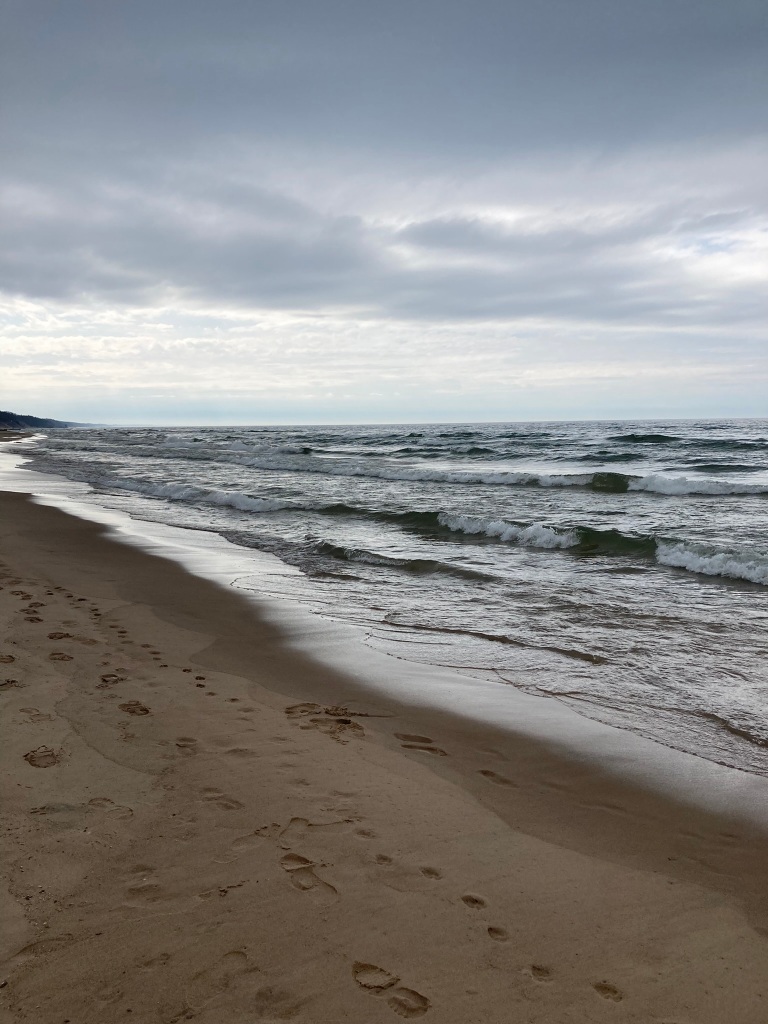
When I was at the lake two weeks ago, I plunged my feet in the icy water, ran barefoot along the beach, drew hearts in the sand with my toes. I felt the way the lake unlocks something in my chest, allowing me to breathe deeply and feel a big sense of centeredness I can’t seem to feel too often anywhere else. Later, I brought my dog down to the water. I know how much people like to let their dogs run on the beach, and Zero and off-leash dogs don’t mix, so I was hesitant, went early on a rainy Sunday morning. The waves were loud, but not overly large. We were only by the water a few moments, because I could see people with a dog further down the beach and didn’t want to take the chance that the dog might give chase. Zero wasn’t keen on getting too close to the water. He’d take a couple of steps toward it while the waves receded, and then dart away when the waves rushed in. I don’t know if he’ll ever be a beach dog and that’s okay. I’ve probably got enough beach dog in me for the both of us.

I observed Zero’s hesitancy as he surveyed the unknown terrain, the way he looks at me sometimes with both trust and concern. It’s as if he’s embodying what’s in my head, the part of me that’s not so sure and the part of me that trusts that I’ll get this right. Sometimes I wonder if he and I are extensions of one another, and then I wonder if we all are. It’s easy to feel that connection, to everything and everyone, even when I’m alone at the lake with my dog who kind of isn’t sure he wants to be there; he just wants to be with me.

Stay connected, and keep looking for yourself.

Love, Cath

On Elemental Lessons, Love, and Good-Messy

By Catherine DiMercurio

Sometimes the most basic lessons are the hardest to learn.

Sometimes I think the best in the shower. In my soul, I’m a water person, though this body can’t swim very well. But whenever I’m around water, I’m calmer. Recently, in the shower, it occurred to me that it is almost the one-year anniversary of the ending of a relationship. It was a relationship that was hard to let go of, in spite of the fact that it needed to end, and I got to thinking that I seem to have more anniversaries of things that ended than things that began. Not long ago, that thought would have sunk me, at least for a few days. I would have ruminated, and found ways to feel increasingly worse about myself. But standing there in the water, after a year of becoming more in tune with myself, my next thought was this (and yes, I do address myself in the second person sometimes): Wait. Are you really saying that you think you have more to mourn than to celebrate?

My immediate answer to myself was no, but part of me still wanted to tally, to dig into hurt and remember it. We get used to making ourselves feel terrible sometimes. For a lot of reasons. But I have spent the last year looking at those reasons, my past, my deeper past, and learning. And in this moment, I understood that it is natural for me to have a lot of emotions around this time of year about the ending of that relationship, and that having those feelings did not have to translate into a trip down the rabbit hole. That’s progress.

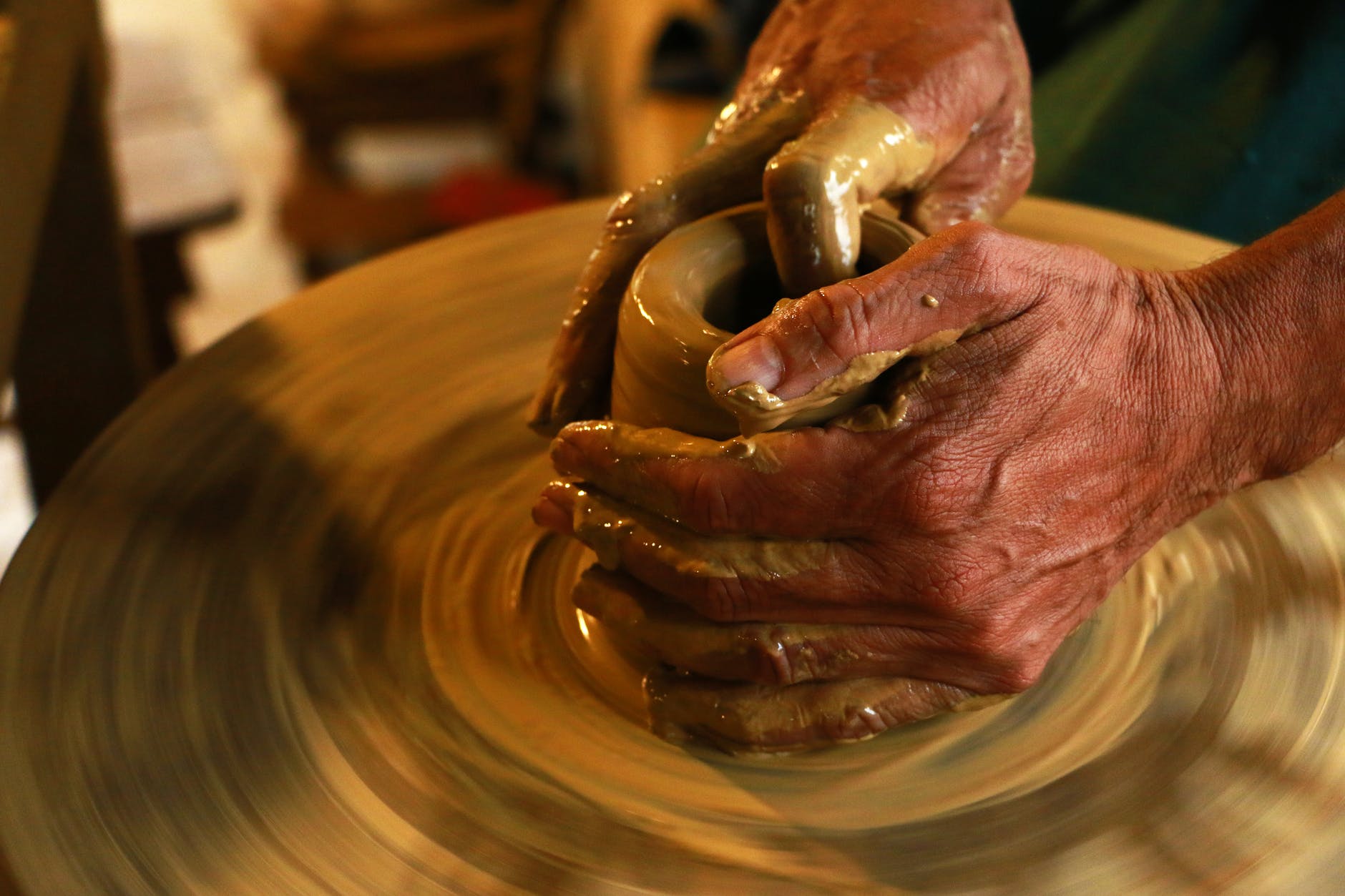
Some of that progress can be attributed to the pottery studio. I feel as though I’ve been on an incredible journey when I think of the first several classes back in January. I pushed myself way out of my comfort zone, not only in trying something new, but in hauling myself out of my cozy house in deep dark winter for a 7 to 10 p.m. class with strangers. I am definitely a morning person, so I knew one of my obstacles was going to be my own fatigue at this point in the day. Optimal learning and creative time for me happens much earlier in the day. And there were a lot of other obstacles, one being that physically, I am not very coordinated, and hand-eye coordination is pretty important when you are wheel-throwing.

I was not prepared for how challenging the experience would be, for how frustrated I would feel. I have no poker face, and even when I’m trying to have a neutral outward demeanor, it is plain for the world to see when I am struggling. Though the class was different from any that I’d ever taken, my brain slipped into student-mode where the usual process was: work hard, study, succeed. In the past, doing well in school meant that the people around me were happy (teachers, parents), and it allowed me the opportunity to excel at something, since it wasn’t going to be in the realm of sports, or anything social.

But, I struggled. Class after class, I felt clumsy and awkward and self-conscious. I had almost no control over what the clay was doing and trying to understand the relationship between the movement of the wheel and how my hands were interacting with the clay seemed like a mystery that I couldn’t unravel. There were too many factors—the wheel speed, the moisture level of the clay, the pressure, placement, and movement of each and every finger on both hands, my posture. I was certain the other new people were already better than me. I thought about quitting. A lot. I even bought a cheap-ish pottery wheel so I could practice at home. It is easier to fail without anyone watching. I wanted only to get a little better between classes so when I sat down in the studio it would be evident that I was making progress. I wanted so badly to be perceived as someone who worked hard, and if my work did not show evidence of that, how would anyone know?

And I did make progress, in my own epically slow way. But I was doing so out of some sort of ancient ache to prove myself, to insist on some kind of worthiness I wanted others to recognize in me even when I routinely overlooked it in myself. Part of my pottery journey has been to trace this powerful need, which has shaped (malformed) so many relationships, back to its roots. This work is not done, as the work of truly understanding ourselves and making peace with it all never is.

Even though I felt like I wasn’t progressing fast enough, my instructor was so good at underscoring how difficult it is to learn any new art form. I remember getting frustrated at the wheel, trying to accomplish something that wasn’t working out. I had a poorly centered lump of clay in front of me that I’d been able to open up enough to begin to pull up the walls. She was standing near, talking me through it, and I said something like, “I just can’t. . . .” I was unable to finish the sentence, because I felt like none of it was working. I couldn’t do any of it. And she replied, “And it’s what? Your third class?” She taught me to embrace wherever it was that I was in this journey. If something turned out wonky, and I could get it off the wheel, I could still practice trimming and glazing. It was all part of the process.

Photo by Regiane Tosatti on Pexels.com

That was kind of a turning point for me. After that, some fresh ideas began to make themselves known in my brain. Couldn’t I just learn and play and grow? Trying to force progress wasn’t working. And feeling tense internally was something that found its way into the clay. Everything was going to happen on my own timeline. And there was no grade. There was no metric by which to measure failure or success, only those that I imposed upon myself. Doors and windows flew open inside me. Soon, I began to feel energized and creative and good-messy, and suddenly, when I thought of all there was to learn, I saw the future blossoming in front of me, whereas only weeks before, when I thought of how much I didn’t know, I’d felt overwhelmed.

The whole experience thus far has reshaped the way I look at myself. It is shocking to me that learning how to throw and work with clay is revealing so much that has nothing to do with clay. I think because I was already doing some of this work, the experience simply shoved open doors whose locks I’d spent some time jimmying open.

To some friends and family, I’ve tentatively equated my evolving feelings about pottery to falling in love. I say tentatively because it seems a strange thing to admit. But what I’m beginning to comprehend is that what is happening is that I’m falling in love with myself. Sometimes it takes us so, so long to learn elemental lessons. And sometimes it takes the elements—earth, water, air, fire—to teach us.

Love, Cath

From Dissection to Healing to Magic

By Catherine DiMercurio

Sometimes it takes science and fairy tales to get there.

Sometimes I feel as though I cannot get out of my own head, and that this is a blessing and a curse. When I think of the events of the past year, around the globe and in our country, is it any wonder that a person would want to escape? At the same time, seated at the shiny black lab table in my brain, dissecting the minutiae of what is working and what isn’t, on a less global, more personal level, thinking of what was, and what could be, and what won’t be, is exhausting.

I remember my advanced biology class, the eviscerated fetal pig in front of me – a tough memory for a vegan, no doubt – and labeling a diagram. I remember the smell of formaldehyde. Who could forget the sour chemical pungency of that smell? Near the end of the semester, late May, perhaps, I sat in Mrs. Fitzgerald’s class, and the windows were open, and the air was warm and heavy. The faint breeze that huffed in through the window did little to dissipate the odors in the room. The paper in front of me, next to my tray of pig, was limp from humidity, and I can see myself sitting there with a scalpel in my hand.

I think, how like that I sometimes feel now, attempting to take an objective scientific look at myself, my brain, my heart. Everything in front me.

Thinking analytically about self is no easy task. It is one part of what we talk about when we say we are doing the work. When I say we here, I mean the people I talk to who are also endeavoring through intentionality to figure out their lives and relationships. Rolling up our sleeves and doing the tough thinking about who we are, who we were, who we want to be. Where are we going and how we get there. The other part of this endeavor is messier. It is the grieving that happens when we follow certain lines of thinking, tracing the paths of arteries back to the heart.

Lately, I’ve been doing this analytical work, and following all the emotions that accompany it. It is painstaking work that involves patience, which I’ve never been very good at, and also why I would have made a poor scientist.

The universe insists on patience, whether or not we are good at it, whether or not we are overcome by a sense of urgency.

There are many ways people talk about what they carry and what they are working through. Sometimes we use terms like weight, or wounds or scars. What I’m beginning to understand is that maybe, though we are focused on this work, though we tend what needs attention with a sense of urgency, frustration, and impatience, we also must focus on the rest of us.

What I mean is this: When we are injured, we care for the wound, but also know that we need our bodies to be strong and healthy in order to heal, so we make sure we are eating the right foods, getting enough sleep, etc. When we meet people, if the injury is obvious, involving a cast, or bandages or crutches, that is likely going to be the first thing they notice about us. We, and they, are rightly focused on this Big Thing that has happened and is now a part of our lives.

Similarly, when we are heart-sore and soul-wounded from large-scale psychic pain and grief, it is just as obvious to the world around us as a broken leg in a cast. But over time, those injuries that may still cause us pain become less apparent to the world at large, just as a once-broken bone may always cause us an ache that no one else can see.

What I’m learning is this: there is a point in our healing process where our focus is able to shift from the wound, the scar, the weight, to the rest of us, to the whole self. And when we are ready, we will let it. We will welcome it.

A holistic view of self neither privileges nor ignores injury. Likewise, it does not privilege or ignore what is healthy and healed.

It is said that some people lead with their hearts, some with their heads. And by lead, I mean, lead themselves, through life. I think, when a heart has been busy healing from new bruising upon old trauma, a person tends to lead with that, with the weight, the wounds. It’s hard not to, when that’s what you’ve been focused on for so long, in an effort to transcend the past.

But, think of this: in a garden, you water the healthy plants and the sick ones. In a writing workshop, you focus both on what’s working and what isn’t. Some of us, perfectionists or people who have otherwise developed a strong compulsion toward proving themselves, can only seem to focus on what needs improving, and do so in a way that presents itself as hyper-self-criticism. We look at this intense attention to what needs to be done as necessary and good, but if we spend too much time and too much energy on that endeavor, we are effectively abandoning the rest of ourselves.

People say, know your worth, and if you’ve been in the process of recovering and healing, it isn’t as if you don’t, but it certainly hasn’t been your area of focus.

We are told that if we do not heal past traumas, we are doomed to repeat destructive patterns. Yet, the notion of healing is a blurry one. We dissect, we study, we grieve, and we do this over and over, trying with each attempt to understand our whole heart and mind more fully.

There are always going to be moments where we shift our attention once again to those old, troubling wounds, but if you have been focusing primarily on that, with an urgent desire to heal, this might be the time and place to say, enough. We might imagine a doctor hovering over healed sutures saying, well, you’re always going to have that scar, but you’re pretty much good to go.

We might imagine ourselves hovering over that poor dissected creature in front of us, saying I’ve learned everything I could from you. Thank you for your sacrifice. Place the scalpel on the table and walk away.

We turn our attention to self as a whole organism and instead of cataloging the injuries that have cried out for healing, we count them as tended to. The analytical part of us can now assess the new being that we now are, scars and all. If we are list makers, we begin a new one. We start small. We think of praise that we received as a child, what we were we good at. We cobble together a collection of our accomplishments, our strengths, big and small.

Photo by Klaus Nielsen on Pexels.com

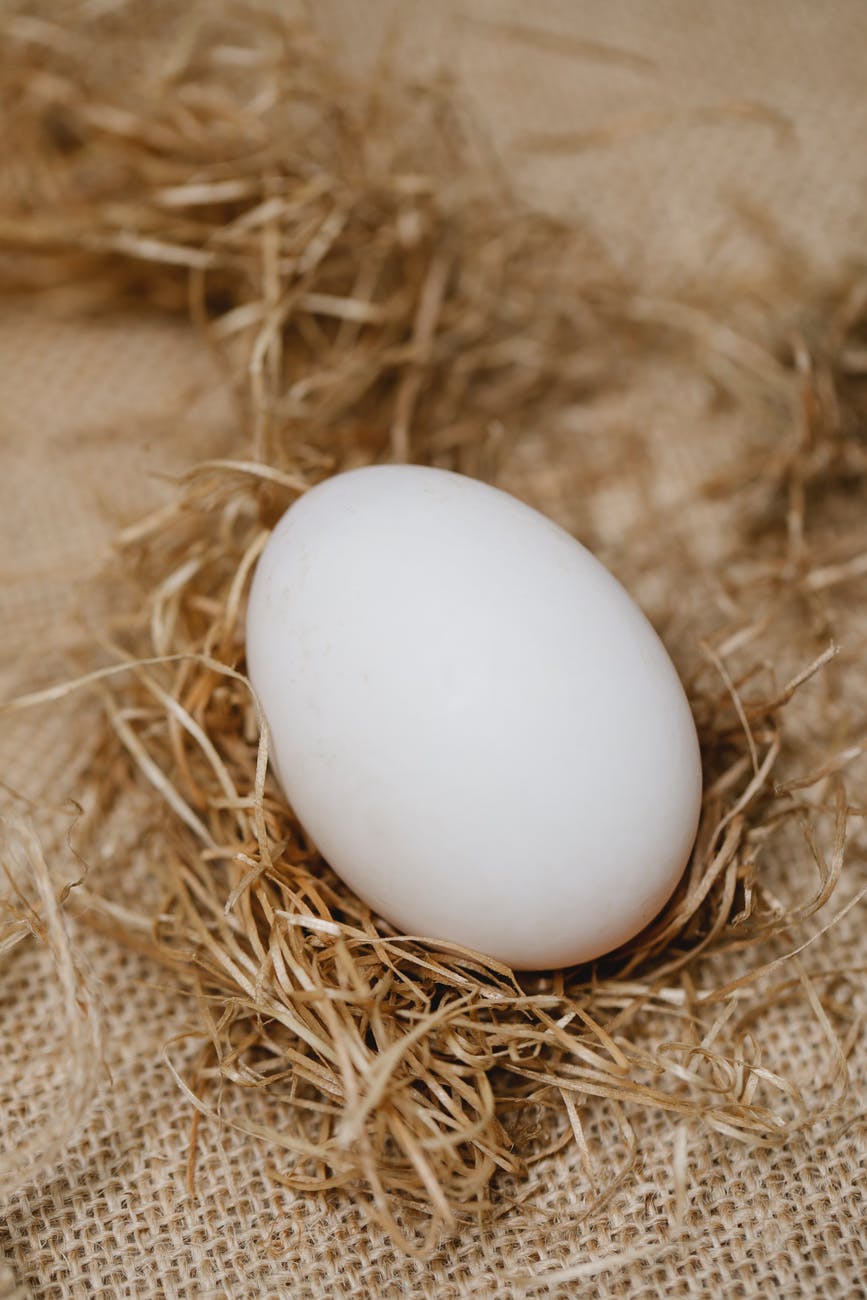
We soon realize that we are doing more than cobbling. We are cracking something open, like a fairytale egg, and what’s inside is something we’ve been hoarding without knowing it – all of the good things, the joyful things, the brilliant unwounded, indestructible, infinite parts of ourselves gifted from the cosmos. We sigh, pleased with our magic, and think, there you are, and are reunited with ourselves.  

Love, Cath

On Patterns, Perspectives, and Puzzles

By Catherine DiMercurio

Sometimes context helps us puzzle things out and find the substance behind the charm.

On the last day before taking my daughter back to college, after her short holiday visit home, we sat at the dining room table, she and my son and I, putting together a puzzle. It was a 500-piece nature scene, quite beautiful and moderately complex, and we laughed and chatted and worked silently, falling into a peace so easily we forgot about the various things we’d bickered about here and there. Tucked away, too, were the few weightier conversations we’d had, and the brief but powerful emotional storms that sweep through a household sometimes, when new transitions are on everyone’s horizons.

In the course of those few hours that we worked, on and off, we found ourselves each selecting a favorite puzzle piece. I was particularly drawn to one of the few which contained a recognizable image, a little vignette, or so it seemed to me. I liked it. It seemed to make sense on its own, independent of the bigger picture it was a part of. So little of life is like that; it so often doesn’t bother to make sense at all.

IMG_6078

Speaking of bigger pictures, I often get the impression that my understanding of the “bigger picture” is flawed or misguided or not fully formed. But maybe, the problem is with the very notion of the bigger picture.

We blame our perception, our perspective, we question how our shortcomings keep us from seeing things clearly sometimes, keep us from understanding our lives, our place in the world. But maybe understanding is muddied because the thing we are trying to understand is a shifting, muddy thing itself.

It’s no wonder that we sometimes flounder, that we can’t grasp how all the pieces fit together, that we are at once puzzled, and puzzle.

The afternoon of the puzzle, I found it utterly impossible to snap puzzle pieces into place without becoming overwhelmed by metaphor and wonder. Sometimes I stared at pieces blankly while my brain scrambled up ideas about identity and purpose and meaning and connection and context. Sometimes I was amazed that we were able to fit any of the pieces together, particularly the ones that were part of a uniform background, the starry dawn sky, the rush of water over rocks. We hunted for pieces, each in our own way, seeking patterns in the shapes. I wondered what it would have been like to try and work that puzzle without the picture on the box as a map.

Life is built piece by piece without context, without a map. Instead, we fashion ideas of what it is supposed to look like, in general, and for us. We look for patterns, we seek partners. We create context. We are thirsty for shape, meaning, structure.

I think all of our endeavoring, this trying to see what fits together, is what connects us and binds us in a shifting world.

We create constants, foundations we hope will withstand the shifting muddiness.

When I look at the photo I took of that puzzle piece, I’m struck by how I romanticized the image. It’s a treetop. It appears to me now less like a self-contained scene, a story within a story, as it sits isolated against a dark background. Only in proximity to a sea of other puzzle pieces does the poetry of the little piece begin to hang together. You have to see it within the context of chaos to understand its clarity.

Throughout all of this reflection, which is so unlike an unmade puzzle itself, some things manage to become clear to me. I am growing comfortable with my tendency toward romanticizing things. It no longer seems a silly or naïve trait, now that I understand it within the larger context of myself. It used to be so much a part of me that I was unaware of it as a distinct characteristic but now, because I can usually see it, I can understand it is a part of me, but not so much so a part of me that I’m blind to its effects. That is to say, I do like to be charmed. I enjoy being able to see idealized versions of things, people. In a way, it is a gift. But, gradually, I have learned to see reality and substance more clearly, too. I have learned to see beyond and around charm more clearly now than I have been able to in the past, can more readily recognize, and subsequently respect, that which we call substance. This is not to say that I’ve perfected this move. Even a practiced self-awareness takes time to become a habit. But still.

When we begin to know ourselves more fully, the way the parts are related to the whole, it can be easier to make sense of things, and not just puzzle pieces.

For example, I recently began looking at houses, as I get ready to sell a house, buy a house, to move. I have been a bit afraid that my tendency toward romanticizing things, to be seduced by charm, would run amok. That my love of original glass doorknobs and built-ins and pretty little details would prevent me from seeing the enormous inconvenience of a too-small kitchen or cracks in a foundation. Happily though, while I did feel that swoonful delight in vintage details, I also witnessed myself being able to see the place as a whole – clearly – and to know it wasn’t right for me. (Happily, too, I find myself lovingly supported on this journey by someone who is not only charming – he has the best smile – but who is full of substance, and who is very much looking out for me. Thank you.)

To put it another way, that little puzzle piece, and my affection for it, make more sense when the piece is viewed not in isolation but within the context of the jumble of the unmade puzzle. Looking at it as a separate thing, I’ve wondered, why did it seem so significant? Sometimes trying to remember the sense we’ve made of something is as challenging as trying to remember song lyrics that we misheard the first time anyway.

But we can gain a new understanding of ourselves, and maybe even one another, through this effort of sense-seeking, even when the context is initially unclear. We recreate context when we return to the effort of the puzzle. And we can do the same in terms of our understanding of ourselves, of each other, of what connects us to one another.

It takes sustained effort, but we can and should create and recreate and build and strengthen the connections and foundations to withstand the muddiness of an ever-changing big picture. There is substance there, in that context and in those connections, and we should seek it, regardless of how dazzled we are by the charm in a detail — whether it be a puzzle piece, a vintage doorknob, or a warm smile.

Love, Cath


On Emotional Economy, and Keyholes

By Catherine DiMercurio

Sometimes listening is both our greatest strength and our biggest weakness.

I read the first half of a Clarice Lipsector story on the Paris Review website that made my heart ache. I’ve been thinking about halves, wondering if a person could have half a broken heart, or maybe it doesn’t work that way.

I realize I’m not entirely sure how to do things halfway, how to be half in and half out of something at the same time. Without perfecting this skill, one risks missing out on something, even half of something, by walking away too soon. On the flip side, possibly you can still be very much wounded by something you only intend to do by halves.

These lessons in emotional economy are always difficult ones. Whether one is nineteen or forty-nine there are bargains made between head and heart. If we sculpt the words differently, might we reduce the risk of getting hurt? If we think in terms of caring instead of loving, if we think of each moment as a whole universe–divorced from past and future–a now to be enjoyed, an adventure sought. Or, is it all a mash-up between a game of semantics and a game of chess?

As I move through life and relationships post-divorce I have come to understand this about myself: I typically see the best in people, regardless of what angle they are showing me. I seek out the earnestness that sighs in the space between their words, I listen to them speak around the things they care about, hear tenderness in silences. It is easy to connect this way. Some might say it is fiction, that I am creating stories that aren’t true because I want something to be that maybe isn’t.

antique close up door iron
Photo by Lukasz Dziegel on Pexels.com

But I don’t buy that. What I often fail to recognize though is that other things are true at the same time. The earnestness and gentleness I see so clearly exist as concretely as guardedness, anxiety, pain. As I’m listening at keyholes, I’m not seeing closed doors. This is either a naïve act of will or one of sheer recklessness, or both. But it is a choice. And like any choice, it has consequences.

“Insist on yourself, never imitate,” instructs Ralph Waldo Emerson. Everyone choses the version of themselves they are going to be every day. I have often grappled with the question of whether we become more or less of who we truly are as we go through life. Sometimes I wonder what the through-line is. I think we all have one, an element of our character, perhaps our soul, that remains as constant as our heartbeat throughout our lives, though we may attempt to obscure or ignore it at times, and live by it religiously at others. Maybe my through-line is this way of seeing, this way of searching for space, for the ways people open up to one another instead of the things that close us off. Maybe that’s why I write. “There is a guidance for each of us, and by lowly listening we shall hear the right word.” Another Emerson quote. Maybe my through-line is this guidance. It is just as likely that I’m wrong. But I am not a person of faith and one has to believe in something.

IMG_5026 (1)

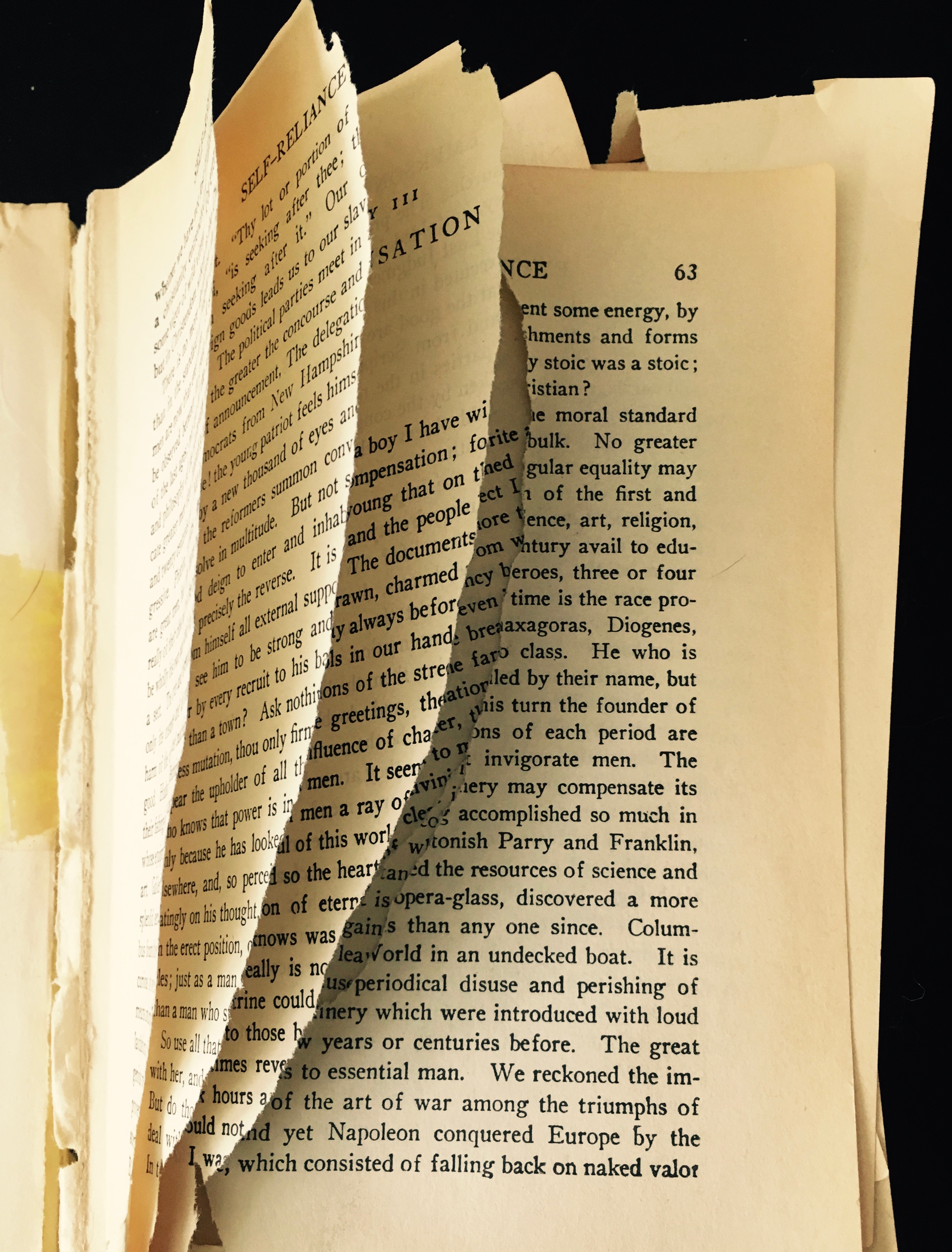
My collection of Emerson’s essays was recently the object of my dog’s intense curiosity. The book survived, but needs attention. It was already aging, the pages brittle and fragile, the spine having been taped together more than once. It is now more or less broken in half, an apt metaphor for the discussion at hand, the words contained in the halves still a through-line. In every way, I’m reminded of what makes us strong and what makes us fragile, of the power of words and intentions, of the significance of keyholes, and doors, both opened and closed.

Love, Cath


Thirteen Ways of Looking: On Finding Clarity, Not Conclusions

By Catherine DiMercurio

Wallace Stevens’s “Thirteen Ways of Looking at a Blackbird” has been running through my head like an 80s pop song. I had to stop and listen.

black and white bird
Photo by Freddie Ramm on Pexels.com

It’s not even that I know all the words, but there is something about it that keeps surfacing for me. The title of the poem will pop into my head, or a couple of lines, or the general mood of it. The poem contains lines like this:

     I do not know which to prefer,

     The beauty of inflections

     Or the beauty of innuendoes,

     The blackbird whistling

     Or just after.

I’ve learned that when something pushes at me like this, I should stop and listen. I think our minds are vast universes connected to deeper things, that since energy cannot be created or destroyed, there is timeless, transcendent energy in us that sometimes knows better than our conscious, thinking brain. And I think that part of us is what people talk about when they talk about gut or faith or intuition. And that part of me has lead me repeatedly to this poem in the past few weeks. And I think I now know why.

If you’ve read the last few posts here, you’ll know I’ve been thinking a lot about the way things end. Sometimes I wonder if I’m overthinking, fruitlessly trying to make logical sense of illogical things, dutifully trying to learn what I can from failures so as to avoid mistakes, prevent future regret or unhappiness. “Thirteen Ways of Looking at a Blackbird” has given me some comfort, not only from its content, in beautiful words yoked together to convey deep, simple, elegant truths, but in its very form. “Thirteen Ways” is about looking at things from different angles. It isn’t about making sense of something or coming to a conclusion, but it is about keen observations rooted in both fact and feeling. It is about fullness and richness of understanding.

Contours, Not Conclusions

In a way, the poem offers both permission for and insight into the tasks my mind and heart have been performing as they looked at one ending—the terminal point in one relationship. My examination of the ending itself expanded into a postmortem of the past two years. I saw patterns that had hidden themselves from me before. The innuendoes, the beauty in the aftermath of the blackbird’s whistling, have settled in, and I have been able to see angles and contours of things in a way I hadn’t before. I’m becoming aware that sometimes these contours matter more than conclusions. Understanding and fullness of knowledge and experience are different things entirely than an argument or statement summarized. Life is not a five-paragraph essay with a thesis stated, a case made, a conclusion drawn.

What I’ve learned about myself through this process of allowing myself to retrace my steps, to study the relationship from beginning to end, is invaluable. There are insights I would not have gained had I simply tried to force myself to move on, get over it, or stop dwelling on it. Recognizing that this is my process, too, is freeing. When any relationship ends or changes—as they so often do in life—permitting yourself to explore it from all sides may be the necessary path for you in order to accept the transition, to gain greater insights about yourself, to change course, to grieve. There is no right way, no one answer, and you don’t have to land on a conclusion, whether or not anyone else expects one from you.

Buried Truths and New Circles

This process, let’s call it the “Thirteen Ways of Looking” approach, is a way to manage the ambiguity I discussed in an earlier post. It is a way to begin to make sense of seemingly incomprehensible things, not to discover answers, but to recover truths we lost sight of or buried. Truths get buried regularly I think, like bones, dog-buried, or lost to rock and centuries.

I dreamed last night of blackbirds. They were pulling at my shoulders, picking me up and flying me away. When I looked down I saw that I had been standing on an island that was suddenly engulfed in flames. I don’t know where the blackbirds will take me but I think I’ll be okay. I’ll leave you today with Stevens’s ninth way of looking at a blackbird: “When the blackbird flew out of sight, / It marked the edge / Of one of many circles.”

Love, Cath