On Winter Gifts and Safe Harbors

By Catherine DiMercurio

As I walked along the snowy beach, the lake splashed against the frozen droplets of former waves at the shoreline. It was wondrous with the sun sparkling across the waves and the icy beach. I slid across frozen puddles, crunched across the ice that rippled like a memory over the windswept sand. I never expected to enjoy a wintry beach walk quite so much. I talked to the lake like an old friend, thanked it for being deep enough to receive my troubles and old griefs without finding me “too much,” without resentment or judgement.

It has been a year packed with some big transitions, which is why, when winter hit so suddenly and forcefully a couple of weekends ago, I didn’t feel prepared. It was a big snowfall, followed by another heavy round a couple of days later. And since, we seem to get another few inches every couple of days to add to the two feet of snow already on the ground.

I remember my father taking my sisters and I sledding when we were little, ice skating once or twice too. I wanted to like it. I did enjoy playing in the snow, building snow men and snow forts and making snow angels. But I remember being at the top of the sledding hill and feeling a sense of apprehension, a worry that we’d collide into the other children sledding down the hill. I wonder if I would have enjoyed it more if it had been just us. Skating never made sense to me. It wasn’t the kind of thing I was going to get the hang of on the first time out and since we only went a couple of times, there was not really a chance to improve, but I also didn’t enjoy the slipperiness, the falling. I felt clumsier than usual, and I was already a kid that got called klutzy. Despite growing up in a state known for its winter wonderland, I have always had complicated feelings about the season.

One Christmas Eve when I was still quite young, we were returning home after visiting my grandparents’ house. Our car spun and skidded off the snowy road and when it stopped, we were facing the Saginaw River. I don’t know how close we were to the river, but in my memory, I have this sense that we had narrowly escaped careening into the water. Maybe that’s why, years later, after I learned to drive, I would become extremely fearful of driving in snowy conditions. Of course I adapted, as you do when you have places to go. You do what you have to do. But possibly this early memory is at play when my driving-in-bad-conditions apprehension surfaces. Perhaps I also just have a strong survival instinct. That, and I don’t really trust other drivers who seem to have no sense of caution.

Combine all this with the anniversaries of some Bad Things happening in early December many years ago, along with the short days and lack of sunlight, and you get a very tricky time. Yet, there is a kind of unexpected vibrancy in this community I’ve landed in, a recognition of and appreciation for the natural beauty we’re surrounded by. People get out there and enjoy the lake and the woods and the fresh air in all kinds of conditions. It’s a bit contagious, even if, especially in winter, I have to work a little harder to get motivated to spend lots of time outside.

I’ve been doing okay though—snowy hikes, walks or drives to the lake, icy beach strolls, sunsets. Some days though I get hit with melancholy, or fatigue, or some other cocktail of emotions that seem to rise to the surface more readily in darker, cold months. Like many people, I walk a fine line between knowing when to let those feelings in, acknowledge them, feel them, deal with them, and knowing when to get out of the house and out of my head. I’m still learning what it means to feel the heavy feelings without falling into ruminating, stewing, spiraling.

At the worst time in my life, I felt as though I was constantly at risk of falling into a deep darkness that I would not be able to climb out of. In retrospect, I think I did fall in sometimes, though, at the time, I believed I was pulling myself up and out just in the nick of time. So when things seem heavy, I occasionally get a feeling of dread, as in, please don’t let this be that. But it has never been that again, thankfully. I have a lot more tools now, and I’ve had a lot fewer reasons to ever feel quite like that again. I don’t often give myself enough credit for the navigating I’ve done, away from dark places.

But here, where I’ve landed, I often look around at the beauty of my surroundings and thank myself for captaining myself to this shoreline city. Sometimes there are two selfs, the one who doubts and is often fearful, and the one who sees the path and makes the necessary choices and journeys. Do you believe me now? I’ve asked myself. Do I believe now that I can make the decisions that land me in the right places at the right time? Do you trust me now? We made it here, after all.
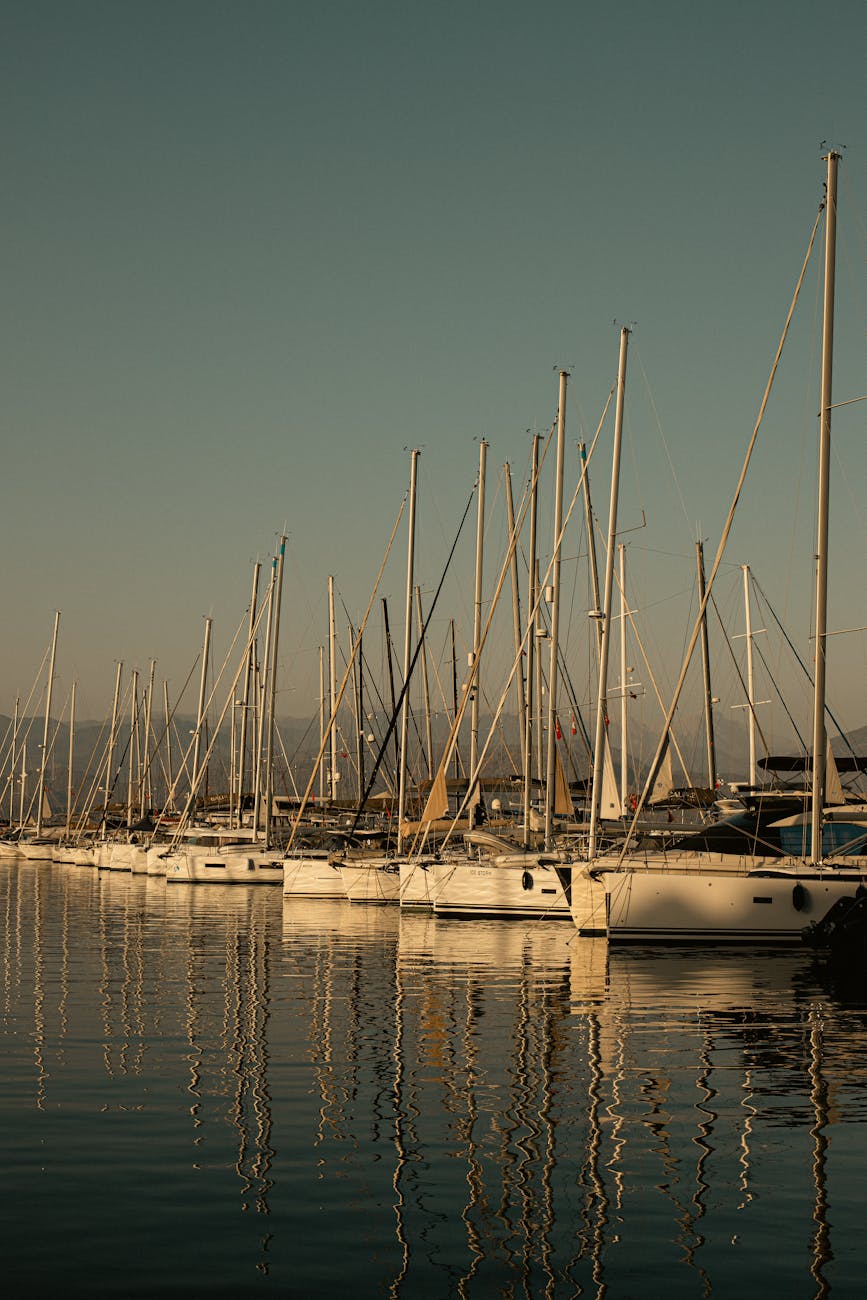
Photo by Anna Morgan on Pexels.com

At the end of my street is a marina. The joy those docked sailboats bring me, when I see their masts jutting into the sky as I stride down the hill, is both reliable and exhilarating. Reliable joy? What a gift! A sign reads “A SAFE HARBOR MARINA.” Safe harbor. How wonderful to discover that this is what we can be for ourselves, and what an actual place can feel like. Finding that feeling after a period of drifting and searching, of looking for belonging and not quite getting there, is as magical as the icy beach, or the gathered boats snug in their harbor. I hope this winter finds you in a safe and wondrous place.

Love, Cath

On Be-ing, Figuring, and Breathing

By Catherine DiMercurio

I don’t recall a time when part of my long walk entailed two miles barefoot at the water’s edge. Where Lake Michigan splashed at my ankles as I strode south. I don’t recall ever being able to go to the beach four times in one week. These are some lovely benefits to completely reshuffling your life.

It’s still a bit surreal, the move. There is so much that I’m still processing with the way this year has unfolded so far. I’m trying to pause more. Throughout this whole process, with a million little and huge steps along the way, I have felt catapulted from one thing to the next. Have barely been able to take a moment to enjoy a sense of accomplishment at meeting various milestones, because the process doesn’t let you rest. Even on the day of the move, an enormous, choreographed event, I was barely able to take a moment to consider the enormity of it, to congratulate myself for choreographing it. There was a brief period of time where I sat with my sister at the picnic table out back while the movers unloaded the trucks when I tried to catch my breath, tried to let the big truth of the moment sink in. I had done it. Moved to a lakeside town. Gotten myself as close as possible to the lake. I had, against the backdrop of some heavy personal turmoil, gotten my old house ready to sell, endured the ups and downs of all the showings and waiting for an offer, accomplished all the work to prepare the new house for my occupancy. Shepherded my anxious, reactive dog through it all. And I had moved farther from my children, from most of my family, from all of my friends, too. All of these things swirled through my mind—the work, the pros, the cons, the hopes, the fears—for a few overwhelming moments before I was pulled back to the reality of a house so chocked full of boxes I could barely make my way through it.

And then I faced the next enormous task. Unpacking. The tiny home was barely navigable. A narrow path led through a maze of boxes. I slept on the couch, unsure how I would even move things around in order to put my bed frame back together. But in two days I created some sense of order out of the chaos, and then I worked for two days in the office I’d managed to set up, and then spent most of the weekend unpacking the rest of the boxes. I can breathe a bit again and am no longer surrounded by cardboard. The basement is still a disaster and will likely remain so for some time. I want to take a few days and just feel normal, want to immerse myself in my regular routines, but my brain is already worrying about organizing the basement, and finding a new vet and dentist and doctor, and calculating when I’ll upgrade the electrical panel and replace the aging appliances.

There is always The Next Thing. There is never a clear deck with no items waiting for our attention. I’ve known this for a long time. It’s a lesson everyone learns at some point. It makes no sense to scramble and scramble trying to get all the Things attended to for the foreseeable future so that you can relax and be happy. It just is not reasonable to postpone feeling okay until all of the worrisome items are attended to. We have to keep figuring out how to find peace and joy in the middle of it all.

But knowing this doesn’t make the mindset adjustment any easier. If there are simple ways for moving the Things to Worry About to the edges so there’s some clear space to breathe, I don’t know them. The ways I know are about conscious, deliberate efforts. Maybe this work is easy for some. For me, it’s a huge mental challenge, a heavy lift. Some of it is self-protective. There is a part of me that is convinced that the only reason I get things done and avoid having important things fall through the cracks is because I do worry. It’s as if I need to worry because that’s the only way things will be ok.

It might seem like a whole lot of exhaustive nonsense if this is not the way your brain works. I think one of the things I love so much about being at the lake is that it is capable of taking me out of that mindset. The water is a live, physical presence; the experience of being there is multisensory. It diffuses worry, calms the loud thinking and overthinking. It’s the only shortcut I know. This past weekend, I took a long walk, some of which was barefoot along the shoreline. At one point, the absence of racing thoughts became apparent. It was shockingly peaceful. For a moment, I felt like Winnie the Pooh, just strolling along, with a hum-de-dum sort of song in my head. “Pooh just is” is a line I remember from Benjamin Hoff’s The Tao of Pooh. And striving for that state of just be-ing feels impossible sometimes.

Part of the problem isn’t just a brain that is wired (by so many things, some of it innate, for sure, but some of it experiential) for worry. Part of the problem is a world that’s all digital and hurry up and loud and bright and urgent and in so many ways frightening and terrible. Of course we want to remain in a cozy bubble, try to feel good and safe and separate. To eliminate as many of the things to worry about as possible until there’s nothing to worry about anymore so we can just be.

I want to believe that while there is no end to worry (do you ever worry that there is something you forgot to worry about?), that the opposite is true, that there’s no end to peace, as in, isn’t there a well of peace within us, a transcendent and universal peace? And if so, how do we get there, how do we find it when we’re lost in all the other stuff. I don’t expect to stay there, I don’t know how people could do that with life being what it is but finding a path there, an easy path, a good path, a clear one, would be nice. I’m trying meditation but it’s quite a challenge.

Maybe I have found a path, maybe that’s why I moved here. It’s surely different for everyone and probably not everyone wants to go looking for that kind of peace. Maybe we’re not supposed to because don’t we need to stay worried so that we can fix little parts of the brokenness in the world? Or do we do that by finding and being peaceful within ourselves, and bringing that energy to everything we do?

Photo by Athena Sandrini on Pexels.com

Yesterday after work I attended a program at a beautiful historic library. It was a book discussion led by a professor from a nearby university, for a book I really loved, about a man who sails Lake Superior in a dystopic, near-future Midwest. The framework of the talk was “dystopia and hope.” I contributed a lot to the conversation. It felt good. And then I drove the few minutes to the lake, strolled on the beach, watched the sun start to set behind the churning waves. I didn’t worry about finding a vet or a dog trainer or a dentist, or work, or what I’ll do with Zero if I want to go visit my people on the other side of the state. I didn’t think about the boxes in the basement, and the logistics of that space. These are things I have to figure out. But for a brief window of time, I was exploring my new community, interacting, living outside of my own thoughts, and getting soothed by the lake. I felt a greater sense of belonging than I have in a while.

I probably won’t ever stop being a worrier, but here there seem to be more opportunities to take breaks from it, and that’ll be good for me. I don’t worry that I will fail to figure out the things I need to. I just don’t always want to go through the figuring out process. It gets tiring dealing with the obstacles that come along with so many decisions. And obviously I feel a bit drained from having navigated a major life change, and that’s okay, is what I remind myself. We get decision fatigue, along with plain old regular fatigue.

But, I do know that I’ll figure out a lot of it. Maybe not all of it, and not at the same time, and often not elegantly. But I’ll do my best, as we all do, and maybe it’ll be a little easier now, here, to stay even-keel through it most of the time.

Be well. Love, Cath

On Moving through This Particular Time and Space

By Catherine DiMercurio

These past several months I have felt as if keeping my head above water takes most of my energy. Each moving-related milestone felt less like a hurdle overcome and more like a wave crashing down on me, until it is over, and I can float a little, catch my breath a little, until the next wave hits. In the midst of all the painting I was doing this past week at the new house, I was fighting to do just that, catch my breath. The task felt overwhelming, the number of walls, the trim to either paint or tape off, the cutting in, the multiple coats, the clean-up, the way the plaster was so thirsty and gulped up all the paint, the cove ceilings and their delicate curves, the yucky and ancient vinyl floorboard molding in the kitchen, the ruined window frame in the living room.  

It’s been over a year since I got it in my head that I was going to move. I took my time with the process, knowing how much I loathe how urgency makes me feel. Winter and early spring were focused on clearing out the basement and making plans, and then in April and May I began to ramp things up with house repairs. Then things really sped up in June when I listed my house for sale and began searching for a new home in earnest. Now, I’ve closed on both houses. I spent a long weekend at the new house organizing some initial improvements—tearing out carpet and having a fence built—and cleaning. This past week, I went back to paint. It’s a task I always enjoy in the beginning, but by the end, I’m ready to be done. And this time the end didn’t come until the fourth room was painted on the fourth day. It was a big job, and like any home improvement task, it came with unexpected obstacles.

But, this isn’t going to be a boring home improvement post. I thought I wanted it to be about how good it felt to let this new-to-me but old house breathe and feel cared for again after a couple of years of vacancy. I thought I wanted to write about how I was trying to make this random place feel like my home. And I thought it was going to be about what a long, sometimes scary journey it has been.

Yet what is hitting me most right now, as a sit in my cozy current home now that I’ve returned from the painting week, is how confusing and chaotic prolonged transitions feel. Many people are in the midst of them now, with grown children off on new adventures or otherwise finding their footing in adult life. People are ending relationships, or starting them, or moving, or grieving, or changing jobs. Sometimes we go through big changes with others and sometimes we go through them alone. And we might have folks helping out where they can, but when we’re flying solo, the upheaval of big changes can hit especially hard.

Somewhere between wrapping up the painting of the bedroom and the office and the hallway and beginning the painting of the kitchen, I felt particularly wrung out and empty, and then I sort of remembered why I was where I was. Two miles west of me was one of the best stress-busters I’ve ever known: Lake Michigan. So that morning I made my coffee and loaded Zero in the car, and we drove the short five minutes to the lake to see the morning light play on the waves. We just stayed in the car, because we see off leash dogs all the time and that is not a great thing with a reactive dog whose training got derailed. I wanted this to be a moment of calm, so we stayed cozy, and watched the other early morning people go by, or do the same thing we were doing, viewing the lake from our cars as if we were at a drive-in theater. I’m looking forward to when I’m actually living at the new place, and I can go grab moments of lake-calm for myself whenever I need to. In this particular moment, I marveled at the way the light of the morning could be both bright and soft at the same time, and the way a gull sounds different when it’s swooping around the shoreline than a gull sounds in the old Kmart parking lot in the puddle of my childhood memories.

That moment was also a reminder to seek out calm wherever I am, lake or not. Because life can feel so big and so chaotic, whether or not we’re in periods of momentous transition. It’s not as if I forgot that I need to do that, or like I wasn’t trying all along to manage my stress with yoga and walks and early morning coffee in the yard with Zero and chats with family or friends. But sometimes we tell ourselves there’s no time, or that it won’t help anyway because there’s too much to do or our feelings of overwhelm are too great.

We tell ourselves a lot of things when we’re tired or drowning in all there is to do every day. We tell ourselves there’s not enough time to sit quietly in a safe place and catch our breath. Maybe we even tell ourselves there are no safe places, and it is tragic when that is true. But sometimes we’re still learning to be our own safe place and that takes time and practice. Sometimes we tell ourselves that we miss things that weren’t particularly good for us. Sometimes there were good parts to miss, but that doesn’t change things. We might ask ourselves why we ever thought we could handle the enormity of moving farther away than we’ve moved before and then we remind ourselves that we are, in fact, handling it. We’re almost there. We’re almost home.

And still, that doesn’t erase the hard parts. Holding two opposing truths within us at the same time can cause a bit of inevitable heartache. For reasons of financial and mental health, I need to go. To follow the dream of living near the lake, I need to go. Because I want to love where I live, I need to go, and at the same time, the fact that I’ll be almost three hours from my kids instead of half an hour hurts like hell. I haven’t made peace with that. I don’t know how to. And I guess, I don’t really want to make peace with it. I want that angst to keep motivating me to find ways to make it easier for us to see each other. I don’t want to slip in to “but it’s so far and everyone is so busy.” I want to remain highly motivated to find someone who can watch my sweet but challenging pup so I can take off for a long drive and a short visit, or to take a weekend here and there to see friends and family. People figure this stuff out all the time and I will too. It’s just, in moments of high contrast, the difficult parts feel sharper. Having just had time to hang out with my kids, the prospect of missing them is looming large.

It’s as if we have to keep finding ways to be bigger on the inside than we are on the outside, so we can hold all that life seems to ask us to hold. And sometimes there is no more room, and we have to become willing and able to put something else down so we can hold on to what we want to hold on to. Maybe there are old griefs I can leave behind so that there’s space to manage this new challenge of geography and proximity to the people I love. Maybe the perplexing problems I have for so long felt gnawing at me are less about algebra (as in, how do I solve for all these variables) and more about physics (as in, this is about the realities of force, mass, and acceleration, as in, how can I move myself forward through this particular time and space). Maybe the math analogy is bad but what I’m saying is that maybe it’s time to get practical instead of theoretical.

We’re all moving—together and separately—through this particular time and space and I hope we all find ways to allow ourselves to lean on one another and to be strong when we can’t and to be strong when someone else needs to lean on us.

Love, Cath

On Pebbles, Fish, and Feathers

By Catherine DiMercurio

Hope and perseverance take various shapes these days. My house is up for sale, and there’s a hopeful contender on the west side of the state just waiting for me. I’m starting to picture where I’m going to land, how I’ll arrange the furniture. I’m trying to do two things at once: fan the flames of my hopefulness to keep it alive, and also, maintain it at only a steady low burn so I’m not overly disappointed if things don’t go my way. That’s not an easy balancing act.  

Still, when I recently visited the town I’m moving to and spent some time by the lake, I had that feeling, the one where my heart wakes up, fluttering and thundering in my chest. There is a simultaneous tug of calm peace and wild joy that tells me this is it, I belong here. I once thought love was supposed to feel that way, and maybe sometimes it has, here and there, and maybe that’s asking a lot of love.

A lot has to happen before I can move, and I’m often wondering if I’m doing it right. I don’t know the rules. I think that’s because there aren’t any. I must have made that part up, that rules exist for How to Do Things. Somewhere along the way, I convinced myself that if I could a) learn the rules and b) follow them, then the result would be everything making sense and falling into place. I imagine the gentle way it will happen, the falling into place, like a gull feather softly floating from the sky, and sighing into the sand at the water’s edge. I think I’ll sit on the floor in my new house and I’ll say, I did it, I got us here. I know it won’t make the world make sense again, but it will feel better, it will feel right and good and like home. That’s what I hope. And then I’ll get to go to the lake whenever I want, and my heart will hop and dance and trip over itself on the way, clumsy and glad.

When I say that I made that part up, about those rules existing, that isn’t entirely true. I willingly bought into beliefs and norms and societal conventions and turned them into rules inside my head because on some level, rules make me feel safe. Knowing the boundaries makes me feel confident. As in, here is a closed system and once you know how it operates you can function in a predictable way and get predictable results.

Even though I learned quite some time ago that the world doesn’t work that way at all, there is a small part of me, a thin little shadow, that stomps her feet in disbelief and frustration when things happen in ways they’re not “supposed to.” And when life gets overwhelming and more variables enter the equation, that thin little shadow grows into something larger and more solid. It’s okay. It’s something you have to learn to live with. Something I learn to live with, the shadow to bargain with, that is really just a version of me that wants to feel safe and understood. I can give her that at least, even if the world can’t. I can try.

If none of this is making sense to you then maybe you were lucky enough to play by the rules whether you believed in them or not and things fell into place for you, so much so that you’re surprised when things don’t work out for other folks. Maybe you figure that they just didn’t work hard enough, like you did. Or they weren’t positive enough or whatever enough, whatever it is that you believe got you where you are.

But if this is making sense to you, then hey, nice to see you here, hope things are going okay.

Photo by Ku00e1ssia Melo on Pexels.com

It’s hard, isn’t it, to live in this liminal space with all this uncertainty unfolding in multiple directions? It almost forces you to be the calm center of it, as if there are so many forces pushing at you from the outside that all your chaotic, uncertain, wayward and worried energy is forced back toward you, and you have to learn to metabolize it all. Because if you don’t metabolize it, you start to feel like it is crushing you. I’ve felt that way recently, like I was getting smaller and smaller. Just a pebble, really. Though, pebble-sized, everything happens around you, not to you, so maybe that’s the right way. How else does one metabolize all that chaos? Maybe it passes through you, like water through fish gills, and we take in what we need to breathe and nothing else. There probably isn’t a right way. Maybe sometimes it is a pebble day and sometimes it is a fish day.

But we all have stuff coming at us all the time. Theoretically, we could reduce the amount of chaos coming at us if we could diffuse our own response, our worry and fear and what not, and only deal with the outside forces, the unpredictable things in our lives that make us feel like things are overwhelming or out of control. But that is easier said than done. Sometimes the only thing that shows us the way is our own exhaustion. When we have no more energy left to worry because we’ve been too busy coping with what life is throwing at us. There is some relief in that somehow, in being too spent to work up enough energy to thrash against uncertainty like a caught fish in a net. That’s when we get to the point of saying, I’ll just have to roll with whatever happens next. And maybe when we’ve done that enough times we won’t have to wait until we’re completely exhausted to adopt that mindset. It’ll be a choice instead of a consequence. Sometimes that’s where the growth is; some of us only learn lessons the hard way.

When I think about leaving this house, I think about all the work I put into it, and how I turned it into a safe place to land after all. It’s a cozy refuge that has served me well. I hope it will let me go, will work its charm on the right person who is ready to make an offer any moment now, so the next set of things can fall into place for everyone.

But for now, it’s wait-and-see mode. I have moments where I’m okay with that, with the not knowing, with the in-between-ness, and there’s a part of me that actually does feel confident that I’ll be able to adapt to however the situation evolves. It’s hard to hold on to that mindset, when part of me wants to lean in so badly the particular details of how I want things to happen. Hope is a funny creature to tend to, being wild and capricious and hungry and fragile all at once.  That’s another thing there aren’t any rules for, the care and feeding of this creature called hope. Maybe we’ll all get it a little bit right today.

Love, Cath

On Spring, and Little Mysteries, and Soft Truths

By Catherine DiMercurio

It’s been a bizarre spring. The last time I wrote, it was just the beginning of it. Now we’re in the thick of it, the irises are blooming and the peonies are about to burst and the buckthorn is proving to be its annual nuisance. Last time I wrote, I was figuring out some paths forward and now they all look a little different.

When I began this blog about open-heartedness, I invited my readers to wander with me, to explore heartbreak and wholeness and everything in between. I think this blog has been around for about eight years, and one of the main things I have discovered in that time is that there is wholeness even in heartbreak, there is wholeness when we feel healed and wholeness when we feel broken. To be human is to be whole; the breadth and depth of our experience is encompassed by who we are in this life and nothing—not pain, loss, grief, fear—can deplete the full richness of our identity. We absorb it all, we metabolize it, transform it, re-emerge as new versions of ourselves over and over again.

The wholeness can feel elusive sometimes. In parsing out recent events, I tell myself I don’t have anything to prove, but my brain cycles through the discussions I’ve had with myself, formulating a defense for decisions I’ve made, paths I’ve taken, as if I have to account for them to anyone other than myself. She has a high threshold for what “makes sense,” this internal judge of mine, and hears arguments daily, usually when I’m in the shower and relitigating my past. I sense it is time to move past such habits, that my energy is needed elsewhere.

But still, I have a strong desire to be “fair” and “reasonable,” and to be perceived that way, so holding myself to account is habitual but sometimes excessive, often unnecessary, and occasionally, cruel. Looking back over my life, I see the ways in which my gut was right, but that it was also right to test its theories, as guts don’t always see nuance, or the need to have certain experiences anyway. But that gut has a good head on her shoulders. I’m learning to be mindful of what she’s instructing. I find that I’m often wary about going with my gut instinct right from the get-go because it is difficult to determine if something is actually and truly wrong when I get that “something feels off” kind of feeling, or if the discomfort I’m feeling is a natural and necessary part of a particular growth journey.

There is also some work to be done when I consider what I just said a few sentences ago, about my desire to be perceived as fair and reasonable. Who is my target audience and why should their perception matter to me so much? Ralph Waldo Emerson wrote, “What I must do is all that concerns me, not what the people think.” I remember reading that in college, being struck with the boldness of that statement. I feel as though I’ve internalized a lot of expectations about who I’m supposed to be and how I’m supposed to behave, and I get caught in the trap of overexplaining, even to myself, why I’ve chosen a particular course of action. Maybe to be regarded as fair and reasonable is so important because I’ve always been a sensitive person who was often told she was overreacting or misperceiving a situation. So I’ve grown accustomed to overcorrecting and interrogating myself, as if there is some value in making my life make sense to other people. There used to be value there. I craved the validation of others, people I trusted saying good thinking, and yes, that makes sense. It’s always nice to hear but in truth I haven’t needed it for some time, though part of me doesn’t entirely know that yet.

It is a strange thing to consider walking through this world and accepting mystery and to say, maybe I don’t need to understand that. Maybe I can stop trying to figure out why I feel better alone than when I’m in a relationship. When I knew myself less, the opposite was true. I thought I was a better me in partnership. But just as my understanding of myself has improved, so has my understanding of what does and doesn’t constitute a partnership. Maybe when we’ve done all the philosophizing and therapizing we can, all the studying and soul-searching, we can say, for now, I accept this as a mystery of life, a mystery of love, a mystery of the universe and of my own soul. Maybe my energy is needed elsewhere, maybe yours is. Possibly it will all make sense when we’re ready. Or, we are ready and it does make sense and we are slow to acclimate to the truths of our existences.

Photo by Valeria Boltneva on Pexels.com

This morning I was preparing to go outside at dawn with my coffee and my dog. He usually sniffs around the yard and I fill the birdfeeder. I examine what’s blossoming: currently, irises, dahlias, snapdragons, impatiens, columbine. I usually hope to see cardinals and woodpeckers before the sparrows and grackles arrive, but lately that hasn’t been the case. Today, though, when I looked through the window before opening the door, I saw a fawn grazing near the overgrown herb bed. I looked past her and noticed two other deer nestled in the myrtle at the back of the yard. Soon, one rose, another fawn, who also began grazing in the yard. The larger doe who I assumed to be the mother remained reclined. She laid there so long after her offspring had risen and wandered that I began to wonder if she was hurt, or, perhaps even giving birth to another baby. I watched the three for a while through the window, feeling glad that they felt safe and nourished in my yard. I left them to their quiet morning routine, told my dog we’d go out in a little bit. I returned after about twenty minutes; they had gone. When I finally wandered out into the yard with my dog, I could see the indented places in the myrtle where they had lain and I wondered if they had cozily bedded down for the whole night in my yard. It gave me such a feeling of peace to cede my space to them for a little while. I imagined that the myrtle was still warm in the chilly morning from their soft brown bodies.

There has been some grief this spring, some loss of a sense of safety and well-being in my little circle. I know that this morning’s sighting of the white-tail deer in my yard was a chance occurrence but also I don’t know if it wasn’t a tiny little gift from the universe, a brief glimpse of a mother and her two youngsters feeling safe and fed and content and together. Maybe mornings like these are for embracing little mysteries as they come to us, and in them, we sense our own enough-ness.

Love, Cath

On Crayon Stars and Resisting

By Catherine DiMercurio

This winter, as always, I try to keep my head above water. It’s harder when the world keeps fracturing before our eyes, but when has it not been fracturing? It’s just a matter of how open our eyes are at any given time.

I’ve taken a break from pottery to focus on some other things, and while it was a hard decision to make, I find that I am both missing the studio but feeling like the break was indeed needed, if only for what I hope is a little while. It’s not hard to find other mediums for my creative energy, but there is no replacement for the collective creative energy of an art studio of any kind, and I’m definitely feeling the lack of that in my life. Still, I’m trying to look ahead to the move I want to make, and I need to create time and space in my life to focus on the necessary steps.

Sometimes it feels like life is lived while simultaneously looking over our shoulders for that which we are trying to outrun and looking ahead of us for that which we might run into, but there is always the running. Even when the pace of life is slow, this mental race is happening.

In some ways, I try to opt out of it, try to stop looking back and forward at the same time. Nothing depletes us quite so quickly as running in two directions at the same time. At least, I’d like to try and imagine that I’m heading toward a goal, instead of fearfully scanning the horizon for obstacles I might collide with.

There’s a not-new idea out there that the energy we put into something, individually and collectively, shapes reality, and that thoughts are energy, so thinking about what we want our lives to be like, and believing in those possibilities, goes a long way toward creating that future for ourselves. On the flip side of this is that our negative thoughts and beliefs play a similar role; we might be inviting into our lives the very things we fear by focusing on those fears. I have long realized that my mental health relies on my ability to redirect my own thoughts when I’m looping on something that is causing me anxiety. Still, I find it overwhelming to think that if I don’t stop being afraid of certain things happening in the future, I might somehow be calling those very fears into being. It can make me feel as though I must police my own thoughts. To me, this is too reminiscent of the old prayer that haunted me as a child, where we confessed to sinning in our thoughts and words, in what we had done, and what we had failed to do. Even as a child, I thought that covers everything! Is nothing about me good? The idea that even my thoughts were bad felt paralyzing, just as the idea does now that bad thoughts create bad reality.

If you have a busy, anxious mind, it isn’t as if redirecting your thoughts is a calm, once-in-a-while sort of activity. It can be a full-time job some days. Maybe that’s what has always been so intimidating about this process. One of the things that I try to do, when a fear or worry arises, instead of trying to push it away as quickly as possible, is to stop, recognize it, and say I see you, I hear you, I GET you. I am resistant to  the idea that something organic to my own self—a thought springing from a fear in my brain—is wrong or bad in and of itself. But like an opinion not supported by facts, the fears in our brains can be misinformed. And I do believe there is value in trying to understand where our fears come from. Sometimes that provides us with an approach for a counterthought we can redirect our brain’s focus to. If I am worried about something that I have to do, and am concerned that I won’t be able to do it, I can remind myself of some of the things I’ve handled, and reassure myself that if this hypothetical situation should arise, I can handle that too.

Sometimes though the fear or worry is something large and unspecific, and even knowing where it comes from within us doesn’t really help. One phrase I’m seeing pop up in various places that can serve as a good counterthought to such thoughts and fears is something like I have the power to create the life, the future, I want. Some people believe the use of such phrases is a way to “manifest” for themselves materialistic things, or a partner, or any number of things, and some people believe that this is nonsense. Others hold that we can even use this type of thinking and believing to create the world that we want, that by channeling our individual energy toward a collective goal, we are feeding positive energy into a world hungry for it, and that this can have powerful results.

This idea holds some appeal. Is this maybe the way to counter some of the horrible developments we’re seeing in the world, in our country, these days? At the very least, can it help us to hang on to the things that are important in our lives and in our hearts while powerful people try to wash those away?

Photo by Zainab Aamir on Pexels.com

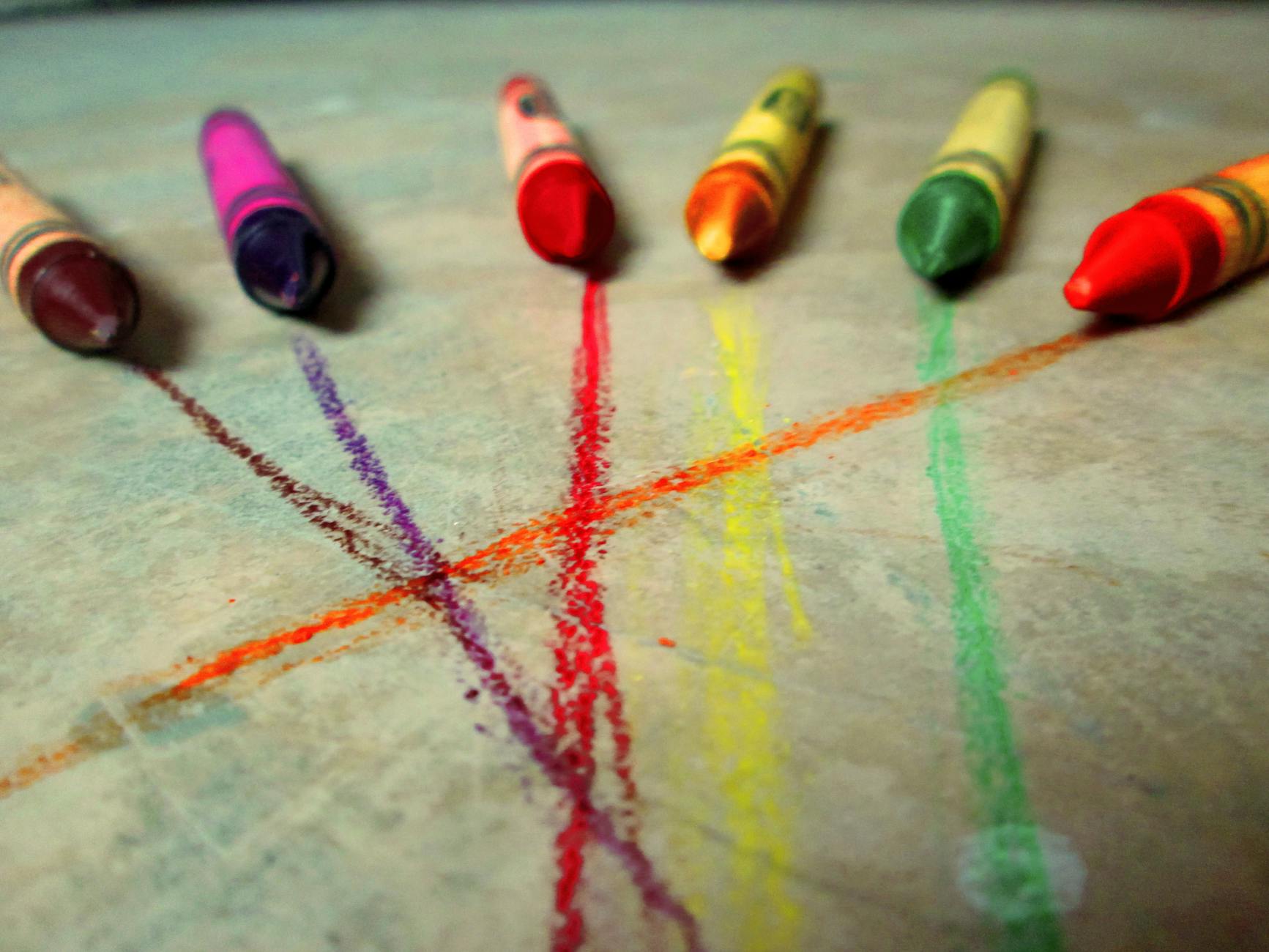
This makes me think of a third-grade art project, where we drew a picture, colored it in with waxy, bright crayons, and then washed over it with a dark paint. Some kids colored dazzling stars that stood out an inky night sky, some drew shining fish in a deep blue ocean. I found the result of using a resist in this fashion mesmerizing. Maybe we can be the resist, be the bright colors we all are, be shiny and solid, and we can stand out against the darkness that wants to wash over everything, wash everything away. Maybe we have to be that type of resist—bright, unyielding—in our own lives too, in our own thoughts, and in the world at large.

It can be so hard, especially in the thick of winter, to hold on to the good things, and find joy and solace in them when there’s so much cold and dark. Battling our fears every day is exhausting and honestly, my fears are part of who I am, which is maybe a strange way to look at it. But I want to understand them and comfort them, help them grow into something else, not battle them. I want to thank them for trying to protect me and show them that their energy could be put to a less defensive use. Our fears are trying so hard to protect us because of how much we love ourselves, even though we often perceive them to be a force that is working against us. I wonder what could be transformed if we looked at them that way, as a force of self-love. Maybe what we need to resist is the shutting down that we sometimes believe our fears are telling us to do. But perhaps they’re just there to remind us about the lengths love will go to.

Love, Cath

On Wishes and Finding Our Way

By Catherine DiMercurio

We are here again, edging our way toward the end of another year, bracing ourselves for whatever is next and trying to inch forward in our own lives, no matter what’s next.

I’m still in the habit of trying to solve my own future, solve for x, study each element of the equation as if some part of me truly believes there is a right answer to find. I do believe we are very much comprised of the stories we tell ourselves about ourselves. But sometimes experiences knock us around, begin to shape those stories, and we have to spend years trying to unbelieve words that have written themselves onto our hearts.

I tell myself stories about belonging because it often seems that I find myself living in places I don’t feel connected to. In truth though, everything ebbs and flows, and discontent arises when I don’t feel connected to myself, and for me it is also true that this disconnect happens less often and less intensely when I’m in natural spaces—near woods and water. And so I keep trying to connect those dots, find the path to where I am supposed to be.   

Today is the solstice and I have been writing different versions of this essay for weeks. The words have had a tough time finding their way because I have plans in the works that I want to talk about but I also feel it is premature to talk about all that, so I keep writing around it all, even though it impacts no one whether I say this or that. What I want to tell you is that I’m trying to move again but I also don’t want to say it out loud in case something gets in the way and my plans are thwarted. I don’t want to jinx it, but I also want to make it real, call it into being. Saying I’m trying to move near Lake Michigan feels like a bold statement but being vague is confusing, and since this is one of the biggest things tumbling around my head and impacting my life, it is hard to say nothing at all. It is hard to write about anything else. When your heart’s on your sleeve, it’s impossible to play things close to the vest. And it is the solstice which is a magic day and therefore good for wishing.

Because of this trying to move, this deciding, this moving toward a lifelong goal, I am making other decisions, like take a break from pottery, which feels uncomfortable and necessary and like there will be a gap, a big place where something is supposed to be, like when you lose your first molar as a child. How is it gone, and don’t I need that, and how long will it take for something to take its place? My ceramics journey is far from over but there are times when we need to pause. I tell myself it is an artist’s decision, to move toward inspiration and peace and wildness and curiosity, and even though it means saying goodbye to one place, one community, I will find another and art often thrives in such curious and tumultuous circumstances. But I left the studio in tears the night of my last class. I don’t know the last time I was more grateful that I had pushed myself into something new, into that first pottery workshop I did with my kiddo.

While the point of pausing pottery is to focus on getting my house ready to sell, the pause might also be a good opportunity to embrace some writing projects that have stalled a little. But it is also a good time to remember that we can only do so much. We can’t underestimate the toll of the full-time job, especially when it asks more of us than ever before. We have to hold so many conflicting notions in our heads at the same time—being grateful for meaningful work and a paycheck but also feeling that work often leaves us little time or energy to enjoy the rest of our lives, to pursue our other dreams. Sometimes I start out by focusing on gratitude but then find myself down a rabbit hole where gratitude is muddied by things that ought not to be the way they are, where corporate greed impacts so much of our lives, and so on. I am working on finally building a meditation practice that will hopefully keep me away from rabbit holes for a few minutes every morning. Which is not to say that there are issues in this world that we should look away from. Gratitude for what we have should not blind us to what we need to bear witness to.

Still, it is a beautiful, cold morning here and I am lucky and grateful for it. Zero and I spent some time outside at sunrise, while the gibbous moon still shone above us. I feel as though I have more questions than answers at this point in my life and I am always looking for signs and guidance, am always wanting to know if I’m on the path I should be on. While standing out there in the cold at dawn, I stomped my slippered feet lightly on the worn pavers to stay warm, and Zero snuffled around in the frozen grass, and I lit a little candle and did my wishing. It reminded me of the kind of early morning where you might find a lamppost shining in the woods, as if we could be so lucky to find any kind of sign that was so obvious. It was a silly thing to want, yes, but it didn’t stop me from wanting it. If someone else said any of this to me, I would reassure them that the path they are on is the right one by virtue of them being on it. We will get to where we need to go, one way or another, and learn what we need to even if we veer in a direction that later seems “wrong.”

Photo by Boys in Bristol Photography on Pexels.com

Maybe one day I will accept my own answer, that it is okay to make wrong decisions, and it is more important that I am approaching life with curiosity and openness and love than it is to worry about doing something that might hurt me or cost me in some way later on, so much so that I stay frozen. This approach treats inaction as if it is some kind of protection. “Bad” choices and situations are going to happen, even when we’re trying to do everything right, because there is way too much we can’t control. I think once you go through a few such things and feel tired of the consequences, the hurt, you get to a place where you just don’t want to choose anything. It’s okay to move slowly, choose our next step with care but it is an illusion to think staying still makes us invisible to the world and to the challenges it wants to throw our way. Still, we are allowed to rest, and take our time.

Maybe too we can be lanterns for one another, glowing lampposts in the winter woods, helping if not to guide one another, at least to show each other that we’re not alone in our wandering.

Wishing you peace,

Cath

On Stress, Right Answers, and Noticing

By Catherine DiMercurio

I cherish calm, routine days. I think I’ve always been that way, but at this point in my life, I am more thankful than ever for peaceful stretches of time where I’m able write, exercise, work, hang out with my dog, and spend time with people I care about, without anything disrupting that flow. I had the thought recently that I need to figure out how to hang on to that sense of peace when I’m stressed. But a new thought dovetailed into that one. Once I’m stressed, that feeling of peace or well-being or calm is lost or distorted. What I actually need to do is to keep that stress outside of me.

Can we deal with stressful situations without becoming stressed? Is it possible not to internalize it? I have started to wonder not only if it is possible, but if it is the way many people already know how to handle it. Can I simply decide to not let it in? Sometimes I think of stress as a cold shadow, and though I try and stay warm and in the sunlight, I get cold and dark anyway.

Maybe it has less to do with what we let in and what we don’t. Like many people, I use the terms “emotions” and “feelings” rather interchangeably, but there’s a lot of information emphasizing that they are two different things. A Psychology Today article I read provides an example of the emotion of discomfort one might experience at a party. Your stomach might constrict and your breathing becomes shallow and rapid. Maybe you start to perspire. One person might interpret these physical cues as feeling anxious our awkward. Another person might experience the same physical cues and describe feeling excited. I certainly have tried to tell myself at times that the physical experiences that I associate with anxiety, often about a social situation, are actually excitement, hoping that if I labeled it differently it would calm me. It usually doesn’t.

Whether stress in particular is a feeling or an emotion seems a little blurrier. It certainly involves physical changes in the body that we label as “feeling stressed” but it is bigger than that. The Mayo Clinic notes that stress affects our body, thoughts, feelings, and behavior. I feel as though my big “revelation”—the idea that maybe I can choose whether to internalize or externalize it—will not be so simple to enact, given that an external situation that is stressful causes immediate physical reactions in my body; this happens before thought, or regardless of thought.

Is it possible then to experience the physical signs of stress—to be having an internal, bodily response—but still try to externalize the stress? As in: there is a stressful situation happening over there. I can feel my heart beating harder in my chest and my breathing is shallow. And while I recognize that I am experiencing physical discomfort and am feeling fearful, the situation itself is still happening over there. I can choose to react to it differently. I can take deep breaths and stretch and I can trust that I will find a way to handle the details of that situation.

Yet a stressful situation is stressful because some part of us feels threatened. Whether it is related to our own experience or that of someone we care about, we might feel that physical or emotional safety is threatened, or financial stability jeopardized, or there might be some other fear we feel deep down in our bones. It might also be very difficult to see it as something external if it is something related to our own bodies, like an injury or illness.

I suppose some of the best advice is just about noticing. When we’re in a heightened, uncomfortable state, we can notice what we’re experiencing in our bodies and how we’re labeling it. Then we can try to bring our bodies back to a state of calm—by breathing deeply, stretching, jumping, dancing, shaking it out, crying. I wonder if the most important part is avoiding what many of us do: we try to talk ourselves out of feeling what we feel. But what if instead, we attempt to love ourselves through it, and to be curious about why we’re responding the way we are.

Sometimes, the most comforting and grounding way for me to respond when I observe that my body is  tense, and my mind is swirling with worry, and my feelings are overwhelming me, is to say to myself: hey, it is normal for you to be feeling this way in this situation. This is a natural response to stress, especially given the circumstances (whatever those may be). Sometimes it is that permission to respond in the way I am responding that makes the path through it a little clearer. This is a generous, loving response that I had to teach myself slowly and painstakingly over a long period of time, that I am still teaching myself.

What’s key here is that when faced with a stressful situation our bodies often have an immediate intrinsic response. It is incredibly challenging to move ourselves toward a calmer state of being if we tell ourselves we should not feel the way we are feeling. But maybe it is possible to take it in steps. Our bodies and minds are going to have that immediate response to something stressful, and that’s normal and healthy. They want to protect us. But once we manage those physical symptoms, and after we’ve been gentle with ourselves and acknowledged the existence of those normal feelings, can we then try to separate the stress from ourselves, can we other it, externalize it, place it “over there” as a set of problems to be solved or details to be managed? It’s worth a try.

Perhaps there is some danger too, in the idea of externalizing stress. That is, we don’t want all big and uncomfortable feelings to be something we see as separate from ourselves, right? I think when we separate ourselves from our grief or rage for example, we lose an opportunity to work through them in a healthy way. But stress is a special beast and maybe it needs special rules to tame it, and to treat its effects on us. It is a strange thing in many ways to try and extricate ourselves from stress and its effects. What I mean is that the world and its energy is woven throughout us and always has been. We can’t float along through this life untouched by things we’d prefer not to experience. It is hard to be soft, to let ourselves have a permeable barrier that allows us to take in as much love as we can, without taking in pain too. It’s hard to live fully and to also protect ourselves. The act of living and pursuing our dreams invites stress and risk.

Photo by Kevin Malik on Pexels.com

One of the things that always comes back to me—wise words from a long time ago—is that there is no right way to do this. No right way to heal, or grow, or explore new things, to say yes to some things and no to others. There is no standard, no road map. As a kid, I always wanted to have the right answer, and in school, there always is one. I wanted to get the “A” and to be ready in class if I was called on. I think of my hand, shooting up into the air, ready to be the one to get it right. Throughout my adult years, I have searched out the “right” answer. The right way for me to live, to love, to be, to be me. It’s been hard to trust that I have ways of doing things that are the right way for me, especially since I look at the way my path has been different from that of a lot of people I know. My way doesn’t have to be someone else’s.

Sometimes when I’m not sure about what to do, I feel as though if I listen hard enough and in a particular way, I will be able to figure out what I truly want. I have worried that I’m on the wrong path because I’m not listening well enough.

What I forget is that there is a chance that the part of me I turn to for the “right” answers for myself might not know yet. It’s one thing to trust your gut, but sometimes your gut is still working on things. It’s hard to be patient, to trust in the timing as well as the answer, to trust that I’ll know what I need to know when I need to know it. I wonder, what if I miss it? What if the answer is too subtle, or I’ve been waiting so long I’ve forgotten to listen?

Perhaps, this is when it all comes back to noticing. We must be ready to notice what our instincts, our gut, is trying to tell us, in its own time. Maybe we must strive to dwell in a state of awareness. Perhaps this is part of what I had in mind, without fully knowing it, when I started this blog. Being an open-hearted person means being open to what is happening around us and inside us; it is about cultivating a rich, fulsome awareness. I think of that same hand shooting up in the air, not to proclaim the right answer, but simply to feel the air, simply to notice.

Love, Cath

On Herons, Ducks, and Dessert

By Catherine DiMercurio

I want to be a heron when I grow up. I want grace and patience.

We saw a heron this weekend, my people and I, on a walk after lunch. The heron was standing on a log in a pond, maybe about to catch a fish, maybe not, apparently unconcerned that we were nearby and watching. I wonder what it is like to be still and calm and wholly myself in the midst of a busy, busy world.

If a heron can, why can’t I?

That is, I can, sometimes, but not always when I need to.

One of the things I have always found challenging is finding a way to feel happy, calm, or peaceful in the midst of dealing with some kind of struggle. I always have the sense that once I get past this thing or that, then I’ll be able to relax, find contentment. Maybe that is one of the things this current challenge is trying to teach me. I’m dealing with a major home repair, the kind that requires financing, the kind that it is depressing to spend so much money on, where you aren’t sure you can manage it but you have to. It has left me feeling stressed, depleted, tired. Everyone deals with things like this in one form or another. We all do, throughout our lives. We go through periods when we seem to be hit over and over again.

If we’re lucky, we also go through periods where not much seems to go wrong, and we have an awareness that somehow, bad things seem to be avoiding us. Sometimes, the more things go wrong, the more things seem to go wrong, and it is too easy to lose ourselves in that mode of thinking. Every time I feel this downward spiral, I have to do the mental work of avoiding its momentum.

This past weekend, I tried not to think of the repair that is about to take place, over the course of 2.5 days. When you have a reactive dog, it is challenging to have people who need to work on your house coming into your home. I’m almost as stressed about managing Zero as I am about the financial component of this repair. The disruption to my workday is also a factor. I try to keep things in perspective, try to manage as many of the pieces of the puzzle as I can. At times I sink into a resigned sort of acceptance; this is simply what needs to be done and I’m managing it as best as I can. At other times, I struck with the impossibility of it all, with the fact that not only is there one more thing to deal with, it is a giant thing.

Throughout the holiday weekend, I tried to compartmentalize so that I could enjoy my time, and I did a pretty good job for the most part. I’ve been thinking though about the way people metabolize the obstacles in their life. Some lean into faith; they pray, or accept challenges as some kind of plan they don’t fully understand. Some consider obstacles as necessities in our soul’s evolution. When challenges arise, they are welcomed and met gracefully. Still others embrace the apparent randomness of the universe, and don’t take challenges personally. I vacillate between approaches; I try to be graceful or wise, or calm. But first, it is true that I sometimes panic, depending on the size or severity of the obstacle. I know that part of this reaction is fear, and I ask myself: can I handle this, and how will I handle this, and what if I don’t handle it well, what if I make choices that cost me in ways I haven’t anticipated. That all comes from a not-fully-realized self-trust. But sometimes, I have a sense that though I can handle something, I’m simply tired of handling things. I feel defiant. “No more,” I wish to say, shaking my fist at the universe. But in the end, the fear or panic or weariness is simply futile, and we weather what we must because there is no other way. Life moves us inexorably forward. It doesn’t matter if we feel buffeted by stormy waves, a small duck in a big lake. Sometimes I want to make myself bigger, stretch tall on heron legs, unfurl the full length of my wings and defy storms. But whether duck or heron, we all simply weather the storms in our own ways. We do what we can.

The other thing I’m learning right now is to give myself space to have those moments of panic without judgement. Somethings are genuinely frightening. A huge, unexpected home repair can trigger feelings of financial insecurity in anyone; it is natural that it would leave many people with the sense that something of our essential safety is under threat, especially if we’ve experienced such instability in the past. I might later say, “I wish I’d handled that better,” but why? It is okay for me to feel anxious, to seek emotional support from my trusted circle. I wonder sometimes why I expect that I should feel unflappable, why I view responses such as fear or anxiousness as antithetical to handling something “gracefully.” I do long to feel a sense of serenity, an inner peace that is untouchable, unable to be shaken by woes or threats of any kind. It’s not a bad goal, but if I’m not there yet, then I’m not there yet. There’s no sense in having judgement about it. Maybe going forward, when I’ve had time to rest and regroup after this particular obstacle, I’ll sink into a kind of sustainable peace that will be less disrupted by whatever the next challenge is. Or, at least, I’ll strive for that.

For now, I’ll I can do is endure this latest challenge and trust that I’ve made the best decision I can at the time. I can use all the little tricks I have up my sleeve to get Zero and me through this. And I know I have people to lean on, and I know that leaning on people makes things easier, and also it doesn’t make the challenges go away. We all have to go through what we have to go through, one way or another, though for a long time I think I sort of expected that leaning on someone was sort of like splitting a dessert at a restaurant. You’re too full to have your own, and everyone consumes however many bites feels comfortable for them. But challenges are not chocolate cake.

Take small bites and deep breaths!

Love, Cath

On Burros and Butterflies, or How to Hold on to Your Dreams

By Catherine DiMercurio

When you are snuggled up with yourself on a towel with a thermos of coffee next to you after you’ve dipped yourself in a chilly lake on a cool, grey morning, you forget. You forget about all the things in your life that you needed to forget about for a little while. The things that seem un-figure-out-able. Those are the things that cause me the most daily stress, and having some relief from them was a gift. Lake Michigan is always a gift.

That was one of my favorite moments from my solo camping trip—the overcast day, the cold lake water, the hot coffee. Perhaps I could even call this trip a retreat, in that I retreated from the overwhelming stress of what my job has been like the past couple of months. I hiked and journaled and did some watercolor painting and read a lot and sat on the beach and looked at the water, and swam whenever I wanted. I made campfires. I listened t0 bumblebees in the silver linden tree. I watched butterflies flit through spirea blossoms, through a field full of staghorn sumac, milkweed, ox-eye daisies, black-eyed Susans. I sought calm and coziness.

Returning to the shores of the lake is for me like returning to the first sound you ever knew, your mother’s heartbeat. And it never fails to unlock something in me, this return. Still, this, itself, is part of one of my un-figure-out-able things. I haven’t figured out how I can rearrange my life, or afford, to have a lakeside life. I tried not to think about that on this trip, tried to simply immerse myself as much as possible.

When I’m in proximity to the lake, I don’t think about the not-belonging I feel almost everywhere else. I feel less out of sync with my environment than I have in most of the places I’ve lived. What does it mean to belong to a place, anyway? It is hard to find language that captures it. In some places, you simply feel connected. A place can speak to you—a house can, a lake can, a town can, a tree can—and you understand somehow. It feels like you. It’s a familiarity, in the sense that you recognize something of yourself in the landscape. It feels like home, a returning of you to you.

I’ve written a lot about belonging over the years in this blog. I thought about it a lot when I left the home I’d raised my children in and moved to this nearby township. It’s my fourth summer here and I don’t feel as though a strong sense of belonging is developing. I’ve made it my home, certainly, and my neighbors and I are friendly with one another. It isn’t a bad place to live by any means. But it is a long drive to a body of water. And in light of the dog attack I’ve written about and the number of loose dogs I have seen in the neighborhood, a new sense of hostility has developed. After the last incident a few weeks ago—another large dog was loose, but I spied him before the dogs noticed one another and I turned and we made it home—something in me closed a door, said it was the last time. The last time I risk another attack. It is another un-figure-out-able thing, my love of morning walks with Zero, and my inability to feel as if we can do that safely. I consulted a trainer, and I’m doing everything I can to make sure Zero is still getting exercise and mental stimulation. But it has been tricky. I have been very unsettled by the loss of our routine. And this sense of the neighborhood at large being hostile to us has been hard to shake.

I once had the thought, or the hope, that once I felt at home in my own skin, felt at last as though I belonged to myself, then I could and would feel at home anywhere. And I do feel that I have arrived at a place where I am more comfortable and content and at home with myself than I ever have been. But rather than this creating a situation where I feel at home wherever I am, it instead has intensified feelings of misalignment in terms of me feeling at home here.

And yet, for now, there’s nothing to be done, or if there is, I can’t see it yet. But, in most lives, there are un-figure-out-able things we live with all the time. We circle back to them, or, they circle us, like hawks or wolves. I’m trying not to think of these circling thoughts like predators, but I do feel an urgency about figuring things out. I wonder if I can make myself more patient by imagining them like butterflies or puppies instead. Though I suppose butterflies and puppies and all living things have some sense of urgency about them. Maybe, like everything else, it all comes down to self-trust. We have to trust ourselves to figure out the right thing at the right time.

There is some version of me that will know what to do, when to do it, and how to do it, and maybe I’m still evolving into her.

I think that a recent dream I had reflects how I’m really feeling about these stubborn, un-figure-out-able things. The dream centered on a stampede of wild burros. It was a chaotic scene, but the burros were beautiful—their hindquarters a golden honey color and their forequarters white with dark spots. Maybe, in the midst of trying to figure out what we want and how to get there, part of the process is cultivating an openness toward all the ways we receive clarity about our path. That is, there is some beauty in wanting, no? My quest for the lake takes many forms, but maybe until I land there, I need to (from the safety of some shelter) observe the beauty of the stampede of my dreams. That is, our wanting helps us flesh out the specifics of our dreams, helps us to pinpoint exactly what is important and why. My desire for a safe place to walk with my dog and enjoy experiences with him is leading me toward other ways of interacting with him and building our bond.

So much of mental health, or at least my mental health, is centered in reframing how I look at things: my fears and anxieties, my past experiences, and my own view of myself. My sister recently observed that we don’t hear rain; what we enjoy about the sound of rain is the sound of the impact of each drop—on a window, the pavement, our skin maybe. She made a point of noting that it is only through this striking of water against object that we note the beauty of that sound. It is up to us to interpret how we view the nature of that impact within this metaphor. To me, “impact” is a word with some inherent violence but it is unsurprising that I hear it that way. Sometimes even minor experiences can leave me feeling a bit shaken; I often experience the world as a little overwhelming (sound in particular). But we don’t have to see everything that way, hear it all that way. Lots of gentle things can be described as impact—clapping, any touch, the brush of a butterfly wing against a flower petal.

We do have to trust ourselves to know what action to take and when to take it, to assess the status of our dreams and our progress toward them, but we also can take smaller, gentler actions every day in the way we look at our lives and our hopes. Recharacterizing our perspectives, reframing our metaphors, can help us tame the chaos of our anxieties. And observing the subtle qualities of our desires can help keep us in tune with what we’re seeking. Sometimes I find it exhausting to hold my own hand and walk myself through something that has been troubling me or causing me persistent worry. But I’m glad I’ve learned how over the years. Kind of. And we have to help each other to do the same. It’s not always about listening to a friend or a loved one and offering advice on what to do. Sometimes we just need to hear one another and swap metaphors, share our dreams, create safe places from which to observe stampedes.

Love, Cath