On Vantage Points and Variables

By Catherine DiMercurio

My blog pace has slowed somewhat in recent weeks, which happens when I’m deep into processing new things or big things or sometimes, recurring things. But occasionally, life offers a little sidestep, a time and place away from the rush of everyday life to think, or not to think.

Last weekend, the weekend of the autumnal equinox, my sister and I took a camping trip to Michigan’s Leelenau Peninsula. We were anticipating a cool fall weekend, but it ended up being more like summer. Michigan loves to play those kinds of games. We weren’t complaining. The nights and mornings were chilly enough for campfires and sweaters, while the warm, sunny days had us wading, or dunking ourselves, in Lake Michigan.

I have three sisters and a brother, and I wish I could take a solo trip with each of them, but this trip was for me and the sister closest to me in age; we are 14 months apart. We shared a room our whole lives, until we left for college. Our high school boyfriends were best friends. People often thought we were twins. This is all to say, we’ve always been close.

Well, not strictly always. I mean, it was always there underneath, but we have ebbed and flowed with our life events, as people do. But we always find a way to return to each other. I wish life made it easier. But I love that we made it happen for these brief days near September’s close.

We had a beautiful campsite, a literal stone’s throw from Lake Michigan. A cluster of cedars demarcated the perfect place for our tent. We’d set up camp to our liking and made dinner. As we sat down to eat, someone ran by the campsite warning of a storm blowing through in nearby Northport. We could look out over the water and see it brewing. So we threw what we could back into the car, and hurriedly threw up some tarps over the tent as an added layer of protection, though, I’d just re-waterproofed it, but still. No one likes a soggy tent. We could feel how quickly the weather was changing and though we finished before it did more than sprinkle, it had turned into a “team building” exercise. Did we occasionally squabble? Of course. But with my sister, these things melt away. I’m glad things still melt away.

One of the things I’ve come to understand after a couple of years being single is that I’ve been prone to deprioritize lots of other relationships when I’m in a romantic relationship. These last couple of years, I’ve made an effort to refocus on friendships and family connections that I found hard to attend to while I was in the midst of past relationships. As I’m [suddenly and surprisingly] embarking on something brand new, one of the promises I make to myself is that I’ll do better this time. I will pursue balance. I won’t let go of so many things that are important to me as I’ve done in the past. The amazing part is that I’ve already talked about this with the new person in my life. What I mean is that I’m amazed that I am comfortable enough now with myself to have conversations I would have previously avoided, and that me being me is already so well received.

I was grateful, on this camping trip, to find the close bond with my sister was at the ready, not rusty or eroded, despite the toll of the past few years, the events in our lives, Covid, etc. What I wanted to offer was the same thing I seek in my own close relationships: a safe place.

The best relationships—family, friend, romantic—provide this, but not only safety as in, a place free from harm, though that is the cornerstone of any healthy relationship. But also, safety, as in, a place to grow. A place to be supported, a place to nurture dreams, a place to push that border between peaceful comfort and sometimes painful progress. Because let’s face it, growth is often uncomfortable.

As a parent, I remember thinking some mornings that my children grew measurably overnight. I would be standing in the kitchen making lunches, and morning hugs with the kiddos would suggest limbs and torsos newly stretched. The sleep tousled hair on their sweet noggins was somehow nearer my chin. You grew. You keep doing that. This sudden gain of a centimeter was accompanied by aches and pains, and a new but short-lived clumsiness as their brains tried to catch up with their bodies. So much non-physical growth is like that too. We often feel off-balance as we try to catch up to what our inner-selves are doing, how they are adapting to changing circumstances.

I think this is why, as I’ve started dating someone, I feel a discomfort that has nothing to do with this kind, smart, and earnest man who wants to spend time with me. With him, I feel at ease. In the in-between times, there are all sorts of recalibrations happening within me. Some of it is the anxiety I’ve always lived with. Some of it is the what-iffing that is completely natural when entering into something new. But beyond that, it’s as if I’ve been trying to solve an equation without enough information, and with each of our interactions, I’m given the quantity of one of the countless variables, so the figuring begins anew. (Math people – forgive what is likely a faulty metaphor!) This is the self-protective part of me, and I am watching her evolve and adapt. (Initially, she wanted nothing to do with meeting anyone new, but the curious part of myself and the self-protective part negotiated.) She enumerates the ways closeness has yielded loss in the past. And, there is this frantic figuring. Solving, or trying to, exactly how things will go, and what will happen, and how we can magically be prepared for it all.

It is hard to find the right way to explain to her that sometimes safety is in the action of leaving, rather than hunkering down. Whether it is leaving a bad situation or leaving one’s comfort zone to explore a new situation that has good written all over it, leaving is sometimes the way we move toward growth. It is not the safety of stillness (though this too has its season and should never be undervalued); it is the safety of becoming more and more ourselves, of embracing the strength this movement and growth entails. It is the safety of balance, in a way, of learning how to regain it when the unknown happens, when we move toward or away from something and stumble.
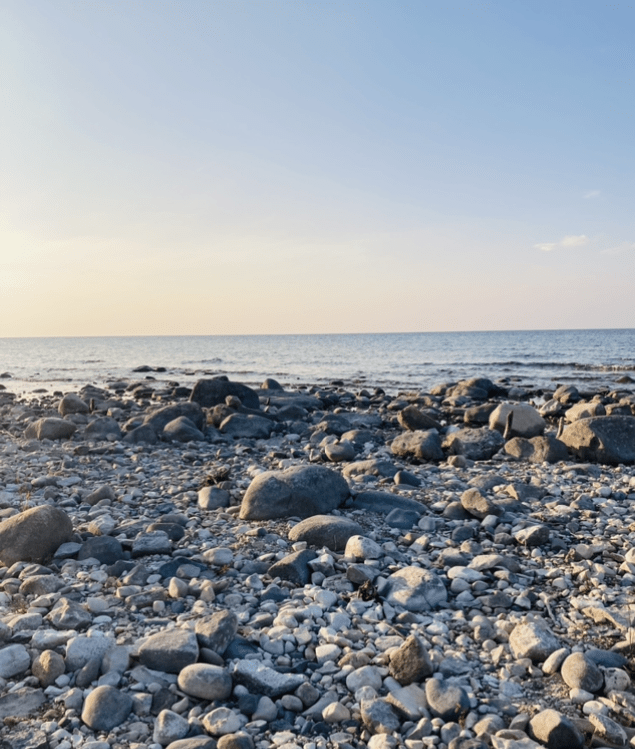
As my sister and I hunched over the rocky shoreline near our campsite, pecking around for pretty stones, we talked. About heavy things and about light things. I watched the way she sought out round, flat stones, the way she stacked them in little cairns everywhere we went. We visited several beaches, and she left these in her wake everywhere we went. I could see in them the precision and care that has always been part of her character, the artistry in both the selection of stones and their deliberate placement, their balancing. I could see the way this activity both calmed and delighted her. I loved the way we were able to fashion for ourselves this time in which to be calmed and delighted near each other, by each other.

The way the campground is situated at the tip of the peninsula meant that we had the perfect view of both sunrise and sunset, partially over the water, and partially over the rocky shoreline. I think about that now, this perfect positioning, this sense of being precisely between one thing and another. Certainly, it means something different for everyone who finds themselves there. For me it was a vantage point, from which to consider what’s next, as I move between the safety of stillness toward the safety of growth, even though I know I can never solve for all the variables.

Love, Cath
On Curiosity and Conversation

By Catherine DiMercurio

How strange that September is beginning is a thought that chirps through my brain these days. This time of year is so laden with transitions it is easy to feel unprepared. The loss of light has been startling, and though temperatures have spiked this weekend, there has been a coolness to the nights and mornings that smells of autumn. The softer light and cooler air touch your skin differently. I don’t mind grabbing a sweater.

There’s much to love about what comes next, but for me, each season always feels too short (except for winter). In this space, I’ve written often about transitions and transformations.

Sometimes transitions sneak up on us the way fall does. Softly but inevitably. Not urgently, but with a quiet sureness. And internally, we feel ourselves needing to recalibrate, wondering how we hold on to the best parts of one season as we enter another.

I think of what I’ve been loving about summer and how to carry that into fall, despite shorter days and cooler temperatures. I no longer have the busyness of shifting from children’s summer vacations to back-to-school, so the seasonal shift is gentler than it used to be. But it can feel jarring, nonetheless.

At a farm stand in Ann Arbor, I bought a small watermelon, some peaches, and a couple of apples, and I thought how wonderful September is, that it encompasses all this, that it is summer and fall, in conversation with one another.

It’s easy to think in terms of conflict, where we focus on the ending of one thing and the beginning of another, and the summer people and the fall people on social media are either lamenting or rejoicing. It’s easy to look at our own apparently competing desires as an equation to be solved, where the variable, “x,” will equal something when we’re done figuring it out. We will do the math and the result will be an answer to the problems that plague us, to the what-iffing we do about both the past and the future. I’m curious about the conversation between the “this or that” scenarios we paint for ourselves. And how, amid all this contemplation, do we sustain an attachment to the present moment? How do we position ourselves fully in who and what we are right now, when we are so busy trying to solve the past and anticipate the future? We fixate on healing and learning from the past, on preparing for a future we can’t possibly know, but we try to know it anyway. Meanwhile in the present we are trying not to disappear.

Maybe the problem starts when we are little, when we are constantly being asked what we want to be when we grow up, and do we have a girlfriend or boyfriend. Why do people do this to children? This felt like a fairly common practice when I was a child. The goals were laid out definitively for us, even if we were unable to articulate them as such as elementary schoolers. We were not even allowed to live in the present as eight-year-olds. It’s no wonder it is difficult to do so now. The messaging we got from so many angles was that the whole point of life was work and a partner. So when one or both of those things don’t work out how we planned, of course everything feels scrambled. And even if everything goes according to plan, many people still find themselves with a persistent “now what” sort of feeling, since everything they’ve pursued has been external.

These days, I try to train myself to savor the current moment and it has meant a certain type of negotiating. For me, being able to fully experience the present means that I must stop trying so hard to eliminate anxiety about the future or analysis of the past. I don’t want to fight myself anymore. It’s exhausting, and it has begun to feel uncomfortable and disingenuous to wish I was different than I am. For me, the thing to do is to focus on what else is also existing right now, amidst the familiar habits of worry and rumination. Can I shine a light on it? Is it excitement? Hope? Curiosity?

I feel as though the path, for me, is peace-making with the parts of me that admittedly feel in the way sometimes. Maybe instead, I should listen to what they need to tell me, listen with a compassionate ear for hearing, not solving. Maybe if I simply say, I understand your concerns. It’s normal for you to feel that way, they will feel heard. They won’t have to shout anymore because I’ve stopped trying to ignore them. And they’ll stop feeling like I’m trying to figure them out of existence. In a way, given that anxious tendencies develop from vulnerable parts of ourselves, we have to be as patient as we would with a child, and sometimes repeat ourselves, with kindness and empathy.

Then, perhaps, once they quiet down, I can listen to the other parts of myself that don’t always get the attention, the quiet ones, who say softly that things are good, that there is much to delight in, even amidst the anxiety. They remind me to trust myself. To be curious and have fun and to not forget about open-heartedness.

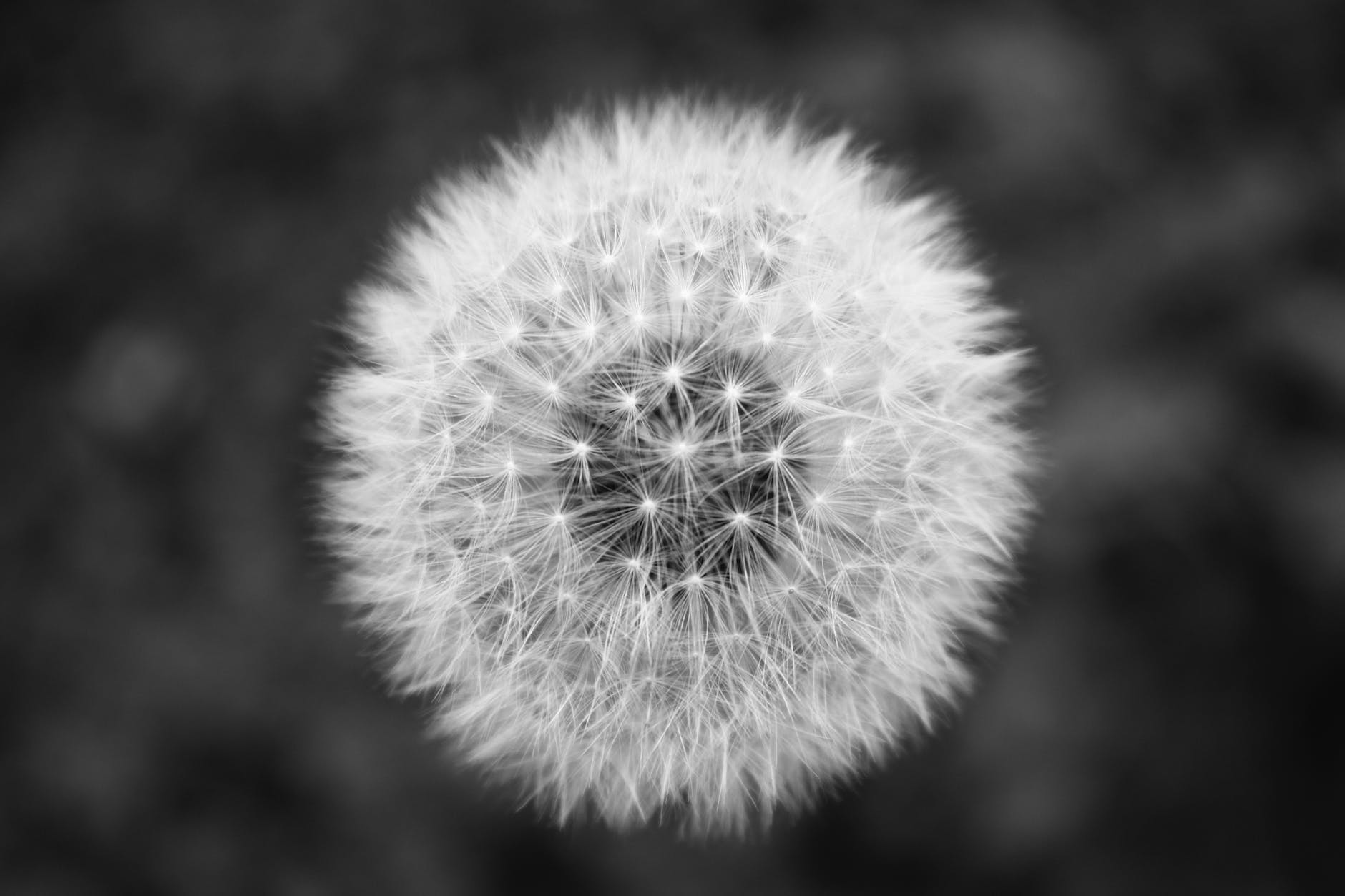
Though I sometimes must remind myself to be playful and silly, I never regret it, and it always connects me with that curious, light-hearted, open part of myself. My son tips me off to the best boxed vegan mac and cheese, and I splurge and buy 12 boxes so I always have something yummy and easy on hand, childhood comfort food. I giggle as I feed my dog bites of ice-cold watermelon and he nudges me for more, his whiskers tickling the bare skin of my summer-brown knee. I sing along to the radio on the way home from pottery, windows open, bright light from the full moon shining down. I make wishes on dandelion puffs. I play with the waves at the beach.

Photo by Jack Hawley on Pexels.com

I remember how to do this, to be delighted, to give this part of myself a seat at the table. But usually, she doesn’t want to sit still. She is laughing and playing freeze tag in the back yard with her siblings, running through her father’s perfect lawn in her bare feet, not minding that she’s “it” again. She is me, I have to remind myself sometimes, and our lungs are full of waiting wishes.

Love, Cath

On Joyful Moments, Good Light, and All Our Selves

By Catherine DiMercurio

Sometimes I reflect on how this blog began, and the name of it. My dog had just died and I was about a year and a half into a new relationship. I was feeling broken hearted and open hearted at the same time. The relationship ended several months later. I took a few months off from dating, then hopped back into something new, which also lasted about two years. Now, that relationship is two years behind me. I didn’t hop back into anything, and another of my sweet pups has passed.

Since that death there have been times over the past two months when it has felt as if things are slowly sliding down a muddy slope. I have struggled to get my footing and little and big things seem to be going wrong. I look everywhere for signs, for tiny joyful things, so I may imprint those things on my heart in an effort stop the mudslide, give me something to hold on to. I know from experience that it is an effective practice, but like everything good for you, it takes consistency and hard work to keep looking. And the more things that go wrong, and the bigger the things, the harder it is to see anything else, harder to feel open hearted in a world full of sharpness.

One of the good things about me is that I like routines. I’m trying to make sure I’m moving more and I bought a pedometer to better monitor myself. Sitting at a desk for 40 hours a week not only has its own detrimental effects but has dulled my ability to gauge how much or little I’m actually moving. Now, my habit is to walk the dog in the morning, take a few breaks to get some steps around the house throughout the workday, then walk again, solo, in the late afternoon or evening. I feel so much better when I do this.

But being a lover of routines has a downside too. It can be hard to try new things. There are a million reasons why I adore the safety and predictability of routines, but basically it’s a combination of how I’ve always been, and what I prefer in the aftermath of some of the roller coaster relationships I’ve been in. Routines keep me writing every morning, keep me and my dog healthy. But breaking them to try other things can be a challenge. Though, trying the New, Big Thing of pottery a year and a half ago was my proof to myself that I can change up the routine and it can be really good for me. And it still feels like a New Big Thing, even though it has been incorporated into my routines.

Routines can also lead us to so many happy moments. My writing practice never fails to ground me, to keep me connected to my self, and to big ideas I want to explore. The quest for little happy moments was most recently undertaken in the aftermath of a storm that resulted in some expensive roof damage. I had been feeling particularly low. But on a routine walk with my puppy Zero, we were led to a beautiful toad. The toad moved in such a lopsided fashion, a half slide, half hop into the grass at our approach that at first I thought it was a wounded bird or something. A good portion of my joy at discovering the toad was seeing that it was an alive-and-well someone instead of a wounded someone.

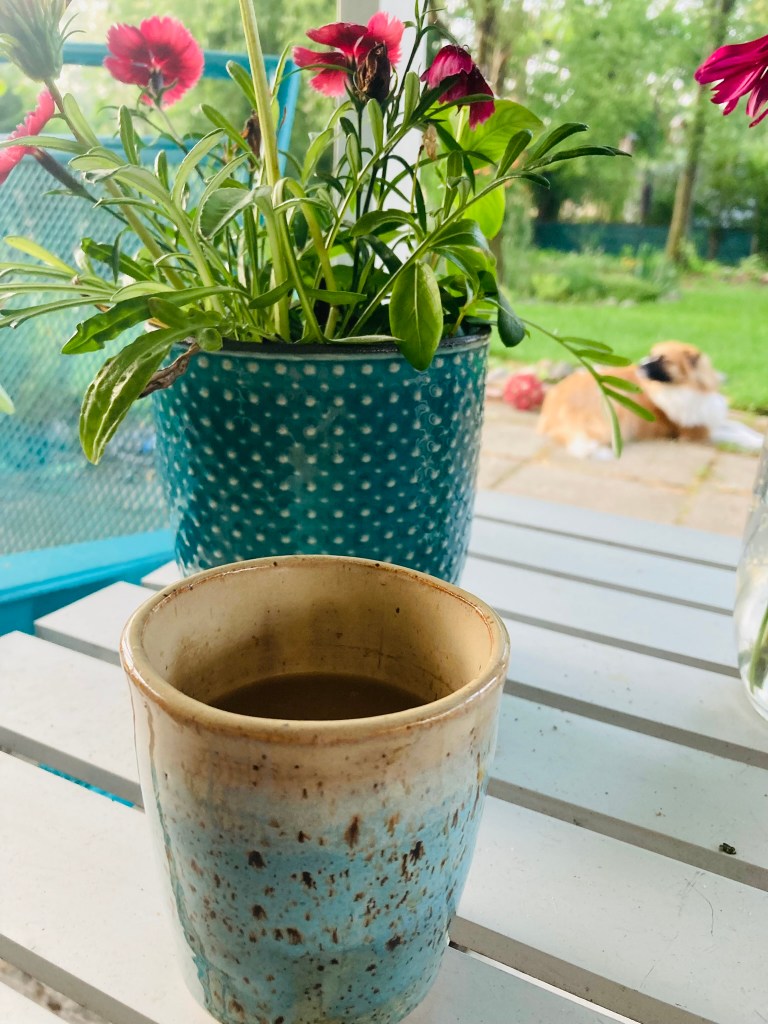
Other little happy moments that happened recently also occurred as my morning routine unfolded. I typically begin the day with a cup of coffee on the patio when I let Zero out. Yesterday, I was drinking coffee from a mug I threw and trimmed and glazed myself. The coffee contained a drizzle of cardamom simple syrup, as I’m obsessed with cardamom these days. I was surrounded by flowers, including a pretty pot of them given to me by a good friend. It was one of those moments, one I wanted to capture and imprint upon my memory for when times are tough, so that I could draw it like a card from a deck and say See? You felt good and happy and peaceful that morning. This morning too, as I stood on the patio looking out into a pale and hazy morning sky, I was surprised to see an enormous waning gibbous moon. I once wrote about that particular moon phase being my favorite, and it was a delight to see it there, perched and oddly bright in the morning sky. It was such a strange, good light, and I’m glad I took the time to bask in it.

I feel like our brains are constantly shuffling the deck of memories. A song will retrieve a memory so long ago and so good that it bruises you to remember how lost and faraway it is. A smell will bring forth another memory of a kitchen full of people you love, and you will smile. The tough memories get added on their own without any effort. I’ve read that our brains imprint—sear?—bad experiences into our memories as a protective mechanism, but good memories are not written in the same fashion. Though, what greater protection from bad memories is there than good ones? It’s a strange way for our brains to work, but if we want to make protective charms of the good memories, we have to do that work ourselves.

One of the beautiful parts about these little happy moments that we’re trying to imprint upon our brain as memory is that there is a lovely now-ness to them. Somehow noting them as they are happening opens up a pocket of time-space and lets the moment exist for longer than normal. Such moments are as much about future enjoyment of the past as they are about the present. Isn’t it amazing how they can exist and extend in all those different directions?

Still, when things are bad, at least for me, my tendency is to resist seeing things, anything, in a good light. I have to heavily lean into the part of myself that knows what to do, to trust her to pull us out. To take us for a walk, to reach out to a friend, whatever it takes. When I feel clearer-headed, I can see that the part of me that knows what to do knows because she fought for this knowledge. She worked like hell to build the scaffolding for us, to make sure we always had a way out. She helped get us out of bad situations and the unhealthy mindsets that went along with them. When things start to get bad, my thoughts become a mantra of “I don’t know what to do.” But, we have always figured it out. I hope, as I’m building this muscle memory, I can catch myself sooner and sooner each time and remember to trust and work with myself instead of against, to have all the disparate parts of myself pulling together and being a team. One part of my brain looks for the good, joyful moments, another does the research and finds the answers, another knows when we need to get out of the house or talk to a friend. And they all comfort the scared part that is worried about all the bad things that could happen.

Sometimes I wonder what it’s like to have a brain that operates as a singular unit, not a crowd of selves constantly in dialogue. But this is the brain I’ve got so we’re going to keep learning, keep talking, and keep growing. I’m off to jump into my next routine of the day. I hope you have a good one, full of happy, collected moments and good light.

Love, Cath

On Swimming in the Sun

By Catherine DiMercurio

Sometimes I just want to write about the sun, and the way, after so much chilliness, so many grey skies, it soaks into skin as more than just warmth, weighing more than light. I want to write about the way, no matter how many times I’ve written about pain or healing or difficult times, what I feel often, weaving through moments and days, is a sense of peace, warm and substantial as that sun. I want to talk about the way over the past two years, I have cleared away the debris of several past relationships, and set up camp within myself, creating the cozy, safe place I’d been longing for.

I write often about the things I’ve been working through over the years because it’s such hard labor, hauling away the remnants of collapse. And it helps. It helps me to talk about it and I believe it helps people who visit this space who might be going through similar things.

I don’t live in a rural area but a creek cuts through township where I live, and it feeds a larger watershed. The creek runs along the backyards of the houses across the street and in the neighborhood we see more wildlife than I expected to. Last night at dusk I heard an owl and this morning, geese. I routinely see deer, ducks, and groundhogs, as well as the expected neighborhood critters, like squirrels, skunks, racoons, opossums. Once there was even a heron, looking out of place in someone’s driveway. I love seeing and hearing this wildlife, though I always have the guilty sense of us invading their space rather than the other way around.

But there is pleasure in seeing these creatures in the unexpected place of this suburban neighborhood a stone’s throw from a big city, just as there are unexpected pleasures of working through the difficult challenges I often write about. I so often find surprising pockets of quiet in this busy neighborhood, and I am finding them more often in my mind too, much more often than when my bruised heart navigated one troubling relationship and then stumbled into the next before it could catch its breath. I was always looking for someone to feel like home, to work with me to establish the peace and connection I so craved. Of course I heard the messages of how you have to find these things in yourself before you can find them in another person. My sense at the time was something like, “yeah, yeah, I’m sure they’re in there somewhere.” But I wanted the solid, physical manifestation of those things—home, peace, connection—in another human standing right in front of me.

When my last relationship ended, I remember having the sense both that I needed to find those things within myself but also, that if I did, I wouldn’t care about finding them in another person, that I’d stop looking, and that even if I was happy being alone now, would I always feel that way? It was as if I was trying to satisfy my now self and my future self at the same time, as if I didn’t trust future me to figure out and pursue what she wanted. Because I didn’t. I didn’t trust future me to figure it out any more than I trusted now me.

But I knew my now self needed a break. Time.

And in this time, with all the debris clearing and the setting up of camp and taking stock and being with myself, I have discovered so much that I needed to find. While I’m still trying to rebuild a confidence I probably lost somewhere in early childhood, after one too many comments about being too this or not enough that, I have found ways to untangle the knots of anxiety that used to tighten so easily. It’s not gone, of course, and this would be obvious if you talked to the family members and the friends I confide in, but here’s the thing I learned: it’s okay to confide. That’s one of the reasons the knots are loosened is that I have learned to reach out, to receive comfort, to wriggle free of the shame that is so often attached to what society so often perceives as weakness. There is so much strength in knowing when you need to reach out, and acting on that, and so much value in developing those trusting relationships.

I also have found joy again in the delight I take in simple things. I never realized, until I laughed hard, alone in my house, over some silly memory or a joke I told myself, or a hilarious meme, how wonderful it is to not have to put a damper on your own happiness because someone around you is unhappy. I don’t know if I ever learned how to do that in a relationship. I always felt like I needed to mirror the level of happiness my partner felt, as if it would be offensive to be joyful while being near someone who was either momentarily grumpy or definitely suffering in a depressive state. I have found moments of unmitigated happiness in my yard with the dogs, or on a walk with them, as we curiously explore our neighborhood together. I’ve uncovered the thrill of learning the Big New Thing that is pottery. I have also written so much lately, delving in and drafting and revising and submitting, rediscovering how necessary writing is to my sense of self. I feel so foreign to myself if I miss my morning writing time, whether it’s the aimless wander of journaling or the wild creation of a new story, or the focused attention of revision. It’s no wonder, when I so often back-burner-ed my writing in my last couple of relationships, whether due to time constraints or the overwhelming anxiety I often felt about the relationships, that I felt so out of touch with myself. But I’m back, feeling curious and growing and working and writing and creating.

Photo by Guillaume Meurice on Pexels.com

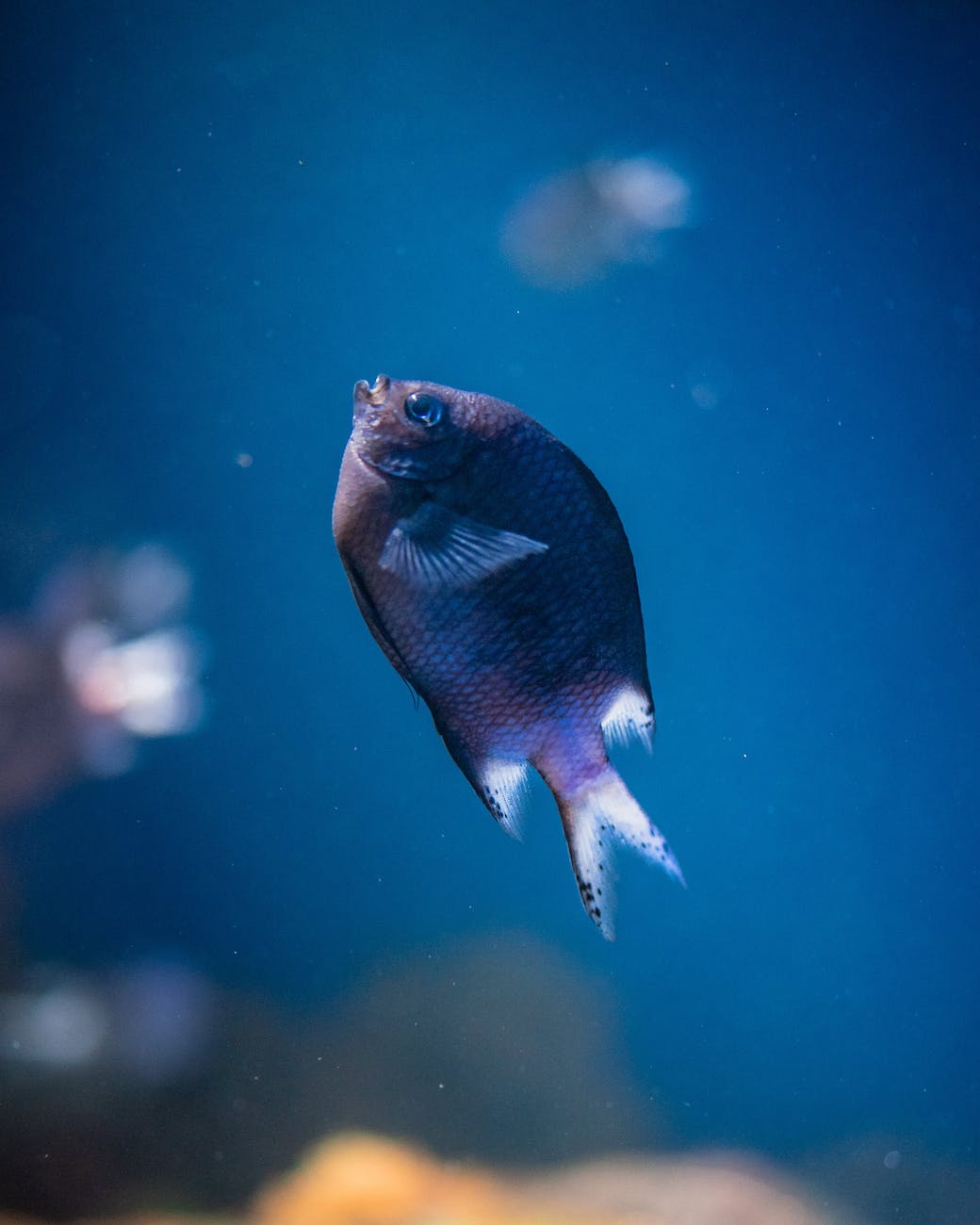
Sure, I feel stuck sometimes, and I write about that candidly, but I also feel like a clever fish, freely frolicking in a big deep lake, swimming to the surface and warming myself in the sun and diving to the depths to explore. That is, I’m embracing a freedom that while scary sometimes is also deeply peaceful and wonderfully delightful.

My point is that for every point I’ve made in this blog about healing and how hard it can be, there is a complimentary point to be made about the reward, the value, the worth of it all. There is always compensation. There is always the awareness that what I’m building is the foundation for everything that is to come next for me.  I’m creating the solid, physical manifestation of the home, peace, and connection I’ve been seeking instead of searching for it in another human standing right in front of me. It’s me. I’ve always been standing right here, but how easily we make shadows of ourselves when it seems like the right thing to do for other people, or because we forgot how to do anything else, or we never knew in the first place. But here we are now, in the sun, at last.

Love, Cath

On the Familiar, Change, and Growth

By Catherine DiMercurio

One of the strangest facets of my existence in the past ten years has been the recurring sensation of unfamiliarity, and how dizzying it can be at times.

When I was married, I enjoyed the feeling that I knew my partner better than anyone else in the world, and I felt was as known to him. Toward the end, that changed, and it began to feel as though he was becoming a different person; the reasons are varied and complex and I have never truly understood how much of that I should allow myself to write about candidly. Suffice it to say that after it was over, I felt as though maybe I’d never known him at all.

In the relationships since, each ended before I’d arrived at the familiarity I craved. I also moved at the beginning of the pandemic, and my youngest went off to college, all of which contributed to the sensation that nothing in my life felt familiar to me any longer. Not my home, not my community, not my solitude, not my self. So much of who we are, at any given moment, feels rooted in place and people. When we look at ourselves extracted from those relationships, it can be disorienting, and it takes a while before we can take advantage of the opportunity it offers.

During my relationships, I was so afraid of loss that I had become someone other to myself, someone who allowed herself to be sloughed off, little by little. I found myself in a dangerous pattern of letting go of little pieces of me, the ones that might get in the way of the relationship succeeding. In the hazy aftermath of it all, after the last one ended, I realized that I did not know how to be in a relationship without this happening. The reason, I began to learn, was that I’d drifted too far from the shores of my own sense of identity. I had forgotten—or never knew—that I was the safe harbor I’d been looking for. The pattern of self-abandonment for the sake of the relationship, for the sake of loss mitigation, had become so familiar it provided its own comfort. It felt easy and good to mold myself into the type of person it seemed my partner wanted me to be. But when things got comfortable, when I was comfortable enough to relax and be myself a little more, it was understandably jarring, and I would back pedal. How much of myself do I get to be, and for how long, became the guiding principles of my behavior. Though there are a lot of reasons things didn’t work out with my past relationships, this is the part that I have to own.

I’ve spent the last two years trying to undo that damage. Some of the rage and grief I still feel over the decade’s losses are rooted in this loss of self—and my own role in it. At the same time, I exist alongside a frustration with time. When I imagine potentially building that sense of familiarity with a new partner, I remember that you can’t create twenty years of history with someone you just met. It’s hard to make peace with what feels, at times, like running out of time. One of the balms for this particular type of bruising the heart experiences is trying to nurture those relationships with friends and with family with whom a history does exist.

But here we encounter another wrinkle. People change, all of us do. And we might find that people who once seemed very familiar to us no longer do, and maybe we don’t seem familiar to them either. And change is such a slippery term, right? It rarely looks how you think it will, in ourselves or in others. To put it more baldly: it hurts. Sometimes it simply hurts to watch people you love become someone else. And our own evolution can hurt, too, when we choose to know and honor who we are. Growth is prickly, painful, and nonlinear.

Sometimes growth is prickly and we long for familiar things we can't have.
Photo by Pixabay on Pexels.com

For a long, long time, the idea that guided my writing was informed by a similar exploration of familiarity and change: do we become more or less of who we are as we get older? Are there essential facets of our true nature that get stripped away or clouded over, or are we growing, feeding that true nature so that it blossoms in a thousand beautiful ways? There is much to think about here, but it seems to me that despite whatever we are doing internally to nurture and protect that truest self, there are external forces acting upon it too. There are people who feed our soul, those who seek to crush it, and those whose aims are more difficult to see, who, for whatever reason, see what is beautiful in us and cannibalize it, because it soothes their own wounded soul. And sometimes we can’t even see it happening, because we are busy being our loving and generous selves. But we are mistaken to believe this is anything other than trauma, and there is wisdom and growth in waking to that knowledge and repairing the damage.

So how do we reconcile this need for familiarity with the fact that everything is always changing? For me, it has become a practice of asking myself new questions. Why am I drawn to the familiar in the first place? What am I truly looking for? The answer is usually comfort. Something needs soothing. All the things that had me craving something familiar—the ending of a relationship, having moved to a new house, my kids moving out—left me disorientated and lonely and I wanted to sink into something that felt like being held. But there was nothing to hold me, so instead, I sifted through old familiar things, held them: photos, books, trinkets in jars, stones from beaches gathered on trips I’d taken with my children.

But one of the most amazing things that has happened in these past couple of years is that I’m learning to accurately identify what I’m longing for and how I can soothe that longing. Not everything that feels like loneliness is loneliness. Sometimes, when the hum of routine has me feeling under-stimulated, I’ll seek out art, nature, company. Sometimes there’s too much happening, and all I want is for everything to slow down, so I’ll do something slow, like bake, sit in the sun, read a book. When I’m longing for connection, I’ll reach out to the people who understand. And sometimes I do genuinely feel lonely and I let myself feel it, knowing that it is a price I willingly pay for peace.

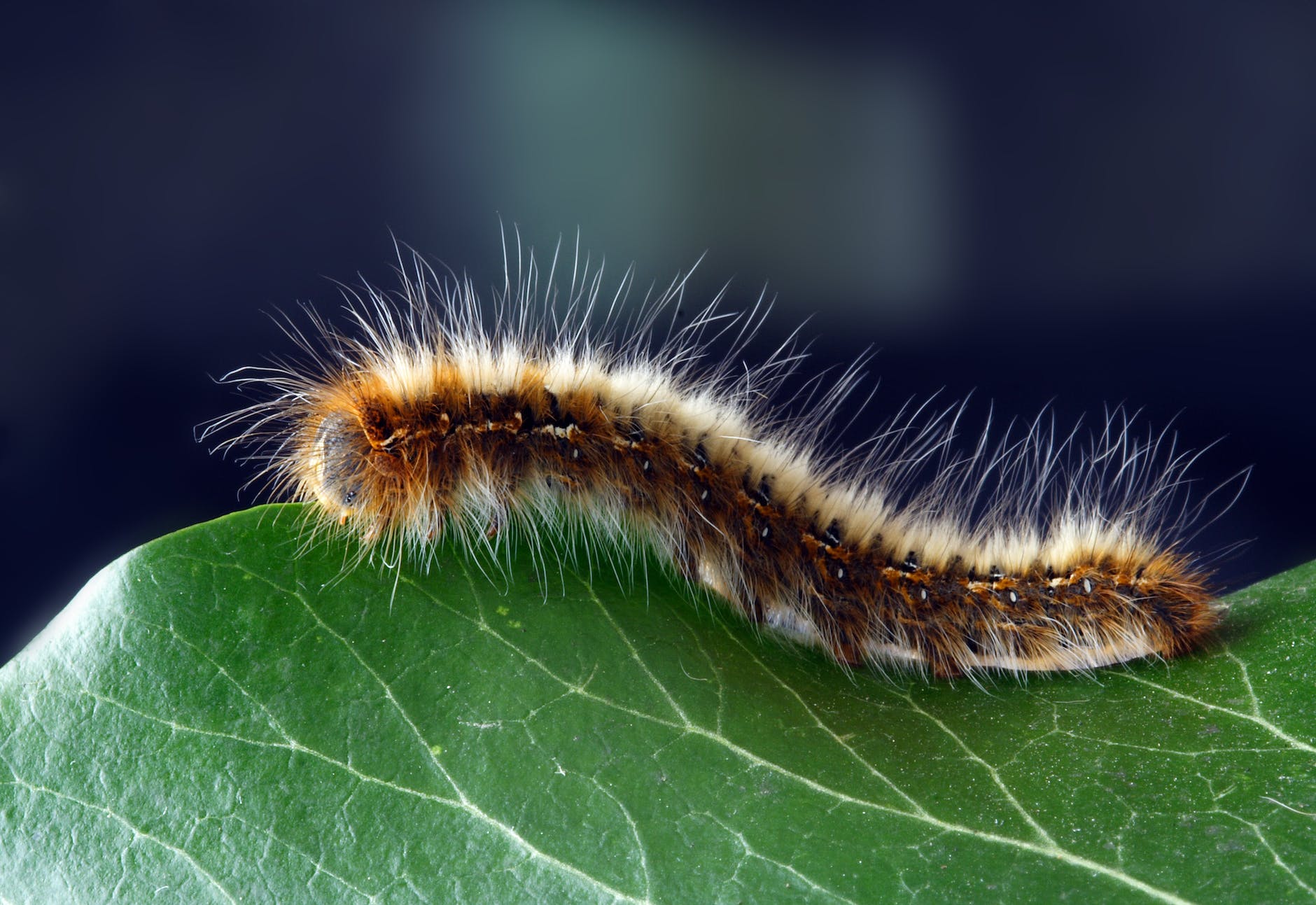
I long to layer all this thinking with some kind of metaphor that captures the feelings I want to convey, but it’s hard because change isn’t always for the better, doesn’t always seem to lead to growth, not when we get stuck in certain patterns. It’s like going through all the trouble of dissolving ourselves in a chrysalis but never becoming a butterfly, when sometimes all we really want to do is be a caterpillar anyway, happily munching on leaves all day. Maybe we do the whole thing over and over again in a lifetime, or maybe we’re always part caterpillar, chrysalis, and butterfly, all at the same time, with different parts of us transforming in different ways. I think though, at the heart of it all, is a truest self, always longing to be seen, to show us the familiar and changing way back to ourselves, lighting the way like a little firefly in the night.

Love, Cath

On Home and Hum

By Catherine DiMercurio

My home is full of rocks, pinecones, driftwood. Whenever I visit a place that gives me that particular feeling, the one that makes my cells sing, I snag a memento. It’s not just bringing the outside in, it’s trying to maintain a particular hum within myself even when I’m away from the places that strike that chord.

For the past several years, I’ve thought a lot about home and belonging, in ways I’d never imagined I’d be contemplating. For a long time, it didn’t occur to me to wonder how we attach our psyche to a certain place, or why. But I’ve been experiencing, for the past decade, almost, what feels like a great untethering. The bonds I have with my children will never be undone, but so much else has unknotted, leaving me free to discover myself in new ways, but also creating a sense of perpetual drift.

I’ve made this home cozy, this place I’ve landed for now. But this was a place of convenience, a place I moved to during the pandemic because I needed to move, and it was affordable, close to my then-boyfriend, close to where my kids had gone away to school, and close enough to an office I’ve been back to about twice since the pandemic began. It will soon outlive its purpose, has already outlived at least a couple of them.

Here’s the thing: if/when I move again, it will be one of the few major life decisions I’ve made completely on my own. I’ve got proximity issues and financial boundaries that will guide my decision, but there aren’t any compromises to be made with regard to what anyone else wants or needs out of this potential move. It’s not nothing. It’s a big something, which is why I’ve been trying to tweeze apart all the strands of what matters. And what I want more than anything is to feel at home, to feel like I belong in the place where I land. But what does that mean? How do I find it?

As I look at what it means to feel at home in a particular place, to belong, I study the places that have felt like home in the past and try to deconstruct memories so I can put it all back together with the pieces I’m working with now. At the same time, the versions of myself that felt at home in those places no longer exist.

I had a childhood friend whose grandmother had a cottage on Lake Huron. Once, I was allowed to go up north with her and her family to visit. I was about ten years old. I don’t remember much, except that it was stormy out, and we were inside, staring through a bank of windows out at the lightning and the rain dancing across the waves. I was transfixed. Transformed. I don’t have many memories that seem etched so clearly into my consciousness, but I know that our brains encode emotionally powerful events differently, so I’m certain that the fact I can retrieve this memory as easily as pulling a Polaroid out of my back pocket underscores how much it mattered to me.

It was because of events such as this that I began to build the wish to someday live by the water. Over the years, the picture of what this might look like, and who might be with me, has changed, but the essentials have remained the same. I always imagined having a summer place up north the way so many Michigan families do, but without a cottage that has been in the family for generations, or without a second income, the idea that I could own a second home is not within the realm of possibility. But lately, as work has shifted to a hybrid, largely from-home situation, a new idea began to take shape. Maybe I could purchase a year-round home on the Great Lake closest to me, and still be near enough for a monthly or so in-person visit to the office, which is all that’s required of me. Maybe this could be a different version of my childhood dream, one that I could conceivably execute on my own. Certainly there are a lot of factors to consider and I’m a ways off from making a decision. But recently, my son and I took a reconnaissance mission to a lake town that seemed like a decent prospect.

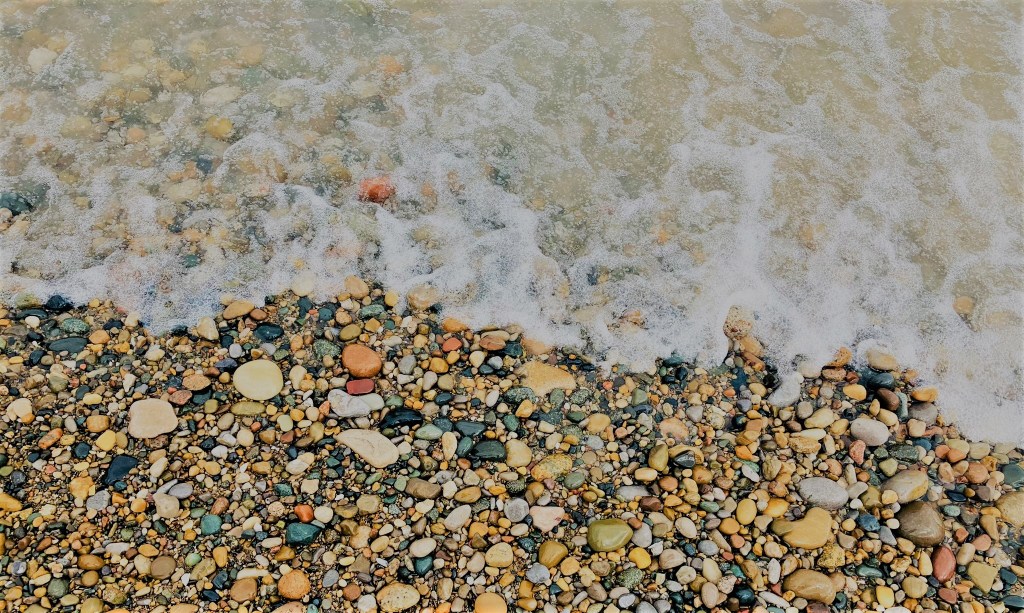
We drove to a small town on the east side of Michigan’s thumb. The town is perched on the coast of Lake Huron. The tiny downtown is home to a beautiful old library with a stained glass window featuring a pair of bright green dragons. Most of the little shops were closed for the season or had reduced hours in the winter, but I could tell that the vibe was cozy. There was a marina, but we couldn’t get right down to the water, so after driving around some neighborhoods, we stopped at a nearby county park so we could spend a little time on the beach. It was the last day of February and was relatively mild though the wind had a chill to it. As we headed toward the water, we could hear the waves crashing on the beach. Instantly, tension I hadn’t even realized I’d been carrying in my chest dissipated. I found myself sighing and smiling as we approached the water. The waves lapped at our boots. Most of the sandy beach was covered in snow. But at the water’s edge, the churning waves were busy polishing beautiful stones, rounding off all the rough edges and leaving a swath of smooth little worlds, a multicolored universe for your eyes to take in each time the waves recede.

As always, whenever I’m near one of the Great Lakes, I hunt for Petoskey stones. I’ve never been able to find one before, though both of my kids have. No matter how diligently I have searched in the past, I’ve never been lucky enough to spot one. But that day on the beach, I did. I found one. I didn’t believe it at first. I whooped with joy and showed it to my son, then later sent a picture of it to my older kiddo, both of whom confirmed it was indeed a Petoskey.

As we walked back to the car, my thoughts churned. How was I going to do it, I wondered. And when? How could I actual bring the dream of living someplace like this to fruition? Should I? Could I? Wasn’t the finding of the Petoskey a sign? As we sat in the car, sipping our coffee and warming back up, I tried to unpack my thoughts and feelings with my son. “I have to figure this out,” I told him. “It’s a good dream.” He agreed, but I repeated it anyway, and suddenly I began to cry, though I hadn’t expect it and wasn’t exactly sure why it was happening at that moment. The tears didn’t last long, but the impact of that moment is still with me. Moments like these are evidence. They are our intuition, our gut, our true selves, insisting on what it is they want and need. Aren’t they?

It is so easy to rationalize things. To say, yeah, it’s a nice dream but the logistics don’t make sense. Or the timing isn’t right, and probably won’t be for some time, if ever, because, because, because. But I have this reaction whenever I’m by one of the Great Lakes. I had it over the summer when I camped in the Upper Peninsula. I had it when my sister and I escaped to Lake Michigan a couple of summers ago. And I had it when I was a child, staring out at Lake Huron as young child.

It’s easy to just keep making the way things are now work. To tell myself the dream is just a fantasy. To tell myself I can have it in pieces, in periodic visits to any one of this state’s beautiful lakes. Maybe it’s more special that way anyway.

There hasn’t been a time where, being near one of the big lakes, I haven’t been deeply and powerfully moved, to my core, and filled with great peace and magnificent energy at the same time. I’m certain the lakes have a similar effect on most people. But I can know only the interior of my own heart, and when I feel this tug of the water, it feels like it matters. Deeply, to every version of myself I’ve been and will be.

I have spoken before of all the erasure that happened at the time of my divorce, where I saw my future evaporating in front of me. It was as if memories of things that hadn’t happened yet were being siphoned from my consciousness. Each time I began a new relationship, each day that it progressed and still seemed full of hope, I tentatively began to imagine a new future. Is this it?, I would wonder. Is this the size and shape of it? And with each ending, the erasure began again.

To not be able to see any of what the future might hold, to not be able to imagine it the way I used to, feels the way heights or deep water feels to me—vast, threatening, frightening. (Ironic, no? The way I long to be near an enormous lake and yet the thought of being in deep water is so scary? I can’t explain it.)

My past has taught me that there is so much you can’t count on, so much that changes regardless of what you planned for, so it’s usually best to not be too wedded to those ideas. Maybe that’s why I’m resisting myself, pulling away from the dream as soon as I’m away from the water. As much as it comforts me to have a hazy outline, a plan that’s adaptable, a goal to work toward, I am afraid to claim it, when so many other things haven’t worked out.

Maybe, at the heart of it, I’m scared that I can’t trust myself to carry it out. Maybe I’m afraid that I’ll betray myself by failing to get there.

In the essay “Self-Reliance,” Ralph Waldo Emerson writes, “Trust thyself; every heart vibrates to that iron string.” The line keeps coming back to me. At times, we feel out of sync with the world around us, and then we find ourselves in a place where everything feels in tune, where we are a plucked string whose vibrations are in harmony with everything around us. When we are seeking answers, or trying to determine what path is the best one for us, how can we ignore that cosmic hum? How can I? Is it so hard to believe that I can get us there, me and all the other versions of myself who have longed for it?

Do you ever feel like you already know the answer you’ve been looking for? Or, you assume there must be something wrong about the dream because the path is so unclear, or there are things about the journey that frighten you? I don’t know if I have my answer or not. Have I been carrying it with me this whole time, like a little lake stone in my pocket? I’ve been trying to write this post for days. I keep clumsily getting in my own way. I don’t know that I’ve gotten it right. I’m still trying to peer through the clouds, listening beneath the wind for that hum.

Love, Cath

On Vulnerability, Lessons, and Learning

By Catherine DiMercurio

Lately, I’ve been thinking about lessons, and the ways we learn and remember. Maybe it was because I had to spend some time thinking about whether I’d invest in another semester of pottery, or because I recently got to spend some time with my math teacher sister.

I was talking to my sister about one thing, and then suddenly, as we were driving home from a hike, I realized I was talking about something else, my old boyfriend. As I recounted an incident that underscored what had gone wrong in that relationship, I realized that I have become a student of my past. In so many ways, this has helped me to understand the way I respond to the world around me. Yet, there are some experiences I revisit without intending to. It is almost like reciting a memorized piece, a prayer, poem, or song, the way I chronicle the events and their consequences. It is as if part of me is determined to always have certain things known by heart, as if only the periodic reminder of what and how something hurt will prevent it from happening again.

Can we protect ourselves and still be open hearted? Is this a binary situation or do we flow between those poles? A Venn diagram maybe, and somewhere in the middle of two intersecting circles is a state where we’re both open eyed and open hearted.

Remember when we were children and we had to memorize multiplication tables and spelling words? I recited things back to myself over and over, even after pop quizzes and tests, worried that I’d forget something. A memory floats back to me of sitting in my parents’ car, a stick-shift van of some sort, in our driveway. My mother was in the driver’s seat; she hated to drive that car. We were talking about a word I’d gotten wrong on a spelling test. I must have been in first or second grade. The word was “ladder,” but I’d spelled it “latter.” I was so frustrated; I’d sounded it out and everything. I don’t remember exactly what my mother said, but the memory is suffused with her gentleness. She repeated both words, emphasizing the different letter sounds of the d’s and the t’s to help me hear the difference. I don’t know why I was so upset by one wrong word on a spelling test, but any kind of test always created a feeling of urgency. It must have been after this that I’d started memorizing everything.

Photo by Markus Spiske on Pexels.com

Even then I was forming and performing the pattern of memorization as a means of avoiding the discomfort of “failure.” [I would later spell the word “oxidation” wrong in the spelling bee, thinking there must be a “y” like in “oxygen.” I would always stumble over 7 x 8 for some reason, and the 12s were always hard.]

Now, I instead of spelling words and multiplication tables, I play out remembered scenes in my head, conflict with past partners. To be clear, this study of the economics of emotional vulnerability was necessary work. In trying to understand why my willingness to be vulnerable and honest with a partner was not reciprocated, I realized that my response to what felt like rejection was to attempt to prove my worth through my ability to be accommodating. But, those equations didn’t add up. And now instead of trying to remember 12 x 9, I know by heart the way my emotional vulnerability and honesty does not equal a healthy relationship when multiplied by 0.

I tiptoed into one aspect of vulnerability again with a brief foray back into online dating. I had a small spark of hope and interest in someone for a little while, but the conversation revealed that I had good reason to keep my guard up a bit. I know that in a way, dating is just like submitting my fiction to literary journals, and that disappointment is common, and you can’t let it dissuade you. But my heart is on the line in a different way in the dating world and I find that I’m more reluctant to keep “putting myself out there” in the face of disappointment than I am with my writing. Maybe this is a lack of bravery, a fear of getting hurt, but it is also fatigue, and a growing sense that maybe it doesn’t matter that much anyway. It is hard to imagine that I will ever simply stop writing and seeking publication; it’s much easier to imagine that I’ll stop looking for the relationship that I once believed was just as important as my writing. Some people say that’s exactly when you find someone—when you stop looking. Other people say you’ll never find someone if you aren’t looking.

Right now, I think I’m going to have to trust that as I explore the boundaries of vulnerability and safety, I’ll be open to the possibility of meeting someone should the opportunity arise.  And that in living my life and exploring my interests, I’m creating opportunities.

What I’d like to do in the meantime is let go of the feeling that lessons must be recited, memories re-dissected, in order for the learning to stick. Life isn’t spelling tests and multiplication tables. There is no pop quiz, but sometimes it feels like there is. Scrolling through a social media feed, I see pop psychologists informing me of the things I need to do to recover from the wounds of past relationships. It’s as if there’s a way to tabulate the self-knowledge gained and unless you can do a presentation for the class on your attachment style and inner child work, you’re not getting an “A” and graduating to “healed” and “ready.”

But I don’t want to do it that way. While I don’t want to miss out on guidance that might help me, I am also fatigued by input, from advice snippets on social media, from the few chapters of self-help books I’ve been able to get through, even from therapy, though that has been vital to me over the years. Do you ever have the sense that everything you need is right in front of you, but the more you listen to other people the harder it gets to put it all together?

Here’s something I haven’t really thought of before: maybe I will intuitively know when I need to seek help. That I can’t “miss out” on guidance that will help me because if I need it, I’ll go looking for it. I don’t have to leave the faucet on, letting a steady stream of help wash over me.

Ralph Waldo Emerson says, “There is a guidance for each of us, and by lowly listening, we shall hear the right word.” I think again of a Venn diagram, this time of our inner voice in one circle and the competing voices of every place and person we’ve turned to for advice, or that has offered it in some way. Maybe there is some amazing overlap at the center where we trust ourselves but also are doing some appreciative “lowly listening” to the outside world as well. I think it’s a little dangerous to think we have all the answers ourselves, but it’s just as harmful to think that we don’t have any, that our own intuition, experience, and introspection is less valuable than the flood of information pouring down round us.

I think, too, that sometimes we create our own noise. We’re reciting our lessons, the ones that are supposed to help us, the ones we can’t forget, and maybe that mumbling recitation becomes part of the static we hear. One of the hardest things about self-trust is believing that what we’ve learned stays with us, that it is a part of us, and will be accessible when we need it. Maybe the lesson learned about a past relationship won’t be quite at our fingertips the way we want it to be, in a new relationship, but we can pause. We can check our spelling and verify the math. Because even if we don’t remember the order of the letters, or can’t quite recall the equation, we do know when something sounds off. We ask ourselves, wait, is that right, is this adding up? The trick is to expand that moment, to slow down and take the time to check. And that might also be the right place to reach out if we need to—to a therapist, a friend, a family member—and go over what it is that’s troubling us.

Some days, I’m reveling in freedoms I couldn’t comprehend when I was tumbling from one relationship into the next. I feel at times like I’ve had the best and worst of three worlds. I know what it is like to love someone for years and years with every single cell of my being, and I know what it is like to be betrayed and devastated by them. I know what falling in love with a new person is like, and I have fully felt the pain of those endings, the dull, persistent ache of realizing that the hope of reshaping your life with someone isn’t going to work out, again. I know the giddy glow of finally getting to know and love myself, and I know how the loneliness swoops in at a rush, extinguishing the lights and leaving me low. And I know that it departs swiftly and mysteriously these days. The only thing I don’t know is what’s next. But I’m curious.

Love, Cath

On Stories, Journeys, Maps, and Signs

By Catherine DiMercurio

Sometimes, all we want is a sign.

Recently, I wrote a short story with a happy ending. Or, more accurately, I finally wrote the happy ending to a story I thought I was done with. I write a lot about broken relationships and wounded people who are trying to find their way toward new versions of themselves or new love. I write about them in various stages of this process. I’ve imagined people in their 20s and people in their 80s struggling with different versions of this same journey. The stories end not hopelessly, but with some acknowledgment that the journey is long, and not over.

I’d been revising this particular story, taking a fresh look at it the beginning of it for a workshop. As I worked deeper into the story, I suddenly began to see a richer ending taking shape, one that moved the characters past the moment of not being able to connect with one another. As I read the last scene I’d written, I sensed what was supposed to happen next, able now to imagine these two people drawing on the bravery they both possessed in order to be emotionally honest with one another and finally move toward one another. Maybe it’s less artful now, with its happy ending. So many short stories end in ways that leave you thinking and wondering, and maybe I still won’t be able to place it with a literary journal. It’s too soon to tell. But, either way, I feel as though I achieved something with this story.

I was not capable of writing that ending to the story before now. I could not have written it one year ago, and I certainly couldn’t have written it eight years ago. It’s not that I couldn’t envision such an ending, but I felt stuck in a way, or, unable to unstick the words from my throat. Confused about how to unravel the fibers, comprehend them, and knit them back together into meaningful sentences, though I felt all the fine threads in my hands. There were insights that eluded me, and that I didn’t know were eluding me. How often do we feel that way, that everything is right in front of us but we can’t see what we need to? So often, we make do with what we can. We show up with everything we’ve been able to make sense of and everything we haven’t, because, what else can we do?

Journeys take a long time, and often long stretches happen in the dark. It’s no wonder we want to look for signs that tell us we are on the right path, that things are coming together, that we are getting unstuck. It is easy to notice things that we hope are signs, once we are looking.

(A yellow butterfly crosses your path while a meaningful song is playing. You once again happen to glance at the clock and the time is your birthday. As passcode for a two-factor verification comes up as 123456. A moth patiently waits for you to save it from death by lightbulb and you do. On a dating app, you see a picture of a man with a crow behind him on a fencepost. You see this picture just after you’ve finished writing a story with a happy ending, a story that happens to prominently feature a crow. [Yes, I commented on his crow picture. No, he did not message me back.])

Photo by Alfonso Ramirez on Pexels.com

Often, I find myself believing that there is no “right” path. And if that’s the case, what need have I of signs to verify that I’m on it? There is no timeline, nor a single trajectory that you follow to get from one point to another, from the point of hurt to healed, over it, better. Still, sometimes we feel a sort of peace settling in over scars, like gold dust or starlight, and we feel soothed, sometimes even shining and spectacular. We can notice that things feel aligned, or balanced, or magical, if only for a moment. We can take all of this as validation that we are doing something well, even if there is no right path, no one way to go.

This bears repeating. I find my self craving answers sometimes to specific questions: should I do this thing or that? Is it the right time to take this step? And though I agonize over the details of these questions in my head, when my heart raises its voice through all that clatter it asks am I doing this right? Is this okay? Am I on the right path? Deep down, essentially, all I really want is to know what I already know. I’ve got this. I’m doing this right. Everything is going to be okay. And the feeling I get when I see the things that feel like signs to me is one of peace. The voice I hear is one telling me you’re doing well. I think I’m not actually looking for a sign that I should get back on Bumble or whatever. I simply want to know that the decisions I make – about anything – are well-fashioned out of awareness, and contemplation, and self-trust. Sometimes, what we really seek is the validation that we are doing/living/being well, and that this path or that, while not inconsequential, matters less than trusting ourselves to do what feels true and good for us.

The way forward after the low points in our lives is a blue-veined map across the surface of our souls. We follow paths that make sense at the time, and find our way back to our heart, and we leave again, replenished but uncertain about where we’re supposed to go next.

Autumn is a good season to pause, consider your surroundings. The days are getting shorter but for the moment, there is a pleasant balance between activity and restfulness, at least for a little while. When you think about the next steps you want to take, consider whether you need some time to get to know your own heart again. Take a visit back, refresh yourself. Consider too, if you’re heading out once more, that there’s no one right way. You don’t have to pursue whatever it is the world has told you should have by now. You get to do it your way, and if you find yourself looking for signs maybe it’s because you already know whatever it is you’re trying to validate.

But it’s okay to want the sign. It’s okay to crave the sight of crows settling in trees at dusk, or cardinals leading the way on your morning walk, or days when your favorite number keeps popping up everywhere. Dreams of pets who have passed, or the same old song turning up on different radio stations multiple times a day, the butterfly that lands on your shoulder or the cricket that has hitched a ride in your car. Whatever it is that strikes you as special, unusual, take in these signs and cherish them. Then figure out what it is that your heart already knows. Maybe it’s just waiting for the rest of you to catch up.

Love, Cath

On Windmills and Waterfalls, Dreaming and Doing

By Catherine DiMercurio

Sometimes we have to protect and feed our energy.

I love a morning moon. Recently I stood under a 5 a.m. waning gibbous, after the harvest moon. I’m not sure what planet glowed nearby but between the moon, the planet, the still bright stars, and a symphony of crickets, letting the dogs out that early was quite pleasant. It was good energy to begin the day on.

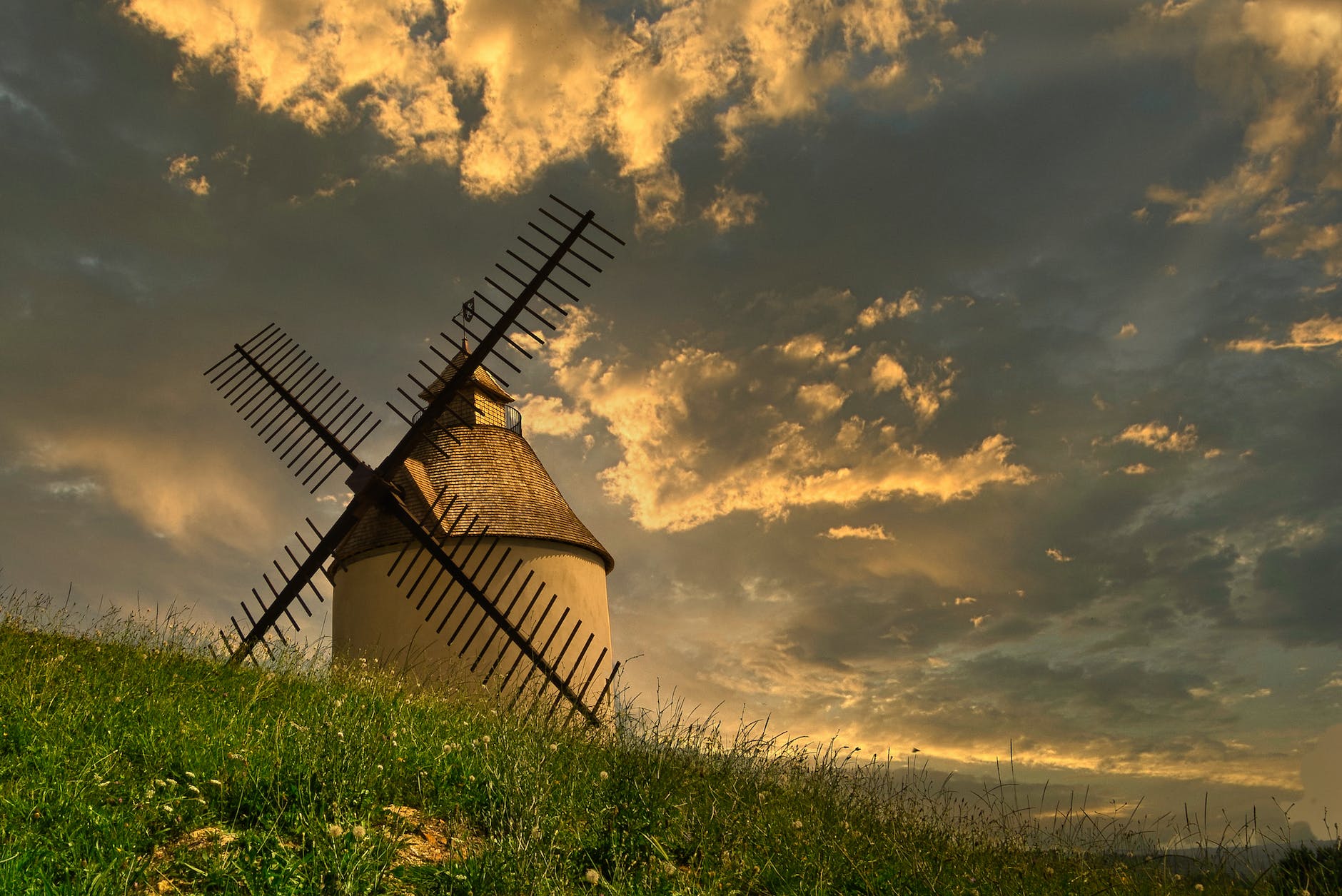
I’ve been thinking a lot about energy lately. My sister recently told me about a dream she had, involving the two of us and a windmill and a waterfall. I feel things churning toward change, as if I’m at some sort of turning point but I haven’t yet discerned what’s next or where exactly I am. I liked the symbols of energy and power she spoke of.

Photo by JACQUES BARBARY on Pexels.com

I’ve had strange dreams about energy as well. One was about electrical cords that were plugged in in strange places, like across the room instead of the nearest outlet, so I was always tripping over them. Another was about a horse. My kids and dogs and I were in the pen with him, and he was alternately restless and bucking, or nuzzling us. Finally, we realized he was hungry, and after we fed him, he was content. This beautiful creature was trying to tell me something simple and urgent, and was getting impatient that I couldn’t figure it out. These dreams left me feeling as though I should be doing something.

On another recent morning, I stood outside at dawn, and white clouds blanketed the sky. I couldn’t get a sense of the sun rising so much as the sky began to lighten every so gradually. And I thought, maybe some transitions are like that. Soft, quiet, and so subtle you don’t notice they’re happening. So unobtrusive you can’t tell where the light is coming from. They are not full of do-ing energy but with be-ing energy.

What is the right balance between energetically pursuing your dreams and patiently waiting for your efforts to pay off? When I look at where I am, what I’m doing, and what I want, it’s unclear where I should focus my energy. Sort of. I am pursuing my writing goals; I’m not yet it a position to pursue my dream of living by woods or water; I’m feeding my creative needs not only with writing but with pottery; I’m maintaining friendships, and trying to be a good dog guardian, and doing my best to be there for my kids to the extent that they still need me to be. But a question mark hovers in the relationship category.

For a long time, I thought if I experienced loneliness, then I was not doing the “being on my own” thing properly. As if I had to prove that solo was perfect and right for me by being fine all the time. But everyone gets lonely. That doesn’t mean I’m failing. Occasional loneliness is a normal thing for everyone, for people in relationships and for people not in relationships. There are going to be times when the feeling crests, but that doesn’t mean it has to swallow us up.

I was hiking this weekend, and while I often find a friend to go with, on this occasion, my usual hiking buddies were busy, so I went alone. I was excited to explore a different part of my usual trail. While doing so, a couple came up behind me. They were walking a bit faster than I was, and to avoid a prolonged period of stalking right at my heels, they said to one another, “want to do a little trot here?” and they jogged past me and got far enough ahead that I wouldn’t be encroaching on them.

When I thought of the ease they had with one another, and having heard snippets of their conversation, I felt a sudden piercing burst of loneliness that brought tears to my eyes. How beautiful to have a likeminded partner to share a hike with, to be so familiar with one another that the conversation flows, and you instinctively communicate with one another on the trail. I thought of my past relationships, and how little we actually had in common in terms of how we enjoyed spending our free time. It’s easy in a moment of loneliness to slide further and further into the past. But I also had the very conscious thought that I did not want to let this bitter pang to continue intruding on my current joy.

I remembered something—a tool to help ground you when you’re feeling anxiety or grief taking over. I knew I needed to firmly root myself into the present moment, the beautiful experience I was having out in the world, not the twists and turns inside my head and heart. I reached out, letting my fingertips skim the bark of a beech tree, and then the next tree, and the next. I took deep breaths of woodsy air, warm and humid on this September morning. I looked down. At my feet was a fallen yellow leaf, of a shape I couldn’t quite identify. It didn’t look like anything around it. I thought it was vaguely poplar shaped, but oddly asymmetrical. I carried it with me, rubbing it between my fingers as though it were a talisman helping me ward off evil.

Because it was. Not that our emotions themselves are evil. But here’s the thing. There’s a difference between noticing/feeling your emotions and having them bond with anxiety in that toxic way they sometimes do. Anxiety distorts our emotions, mutates them. It’s a bad combo. I saw that beautiful couple being awesome in the woods together, and the emotions came at me hard and fast. Grief, loneliness, the confusion of “have I ever had that?” I felt it all in an instant. But I knew anxiety was kicking in when I began to ask the “what if” questions. What if I never find it, etc. That’s when I reached out to the trees for help. We have to know when to reach out.

Funny that I found a little distorted leaf that looked like it didn’t belong anywhere since that’s exactly how I was feeling. It’s like the woods were saying, “you’re not alone.” And that’s also when I realized that feeling lonely doesn’t undermine any progress we’ve made with self-trust and healing. It is simply another emotion. We notice it, feel it, and it’s a good sign when we can prevent it from pairing up with anxiety.

I was pleased that I’d managed to hold onto the good energy, to nurture it. But what of the other energy, the dream energy that seemed to be urging me to do, to act. Was it relationship related? Am I ready to try again? Or is it better to simply be, be me, be open to possibility, to wait and see what happens?

So much of what we want in life, so many of our dreams, are not entirely within our control, so it’s no wonder that it’s confusing when we consider how much energy to put into something. I think we have to listen to what our dreams are pointing us to, but they can be hard to interpret. Maybe the doing my subconscious was hinting at was about simply protecting my own energy. Not wasting it. Feeding it. Maybe it was about reassurance, a reminder to keep tending and keep trusting.

Love, Cath

On Love Letters and Pancakes

By Catherine DiMercurio

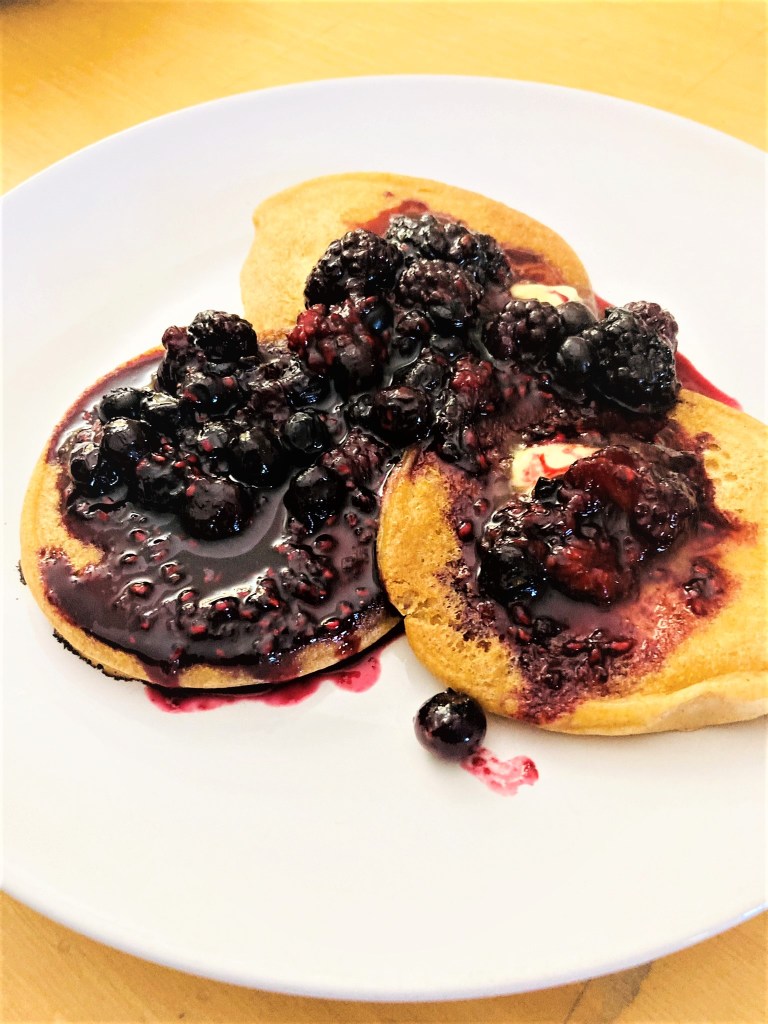
Pancakes are love letters I write to myself on weekend mornings. Yesterday’s were slathered in vegan butter and a syrup made from mixed berries and turbinado sugar, since, shockingly, I was out of maple syrup. I have a long history with pancake-as-love-letter. I used to make them for my family when the kids were little. It was a favorite treat. Every once in a while, if I was up early, I’d make them on a school morning and the kids would be surprised and delighted to have a break from their usual school morning fare of toast and tofu, cereal, frozen hashbrown patties hastily heated, smoothies, or whatever else we threw together. When we’d have neighbor kids over for a sleepover, I could easily be cajoled into making chocolate chip pancakes. All of this was a way for me to say, let me do this for you, make you feel welcome and delighted and full-bellied. Comforted and loved.

Messy but tasty.

Once, when my marriage was building toward its demise, and it seemed like my husband had gradually evolved into someone I didn’t know, who didn’t know me, I made pancakes on a Saturday morning and called the family to the table for breakfast. He sat down, reluctantly, in front of the steaming plate of love letters I’d placed in front of him. “I don’t really like pancakes,” he said. He didn’t even say “anymore,” as I recall. It was as if he was telling me that all along, he’d never liked them, and all along, he’d let me labor under the delusion of my delight in feeding him this treat. All along, what I knew and what I thought I knew were different things. Some seemingly mundane moments like this etch themselves into your soul and you try and talk yourself out of letting them mean too much, but later you are able to understand why it hurt so much more than it “should” have.

Later, after the divorce, after the rebound boyfriend summoned from my college days (for whom I made gluten-free pancakes), my first real new boyfriend spent the night for the first time while the kids were away. I made him pancakes in the morning. I delighted in how much he enjoyed them, how pleased he seemed to be in my space, sitting at the dining room table with me over pancakes and my syrupy love notes. I fell in love easily then, though that relationship did not last long, nor did the one that followed. I have a pancake story for that one too, but like most of the love notes I offered then, the reception was lukewarm.

Now I make pancakes for myself and it still feels like a special treat. Yesterday, I needed to feel taken care of, so I made myself the aforementioned pancakes. It started out just as something that sounded good but as I began mixing the batter, I thought of how satisfied I felt whenever I bothered to make myself a good meal instead of just scraping something together because it’s “just me.” So I completed the task with more deliberateness, thinking about why I was feeling the need for care in this moment, and also being grateful for being tuned in to what I needed. Even just months ago, it was challenging for me to consider both what I needed and figure out a way to get it. It was no easy task to make myself feel loved. To allow myself to feel loved. By the people in my life, by myself. Being partnerless felt burdensome, heavy, huge. It felt like an enormous cloud that shadowed my life. I felt that, theoretically, I loved myself, but I sort of waved away the notion that such knowledge could do anything to assuage my grief or loneliness. Now, I’m able to enact that love in different ways, to sit with emotions that need attention, to take comfort in a thoughtfully made meal, to pull myself away from the damaging loop of anxiety-thoughts by going for a walk or heading to the pottery studio or playing with the dogs.

It’s taken me so long to learn how to connect all these dots. For most of my life the messaging around me was that there was something wrong with prioritizing oneself. We don’t really learn how to do it. I didn’t. Or that we can, or should. For me, it has been so much easier to do now that I haven’t been in a relationship for a while. A year ago, I would not have imagined that I would come to think of the ending of my relationship as a gift. At the time, I felt I was making a healthy decision for myself but it was still a painful process and a grieved ending. It has taken me these many months to get to the point where, beyond knowing what I want in the next relationship (when/if that happens for me), I know myself so much better. Further, I know myself better for the sake of myself, not for the sake of any past, present, or future relationship. In the years since my divorce, I’ve been doing this work, but having this time entirely to myself for the past year has allowed me to further those efforts, to be more conscious, aware, and deliberate about my wants, needs, choices, preferences, and so on. To be clearer about my motivations and my triggers.  

Obviously, as a human, I still desire external validation, connection, conversation, etc. I’m learning what it means to feel wholeness and peace and at the same time desire connection and community. They aren’t mutually exclusive. I also have bad days where nothing seems to help. I’m still a work-in-progress. We all are, and there is so much beauty in that. The people I’m most drawn to are those who possess that same awareness. 

Pancakes are not the only love letters I write to myself. When I look around my space and see houseplants in every room and jars of found objects—pinecones, driftwood, rocks—I see all the ways in which I bring nature inside so that it is all around me, because it calms me and centers me. Every little stone I’ve ever pocketed or tucked inside my beach bag was a way of me saying to myself, trust me, you’re going to need this later.

So, if you’re reading this, take a moment amidst all the loud clatter and chaos that seem to be the norm of the world around us most of the time, and think about what little love note you could give yourself today. Is it cooking a comforting meal, writing an actual note, going for a walk, picking up a lucky penny? Maybe it is pouring coffee into your favorite mug, and stepping away from work for 15 minutes outside. What are the ways you’ve expressed love for others in the past that you can offer yourself now, like me and my pancakes? It’s worth thinking about. You’re worth it. I am.  

Love, Cath