On Spring, and Little Mysteries, and Soft Truths

By Catherine DiMercurio

It’s been a bizarre spring. The last time I wrote, it was just the beginning of it. Now we’re in the thick of it, the irises are blooming and the peonies are about to burst and the buckthorn is proving to be its annual nuisance. Last time I wrote, I was figuring out some paths forward and now they all look a little different.

When I began this blog about open-heartedness, I invited my readers to wander with me, to explore heartbreak and wholeness and everything in between. I think this blog has been around for about eight years, and one of the main things I have discovered in that time is that there is wholeness even in heartbreak, there is wholeness when we feel healed and wholeness when we feel broken. To be human is to be whole; the breadth and depth of our experience is encompassed by who we are in this life and nothing—not pain, loss, grief, fear—can deplete the full richness of our identity. We absorb it all, we metabolize it, transform it, re-emerge as new versions of ourselves over and over again.

The wholeness can feel elusive sometimes. In parsing out recent events, I tell myself I don’t have anything to prove, but my brain cycles through the discussions I’ve had with myself, formulating a defense for decisions I’ve made, paths I’ve taken, as if I have to account for them to anyone other than myself. She has a high threshold for what “makes sense,” this internal judge of mine, and hears arguments daily, usually when I’m in the shower and relitigating my past. I sense it is time to move past such habits, that my energy is needed elsewhere.

But still, I have a strong desire to be “fair” and “reasonable,” and to be perceived that way, so holding myself to account is habitual but sometimes excessive, often unnecessary, and occasionally, cruel. Looking back over my life, I see the ways in which my gut was right, but that it was also right to test its theories, as guts don’t always see nuance, or the need to have certain experiences anyway. But that gut has a good head on her shoulders. I’m learning to be mindful of what she’s instructing. I find that I’m often wary about going with my gut instinct right from the get-go because it is difficult to determine if something is actually and truly wrong when I get that “something feels off” kind of feeling, or if the discomfort I’m feeling is a natural and necessary part of a particular growth journey.

There is also some work to be done when I consider what I just said a few sentences ago, about my desire to be perceived as fair and reasonable. Who is my target audience and why should their perception matter to me so much? Ralph Waldo Emerson wrote, “What I must do is all that concerns me, not what the people think.” I remember reading that in college, being struck with the boldness of that statement. I feel as though I’ve internalized a lot of expectations about who I’m supposed to be and how I’m supposed to behave, and I get caught in the trap of overexplaining, even to myself, why I’ve chosen a particular course of action. Maybe to be regarded as fair and reasonable is so important because I’ve always been a sensitive person who was often told she was overreacting or misperceiving a situation. So I’ve grown accustomed to overcorrecting and interrogating myself, as if there is some value in making my life make sense to other people. There used to be value there. I craved the validation of others, people I trusted saying good thinking, and yes, that makes sense. It’s always nice to hear but in truth I haven’t needed it for some time, though part of me doesn’t entirely know that yet.

It is a strange thing to consider walking through this world and accepting mystery and to say, maybe I don’t need to understand that. Maybe I can stop trying to figure out why I feel better alone than when I’m in a relationship. When I knew myself less, the opposite was true. I thought I was a better me in partnership. But just as my understanding of myself has improved, so has my understanding of what does and doesn’t constitute a partnership. Maybe when we’ve done all the philosophizing and therapizing we can, all the studying and soul-searching, we can say, for now, I accept this as a mystery of life, a mystery of love, a mystery of the universe and of my own soul. Maybe my energy is needed elsewhere, maybe yours is. Possibly it will all make sense when we’re ready. Or, we are ready and it does make sense and we are slow to acclimate to the truths of our existences.

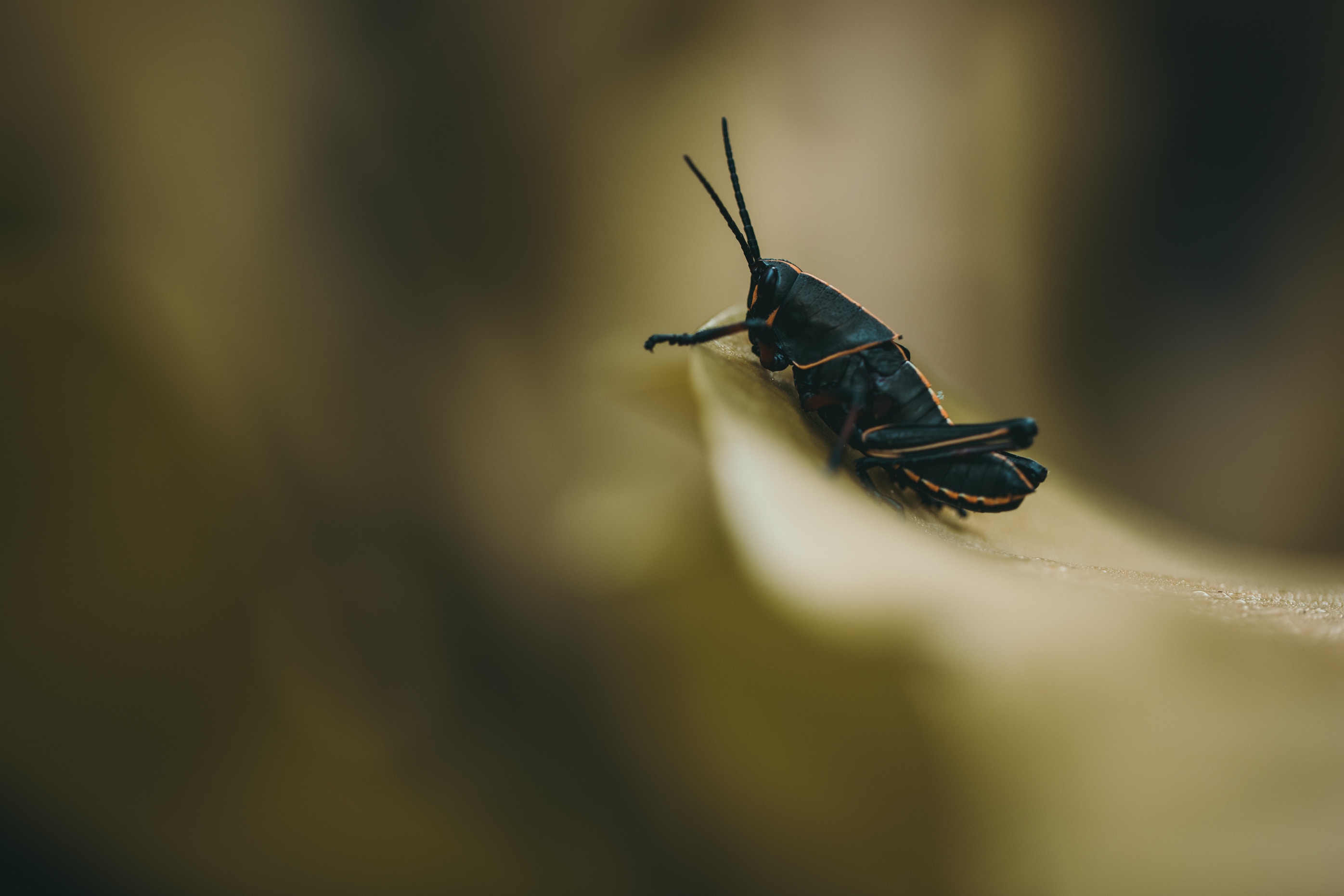
Photo by Valeria Boltneva on Pexels.com

This morning I was preparing to go outside at dawn with my coffee and my dog. He usually sniffs around the yard and I fill the birdfeeder. I examine what’s blossoming: currently, irises, dahlias, snapdragons, impatiens, columbine. I usually hope to see cardinals and woodpeckers before the sparrows and grackles arrive, but lately that hasn’t been the case. Today, though, when I looked through the window before opening the door, I saw a fawn grazing near the overgrown herb bed. I looked past her and noticed two other deer nestled in the myrtle at the back of the yard. Soon, one rose, another fawn, who also began grazing in the yard. The larger doe who I assumed to be the mother remained reclined. She laid there so long after her offspring had risen and wandered that I began to wonder if she was hurt, or, perhaps even giving birth to another baby. I watched the three for a while through the window, feeling glad that they felt safe and nourished in my yard. I left them to their quiet morning routine, told my dog we’d go out in a little bit. I returned after about twenty minutes; they had gone. When I finally wandered out into the yard with my dog, I could see the indented places in the myrtle where they had lain and I wondered if they had cozily bedded down for the whole night in my yard. It gave me such a feeling of peace to cede my space to them for a little while. I imagined that the myrtle was still warm in the chilly morning from their soft brown bodies.

There has been some grief this spring, some loss of a sense of safety and well-being in my little circle. I know that this morning’s sighting of the white-tail deer in my yard was a chance occurrence but also I don’t know if it wasn’t a tiny little gift from the universe, a brief glimpse of a mother and her two youngsters feeling safe and fed and content and together. Maybe mornings like these are for embracing little mysteries as they come to us, and in them, we sense our own enough-ness.

Love, Cath

On Voice, Moment, and Movement

By Catherine DiMercurio

Sometimes moments are motion, and our voice guides us through, if we listen.

Spring weather here can be a strange mix, with warm sun shining down while a frigid wind blows. Moment by moment you are alternately completely comfortable, basking in the sun that soaks into your skin, and then suddenly freezing and wishing you had a hat and gloves. This weekend my emotions played out similarly.

With my son home for a visit, relieving the solitude of my day-to-day life, I alternately felt happy, comfortable, and relaxed, and then suddenly sad and anxious, as if I existed in the moment and the ones just before and just after all at the same time.

In the course of running some errands, we stopped at the pottery studio where I take my class. I picked up a couple of glazed pieces that hadn’t turned out as I’d hoped, then we headed to the nearby gardening center. As we wandered the greenhouses, my emotions were all ebb and flow. There were layers washing over one another: the disappointment over my pottery was softened by plans for how I could improve next time; the excitement over what plants I might buy to spruce up the yard wilted as I worried about costs; but mostly, the joy at having my son home and spending time together was being washed over at the edges with the sadness of knowing we only had a short time together, and with the ache of wishing my daughter could have been with us too.

People say, live in the moment. In that moment, I was giving myself the same instruction. Do not focus on disappointment or sadness; be here with your son and the beautiful plants the smell of hyacinth and this adorable cat who wandered up to greet you. It isn’t as if I ignored joy and dwelled only in the darker thoughts. But sometimes, you have to hold it all at the same time. Sometimes the moment pushes and pulls you as though you are standing chest deep in a big lake and the waves make stillness impossible.

In navigating the movement of the moment, I often feel as though I’m straining to hear a voice over the distraction of ambient sound. I am trying to coax this voice to greater volume. The voice of instinct, of guidance, can be so quiet in me sometimes, but I have begun to understand why.

In my writer’s workshop, we’ve been talking about voice, and the way any novel opening can work if the voice is effective. When I’m writing a novel it takes a while to find that voice. Until recently, I hadn’t realized that the issue of voice in my writing and the strong clear voice of instinct that I have been listening for within me were one and the same.

There are many reasons why it is hard to hear and trust that voice within us, nudging us toward good things, warning us away from trouble. I think it can be difficult to hear your own voice if ever you were told that you were too sensitive or too needy. In response, you might have found yourself voicing feelings and needs less frequently and more quietly. You began to observe, trying to determine what emotions are allowed to be expressed, and when, and by whom. Over time, the weight of what you haven’t expressed makes you empathic. You are in-tune to the deep feeling of others because it is so heavy in you. You might have become a servant to other people’s emotions, knowing how it feels to have things unattended to. Sadly, in this way, we teach ourselves to listen more closely to others than we do to ourselves.

Well-meaning people tried to protect you from a mean world but didn’t understand that your openness and sensitivity were strengths, not liabilities. You didn’t need a thicker skin, you needed understanding, maybe some tools to help you cope. Later, less well-meaning people were able to spot your vulnerability, told you to trust them and not yourself, and that was easy to do, because your own voice had grown so quiet.

This voice is how we navigate everything, so when it is quiet, we are filled with self-doubt. And even when we train ourselves to listen for it again, it is easy to discount it.

I’ve recently tried to start running again, and I’m still incorporating a lot of walking into my running because in the past I’ve made the mistake of trying to ramp up too quickly, and I get injured, and then I can’t run at all for a while. I used to think that I “failed” at a run if I needed to stop at walk. The mindset I’m trying to cultivate now is that a successful run is the one I’ve begun. It is the one in which I listen to my body and walk when I need to.

I used to think that I failed if a story got rejected, if I never heard back from an agent, if the guy from the dating app who was messaging me disappeared. But I’m realizing now that every time I begin again, I succeed. Every time I listen to my instincts and chose hope, resilience, and perseverance, it matters. Of course, we need to rest, to pause and listen to that voice within us, to keep recalibrating our efforts to our purpose.

Do we ever get it right, the balance between when to push ourselves and when to pull back? Or does getting it “right” mean that we cultivate the awareness that balance is achieved through this movement? Sometimes it seems that balance is more about living in midst of that ebb and flow, the push and pull, than it is about a finding that briefest moment of stillness somewhere in the middle of it all. My comfort zone is in that middle space, and I’d love to learn how to expand it, but so much of life happens in the waves pushing and pulling me away from it.

Whether it is learning how to exist in a moment that is filled with the fluidity of past, present, and future all at once, or existing in the process of working through “failure” toward what we value and what we want, being able to accept the movement of the moment, of all that is pushing us and pulling us as we try to keep our footing, relies on us hearing our own voice and letting it guide us. This is our work.

I have learned that I only experience peace in the midst of all these processes when I am able to hold it all at once, when I can embrace a moment and the movement around it. It is the cat in the warm greenhouse, and the cold wind, and the peppering of disappointment and worry, and the scent of hyacinth, and my son with me now, and his imminent leaving, and missing my daughter, and the sunny joy of love, and all of it all at once.

I hope you find peace in the process and can always hear your voice.

Love, Cath

On Messiness, Moodiness, and Harmony

By Catherine DiMercurio

I usually am craving spring by March. This year, I am stunned to discover that I am not, at least, I’m not consistently yearning for it the way I usually am this time of year. I am no fan of prolonged winters and I’m not as cold tolerant as a lifelong Michigander should be, yet with the promise of long days ahead I have the sense that I’m still in some sort of cozy, dark cocoon I’m not ready to come out of. I think much of this is due to the largely self-imposed idea that the longer the day, the more productive I should be. Yet, no one is policing me. And I do love finally feeling the sun and digging in the dirt. I’m sure, when the time comes, I will be ready.

But, the time change often makes the transition to spring feel forced, unnatural. In general, I have found that most transitions are difficult for me. It takes me longer than I expect, always longer, to recalibrate my brain and heart. Changes take time to get used to, even if we are ready for them.

This has been a time of noticing for me. I have spoken here often of the abrupt shift to solitude I experienced when my son moved out at the end of the summer, and this experience coming on the heels of other endings. In the months that have elapsed, I have taken care to notice things about myself that previously only fluttered to the surface of my perception, when my attention was more keenly attuned to the other people inhabiting my daily life. Despite periods of loneliness, it has been a gift to become reacquainted with my own natural rhythms, my own seasons.

Sometimes I wake to the feeling that I am in my own little bubble floating on the periphery. I don’t mean this in a covid way, though surely the isolation of the past two years has contributed to this feeling for many people, myself included. I think this shift must be common to many empty nesters, particularly single parents. One day you are the safe and solid center of a little family’s busy hum of activity. And then . . . you sense you are still that, but in a way that is fractured and more theoretical. It is normal, natural, abrupt, and jarring all at once. Though you always knew your children were universes unto themselves, not simply a part of yours, when you cohabitate all the universes merge and overlap and interact. And then, they do not, not in the same way.

Everyone’s life has changed dramatically in the past two years. We are still in the process of molding what things are supposed to look like now as a society, while individually we are integrating covid adaptations into our lives along with all the other changes that naturally happen to a person and a family over the course of two years. We simultaneously feel an urgency to play catch-up and to re-evaluate.

It is so messy. I find that the chaos of Michigan weather in early March mirrors my headspace at this time of year. When I began writing this earlier this week, it was about to snow and 19 degrees out. In a few days, the temperature is supposed to be almost 70 degrees. When I woke too early recently, I turned on the light, tried to write, got sleepy, tried to fall back asleep. Maybe I did for a few moments. I rose and warmed up yesterday’s coffee, let one dog out and in, greeted the other still half-asleep dog, and as I walked down the hall back to my bedroom, coffee in hand, I felt as though my mood changed with each step. I was angsty over beginning the workday on not enough sleep, worried and despondent about the collection of things that currently trouble me, overwhelmed by all the house and yard stuff that is going to need to be tackled soon. And as I reached the end of the hallway rug and my right foot hit the hardwood floor, I smiled. I smiled because of the dogs. I smiled at the glimpse of my bedroom, with its pretty blue walls and embroidered curtains. I snuggled back in bed to write, pleased to be in my own space, and that I still had time to write before I had to turn to the rest of the morning and all its business and busyness.

Photo by Ravi Kant on Pexels.com

One of the things about where I am now is that I have time and space to have mood shifts that don’t need to be explained or mediated. It is much easier for me now to experience difficult feelings and move through them in an organic way rather than to have to compartmentalize as I’ve done in the past. I have been the type of partner who has moved my own mood out of the way when it seemed like the simplest path toward what I perceived to be harmony. I made things disharmonious within myself to try and cultivate and preserve harmony in the relationship. I’m not certain I will ever know to what extent I did this because of internal or external expectations. Most likely, it was both. I like to imagine a future relationship in which this type of behavior will not be expected of me by my partner or myself, and in which I will keep the lessons I am learning about myself now at the forefront. In which my compulsion to make things easier for someone else will not supersede my ability to voice and address my own needs. It isn’t that we shouldn’t have empathy toward our partner, but we must have equal empathy for ourselves. No one should have to feel like they are somehow in someone else’s way.

March is a messy, muddled month. But it churns with energy, and we mirror its moods. We are sunny, it is raining, it is snowing, we are tired, hope sprouts beneath the dead leaves that protected it in the long cold months. It is windy, we are moody, look, here’s the sun again. It can be difficult to find harmony in this season of change. But if we cultivate a practice of noticing, of observing the fluctuations in our mood and states of minds, and states of hearts, if we let it all move through us, jangling and cacophonous like a windchime in a March storm, maybe it will be harmony that finds us in the aftermath.

Love, Cath

On Bargaining, Warmth, and Crickets

By Catherine DiMercurio

“March is a bargaining month. . . . How like happiness this is.”

Maybe it is because I live with dogs that I find myself, hound-like, snuggling well-loved ideas with familiar scents. I perpetually consider notions of happiness, transition, ambiguity, and identity—philosophical bones for these forty-something-year-old teeth to gnaw on. As March expires, I return to thoughts about negotiating with the past—and and the ghosts that hound us—in our pursuit of happiness.

Speaking of hounds, I look to mine for lessons, not really knowing what else to do with the half-wild thing I adopted a few months ago. We make tiny bits of progress and then leap back. I have written in other posts about his past, about how, during his most impressionable time he was kenneled, not learning, not bonding. I lecture myself about expectations and push away the feeling that I do not understand how to make this small plot of real estate a large enough home for this big-hearted, loud and loping beast. On my good days there is fresh resolve, an eager, well-meaning patience. On bad days, frustration boils, then quiets as I remind myself of his history, then simmers once again. I remind myself: past and present must some how find a way to live together.

We make bargains with the ghosts of our past. But often, we must learn to make them with ghosts and pasts of others, too.

I began writing this post a week ago and am returning to it on the last day of March. March is a bargaining month. I haggle with yard mud and slopped paws. Crocuses hem and haw, deciding when to take the risk. March begins a transition to spring that stretches through dreaded April snows. In Michigan, we do not fully believe it is spring until it is nearly summer. How like happiness this is.

It is easy to doubt that a joyful mood will live to see the light of the next day, and the next, until we realize finally that we’ve been happy all this time. How comfortable it is to doubt joy, given histories of endured loss. Sometimes, I decide to stop counting losses and try to only tally the wins—the joyful moments, the kitchen laughter, the soft morning kisses, the contented sighing of freshly walked dogs, the smell of spring rain, every sip of coffee, texts from teenage children checking in on me, on each other.

I decide to watch happy pile up around me. The losses will still come whether or not we are ready for them. Maybe, if we soak up enough sun we can take on the cold when it comes, take it on with a little more vigor and confidence. To always be steeling ourselves, waiting for the next trouble and trying to prepare for it, dilutes the joys we could be experiencing every day. Let the sun be the sun.

I know this: what today feels like a bump in the road would have felt like a steep and rocky mountain, nearly impassible, just a few years ago. Mostly. Sometimes obstacles still feel bigger than they are. Setbacks still sting—the broken appliance I can’t really afford to replace, another rejection from a literary journal, taxes, parenting stressors, the strange new noise the car is making—these are all still part of life, and can all gang up on me from time to time.

The practice of joy-tallying takes perspective, it takes meditative awareness, and is a conscious expenditure of psychic energy. And sometimes our zeal for it flags, and the cold seeps in even though the sun is shining. Sometimes we need to have another conversation with our ghosts. We need to make bargains about what we allow ourselves to remember, and to forget. In the end, it may be that what protects us the most from future pain is not, in fact, the memory of past pain. It may be that it is the willful act of forgetting that unthickens the skin and lets us feel the sun.

kal-visuals-682589-unsplash

Right now, hosts of crickets that have been wintering as eggs or nymphs (depending on whether or not they are fall field crickets or spring field crickets, apparently). They have been feeling the changes in soil temperature. Like all of us in Michigan, they are trapped between the end of the cold and the beginning of warmth. They wait to see when there have been enough consecutive warm days to call it spring. Then instinct kicks in, warmth is certain, emergence is imminent. Maybe we don’t have to wait as long as the crickets do, but sometimes we have to trust the instinct and seek the warmth. I suspect letting happiness soak in, one joy at a time, yields a stronger protection against the cold than developing too thick a skin.

Enjoy the warmth, whenever you find it. Love, Cath

(photo credit: Photo by Kal Visuals on Unsplash)

On Appearances and Optimism

By Catherine DiMercurio

Sometimes things are not what they seem. And that can be a good thing.

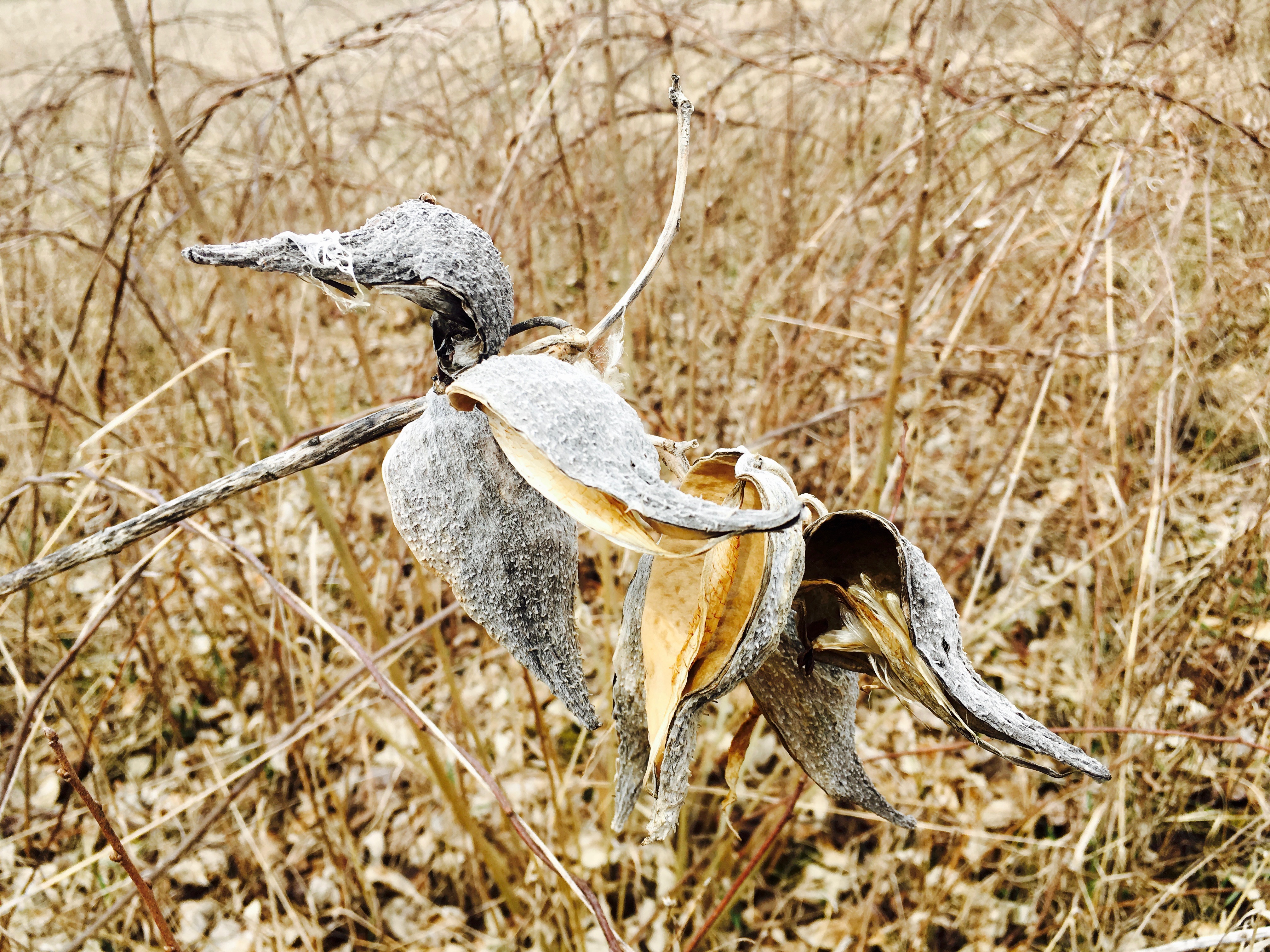
My kids and I hiked this past weekend, seeking the loons we had learned were migrating through the area. The path took us through the woods, and stretches of it ran next to the lake. Spring is slow in arriving this year. All around us were shades of brown and grey, broken only by a few red leaf buds in the dirt, scattered like confetti. The deer and sandhill cranes we spotted blended into this backdrop, though the blush of red on the cranes’ heads allowed us to notice them roosting on their nests. We found the loons too, thanks to their glossy white chests, though they were also difficult to see in the distance, unless they were swimming toward us. Along the path as the woods opened to fields, I noticed a milkweed pod. The cottony insides had long since been carried off by the wind, but the husk that remained bore a striking resemblance to a bird. I had to look twice to be sure. The image stayed with me, reminding me that things that have the shape and appearance of one thing can actually be something else quite different.

IMG_3033

For a long time, throughout the divorce year and in the aftermath, I tended to take a pessimistic view of this idea. As in, be wary and suspicious because things are not what they seem. Proceed with caution: people you care deeply for may look like someone you know but have somehow turned into different someones. I felt as if the world was waiting to trip me up and trick me, and that I perpetually needed to be looking over my shoulder to see what was sneaking up behind me and at the same time casting my gaze far ahead to see what might be coming at me next as I tried to escape what was behind me. I wore this pessimism like a cloak. I put it on and hid myself, but it wasn’t really my true nature.

Optimism versus Pessimism

As time has gone on and the urgency of caution has ebbed, as stability has returned to my life, I find myself becoming me again, the one who can see the flip side to the aphorism that things are not always what they seem. I can recognize once again that something that appears to be a normal, everyday thing, or even something potentially threatening, can actually turn out to be an amazing, wonderful thing. I discovered being alone wasn’t lonely, and later, that a random date with a stranger can turn into something unexpectedly perfect. Life can be delightful that way, when expectations are turned upside down and you discover something new.

Still, it has taken me a long time to move from pessimism back to optimism as a general mindset. Initially, it exhausted me to hear people say don’t worry, everything will be okay. I felt like nothing would be okay again, not ever. That way of looking at the world gradually evolved into to a different mindset. Everything might be okay. But only because I am working my hardest to make it that way. And what if I can’t? Things got better, in part, because I made them that way. But that effort built some much needed confidence and a sense of self-reliance. This was another unexpected gift of the ending of one life and the beginning of another, as the divorce year transitioned into a new year, and a new way of being. I began to trust in my ability to work through things, to handle situations I used to fear. Sometimes it’s still hard to tell the difference though, between fatigue and fear. Sometimes you get tired of handling things, but that doesn’t mean you can’t handle them.

I like to believe though, that one of the things that got me through the toughest of times was the awareness that the pessimism was something I could take off and cast aside when I was ready. I wanted to believe in my own positivity and sometimes wanting to believe is enough. It is a bridge that gets you to the next step.

Irrational Hope

In the course of my MFA work I was introduced to the writing of Clarice Lipsector, and I stumbled across this line: “It is possible that even then the theme of my existence was irrational hope.” This stuck with me, and I latched on to that idea of irrational hope, hope that even in the darkest of days, things will get better. Sometimes optimism gets a little suffocated by circumstances, but it is still there waiting for you, and I think this sense of hope is what kept me going, and continues to inspire me in good times and bad.

IMG_2940

It takes a conscious, mindful effort to see things this way at times. It’s easy to put the cloak back on when life gets stressful. It’s so simple to fall back into the trap of pessimism, so simple it seems like a relief. In a way, it’s familiar and safe, even though it’s a dark place to be. Stress—sometimes little, lowercase stress and sometimes all caps STRESS—can yank me back powerfully into a time where I felt like things kept falling apart, the world was out to get me, and I had no control over anything. The comfort in that, the reason it is so easy for anyone to fall into, is that in that space, there is permission to stop trying to make things better. But when stress sinks into me, I consciously remind myself, this is not that; I’m not back where I was, hiding under the cloak. We have to talk ourselves down from the ledge of panic sometimes. It might be only a panicky moment, or maybe we feel ourselves falling back into a habit of anxiety and worry. But then you go for a walk and see a milkweed pod shaped like a bird and it lifts you, it allows you to reprogram your thoughts and emotional responses. It allows you to remember who you really are.

Enjoy the path that you find yourself on today. Love, Cath