The Age of Compromise: On Aging and Surrender

By Catherine DiMercurio

This is a moment of surrender. Or, at least, a movement toward that moment. This weekend, I sat in a high school classroom, listening to my children playing a duet—my son on the cello, my daughter on the violin. As a graduating senior, my daughter was performing at her last state solo and ensemble event. It was also the last time the two of them would be performing a duet together in this context. I often close my eyes when I listen to them play and for a moment, Beethoven’s Sonatina drifted through memories, picking up images that hung for a moment in the melody so I could see them, images of the two of them as children, playing together, kneeling in the grass, heads bent toward one another, communicating in the deeply familiar and private way siblings often have.

pexels-photo-164821.jpeg

Now, they sit on black chairs in this sunny room, communicating differently—with the interplay of cello and violin, trading the melody—heads still inclined toward one another, almost fully fledged and ready to fly. It is difficult to think about the journey of all those years, to think about how much my son and daughter have grown, without considering the impact of my own accumulation of years.

I have an uneasy relationship with the notion of aging. I’ll be 48 later this year. It isn’t the number itself that gives me any trouble, but rather, the undeniable signs that this is happening. It’s different for everyone, the collection of symptoms that pile up, that make you notice them not as individual random things but as parts of a pattern. At some point, it all adds up and you realize that getting older—which you were fine with—means you are actually getting old.

Distance and Pain

Did you notice what happened there? That slip from first person into second person? Writers sometimes do this with a first-person narrator as a hint that the topic is so difficult or painful for the speaker that they—consciously or not—slipped into speaking about it using the more distant, generalized “you.” It diffuses the pain. An example: Hemingway does this with his (autobiographical) narrator at the end of A Moveable Feast when he’s discussing the affair that ended his marriage to his first wife, Hadley. Hemingway describes the progression of the affair from something “stimulating and fun” to “truly wicked.” He speaks of the way “You lie and hate it and it destroys you.” He doesn’t say, “I lied and hated it and it destroyed me.”

So perhaps, it’s more accurate for me to say, “At some point it all adds up and I realize that getting older—which I was fine with—means I’m actually getting old.”

This progression from getting older to becoming an old person might be an easier journey if our society esteemed old age in any way. It doesn’t. The daily toil endured to be productive, tax-paying members of communities, the sacrifices made to raise children, the wisdom gained through the trial and error of living and loving and being human and making it to your 60s and 70s and beyond, are all frequently overlooked by our American society collectively, and by many of us individually on a day to day basis.

The Fine Art of Compromise

For me there are clear, outward facing indicators of my age I’m not comfortable with. I used to be regularly told that I looked younger than my age. I don’t hear that too much any more. For a period of time I read every article I could about the way stress—particularly some of the deep, long-lasting, chronic stress of divorce—ages a person rapidly on a cellular level. Though this idea was upsetting, it helped me accept some of the changes I was seeing and feeling. The grey hair, the bouts of insomnia. Sometimes it seems unfair, as if I thought I could cheat aging because I’ve focused on healthy eating for most of my adult life and tried to stay active since the kids were small. My lifestyle should at least yield healthy and productive later years, but I’m not naïve enough to believe there are any guarantees.

img_2786.jpg

I also find myself reading articles about the benefits of slow running. I ran two half marathons the year of my divorce. Running helped me purge a lot of the toxins I felt seeping into the tissues of my body. I felt like stress was devouring me breath by breath and I needed to burn it off the way fever kills infection. I’m not an efficient runner though and in the years since, long runs seem out of my reach. It’s hard to make peace with that. At the same time, I want to keep running. I’d rather do a few short runs, and some long walks, every week and be able to maintain that routine for the next twenty years rather than try and rack up mileage the way I used to and risk injuring myself to the point where I can’t run at all. My late 40s seem to be The Age of Compromise.

These are all small things. I feel good, really good, most of the time. I don’t wake up with aches and pains. The insomnia gets bad sometimes but I found that not eating after 7 pm really helps. The grey hair feels personal. I know it is a superficial thing. It is hard to find a vegan hair color that really does the job. I have researched articles on the best ways to go grey. I’ve pulled up pictures of Ann Bancroft in The Graduate and thought, maybe just let those streaks come in?

All of this research, these thoughts, these little allowances, are part of a movement toward surrender. Yet I remain unwilling to stop fighting the idea of growing older. I suspect that when I embrace it, a lot of things will fall into place. It’s worked out that way in other arenas. But right now I don’t even know what surrender and embrace look like. Is it when I decide to stop coloring my hair? Is it when I stop reacting so angrily to articles with headlines like “The 40 Things Women Over 40 Should Never, Ever Wear”? Maybe acceptance gets feathered in at the edges and you simply start noticing that you really don’t care about such things anymore. It’s possible that even thinking of it as embrace or surrender is to suggest I’m still fighting. Maybe it all happens organically, quietly in its own way, like when you remember that thing on the tip of your tongue finally, hours after you stopped trying so hard to catch it.

Whiplash: Looking Back and Looking Ahead

The flip side of all of this—of watching my children grow into adulthood, of making little deals with myself about how to shift the way I think about my age or changing my eating patterns—is that being honest with myself about aging means I also have to acknowledge that my parents are aging. I think now of that sonatina again and the memories shift. It’s my sisters and me—before my brother was even born and long before my baby sister was born. We are huddled in the fort made by the arching branches of forsythia bushes, speaking almost a private language, breathing in the delicately scented air under the first yellow blooms of spring.

Maybe my parents watched from the window. Maybe, as their little girls were graduating from high school, they thought about their own aging, and now, with their grandchildren graduating, they are simply living it. They are in their seventies. They deal with more doctor appointments than they used to, but they are active and happy and healthy. Like the good parents they have always been, they are modeling for me what aging can look like. They are simply living their lives, enjoying their journey, and dealing with obstacles along the way as they have always done and taught me to do.

So what am I so afraid of? Maybe it’s simply that the transitions in life are the hardest, and once we make our compromises, make our tweaks and our peace, we adapt and get on with it. It seems that every time I think this road is familiar and I know the way, the scenery changes and I get a little lost. Usually though, once the fear subsides I find I can relax and enjoy the adventure. I hope aging is like that.

Enjoy the road. Love, Cath

On Film, Families, and Foxes

By Catherine DiMercurio

Most people who know me are aware that I’m an introverted homebody type. I prize coziness. After a long week it takes a lot of motivation for me to get excited about going out, at night, among people. But when your daughter—who within months will be moving to campus—says hey, we should do this Wes Anderson costume party thing, you get motivated. My daughter, my son, and I all enjoy evenings at home spent watching movies, reading, and hanging out together. The fact that my almost-sixteen-year-old son, my eighteen-year-old daughter, and I truly enjoy each other’s company is a source of continual joy for me. I know going through the divorce, as hard as it was on all of us, brought us even closer together in a new way. Oddly, we are sometimes gifted with healthy, joyous by-products of trauma, like superheroes who come by their powers via spider bites or extreme exposure to gamma radiation.

IMG_2758

My first Wes Anderson film was Rushmore. I remember watching it in my living room and thinking about how much it reminded me of two of my favorite films, The Graduate and Harold and Maude. I was hooked. My daughter was thirteen when Moonrise Kingdom came out on DVD and I let her watch it after she repeatedly asked if she could see it. My son sat in on subsequent viewings and they both responded to Wes Anderson’s quirky storytelling, his spot-on casting, and pretty much everything about his cinematography, even though they didn’t articulate their enjoyment in those terms. Over the years, they got caught up on his body of work and Wes became a shared obsession.

A Recipe for Wes Anderson-Level Awkwardness?

When my daughter suggested that we attend the Wes Anderson party, it was her idea that we invite my boyfriend, who is also an avid fan, as well. The party was an all-ages theme night at a local bar, and my son was on the fence about whether or not he wanted to go. He eventually declined, though he would have made an excellent Max Fischer. A few days before the event, after all costume-related items had been procured, I wondered about the potential awkwardness of the evening. There was the generalized social anxiety I typically experience before going out. And there was the more focused anxiety about heading to such an event with both my boyfriend and my daughter. This was new. The four of us—my kids, my boyfriend, and I—have spent time together as a group on a number of occasions, but we’ve explored this territory cautiously over the past year and a half, a strategy that has worked to our advantage. Nothing has felt rushed or forced. So, though I had no reason to believe that our interaction for the evening would be anything less than relaxed and enjoyable, I let the idea of it, the labels, get in my way. Me, boyfriend, teenage daughter. This might seem weird to people. Was it weird? Surely this mix went awry for lots of people. But, he wasn’t some random guy, and she wasn’t simply a stereotype of a teenage daughter. And even if it was weird that the three of us would socially interact in this way, as a friend of mine pointed out: this would be the way Wes would want it.

The Way We Connect to Character and Theme

This comment opened things up for me, and in particular, got me thinking about the costumes we had chosen. The Facebook event page exhorted us to dress up as our favorite Wes Anderson character. My daughter chose Suzy Bishop from Moonrise Kingdom, a teenage girl whose parents seem like they are on the verge of divorce. Suzy follows her heart and embarks on a wilderness adventure with the boy of her dreams, her record player, and her cat. My boyfriend, one of three brothers, chose Francis Whitman, one of three brothers, from Darjeeling Limited. Francis is organized and focused and attempts to re-bond with his brothers after the death of their father.

IMG_2761

Throughout the film, Francis sports a bandaged and bruised face and walks with a limp, these injuries having resulted from an accident brought on by the deep grief he experiences after his father’s death. And I chose Felicity Fox, from Fantastic Mr. Fox. Felicity is strong and tenacious, loving and realistic. At one point, she tells Mr. Fox “I love you, but I shouldn’t have married you.” She rightly bristles at being lied to by her husband, and lashes out after his dismissive comment that he is, after all, a wild animal. She points out that he is also a husband and father. A fierce and protective mother, Mrs. Fox is perhaps most deeply hurt by Mr. Fox’s deceit because it has put their son, as well as their nephew, in danger. This gives you a sense of Wes, who is able to develop nuance and emotional depth even in a stop motion animation film based on a Roald Dahl children’s story.

Wes returns again and again to themes related to absent or deeply flawed fathers, troubled relationships between siblings, and mothers that are present and protective but in many ways distant, or alternately, decidedly unavailable. Despite the recurring nature of these themes, the characters rarely become monochromatic archetypes. Even when Wes’s settings seems outlandish or far away—a fox hole or a train rattling through India—the way his characters relate to one another with regard to family dynamics is, I believe, what draws people into his stories.

So a Teenage Girl, a Fox, and a Bandaged Man with a Cane Walk into a Bar . . .

. . . and had a relaxed and enjoyable time. We sat and talked about our favorite Wes Anderson films and moments, we struck up conversations with those around us about Wes and other directors, other films. We people-watched, admired others’ costumes, laughed together, and congratulated ourselves on leaving the house and being social. We were home just after 10 pm.

IMG_2759

Later in the weekend, I happened upon a Facebook conversation about Lady Bird, a film I have not yet seen. Whether or not it was well liked by the people discussing it, the film clearly sparked introspection about parent-child relationships, perhaps in the same way that Wes Anderson films do, a little through humor, and a little through darkness. We come at these stories through our experiences as children, parents, and siblings. Sometimes the portrayal of families in film resonates with us in a profound way and sometimes it leaves us feeling disconnected, almost as if we are being left out of a private joke.

This left me thinking about Max Fischer, in Rushmore, and his desire to tell stories through theater. In the end, Max’s theatrical endeavors aren’t about the subject matter of the plays he writes, but really, about the fact that he writes plays as a way to remain connected with his mother, who died when he was young. It was his mother who supported his art, who gave him his typewriter after he wrote the play that got him admitted to Rushmore as a child. In fact, it was his mother’s act of submitting the play to Rushmore that got the young Max into the private school. Max’s connection to his deceased mother is at the heart of his relationship to Rushmore Academy and to his art as a playwright. And throughout the film, we see Max searching for connections and meaning, undoubtedly as a way of coping with this deep sense of loss.

This is why writer’s write, why movies are made, and why people seek art, whether it be on film, in print, on canvas, or molded out of clay. We all have concrete or ambiguous losses, pain that shifts in form and intensity as we get older. Whether we make art or consume it or both, the art-person relationship is as much about mitigating loss and seeking connection or empathy as it is about entertainment. These desires are also at the root of our often very strong reactions to film or books: I loved that book. I hated that film. It spoke to me. It left me feeling disappointed.

I talk about “the road” a lot, as it is a metaphor that endures in its ability to help me make sense of life. And I think attempting to make sense of it all is what we are called to do as artists and what we seek as consumers of art. We simply want to make sense of this often confusing and painful journey and to feel a little less alone, to be in on the joke.

Enjoy the road. Love, Cath

Failure, Rejection, and the Road to Nowhere

by Catherine DiMercurio

This is the blog post I keep running away from. The reason? I can’t find perspective. I don’t know how I’m supposed to feel about it, what insights to draw from it, because, to be candid, my writing life is filled with frequent rejections and persistent failure. My relationship with my writing is messy in a way that I learn to live with every day but don’t fully comprehend.

pexels-photo-243625.jpeg

I have written since I was about ten, when I began composing angsty tween poems, before being a “tween” was a thing. You were just ten, or eleven, or twelve. Then you were a teenager.

I often say that I love writing, which is true, but as with most loves, there exists a complex array of emotions for which the word is merely a cipher. The things we truly love cannot be separated from who we are.

Trying to Avoid the Pull of the Road

This identity-centric love happens to be a thing that many people have been able to monetize. Many people have found channels with which to share their work with others. It becomes expected that if you write, you do something with it. When I began my freshman year at U of M, I was interested in genetics. After I took my first science class though, and received the first C I’d ever gotten in my life, I wondered if maybe there were other career paths more suited to my strengths. I didn’t know what those were, however. I knew I liked to read, and I liked to write, but the whole point of college was to prepare myself for an actual job and I knew I didn’t want to teach. I’m sure if I’d had a little more confidence in myself I could have successfully pursued the career in genetic counseling I thought I wanted. Later, I would get a C in a poetry class and it didn’t slow me down one bit. In the end though, I sat with an advisor in a little room in Angell Hall. It was time to declare a major. He did the best he could with one more unfocused liberal arts student and told me I should do what I loved, because that was the most important thing, and things would fall into place. I’m still not sure if this advice was sound, but the idea was reinforced throughout the years after I graduated. I feel like for a decade or so the message many Gen Xers received, a message amplified by talk show hosts and self-help books, was do what you love.

Embracing the Longest Road Trip Ever

I declared as an English major that day. Still, I was afraid to take a creative writing class. I focused on literature, and I loved writing about it. A friend pointed me to a creative nonfiction class my senior year, and I was so engaged by it, I began seeking out the professor at her office hours to talk about writing. She encouraged me to write a story and submit it for the Hopwood award, a prestigious writing award at the University of Michigan. I did write. I did submit. I did not win. But the act of writing that story was a beginning for me. Something in me unlocked.

pexels-photo-371954.jpeg

After graduation, I landed a job as an assistant editor with a reference publishing company, hoping for two things: one, that the job would allow me time to keep writing, and two, that maybe it could lead to some publishing connections.

In a way, though it would take many years, it did both. I was only able to finish a novel after I left the company. I began freelancing, and with the power to structure my schedule differently, I was finally able to focus the way I wanted to. I wrote a novel and sent out dozens of query letters. The rejections piled up and the message I internalized was that the work simply wasn’t good enough. Perhaps all I needed to do was send out hundreds instead of dozens of letters. Perhaps I needed to get better. Later, still freelancing, and now raising two children, I tried again with another novel, and sent out query after query. The company I freelanced for had purchased a fiction imprint, and I was able to acquire the name of an actual person at the imprint to whom I could submit my query. Amazing Disgrace came out in 2006. The print run was small, but my foot was now in the door. I’d even contacted my former professor, who was still teaching. She came to one of my book signings and invited me to her class to speak. I couldn’t believe it; I finally had some momentum.

That momentum slowed and dissipated, a little ripple dying in the wet sand at the water’s edge. I wrote another novel. I revised that third novel over and over again and kept sending it out. Eventually I put it aside and focused on my freelance work, which now involved a lot of writing. Writing about literature. I was good at it, and I had a lot of jobs coming in. But, the work started to dwindle. At the same time, my marriage began to unravel. In the middle of it all, I applied to some MFA programs, thinking that maybe the reason I wasn’t getting published was because I needed to learn how to write better. It was a victory to be accepted into the Vermont College of Fine Arts creative writing MFA program. I felt like I belonged. I even did a post-grad semester so I could continue to work on my next novel.

When Things Don’t Add Up

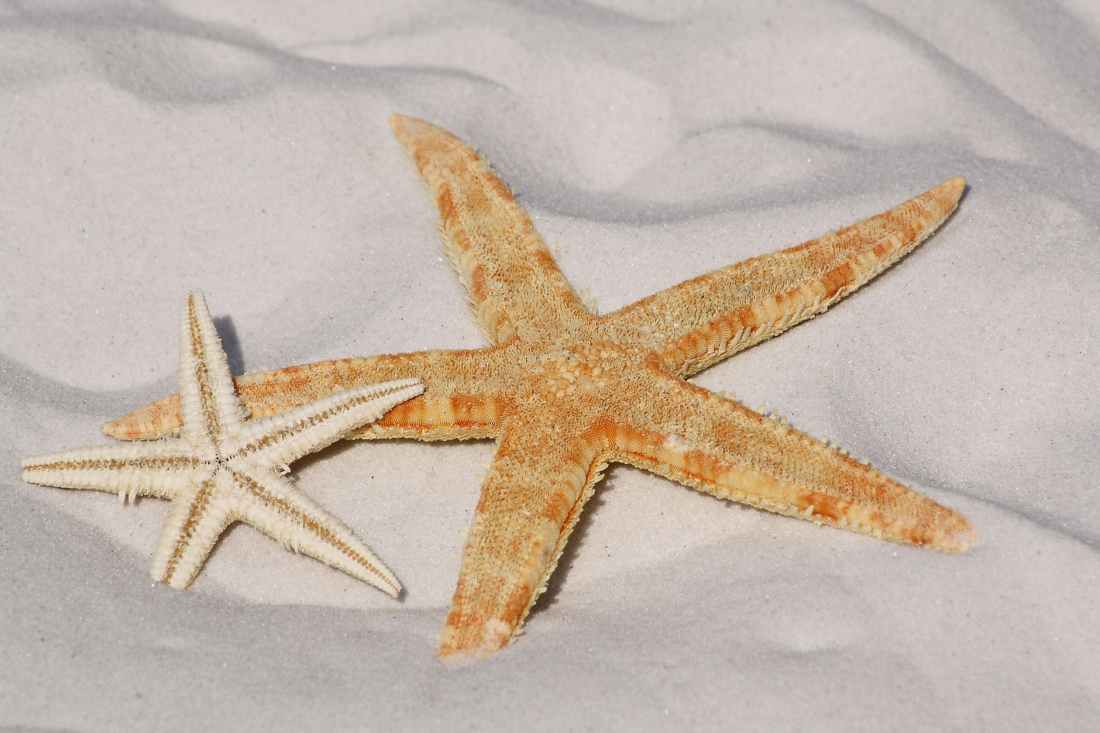
All of the writing, the submitting, the rejections—each act is a lesson in vulnerability, in open heartedness, in loving the work rather than the reward. It would be a lie to say that the rejections don’t break my heart. They do. I imagine myself as a starfish, able to regenerate the necessary body parts to keep functioning. For the starfish, limbs; for me, my heart.

starfish-sand-beach-sea-56610.jpeg

Here I am now, two years post-MFA. I’m working full-time again at the same reference publishing company, squeezing in my writing time in the hours before or after work. In a way, I’m back to where I started. Currently, I have two short stories I’m submitting at various literary journals. They are getting rejected. But many of the rejection letters are detailed, positive notes that praise the work. I feel like I’m close, that soon maybe I’ll find the right person at the right time at the right journal. I also have several queries out for what is technically my fourth novel, and I’ve begun work on a new short story.

I wonder every day if the work is good enough, and if I’m trying hard enough. I’ve failed a lot and have seen so few successes. I lose sleep so I can write. I’ll be paying back student loans for the MFA for a long, long time. I have asked myself if it is worth it and all I know is that it doesn’t seem to matter. Converting the experience into tangible value in order to deem it a sound investment is like saying 2 + circle = purple. It doesn’t add up. I seem to be on a road that meanders in no discernable direction, and I’ve paid to be on it. So where do I go from here? Maybe onward is the only answer.

Enjoy the road. Love, Cath

The Alchemy of Experience

By Catherine DiMercurio

Walking down South University in Ann Arbor with the U of M tour guide, our group of admitted students and their parents files past a row of children, who have descended from their yellow school bus to the sidewalk. Parent volunteers and a teacher herd the youngsters into a straight line. They are perhaps second or third graders—small, wide-eyed, wearing brightly colored jackets, the reds and yellows bursts of color like poppies against the grey streetscape. And here we are, another group of parents shepherding our children, trying to keep being what we are—a presence that can still shape and guide and protect them—though within a few short months they won’t even live with us anymore. It’s easy to see how fast it goes.

We all knew it, how quickly it was happening. We did what we were supposed to do, and didn’t take anything for granted, and cherished every moment, good and bad, every first and every fever, every struggle, every tear, every belly laugh and broken heart and broken bone. We still couldn’t will time to go any slower.

IMG_5489


I’m here with my daughter, the focus of our attention all day—how are you doing? are you excited? maybe this is where you’ll live—and my son, and their father. It’s been a long while, since the four of us have spent any amount of time together, and that isn’t lost on any of us. But the day unfolds pleasantly despite its potential for awkwardness, and more than once I think, look how far we’ve come. I wonder if the children think about that, or if they relax and accept this as a new normal. Before the divorce, the four of us visited Ann Arbor on many occasions. It is where our story began, where my ex-husband and I met. Now, what is equally prominent in my mind is how many other stories began when I attended U of M as well—friendships that remain an important part of my life, that buoyed me through dark times, and quite simply, my own story. When I started at U of M, it was the first time in my life I’d truly been away from my parents and siblings, the first time I began to see myself as more than a part of that family unit, as someone whole and separate.

IMG_5490

After we pass that row of children, part of my mind remains fixed in two pasts. It is as if being here has unwound several threads in my brain. I follow myself down one path, remembering myself as a freshman. And I also recall parenting my daughter when she was a second grader, spirited and smart and seemingly always eager for whatever was next. I look up and see she’s gotten ahead of me. Glancing past the little ones, I spot her French braids and her black windbreaker and I manage to move myself forward into now once again. But the day’s journey into the past isn’t over. Before long I find myself in my old dorm, Mosher-Jordan. It’s been renovated, but much of it still looks like it did in 1988 when I first moved in. The building is an old brick one, warm and inviting. Oddly, it is when I see the staircase that a flood of memories come back to me—specifically, traipsing up and down the tiled steps to the cafeteria where I worked. I know that living in this dorm was transformative for my ex-husband as well. Though we knew each other when we lived here, we didn’t date until long after we had both moved out of the dorm. I suspect that he is coping with a flood of memory as well. He, too, made life-long friendships here, and I can appreciate that like me, he’s probably recalling what it was like to be eighteen and at the beginning of it all.

For me, being at the beginning of it all meant discovering what it meant to be me without all the qualifiers—sister of, daughter of. It was incredibly difficult to leave my parents, my sisters, and my brother. I honestly did not know how I was supposed to do it. Though I remember feeling exhilarated, I was also so incredibly sad and terrified. And now, my daughter is preparing to make that same transition, and I’ll experience it from this side of the mother-daughter relationship. I’m sure I’ll probably call my mom and sob and ask her how she did it. How do you leave that dorm room? I console myself with the fact that I have a few months to get ready.

IMG_5487


For a long while, the question that percolated through much of my writing centered on the question of whether we become more or less who we truly are as we accumulate experience. Do we start out as our “true” selves and lose that identity along the way, or does what happens to us in life continue to add on to who we are. For some time, I’ve been trying to figure out what felt wrong about that way of looking at things. Something occurred to me though during this last trip to Ann Arbor. I realized: I’m not the sum of all the emotions and experiences that have brought me here. It isn’t about addition or subtraction—I didn’t become more me or less me because of things that have happened to me, or how I responded to them. I have become, and continue to become, who I am in each moment. It’s not math. It’s more like chemistry. Life is transformative and in many ways nonlinear, and there is mystery and magic to it, so maybe it’s more accurate to say that the process of identity-shaping is more like alchemy than anything else.

Love breaks your heart and mends it and breaks it again in a different place. Sometimes in the same place. Parenting makes it feel as though this process is happening with each heartbeat. By some alchemy our hearts remain completely whole and completely broken at the same time and we continue to love and grow, though each breath is another goodbye. But I wouldn’t change a thing.

Enjoy the road. Love, Cath


Dog Days and Heart Breaks

By Catherine DiMercurio

When my dog Oslo was first diagnosed with cancer, I developed the notion that it was my fault. His diagnosis came about a year after my divorce was final: lingual malignant melanoma. The timing did not escape me. I knew somehow that Oslo had, on a cellular level, absorbed all the malignancies of my heart—all my grief, all my rage, all my fear. He had been at my side, as always, but especially during that really bad year when I cowered in a heap after the children left for school. I sobbed into his smooth brown fur and when I was exhausted and tried to rest, he curled up next to me, pressing the curve of his spine into the backs of my knees. That was the kind of support I needed during the divorce year, and Oslo knew just what to do.

Puppy Love

He was five at the time of the diagnosis. We got him when he was a smooth-bellied puppy, about five months old, according to the estimates of the shelter. They say he was a beagle-lab mix, but he did not look like his siblings, who were all beagle-sized but with the coats of black Labs and yellow Labs. Oslo was bigger. His brown fur was flecked with black, and the tip of his tail was black. His face had a sweet, beagle expression and he possessed the strong wide chest of a stout, muscular dog, most likely a pit bull, though no one wanted to write that on any official record of his.

IMG_2568

Just before the diagnosis, he had become excessively drooly and his mouth smelled foul. I presumed he had some sort of tooth decay, so I scheduled him for a cleaning. I assumed they’d have to remove a tooth. When Oslo’s long tongue hung from the side of his mouth as he panted anxiously during the examination, the vet discovered a walnut-sized tumor on the back of Oslo’s tongue. The results of the biopsy came back positive, and the vet recommended an oncologist so that we could discuss his prognosis and options. My vet tried to be optimistic, but he did tell me how aggressive this cancer was. I didn’t even know there were oncologists for dogs. At the appointment with the oncologist, they x-rayed his lungs, which were clear still, somehow. But that was pretty much the only good news. There was more—talk about the tumor that was removed, and margins, and lymph nodes. Basically I was told he had 30 to 60 days. DAYS.

Beating the Odds

But Oslo kept being fine. He was happy and eating and playing with the children and with our other dog, Phineas. For almost another two years, he was his sweet, normal, loving, devoted self. In that time, life around our house improved considerably. The initial trauma of the divorce and all of the life changes that came with it had evened out. Everyday life was different now for me, my daughter and son, and our two dogs. It was calm and predictable once again. Once your life isn’t being shaken up like a snow globe, the simplest things fill you with joy. Completing a task like getting your oil changed or going to your job and coming home, or being able to call the dentist to make an appointment and attend parent-teacher conferences on the same day was cause for celebration. I did two things! In addition to going to work! It sounds silly maybe, but after turmoil, there is such unbelievable delight in normalcy. And Oslo loved normalcy as much as I do. I think that kept him going. And maybe he needed to make sure we were going to be okay.

Meanwhile, the cancer was all still spreading within him, seeping from cell to cell and turning his body against him. An x-ray in this past fall confirmed it had spread to his lungs. His lymph nodes became enlarged. His eye began to swell with the pressure and became infected. He started to slow down. Once his breathing began to sound labored I knew we didn’t have much time, and the morning after a sleepless night for both of us was the morning I knew we didn’t have any time left at all.

My children are eighteen and almost sixteen. We’d talked very openly about all of this during the past two years, about everything that might happen and when it might happen, so they were as prepared as anyone could be, and none of us wanted him to struggle. In a way, then, we were ready. But, it really isn’t like that at all when you walk into the building with your family and realize that not all of you are walking out.

Goodbyes

There were lots of hugs and tears in that room that Sunday morning. A nice comfy, clean dog bed took up a considerable amount of floor space, but Oslo refused to get on it. So we all sat on the cold, tiled floor around him. He wouldn’t lie down, but finally at least he sat. The image that keeps returning to my brain is how he slid to the floor after he was administered the heavy sedation, known by anyone who has been through the process of witnessing a pet being euthanized as “the first shot.” The second shot is the one with the lethal medication that stops the heart. After the first shot, as Oslo slid to the floor in a deep, heavy sleep, I had the sense of time slowing. I keep seeing that long, slow slide and I remember trying to hold him and gently easy him down. In that prolonged moment Oslo was still with us, but not. We all had our hands on him, all three of us weeping with as much restraint as we could muster until the vet left the room. You can feel it happen, life leaving a body. You can feel your sweet, loving friend leave this world.

My missing of him is aggressive and sharp, like the taste of very burnt sugar in my mouth. It eases sometimes and I’ve stopped expecting to see him walking into the room. Mostly. Some days I still try to put his food in his bowl before I realize his bowl is no longer there.

Crying to a friend about losing Oslo, I extolled his virtues. I talked about how devoted to me he was, and how he followed me around the house, needing always to be wherever I was, and how he was always there for me. She reminded me of something else: I was always there for him. Even though I mourned the fact that I should have done more with him—more walks, more dog park, more treats, more attention—she said his life was better than it would have been because I adopted him and not someone else. I hadn’t thought of it that way before. I hope it’s true.

Doing Things That Break Your Heart

When I originally envisioned this blog, I thought of it as a series of “Twelve Things That Will Break Your Heart and Why You Should Do Them Anyway.” I didn’t know how to work that in but I knew it was in this context that I would be writing about Oslo. Loving a dog—adopting from a shelter, taking in a dog that someone needs to “rehome,” fostering, volunteering at a shelter—it doesn’t matter how you come at it. But it is one of those relationships that our language does not have the right words for. I didn’t mother Oslo in the way I mother my children, and I didn’t own him the way I own a pair of shoes, and I didn’t care for him in the way that I care for my friends. The way dogs and their people love each other doesn’t fall into any of the people-people or people-object categories. We don’t have useful, loving, warm words for interspecies companionship. For some of the most important relationships in our lives, language truly fails us.

Last week, I talked about being on the road, of recognizing and appreciating where you are and whom you are with. I hope your company includes someone like Oslo.

Enjoy the road. Love, Cath
Open Road, Open Heart, and Other Post-Divorce Discoveries

By Catherine DiMercurio

pexels-photo-459451.jpeg

Into one of the few cooler mornings of a hot, dry summer, a light drizzle fell. As I drove, the world felt grey and quiet, soft somehow. I tried to soak in some of that peacefulness the way the road unfolding in front of me soaked up the light rain.

I’d traveled this route before, from one metro Detroit suburb to another. But today, I wasn’t headed to the mall with my teenagers, or to that good Asian market with all the noodles. I wasn’t shopping for homecoming dresses or black slacks for orchestra or soccer cleats or cross-country spikes. I headed for the Barnes and Noble, but not for books. Well, not only for books. This particular location was roughly the halfway point between me and my first Match date. A morning bookstore coffee date seemed like the softest, easiest way for me to fall into this new world.

When the Journey Begins with Break Downs and Traffic Jams

At 46, I was a year and a half post-divorce. The rebound relationship was out of the way, though you never want to think about it like that when you are in it. I had done what lots of divorced people do. I looked up someone from my past. I knew it was too soon, and I knew we were probably different people now, but I didn’t want to miss my shot. It seemed better to take a chance when I was still raw and vulnerable from the ending of my marriage. I figured that later, I’d be bitter and closed off. And I was afraid of being stranded in the middle of nowhere by myself after twenty years of having someone at my side.

pexels-photo-305264.jpeg

Though I green-lighted the relationship, it went nowhere fast. It wasn’t the beautiful story I wanted it to be. Instead, it was an uncomfortable traffic jam of mismatched expectations and compatibilities. With a tremendous sense of relief, I extricated myself and settled into not being with anyone. And I liked it. I didn’t feel stranded. Being on this stretch of road with my daughter and son seemed like right where I was supposed to be. It had been healthy and good for me to choose to be alone, to close the door, and wave goodbye.

Several months into my being-alone-ness, I understood something: I could do this for the rest of my life. I luxuriated in not having to deal with anyone else. No baggage, no quirks, no personality differences to keep trying to make peace with. Around this time, a good friend encouraged me to try something like Match or eHarmony or one of those sites, just for fun. At first, I had no interest and dismissed the notion entirely. But I began to wonder if my hesitation was rooted in something deeper. Was I afraid of being with someone again? In the same way that other people are afraid of being alone? I didn’t come all this way to start being afraid of everything again. I also considered that while 46-year-old me was happy alone, would 56-year-old me want something different? Would 66-year-old me long for companionship? And so on.

When the Detour Becomes the New Route

My initial plan was to go on a couple of Match dates and check that off my list. Get un-rusty at meeting new people. I wanted to dabble with the idea of being with someone, but with lower stakes than that whole rekindling an old love thing.

With these expectations in place, I got on Match, and exchanged a few emails with a couple of people. At first, it was fun and exciting. But after a couple of weeks of liking photos and sending some emails here and there, the shine wore off. I didn’t really want to talk to the hot guy in Ann Arbor with baby twins who hoped to find someone to help him parent. I reached out to the yoga-loving vegetarian because here was someone with some common interests finally, but never heard back. I didn’t want to spend an hour having a drink with any of the men who only wanted to talk about their own travels, their fitness routines, or their favorite sports team. I considered letting my subscription run out without even meeting anyone in person. The online dating thing, it seemed, was an interesting part of my journey but I was ready to put it behind me. Maybe the whole thing had just been a detour and it was time to get back on my way.

pexels-photo-235975.jpeg

But then someone liked one of my photos. He invited me to chat with him on the app if I wanted to. I didn’t respond right away, but I found myself going back to his profile. He liked books and wasn’t into sports. Books! The last book he had read was a biography of Aldous Huxley. This intrigued me, and I finally emailed him and we went back and forth with long emails about books and our divorces and our families and he asked if I wanted to meet. I bought a little more time. A face-to-face meeting could bring all this hypothetical alignment and compatibility to an end. I had also never dated someone I didn’t already know. In college, relationships grew out of familiarity—living together, working together, knowing people as friends. I said okay. I said let’s meet.

Without realizing it, I had been developing a new pattern in the aftermath of my divorce. If something scared me—like pursuing an old relationship, ending a bad one, finding a new job—I paid attention to the fear but I didn’t let it stop me as I had in the past. I had begun to live differently. Not fearlessly, but more openly. I think I was too naïve and inexperienced to be specifically afraid of getting hurt by meeting this man, but I feared everything that was new about it, everything I didn’t know. And I was afraid of being too me. Too shy, too emotional, too nerdy and bookish, too much a single mom, too vegan, too unable to converse easily with new people about trivial things, too likely to talk too much about the wrong things. I wanted to cancel. I really wanted to get myself out of this situation. But I also didn’t.

So here I was, driving to the bookstore through the light drizzle on a Saturday morning in late July. I was early. I wandered around, listening to the Beatles play over the sound system. I finally bought a coffee and sat down, heart thumping like a flat tire on the highway. And he walked in.

There’s No GPS for This

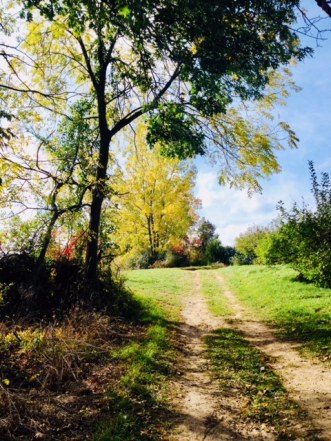
Life shatters us sometimes. It looks different on everyone, the way we wear this pain. For me the big shattering was my divorce. I live in the aftermath of it. At times, we all find ourselves stranded in the places life dumps us when crises hit. It’s like being shoved from a moving vehicle and once you stop falling, and crashing, you assess your injuries. Then you have to pick yourself up and limp along the road. You don’t do it because you’re strong or fearless. You do it because even though you have no idea where you are going, you get simply grow tired of feeling stranded.

My perspective shIMG_5295ifted after life shoved me from the moving vehicle of my marriage. I used to live in a what-if mindset. What if something happens? But something always happens, and it’s rarely the thing you thought you prepared yourself for. Quite often the big thing that happens, the thing that shatters us, is precisely the one and only thing we didn’t think we needed to prepare ourselves for. After I stopped falling and crashing and nursing my wounds, I wanted to stop feeling as though another disaster would strike at any moment. As I started down the road, I soon grew weary from looking over my shoulder, waiting to see what was going to hit us next. That mindset is still a part of me, and it slips back in sometimes, but it drains so much energy. I want that energy for other things, for loving and laughing. I have to remind myself to be open to joy instead of looking for disaster, but it gets easier. I try to keep my eyes on where I am, where I’m going, and who is with me. Maybe the only thing to do is be vagabonds on this road together.

And that first Match date? He’s still on the road with me, at my side, holding my hand, almost two years later.

Enjoy the road. Love, Cath